Release calendarTop 250 moviesMost popular moviesBrowse movies by genreTop box officeShowtimes & ticketsMovie newsIndia movie spotlight
    What's on TV & streamingTop 250 TV showsMost popular TV showsBrowse TV shows by genreTV news
    What to watchLatest trailersIMDb OriginalsIMDb PicksIMDb SpotlightFamily entertainment guideIMDb Podcasts
    OscarsBest Of 2025Holiday Watch GuideGotham AwardsCelebrity PhotosSTARmeter AwardsAwards CentralFestival CentralAll events
    Born todayMost popular celebsCelebrity news
    Help centerContributor zonePolls
For industry professionals
  • Language
  • Fully supported
  • English (United States)
    Partially supported
  • Français (Canada)
  • Français (France)
  • Deutsch (Deutschland)
  • हिंदी (भारत)
  • Italiano (Italia)
  • Português (Brasil)
  • Español (España)
  • Español (México)
Watchlist
Sign in
  • Fully supported
  • English (United States)
    Partially supported
  • Français (Canada)
  • Français (France)
  • Deutsch (Deutschland)
  • हिंदी (भारत)
  • Italiano (Italia)
  • Português (Brasil)
  • Español (España)
  • Español (México)
Use app
  • Cast & crew
  • User reviews
  • Trivia
  • FAQ
IMDbPro

Behind the Rising Sun

  • 1943
  • Approved
  • 1h 28m
IMDb RATING
5.6/10
403
YOUR RATING
Behind the Rising Sun (1943)
DramaWar

In Japan, foreigners and their Japanese friends are caught up in the rising tide of militarism.In Japan, foreigners and their Japanese friends are caught up in the rising tide of militarism.In Japan, foreigners and their Japanese friends are caught up in the rising tide of militarism.

  • Director
    • Edward Dmytryk
  • Writer
    • Emmet Lavery
  • Stars
    • Margo
    • Tom Neal
    • J. Carrol Naish
  • See production info at IMDbPro
  • IMDb RATING
    5.6/10
    403
    YOUR RATING
    • Director
      • Edward Dmytryk
    • Writer
      • Emmet Lavery
    • Stars
      • Margo
      • Tom Neal
      • J. Carrol Naish
    • 16User reviews
    • 8Critic reviews
  • See production info at IMDbPro
  • See production info at IMDbPro
    • Awards
      • 1 win total

    Photos40

    View Poster
    View Poster
    View Poster
    View Poster
    View Poster
    View Poster
    View Poster
    View Poster
    + 32
    View Poster

    Top Cast45

    Edit
    Margo
    Margo
    • Tama Shimamura
    Tom Neal
    Tom Neal
    • Taro Seki
    J. Carrol Naish
    J. Carrol Naish
    • Reo Seki
    Robert Ryan
    Robert Ryan
    • Lefty O'Doyle
    Gloria Holden
    Gloria Holden
    • Sara Braden
    Donald Douglas
    Donald Douglas
    • Clancy O'Hara
    • (as Don Douglas)
    George Givot
    George Givot
    • Boris
    Adeline De Walt Reynolds
    Adeline De Walt Reynolds
    • Grandmother
    Leonard Strong
    Leonard Strong
    • Tama's Father
    Philip Ahn
    Philip Ahn
    • Japanese Officer Murdering Takahashi
    • (uncredited)
    Abner Biberman
    Abner Biberman
    • Inspector
    • (uncredited)
    Luke Chan
    • Officer
    • (uncredited)
    Spencer Chan
    Spencer Chan
    • Japanese Swordsman
    • (uncredited)
    Aen-Ling Chow
    • Japanese Girl
    • (uncredited)
    Fred Essler
    Fred Essler
    • Takahashi
    • (uncredited)
    Benson Fong
    Benson Fong
    • Japanese Officer with Message
    • (uncredited)
    Lee Tong Foo
    Lee Tong Foo
    • Dinner Guest
    • (uncredited)
    Mei Lee Foo
    • Geisha Girl
    • (uncredited)
    • Director
      • Edward Dmytryk
    • Writer
      • Emmet Lavery
    • All cast & crew
    • Production, box office & more at IMDbPro

    User reviews16

    5.6403
    1
    2
    3
    4
    5
    6
    7
    8
    9
    10

    Featured reviews

    dougdoepke

    Laying the Basis for Post-War Occupation

    Unlike boilerplate propaganda films of WWII, this one has some complexity. I suspect Washington DC was smelling victory in 1943 and was correctly concerned with post-war occupation and how the American public would react. Thus, as other reviewers point out, the enemy is depicted as Japan's medieval warrior society and not the Japanese people as a people. The movie's propaganda aspects center on familiar stereotypes (cruel soldiers and inhumane policies), but more importantly, these ugly aspects are also portrayed as the result of a conditioning process (Taro), and not the result of some genetic, sub-human flaw as in typical propaganda films of the time.

    This distinction opens the possibility that a reformed social order with better values and socializing process can produce a more modern and democratic people better attuned to Western ideals (Tama, Reo, & the early Taro). The end result thus suggests that the Japanese people may be human after all, yet suffering from what may be termed a "social disorder"-- A disorder that a good dose of American-style democracy can remedy under an astute post- war occupation regime, such as Gen. MacArthur's turned out to be. Now, no matter how self- congratulatory these political assumptions may be, the result turns out to be shrewdly visionary in an historical sense.

    Of course, this is a pretty heavy load for what is essentially an RKO programmer. Nonetheless, the subtext plays out in a screenplay more shaded than most. I suspect audiences expecting something more typically simplistic were a bit put off by the ambiguities. Still and all, there are familiar American stereotypes to anchor the audience—the good-hearted Irishman (O'Hara), the competitive sportsman (Lefty), and the enterprising reporter (Sara). Revealingly, they're shown as getting along quite well with those liberally minded Japanese who will share power during the post-war period.

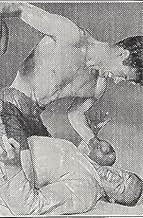
    This mixture of crude stereotype along with the more subtle humanizing aspect creates a rather awkward combination that doesn't work very well for the movie as a whole. Perhaps this is why the film remains pretty obscure in movie annals. Nonetheless, two episodes remain memorable for me. It's easy to overlook architect O'Hara's passing observation about sturdy Western construction materials. These, he points out, can withstand natural calamities that Pacific islands are prone to, such as earthquakes and floods, better than traditional, less substantial, Japanese materials. To me, this illustrates the potentials of a genuinely cooperative internationalism outside this particular one-sided context. Also, the central action scene of a gangly American boxer (Ryan) vs. a Japanese martial arts expert (Mazurki) may not be very convincing, but it certainly is eye-catching.

    Now, I'm in no position to judge the historical accuracy of the events depicted here and claimed as fact-based by the prologue. Nonetheless, the movie remains an interesting one for its generally humane message in a time of real war.
    kev-22

    Loopy, intriguing WWII propaganda

    We'd call it racist today, but this constantly amusing bit of rabble rousing did what it had to do at the time, while allowing somewhat refreshingly that not all Japanese were monsters. When this was made, the outcome of the war was still not assured, although the bombing raids over Tokyo were in full swing, as the end of the film shows. Along the way there's an incongruous mix of white RKO stock leads unconvincingly playing the main Japanese characters while actors of actual Japanese descent play minor supporting parts. J. Carrol Naish may seem silly as a Japanese businessman, but he is surprisingly sincere as the misguided father who goads his nonviolent, Americanized son with jingoistic pleas to enter military service. To the father's eventual dismay, the son, played by Tom Neal in one of Hollywood's more notable instances of miscasting, becomes an increasingly callous savage who comes to relish Japanese atrocities while on duty in China. Showing that Hollywood could do the Goebbels thing with the best of them, the film proceeds to show Japanese soldiers pushing opium on children, yanking mothers away from crying infants, hauling Chinese women into prostitution houses, bayoneting children, and--worst of all--slapping around American nationals! The highlight is a wacky, drawn-out duel of strength between an American boxer (Robert Ryan doing his "The Set Up" thing six years before the fact) and a Japanese jujitsu expert. The film's opening titles claim that the whole thing is 100 percent true and authentic, a perfect red flag to take it all with a grain of salt.
    7djpass9

    Ahead of its time

    I wasn't expecting much from a Tom Nea movie, but this was an instructive bit of propaganda. dougdoepke in his review here makes some excellent points. The Japanese people are portrayed as being the victims of rigid class system. In this film it is the Japanese who are the racists. Aside from that, I enjoyed seeing Gloria Holden and Don Douglas, who died too young....Some of the air raid footage looked as if it was recycled from "Bombadier."
    6Fred_Rap

    Gonzo WW II agitprop cum bloodbath

    "Know the worst about the Japs!" screamed the original ads for this delirious WW II time capsule, a violent, rabble-rousing propaganda piece purporting to show how Japan rose to become a world terror. But with the first act of Japanese savagery, the film's true intent becomes crystal clear: to foment outrage and demonize the enemy by dishing out heaping helpings of barbaric cruelties. Atrocities on the menu include gang rape, wince-inducing torture, bayonet practice on babies, the mass slaughter of innocents, and the likes of Tom Neal, J. Carrol Naish and Abner Biberman playing sons of Nippon in heavy Asiatic makeup.

    By turns, unintentionally hilarious and horrifyingly brutal, the film is never less than gripping thanks, in large part, to Edward Dmytryk's deft direction. Worth the price of admission alone is a blistering, brilliantly edited ten-minute ring fight between an American boxer played by Robert Ryan (a real-life college boxing champ) and a towering Japanese judo expert played by Mike Mazurki. It's a genuine showstopper, expressly designed to whip homefront theater audiences into a frenzy of cheers, cat-calls and general bloodlust. With Gloria Holden, Margo and Richard Loo (wonder of wonders, a genuine Asian).
    Kirpianuscus

    propaganda. at the first sigh

    today, it is easy to criticize it. for the unrealistic Japanese characters, for the too subjective message, for the cruelty and conflicts who are perceived as strange. but the bad opinion has a fragile root. because we ignore the context. for 1943, a propaganda film, mixing few romantic and film noir slices, is the predictable tool for encouraging and answer to expectations. and this is the most useful angle for see it. because, if you ignore all the points of your superiority about it, it is a decent war film. and this, maybe, is the essential thing. because, behind the scenes, the real dramas are easy to be discovered. so, an useful lesson.

    More like this

    Tender Comrade
    6.2
    Tender Comrade
    The Outlaw
    5.4
    The Outlaw
    Sky Devils
    5.0
    Sky Devils
    Vendetta
    5.9
    Vendetta
    Hell's Angels
    7.3
    Hell's Angels
    Hitler's Children
    6.4
    Hitler's Children
    Jet Pilot
    5.6
    Jet Pilot
    Trail Street
    6.3
    Trail Street
    The French Line
    5.1
    The French Line
    Marine Raiders
    5.8
    Marine Raiders
    Cornered
    6.7
    Cornered
    Address Unknown
    6.9
    Address Unknown

    Related interests

    Naomie Harris, Mahershala Ali, Janelle Monáe, André Holland, Herman Caheej McGloun, Edson Jean, Alex R. Hibbert, and Tanisha Cidel in Moonlight (2016)
    Drama
    Band of Brothers (2001)
    War

    Storyline

    Edit

    Did you know

    Edit
    • Trivia
      A B-grade exploitation flick produced for $240,000, "Behind the Rising Sun" (1943) did A-level business at the box office, grossing $1.5 million. This was director Edward Dmytryk's second such hit for RKO that year, following the surprise blockbuster "Hitler's Children" (1943). Over the next four years Dmytryk gained the nickname "Mr. RKO" for consistently turning out profitable films for that studio.
    • Goofs
      During the bombing of Tokyo, presumably the Doolittle raid, B-17 "Flying Fortresses" ( a heavy bomber) are shown carrying out the attack. The Doolittle raid was carried out by B-25 bombers, a medium bomber, launched from the aircraft carrier, USS Hornet.
    • Quotes

      Reo Seki: Do you know what this is?

      Taro Seki: Of course. It's an air map. Say, it's a swell one too.

      Reo Seki: You did some flying while you were in college, did you not?

      Taro Seki: Yes, I had a pilot's licence.

      Reo Seki: Good. Then you will understand quite easily.

      Reo Seki: Observe, my son, when the Earth is spread out flat like the very air itself how there is no place in the world more than 60 hours from any other place, then Japan is no longer a little island at the end of beyond. Japan is the very centre of the universe. For the best airlanes lie to the north: Russia, Europe and North America. And we shall be masters of the north and of the east as well. That is quite inevitable.

      Taro Seki: That's taking a lot for granted, isn't it?

      Reo Seki: Not when you know your geography. Observe again: this is the heartland. Who holds the heartland, holds the world. For here is one fourth of the Earth's surface and one half of its population. Now take a good look, my son, and ask yourself: who is best fitted to hold the heartland? India, China or Japan? Who, in fact, is best fitted to hold the very world itself?

      Taro Seki: But surely, Dad, you don't go for that stuff? Who would want to hold the world, even if he could?

      Reo Seki: There was a time, my son, when we used to say: "Asia for the Asiatics". That was before we knew our strength. The white man is not only in the minority here; he is in the minority throughout the entire world. And the time will come when we shall see who is the master and who is the slave. That will be a great hour my son. It will belong to Japan. And Japan alone.

      Taro Seki: But this isn't the Japan I've come home to work for.

      Reo Seki: It is the only Japan there is. We must all rise with it or all perish with it.

    • Connections
      Featured in Hollywood the Golden Years: The RKO Story: Dark Victory (1987)
    • Soundtracks
      Alma Mater
      (ca 1870) (uncredited)

      (Cornell University's Marching Song)

      Music by H.S. Thompson from his ballad "Annie Lisle" (1857)

      Lyrics by Archibald Croswell-Weeks and Wilmot Moses Smith (ca 1870)

      Sung by Tom Neal a cappella

    Top picks

    Sign in to rate and Watchlist for personalized recommendations
    Sign in

    FAQ17

    • How long is Behind the Rising Sun?Powered by Alexa

    Details

    Edit
    • Release date
      • January 27, 1944 (Mexico)
    • Country of origin
      • United States
    • Languages
      • English
      • Japanese
    • Also known as
      • The Mad Brood of Japan
    • Filming locations
      • RKO Studios - 780 N. Gower Street, Hollywood, Los Angeles, California, USA(Studio)
    • Production company
      • RKO Radio Pictures
    • See more company credits at IMDbPro

    Box office

    Edit
    • Budget
      • $239,000 (estimated)
    See detailed box office info on IMDbPro

    Tech specs

    Edit
    • Runtime
      • 1h 28m(88 min)
    • Color
      • Black and White
    • Aspect ratio
      • 1.37 : 1

    Contribute to this page

    Suggest an edit or add missing content
    • Learn more about contributing
    Edit page

    More to explore

    Recently viewed

    Please enable browser cookies to use this feature. Learn more.
    Get the IMDb App
    Sign in for more accessSign in for more access
    Follow IMDb on social
    Get the IMDb App
    For Android and iOS
    Get the IMDb App
    • Help
    • Site Index
    • IMDbPro
    • Box Office Mojo
    • License IMDb Data
    • Press Room
    • Advertising
    • Jobs
    • Conditions of Use
    • Privacy Policy
    • Your Ads Privacy Choices
    IMDb, an Amazon company

    © 1990-2025 by IMDb.com, Inc.