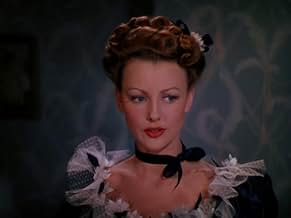
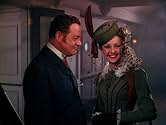
Madeleine Marlowe, engaged to the Duke of Trippingham, discovers she's exposed as Rosie O'Grady by Police Gazette hack Samuel A. McGee, leading to an Irish brawl in her stage show.Madeleine Marlowe, engaged to the Duke of Trippingham, discovers she's exposed as Rosie O'Grady by Police Gazette hack Samuel A. McGee, leading to an Irish brawl in her stage show.Madeleine Marlowe, engaged to the Duke of Trippingham, discovers she's exposed as Rosie O'Grady by Police Gazette hack Samuel A. McGee, leading to an Irish brawl in her stage show.
- Awards
- 1 win total
Charles Trowbridge
- Husband
- (scenes deleted)
Bea Allen
- Chorus Girl
- (uncredited)
Louise Allen
- Chorus Girl
- (uncredited)
Herbert Ashley
- Minor Role
- (uncredited)
Hooper Atchley
- Salesman
- (uncredited)
Walter Baldwin
- Mailman
- (uncredited)
6.3390
1
2
3
4
5
6
7
8
9
10
Featured reviews
It drags
A Music Hall star, Madeleine Marlowe (Betty Grable) returns from London to America where she has wowed society and is romantically linked with a Duke, Charles (Reginald Gardiner). On her return, a reporter Sam (Robert Young) exposes her as a former Burlesque Queen, Rosie O'Grady. The film then follows the tricks that Rosie and Sam play against one another in order to get the upper hand. At the end, love is in the air.
Unfortunately, the songs and dances in this film aren't any good and this lets the film down as the story doesn't have the strength to carry the film alone. The scenes with Betty Grable are good, but when she is not on screen, there are some pretty dull moments. Its not that the cast are bad, although there is a poor scene where Sam and Charles get drunk which could have been edited out, its just that the overall film isn't quite good enough. The music needed to be better in order to make this film passable or even good. Its a better story than her other offering "Coney Island" from the same year, but that film is better because of the music numbers that it contains.
Its OK but it doesn't need to be seen again.
Unfortunately, the songs and dances in this film aren't any good and this lets the film down as the story doesn't have the strength to carry the film alone. The scenes with Betty Grable are good, but when she is not on screen, there are some pretty dull moments. Its not that the cast are bad, although there is a poor scene where Sam and Charles get drunk which could have been edited out, its just that the overall film isn't quite good enough. The music needed to be better in order to make this film passable or even good. Its a better story than her other offering "Coney Island" from the same year, but that film is better because of the music numbers that it contains.
Its OK but it doesn't need to be seen again.
...Betty Grable at her loveliest...
...."Sweet Rosie O'Grady" and "Mother Wore Tights" were Betty Grable's favorites of her films. It is easy to see why they are. "Sweet Rosie" is just possibly Betty at her peak. To give credit where credit is due, Betty's peak lasted a remarkably long time. In this Betty is an established star in England returning to the United States. Robert Young is a newspaper reporter who dredges up her less than glamorous beginnings as a singer in a beer garden. They then proceed to scrap and humiliate each other right through the whole film. Reginald Gardnier is the guy who loses Betty. He must have liked Betty a whole lot. He lost her in a total of six films. Certainly no one could call him a quitter. He does get Betty's maid as a sort of consolation prize. Betty and Robert Young do finally resolve their differences and admit they like each other a lot. The whole thing is brisk and colorful--and like all Betty Grable films: a lot of fun.
Marvelous fun
Robert Young is perfectly cast as a wise-guy reporter writing for a pre-Enquirer rag called the Police Gazette who is assigned by his crusty Editor, played perfectly by Adolph Menjou (Walter Burns from the original Front Page), to write a series of expose-type articles on returning stage star Betty Grable's burlesque beginnings. The Technicolor is luscious throughout. Reginald Gardiner is a stitch, as usual, playing Betty's British betrothed who breaks off the engagement as a result of the scandal. Virginia Grey is perky and decorative as Grable's maid. Byron Folger also lends support as a perfectly prissy prig (what else?).
Betty, of course, is the star. She sings and dances with aplomb. The added delight is her comic timing and chemistry with Young. We enjoy and believe them at each others throats which makes the inevitable payoff in each others arms that much more enjoyable.
Return Of The Native
At 74 minutes, "Sweet Rosie O'Grady" is just long enough and does not wear out its welcome. But it is so good good-humored and good-natured that it is tough to dislike. It must have been a B musical when it came out and there is only one memorable song in the score, "My Heart Tells Me", sung by Betty Grable. The male lead, Robert Young, is a stranger to musicals but does, in fact, get to sing the title song - and was amazingly good.
The story is outlandish, about a saloon singer from Brooklyn who becomes an international sensation and returns, hopefully in triumph. Young is a reporter who spills the beans about her humble beginnings, and she vows revenge. From there they each try to outdo the other in revenge mode, and from here the plot goes far afield.
It is all harmless fun, and as bright and glossy as Fox could make it. The surprise, as noted above, is Young, who I didn't consider as either particularly funny or as a singer, but who proves he can be both here. Good support from Adolph Menjou and Reginald Gardner helps the cause. Leonard Maltin raved about Menjou in his review, and he gave a workmanlike but unspectacular performance. Makes you wonder if he ever sees any of these oldies he reviews.
The story is outlandish, about a saloon singer from Brooklyn who becomes an international sensation and returns, hopefully in triumph. Young is a reporter who spills the beans about her humble beginnings, and she vows revenge. From there they each try to outdo the other in revenge mode, and from here the plot goes far afield.
It is all harmless fun, and as bright and glossy as Fox could make it. The surprise, as noted above, is Young, who I didn't consider as either particularly funny or as a singer, but who proves he can be both here. Good support from Adolph Menjou and Reginald Gardner helps the cause. Leonard Maltin raved about Menjou in his review, and he gave a workmanlike but unspectacular performance. Makes you wonder if he ever sees any of these oldies he reviews.
Enjoyable fluff
"Sweet Rosie O'Grady" is enjoyable fluff...a light time passer that isn't particularly demanding. Betty Grable and Robert Young give it their best and apart from one or two too many songs (which isn't surprising considering it's a Grable flick) it's worth seeing.
The story is set during the Gay 90s and Rosie (Grable) is a stage sensation in both Britain and the States. She has every reason to be happy, as not only is she popular but she's engaged to some minor member of the British royalty. However, all this is stood on its head when she arrives back in America. An unscrupulous reporter', Sam Magee (Young), tricks her into an interview and she is so angry she decides to turn the tables on him--telling the other reporters that she is engaged to Magee--and that he is essentially a kept man! Back in the day, that was a shameful thing in this sexist world....now folks would just think Magee was a lucky guy. Regardless, she and Magee exchange barbs throughout this musical comedy until its very expected finale.
As I said, there were a few too many songs...part of the genre...but a part that definitely slowed down the comedy. Still, it's enjoyable and worth seeing if you love classic films.
The story is set during the Gay 90s and Rosie (Grable) is a stage sensation in both Britain and the States. She has every reason to be happy, as not only is she popular but she's engaged to some minor member of the British royalty. However, all this is stood on its head when she arrives back in America. An unscrupulous reporter', Sam Magee (Young), tricks her into an interview and she is so angry she decides to turn the tables on him--telling the other reporters that she is engaged to Magee--and that he is essentially a kept man! Back in the day, that was a shameful thing in this sexist world....now folks would just think Magee was a lucky guy. Regardless, she and Magee exchange barbs throughout this musical comedy until its very expected finale.
As I said, there were a few too many songs...part of the genre...but a part that definitely slowed down the comedy. Still, it's enjoyable and worth seeing if you love classic films.
Did you know
- TriviaA slightly reworked version of Love Is News (1937), a screwball comedy made during the 1930s starring Tyrone Power and Loretta Young.
- ConnectionsReferenced in We'll Meet Again: One Step Forward, Two Steps Back (1982)
Details
Box office
- Budget
- $1,185,000 (estimated)
- Runtime
- 1h 14m(74 min)
- Aspect ratio
- 1.37 : 1
Contribute to this page
Suggest an edit or add missing content