IMDb RATING
6.4/10
1.8K
YOUR RATING


A young femme-fatale realizes that the man she married is an incorrigible wastrel.A young femme-fatale realizes that the man she married is an incorrigible wastrel.A young femme-fatale realizes that the man she married is an incorrigible wastrel.
- Director
- Writers
- Stars
- Nominated for 1 Oscar
- 1 nomination total


Eddie Acuff
- Steve
- (uncredited)

Fred Aldrich
- Bartender
- (uncredited)

Frank Austin
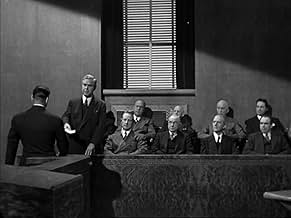
- Jury Member
- (uncredited)
John Barton
- Concertgoer
- (uncredited)
Vangie Beilby
- Wedding Guest
- (uncredited)

John Berkes
- Waiter
- (uncredited)

Oliver Blake
- Defense Attorney
- (uncredited)

Charles Cane
- Joe
- (uncredited)

Wheaton Chambers
- Plane Passenger
- (uncredited)

Ruth Cherrington
- Concertgoer
- (uncredited)
James Conaty
- Concert Patron
- (uncredited)
- Director
- Writers
- All cast & crew
- Production, box office & more at IMDbPro
6.41.8K
1
2
3
4
5
6
7
8
9
10
Featured reviews
Siodmak's film noir from a Somerset Maugham novel...
DEANNA DURBIN begged Universal to let her play a dramatic role after her great success in a string of mostly mediocre films where she played a Little-Miss-Fixit in featherweight romantic comedies who sang operatic ditties with great skill and charm. She was always involved in a scheme to reunite her mother and father for the final clinch.
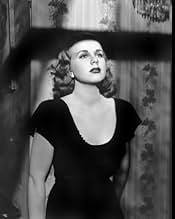
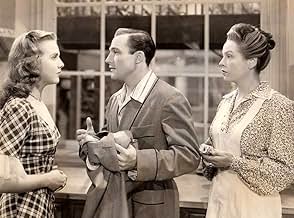
Here, she handles her very adult role with competence, quite believable as a torch singer in a disreputable nightclub, a troubled woman seeking redemption for problems in her twisted past relationships with a mother and son (GALE SONDERGAARD and GENE KELLY).
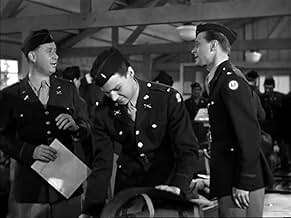
Deanna shines in the role, giving it shades of both simplicity and charm while playing the happy bride, but convincing when she becomes the bruised and fragile woman who manages to tell her tale of woe to a young lieutenant. The soldier is nicely played by DEAN HARENS, an officer on Christmas leave who is on his way to San Francisco when a storm forces his plane to land in New Orleans.
The film structure is not always smooth, burdened as it is by a couple of flashbacks in the middle and a rather weak ending that is over too abruptly. But Robert Siodmak and cameraman Woody Bredell give the whole piece a fluid style with long tracking shots and superior cinematography for several key scenes, notably the one that takes place at a church service on Christmas eve, and another in a concert hall.
Durbin's fans will certainly appreciate her rendering of "Spring Will Be A Little Late This Year" and Irving Berlin's haunting ballad "Always." The background music, a mixture of popular songs and classical pieces, is effective, especially for all of the nightclub scenes. Hans J. Salter deservedly won an Oscar nomination for his detailed and meticulous score.
Effective supporting performances from GALE SONDERGAARD, GLADYS GEORGE and RICHARD WHORF strengthen the tale. Well worth watching. Oddly enough, Deanna handles her dramatic chores in much better style than Gene Kelly, who's unable to do much with his role of a weak-willed wastrel who turns to crime for reasons unexplained.
Trivia note: David Bruce has a small role at the beginning. Two years later he'd be co-starring with Deanna in much bigger parts in CAN'T HELP SINGING and LADY ON A TRAIN.
Here, she handles her very adult role with competence, quite believable as a torch singer in a disreputable nightclub, a troubled woman seeking redemption for problems in her twisted past relationships with a mother and son (GALE SONDERGAARD and GENE KELLY).
Deanna shines in the role, giving it shades of both simplicity and charm while playing the happy bride, but convincing when she becomes the bruised and fragile woman who manages to tell her tale of woe to a young lieutenant. The soldier is nicely played by DEAN HARENS, an officer on Christmas leave who is on his way to San Francisco when a storm forces his plane to land in New Orleans.
The film structure is not always smooth, burdened as it is by a couple of flashbacks in the middle and a rather weak ending that is over too abruptly. But Robert Siodmak and cameraman Woody Bredell give the whole piece a fluid style with long tracking shots and superior cinematography for several key scenes, notably the one that takes place at a church service on Christmas eve, and another in a concert hall.
Durbin's fans will certainly appreciate her rendering of "Spring Will Be A Little Late This Year" and Irving Berlin's haunting ballad "Always." The background music, a mixture of popular songs and classical pieces, is effective, especially for all of the nightclub scenes. Hans J. Salter deservedly won an Oscar nomination for his detailed and meticulous score.
Effective supporting performances from GALE SONDERGAARD, GLADYS GEORGE and RICHARD WHORF strengthen the tale. Well worth watching. Oddly enough, Deanna handles her dramatic chores in much better style than Gene Kelly, who's unable to do much with his role of a weak-willed wastrel who turns to crime for reasons unexplained.
Trivia note: David Bruce has a small role at the beginning. Two years later he'd be co-starring with Deanna in much bigger parts in CAN'T HELP SINGING and LADY ON A TRAIN.
Shows Deanna's acting to good advantage, but not much of Maugham left
If you want to see a film version of Somerset Maugham's "Christmas Holiday", you'll have to wait a while. This isn't it, despite the credit. "Suggested by..." would have been a more accurate credit. Maugham's tale is set in prewar Paris and concerns a young English college student who goes to Paris to see the sights during his Christmas vacation. This film updates the action to WW2 and concerns a lieutenant just graduated from flight school on leave to get married in San Francisco. Grounded by bad weather in New Orleans, he receives a telegram from his fiancée announcing her marriage to some other cluck. He decides to continue to S.F., presumably bent on vengeance. From here on film and Maugham more less parallel each other in broad outline, but all of Maugham's discussions between the student and his radical journalist friend about politics, sex, society and other more or less tabu topics in 1944 Hollywood are eliminated. In the film, the journalist is a pestiferous, drunken ne'er-do-well who frequently acts as a pimp for Gladys' dive. In the original story, Deanna's character, named Sonya, is a Russian émigré forced into prostitution to support herself and her sociopathic lover. Stripped of all of Maugham's philosophical thrust, we have just another film-noir/weeper, although it's not too bad in many respects. Not to reveal the melodramatic denouement tacked on by Hollywood, I'll only say that Maugham's story ends without any resolution, except possibly the student's regret that after being introduced to Sonya, he didn't see Paris, and all he got out of Sonya was conversation. In that, film and story agree.
Well, there you are! Somerset Maugham's "Christmas Holiday" indeed! But it's not as bad as some critics declare. Pauline Kael didn't like it, of course. But it is interesting as a film noir, and Deanna's first, perhaps only real, chance at a dramatic vehicle. Helen Hayes, or even Jane Greer, she wasn't, but then it's doubtful that Universal ever made any effort to develop her acting talent beyond the merest fundamentals. Also she didn't have the long film background of a Helen Parrish. She does present a winsome, sympathetic girl plunged into bad circumstances when her attractive husband proves a murderer and general bad type. Added to that, her mother-in-law casts her out after the husband's conviction. It's not a great performance, but Hollywood has produced many worse. Gene Kelly and the rest of the cast are very good. Kelly is in a very early role, the others are mostly veterans. It's a very moody piece, with photography to suit, and not at all what you would have gotten if Maugham's real story had been filmed.
Oh, yes. Deanna gets to sing two songs. Early on we get "Spring will be a little late this year", which is a slightly jazzy torch song, and later in the film, "Always", beautifully and wistfully delivered by Deann.
Well, there you are! Somerset Maugham's "Christmas Holiday" indeed! But it's not as bad as some critics declare. Pauline Kael didn't like it, of course. But it is interesting as a film noir, and Deanna's first, perhaps only real, chance at a dramatic vehicle. Helen Hayes, or even Jane Greer, she wasn't, but then it's doubtful that Universal ever made any effort to develop her acting talent beyond the merest fundamentals. Also she didn't have the long film background of a Helen Parrish. She does present a winsome, sympathetic girl plunged into bad circumstances when her attractive husband proves a murderer and general bad type. Added to that, her mother-in-law casts her out after the husband's conviction. It's not a great performance, but Hollywood has produced many worse. Gene Kelly and the rest of the cast are very good. Kelly is in a very early role, the others are mostly veterans. It's a very moody piece, with photography to suit, and not at all what you would have gotten if Maugham's real story had been filmed.
Oh, yes. Deanna gets to sing two songs. Early on we get "Spring will be a little late this year", which is a slightly jazzy torch song, and later in the film, "Always", beautifully and wistfully delivered by Deann.
Prepare to be Astonished!
The two stars are Deanna Durbin and Gene Kelly so 1940's audiences seeing a title like "Christmas Holiday" may well have expected a musical. The surprise was a TKO, and people reeled under this somewhat cleansed version of the Maugham novel. A powerful drama, "Christmas Holiday" actually proves that Durbin could have been on the verge of a stellar adult career that would have included important dramatic roles. She is merely superb in this one as a 'dance hall singer-hostess' who is determined to suffer as much as her murderous, jailed, asocial husband, very well done here by Gene Kelly. Durbin sings two standards beautifully, but it is her ACTING here that boosts the attention. Robert Siodmak, one of our finest noir-ish directors, carries off this challenge with excellence. Dean Harens is an fine foil for Durbin in her quest for retribution. A Broadway actor, he sounds and acts in the Tom Drake-style, and that is a compliment. Gladys George, Gale Sondergaard, Richard Whorf work well under Siodmak. Perhaps the public wasn't ready for Durbin and Kelly as 'hostess' and 'psycopath', and that is a shame. Despite the whitewash of some of the novel's elements, this is a very very fine film, and Deanna Durbin, wherever you may be these days, you are to be sincerely commended. Thanks for this one!!
One of Deanna Durbin & Robert Siodmak's best
I was lucky enough to catch a rare screening of this never-on-video film at the Cinematheque here in Hollywood last night. It was very beautiful, moving even, with lovely black-&-white cinematography by Woody Bredell. Other users' comments to the contrary, Gene Kelly's role is most definitely not insignificant - he's the villain, for crying out loud! His genuinely complex and subtle performance is a real standout in a film filled with wonderful work by all of the actors. Gale Sondergaard, also, is clearly well-cast, too, as Kelly's mother; she may have been a little young for the role in real life, but that certainly doesn't come across in her portrayal of the stifling, weak-willed, coddling mother of a killer. Deanna Durbin, though always more of a performer than an actor per se, is more than convincing as a world-weary singer in a whorehouse (not a night club; though it's never explicitly identified as a house of ill repute, only the most boneheaded viewer would take it for anything else). Her tearful breakdown in the church during Christmas Eve mass (an exquisitely rendered set piece, full of deep, soft shadows and luminous pools of communal light) is genuinely touching and heartfelt. And the film's final moments, if accepted unironically (as they were intended), are truly poetic and uplifting.
Deanna Durbin--all grown up
A nice film--and it is nice to see Deanna Durbin shed her little girl image for something with a bit of a bite to it. She plays a singer in a nightclub and is married to Gene Kelly, although he doesn't have much to do in this film. Nice to see some good supporting performances by Gladys George and Gale Sondergaard--although Ms. Sondergaard seems a bit young to play Gene Kelly's mother!!


Did you know
- TriviaBecause of the Hays Code, screenwriter Herman J. Mankiewicz changed the setting from a Paris brothel to a nightclub in New Orleans, and changed the main character from a prostitute to a more ambiguous nightclub singer and hostess, in adapting the 1939 novel of the same name by W. Somerset Maugham.
- GoofsAfter Robert breaks out of jail, the newspaper spells his last name as "Mannette". However, the correct spelling is "Manette".
- Quotes
Simon Fenimore: [to Charles] The planes are all grounded, the trains won't do you any good, and you're too big for me to carry on piggyback.
- ConnectionsReferenced in Go, Johnny, Go! (1959)
- How long is Christmas Holiday?Powered by Alexa
Details
- Release date
- Country of origin
- Language
- Also known as
- W. Somerset Maugham's Christmas Holiday
- Filming locations
- St Vibiana RC cathedral, Main St, Los Angeles, California, USA(midnight mass scene)
- Production company
- See more company credits at IMDbPro
- Runtime
- 1h 33m(93 min)
- Color
- Aspect ratio
- 1.37 : 1
Contribute to this page
Suggest an edit or add missing content