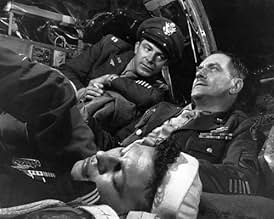
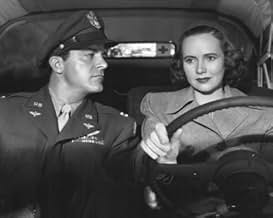
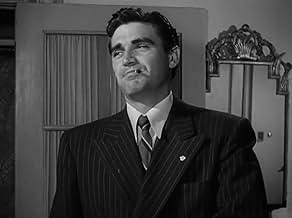
Three traumatized or physically disabled World War II veterans return home to the American Midwest to discover that they and their families have been irreparably changed making readjustment ... Read allThree traumatized or physically disabled World War II veterans return home to the American Midwest to discover that they and their families have been irreparably changed making readjustment difficult.Three traumatized or physically disabled World War II veterans return home to the American Midwest to discover that they and their families have been irreparably changed making readjustment difficult.
- Director
- Writers
- Stars
- Won 7 Oscars
- 25 wins & 4 nominations total
- Al Stephenson
- (as Frederic March)
- Director
- Writers
- All cast & crew
- Production, box office & more at IMDbPro
Summary
Featured reviews
One Of The Best Films Of Its Kind
Crafted with care, narrated with flair & incessantly human in its approach, William Wyler's film's silent, thoughtful contemplation on PTSD is still as relevant today as it was at its time of release. Firmly grounded in realism & having stood the test of time all these years, The Best Years of Our Lives is one of the finest offerings of its kind.
Those Left Behind
Such a powerful film. At first the new lives of the soldiers seem to be facing small adjustments, such as their children's interest in "atomic energy" and "scientific efficiency". But soon we find that jobs are hard to find, and the wives and girlfriends sometimes met new people while the battles were fought.
Although a serious topic, the film has the right balance of entertainment and drama. It never gets outright depressing, and things like depression and suicide are overlooked. But it still remains a valuable lesson: as bad as dying in the war is, sometimes the transition back to normalcy can be just as damaging.
Although not one of the better known movies today (2014), "The Best Years of Our Lives" won seven Academy Awards in 1946, including Best Picture, Best Director (William Wyler), Best Actor (Fredric March), Best Supporting Actor (Harold Russell), Best Film Editing (Daniel Mandell), Best Adapted Screenplay (Robert Sherwood), and Best Original Score (Hugo Friedhofer). It still sits on the IMDb Top 250, just as it should.
Dana Andrews
The Troops are Coming Home.....
Definitely a family orientated movie (Cert U) this will appeal to and find favour with all ages, but don't start thinking that this is all gooey, slushy nonsense. There's some quite hard-hitting topics covered, even by today's standards and of course, with our minds on our current troops in Iraq/Afghanistan, equally relevant.
Multi-stranded, which each of the three G.I.'s immediate and extended families and friends being examined, it's about them coping, with varying degrees of success, with home life and getting jobs, now that the War is ended. It's the little observations and stories around them that are so fascinating, as the Heroes of yesterday are now anything but when it comes finding new purpose in a changed world.
The cast is exemplary, not necessarily the biggest stars of the day but the most believable and natural for their roles. Dana Andrews, Myrna Loy and Fredric Marsh are the ones most easily recognisable and their appearances convey a sort of reassuring familiarity and normality. They're all excellent, of course.
Though long, at nearly 3 hours, William Wyler's easy going but assured and tight direction keeps things flowing nicely and it never drags. This, my second viewing, is an enjoyable one as the first and if anything I'm more at ease with it.
Though obviously not as exciting or dramatic as other 'normal' war films, it's a tragedy that it's not more well known. I've never seen it to ever have been on TV, or to my recollection, even Sky Movies, for that matter. Any movie that won 7 Oscars and is currently no. 180 in the top 250 IMDb's films of all time, voted by its voters (us, the public) is hardly one of minority interest.
A friend I lent my DVD to watched it with his family and normally they only go for current films, or ones they know, but they not only enjoyed it, but felt enormously moved by it, too.
If you haven't seen The Best Years... yet, make a mental note to do so. Your life won't change by doing so, but it really is worth the 3 hours of it that it will take. You certainly can't say the same about every film out there....
Forgotten now that it was mildly controversial in its day
Back in 1946, it was a jaw-dropper to have a character in a movie utter the word "divorce" or to aver an intent to break up a marriage -- such ideas just weren't voiced in films then. To modern audiences, they come across as melodramatic, but I'm told they elcited genuine gasps from audiences then.
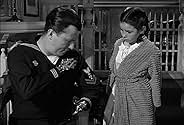
Even more astonishing was William Wyler's decision to cast real-life amputee Harold Russell in the key role of a returning Navy veteran. Until <i>The Battle of Britain</i>, in which an actual, disfigured RAF veteran made a cameo appearance, directors didn't make those sorts of courageous gestures. The intimate yet innocent scene in which Homer Parrish (Russell) demonstrates his helplessness to his fiancé Wilma Cameron (Cathy O'Donnell) is beautiful, heartbreaking and uplifting; later, during the wedding scene, Russell stumbled over a line in saying the vows, and Wyler left the humanizing mistake in, God bless him for it.
Oscars Best Picture Winners, Ranked
Did you know
- TriviaFor his performance as Homer Parrish, Harold Russell became the only actor to win two Academy Awards for the same role. The Academy Board of Governors thought he was a long shot to win, so they gave him an honorary award "for bringing hope and courage to his fellow veterans through his appearance." Later in the ceremony, he won for Best Supporting Actor.
- GoofsWhen Al introduces his wife and daughter to Fred and Homer at Butch's, he refers to Dana Andrews as Homer and Harold Russell as Fred. This was intended as a consequence of Al being drunk.
- Quotes
[after Peggy tells her parents that they never had any trouble in their relationship]
Milly Stephenson: "We never had any trouble." How many times have I told you I hated you and believed it in my heart? How many times have you said you were sick and tired of me; that we were all washed up? How many times have we had to fall in love all over again?
- Alternate versionsThe film was modified to play on a wide screen and reissued on February 3, 1954.
- ConnectionsEdited into Chain Lightning (1950)
- SoundtracksAmong My Souvenirs
(1927) (uncredited)
Music by Edgar Leslie
Lyrics by Lawrence Wright
Played on piano by Hoagy Carmichael
Details
- Release date
- Country of origin
- Language
- Also known as
- Los mejores años de nuestras vidas
- Filming locations
- Ontario International Airport - 2900 E. Airport Drive, Ontario, California, USA(Airplane graveyard)
- Production company
- See more company credits at IMDbPro
Box office
- Budget
- $2,100,000 (estimated)
- Gross US & Canada
- $23,650,000
- Gross worldwide
- $23,667,133
- Runtime
- 2h 50m(170 min)
- Color
- Aspect ratio
- 1.37 : 1