

A young woman traveling to Poland with her employer meets a count, and they fall in love as World War II begins.A young woman traveling to Poland with her employer meets a count, and they fall in love as World War II begins.A young woman traveling to Poland with her employer meets a count, and they fall in love as World War II begins.
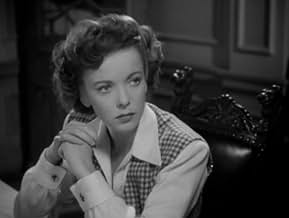
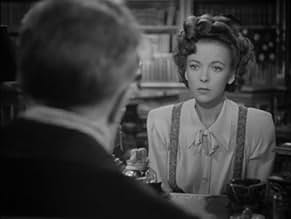
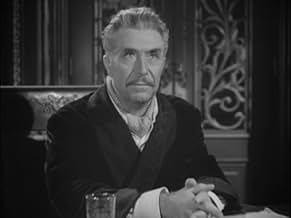
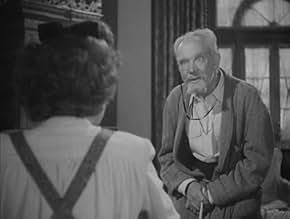
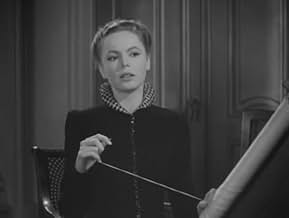
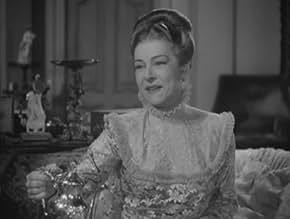


Alla Nazimova
- Zofia Orwid
- (as Nazimova)

Harry Adams
- Ballet Attendee
- (uncredited)

Alex Akimoff
- Wine Seller
- (uncredited)
Sylvia Arslan
- Naneczka
- (uncredited)

Lynn Baggett
- Friend of Count Orvid
- (uncredited)

George Blagoi
- Polish Peasant
- (uncredited)

John Bleifer
- Wladek
- (uncredited)

Paul Bradley
- Ballet Attendee
- (uncredited)

Cyd Charisse
- Ballerina
- (uncredited)

Gino Corrado
- Peasant at Party
- (uncredited)
- …
Julius Cramer
- Polish Diplomat
- (uncredited)
Jane Crowley
- Party Guest
- (uncredited)
- Director
- Writers
- All cast & crew
- Production, box office & more at IMDbPro
6.7685
1
2
3
4
5
6
7
8
9
10
Featured reviews
What a Great Find!
Stumbled onto this on TCM ... granted, it's a wartime film to be sure - down to the "Buy War Bonds" cleverly configured Warner Brothers credit at the end, and brimming with patriotic emotion - but incredibly enjoyable/entertaining. I was happily surprised by all the talent in the cast - besides the ALWAYS wonderful Ida Lupino and the wonderfully debonair/attractive Paul Henreid (sigh!), it was delightful to see - albeit briefly - Mary Boland (for an extensive Mary Boland treat, check her out in "The Women"). And the rarely-seen-on-screen Alla Nazimova was illuminating ... while I heard her name being mentioned by the host, I didn't put it together until afterward. Great WWII Western European homefront film - highly recommend it!
An Interesting and Surprisingly Good Film
Very enjoyable indeed. I always enjoyed the stoic acting of Paul Henreid anyway and to see the very attractive and talented Ida Lupino at age 26 was a treat.
The important idea of a beau, either male or female, not being good enough for the family into which he or she's becoming a part of through marriage, is ancient. I know that here in the USA, it reigns galore but of course from studying history, I had learned that the "quality" of the beau in aristocratic Europe families was intense. Like for instance, here in the USA, family crests and all that jazz are meaningless but not so in Europe. There, lineage, pomp and ceremony are of supreme importance.
This is why Ida Lupino's entrance into the family of Count Orvid's of Poland is fascinating. It was like pitting the old Brooklyn Dodgers against the mighty New York Yankees in so many World Series games. Obviously in the film, Dodger Lupino didn't stand a chance except for uncle Leopold Baruta's warm understanding of why aristocracy shouldn't destroy love.
In the meantime, this enchanting love story is set in the backdrop of maniac Hitler's preparations for invading Poland. The film therefore has tension cleverly wound within the fabric of the entire film. And what will happen to the love affair and marriage of Ida and Paul once Hitler attacks? See for yourself--it's a good movie on Turner Classics.
The important idea of a beau, either male or female, not being good enough for the family into which he or she's becoming a part of through marriage, is ancient. I know that here in the USA, it reigns galore but of course from studying history, I had learned that the "quality" of the beau in aristocratic Europe families was intense. Like for instance, here in the USA, family crests and all that jazz are meaningless but not so in Europe. There, lineage, pomp and ceremony are of supreme importance.
This is why Ida Lupino's entrance into the family of Count Orvid's of Poland is fascinating. It was like pitting the old Brooklyn Dodgers against the mighty New York Yankees in so many World Series games. Obviously in the film, Dodger Lupino didn't stand a chance except for uncle Leopold Baruta's warm understanding of why aristocracy shouldn't destroy love.
In the meantime, this enchanting love story is set in the backdrop of maniac Hitler's preparations for invading Poland. The film therefore has tension cleverly wound within the fabric of the entire film. And what will happen to the love affair and marriage of Ida and Paul once Hitler attacks? See for yourself--it's a good movie on Turner Classics.
propaganda film with focus on Poland
"In Our Time" from 1944 is a propaganda movie set in Poland starring Paul Henried, Ida Lupino, Nazimova, Nancy Coleman, Victor Francen, and Michael Chekhov, and directed by Vincent Sherman.
The script, by Ellis St. Joseph and Howard Koch, is reminiscent in some ways to Rebecca and to Gone with the Wind. Jennifer Whittridge (Lupino) is traveling as a secretary to an antique dealer (Mary Boland) in Poland in 1939 when she meets Count Stephen Orvid (Henried). Henried mistakenly believes Jennifer is good for a quick fling, but he realizes soon enough that's not the case. As Jennifer's trip draws to an end, he proposes, and she accepts though his aristocratic family objects. In order to live independently of his uncle (Victor Franzen), Stephen and Jenny employ modern techniques on the farm and incentivize the peasants by giving them a share of the harvest. Then the war comes to Poland.
There are good performances by everyone involved. The film moves slowly but one feels the tension of the approaching war. Some of that tension may be due to the viewer knowing that Poland was in for one miserable time not only during the war, but after under Communism.
Paul Henried had his real heyday during WWII since the usual leading men were off fighting the war; Ida Lupino, since she was at Warners, always wound up with Bette Davis' handoffs and later distinguished herself on television and as a director. She and Henried make you care about the characters.
It's odd to have a film set in Poland, odder still that Poland's radio announcements were in English. Eastern Europe's WWII story is a tragic one, and it wasn't shown in film all that often.
The script, by Ellis St. Joseph and Howard Koch, is reminiscent in some ways to Rebecca and to Gone with the Wind. Jennifer Whittridge (Lupino) is traveling as a secretary to an antique dealer (Mary Boland) in Poland in 1939 when she meets Count Stephen Orvid (Henried). Henried mistakenly believes Jennifer is good for a quick fling, but he realizes soon enough that's not the case. As Jennifer's trip draws to an end, he proposes, and she accepts though his aristocratic family objects. In order to live independently of his uncle (Victor Franzen), Stephen and Jenny employ modern techniques on the farm and incentivize the peasants by giving them a share of the harvest. Then the war comes to Poland.
There are good performances by everyone involved. The film moves slowly but one feels the tension of the approaching war. Some of that tension may be due to the viewer knowing that Poland was in for one miserable time not only during the war, but after under Communism.
Paul Henried had his real heyday during WWII since the usual leading men were off fighting the war; Ida Lupino, since she was at Warners, always wound up with Bette Davis' handoffs and later distinguished herself on television and as a director. She and Henried make you care about the characters.
It's odd to have a film set in Poland, odder still that Poland's radio announcements were in English. Eastern Europe's WWII story is a tragic one, and it wasn't shown in film all that often.
Solid Acting in Messy Propaganda Film
Vincent Sherman's "In Our Time" tries to do for Poland what "Mrs. Miniver" did for England: raise American awareness to the plight of a European nation besieged by the Nazis. Unfortunately, the film wanders all over the hack-writing map from romance to propaganda to social issues and loses its focus early on. Even the style of the film shifts from intimate drama to semi-documentary with voice-over narration to stirring morale booster complete with back-lit clouds and beams of inspirational light. Despite the varied styles, the movie seems to linger on far too long despite a running time of less than two hours. By the time that the requisite patriotic speech has been made, the music has risen to stirring proportions, and the march towards the sunset has begun, many viewers may already have tuned out.
The unconvincing story begins in an antique shop where Ida Lupino, the young companion of Mary Boland, an English antiques buyer, meets Paul Henreid, a Polish nobleman. Only those who have never seen a Hollywood film from the Golden Age will be surprised by the Romeo-and-Juliet romance that develops or by the obstacles that stand between the couple and eternal bliss. Class-conscious family, impending war, and stubborn peasants are only some of the roadblocks to those inspirational beams that beckon on the horizon.
Unfortunately, some first-class talent has been lavished on this less-than-classic film. Ida Lupino is the shy companion to an overbearing employer. Within two hours, she blossoms into an assertive woman who fully supports and inspires her husband in his idealistic pursuits. Paul Henreid, whose seductive eyes and voice won Bette Davis and Ingrid Bergman, works his magic on Lupino. Like his role in "Casablanca," Henreid's character is caught up in patriotic fervor and self-sacrifice. Both leads are excellent although they cannot overcome the messy script. Silent film star Alla Nazimova offers especially fine support as Henreid's aristocratic mother. However, while the cast often rises above the writing, "In Our Time" remains dated in its message. Considering what Poland endured under Communism after World War II, many of the film's inspirational lines about fighting for the future ring with irony. Despite the length, lapses, and inconsistencies, Lupino, Henreid, and Nazimova make "In Our Time" worth a viewing, but the film is hardly a repeatable experience.
The unconvincing story begins in an antique shop where Ida Lupino, the young companion of Mary Boland, an English antiques buyer, meets Paul Henreid, a Polish nobleman. Only those who have never seen a Hollywood film from the Golden Age will be surprised by the Romeo-and-Juliet romance that develops or by the obstacles that stand between the couple and eternal bliss. Class-conscious family, impending war, and stubborn peasants are only some of the roadblocks to those inspirational beams that beckon on the horizon.
Unfortunately, some first-class talent has been lavished on this less-than-classic film. Ida Lupino is the shy companion to an overbearing employer. Within two hours, she blossoms into an assertive woman who fully supports and inspires her husband in his idealistic pursuits. Paul Henreid, whose seductive eyes and voice won Bette Davis and Ingrid Bergman, works his magic on Lupino. Like his role in "Casablanca," Henreid's character is caught up in patriotic fervor and self-sacrifice. Both leads are excellent although they cannot overcome the messy script. Silent film star Alla Nazimova offers especially fine support as Henreid's aristocratic mother. However, while the cast often rises above the writing, "In Our Time" remains dated in its message. Considering what Poland endured under Communism after World War II, many of the film's inspirational lines about fighting for the future ring with irony. Despite the length, lapses, and inconsistencies, Lupino, Henreid, and Nazimova make "In Our Time" worth a viewing, but the film is hardly a repeatable experience.
Unusual World War II Drama
It is unusual to see a film made during the Second World War by Warner Bros. that deals with Poland, but here we have this seldom seen gem starring Ida Lupina and Paul Henreid. Lupino plays an English tourist in Warsaw on an antique buying mission when she falls in love with a Polish count, played sensitively by Henreid. They move to his estate and attempt to modernize the farm operations, but the German invasion of Poland throws their lives into turmoil.


Did you know
- TriviaCount Stefan takes Jennifer on a walking tour of Warsaw. As they walk, stock footage is shown of various important monuments, culminating in the bronze statue of Frédéric Chopin by sculptor Waclaw Szymanowski. These monuments were all systematically destroyed by the Germans in 1940.
- GoofsAt the ballet, Count Stefan and others in his box use the opera glasses to look down at Jennifer in the audience below. The first shot through the glasses shows her not looking straight up at Count Stefan, but to her right, even though they have acknowledged each other. In subsequent shots through the glasses, the perspectives are far too low and to the front of Jennifer to be from the box above.
- Quotes
Count Pawel Orwid: [at the ballet] Stefan, when I was a young man, I came for the ballerinas. Later on I came for the music. Now I come to sit.
- Crazy creditsAfter the WB logo appears at the end, the letters W and B are separated and letters added to form the words "BUY War Bonds".
- ConnectionsFeatured in Frances Farmer Presents: In Our Time (1959)
- SoundtracksPolonaise in A major, Op.40, No.1 ('Military')
(1838-39) (uncredited)
Written by Frédéric Chopin
Partially played during the opening credits and at the end
Variation in the score throughout
Played on a radio to signal that Warsaw is still fighting
Details
- Runtime
- 1h 50m(110 min)
- Color
- Aspect ratio
- 1.37 : 1
Contribute to this page
Suggest an edit or add missing content