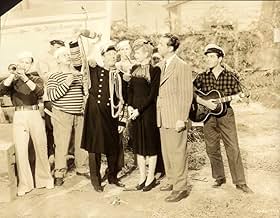
An idealistic shipyard worker interests a beautiful Hollywood star in staging a musical tribute to the war industry, but they disagree on some important issues.An idealistic shipyard worker interests a beautiful Hollywood star in staging a musical tribute to the war industry, but they disagree on some important issues.An idealistic shipyard worker interests a beautiful Hollywood star in staging a musical tribute to the war industry, but they disagree on some important issues.
Rags Ragland
- Mr. Smith
- (as "Rags" Ragland)
Steven Geray
- Uncle Felix
- (as Steve Geray)
Harry Adams
- Shipyard Executive
- (uncredited)
5.7504
1
2
3
4
5
6
7
8
9
10
Featured reviews
Dull plot, boring music, even Spike Jones and Lucille Ball couldn't save it.
I went into this movie hoping for the best. I like wartime musicals in general. Dick Powell and Lucille Ball did good jobs with their roles; however, the writers gave them boring dialog. The love-interest between the two of them was not given any real growth; just suddenly it was there. I did not think much of the music; the best number was the snippet we heard of Spike Jones with "Der Fuhrer's Face." The one complete number that Spike Jones did had little of his great musical comedy; pretty tame stuff,even with the monkey. Bert Lahr's comedy skits were interminable.
There were parts to enjoy: Lucille Ball was quite a looker, and there was a good selection of bit players who really deserved more time on screen.
I don't want to meet these people
Let's put on a show for the war effort...or some arrogant playwright or something. Dick Powell plays a pompous jerk who somehow finagles a famous actress (Lucille Ball) into not only falling in love with him but also getting his play produced. The movie is basically the struggle to get the play made. The struggle, by the way, is only such because of Powell's temper tantrums. Good grief who thought this character was appealing? Powell is a likable actor but here he sulks his way through the whole film. "My show! My show! My show!" Shut up already you whiny baby. This guy wants his precious play to be authentic to real working class people, but he never seems real or working class himself.
Powell also has poor romantic chemistry with Lucille Ball. For her part, Lucy is a bit wooden and lacking the brilliant spark we all know she possessed. The supporting players like Virginia O'Brien, Bert Lahr, and June Allyson are the best part of the cast. There's also an annoying guy doing bad impressions. I'm not going to bother looking up the actor's name. Just know he's awful.
The movie is way too long for such a thin plot and commits the cardinal sin for any musical comedy: it's hardly ever fun. The musical numbers are so-so, with O'Brien's "Say That We're Sweethearts Again" being the standout. It's probably the only thing that you walk away from this film remembering.
Powell also has poor romantic chemistry with Lucille Ball. For her part, Lucy is a bit wooden and lacking the brilliant spark we all know she possessed. The supporting players like Virginia O'Brien, Bert Lahr, and June Allyson are the best part of the cast. There's also an annoying guy doing bad impressions. I'm not going to bother looking up the actor's name. Just know he's awful.
The movie is way too long for such a thin plot and commits the cardinal sin for any musical comedy: it's hardly ever fun. The musical numbers are so-so, with O'Brien's "Say That We're Sweethearts Again" being the standout. It's probably the only thing that you walk away from this film remembering.
the various performers of the time
One of lucy's (wartime) films before she found her groove in "I love lucy". This one has some pretty big names... rags ragland, virginia obrien, dick powell. Bert lahr ( the cowardly lion) and june allyson. Even dick elliott (the mayor on andy griffith) bill swanson wins a date with big starlet julie hampton. But what he really wants is for her to help put on the show he has written. But when the producer changes it all around, swanson goes back to his day job. Will this show ever get made? Some pretty raw humor, for a show made in the 1940s. Although it's pretty tame, compared to modern standards. Some funny bits. And digs at mussolini and hitler, since the united states had been in the war for a couple years by now. Performances by groups that were popular at the time. It's a little un-even, but the overseas troops were probably glad to see entertainers and familiar faces on the big screen. Too many songs for me. Did bert lahr really need to sing so long? They should have let virginia o'brien do more songs! It's okay. Not much of a story, but great to see all the familiar faces together in one film. Directed by charles reisner.... he had worked with the marx brothers and buster keaton.
Odd Celebration
The movies I choose to watch are sometimes suggested by events. Recently. I encountered yet another incomprehensible act by the American War Department and took refuge in this.
It is from an era of justified involvement in a war. Death camps, master race.
It is rank propaganda, subsidized by political leaders. It has other offenses. Blacks are shown twice: a man as a yassa porter and women happily picking cotton.
And yet its charm is in the thing it celebrates. You likely will never see this. It is dated and not very good as a film. The strings it pulls... well, they're broken. So let me describe it.
It features Lucille Ball before she made herself a joke. In this era, she was a desirable pinup, even at 33. She parades her legs and glamor as a famous stage actress. She meets and falls in love with a wartime shipworker who aspires to be a playwright. He, it turns out, has written a play featuring the good souls of the shipyard representing all the "ordinary people" of America who labored for the war effort, which at root was a competition of manufacturing infrastructures.
That play is the device around which all sorts of narrative effects are folded. There's the bit which forms the plot: she likes the play and attempts to put it on. But it gets too glamorized for the author. It isn't "real" enough and rather than demean the subject, he forgoes wealth and fame and closes it down. She follows him back to work in the shipyard to charm him into letting the show go on. As scripted, she discovers and comes to appreciate the goodness of the honestly laboring people.
At the end, she puts on the play as he intended it to be, at the shipyard. Inside the play's performance, he literally enters the play and reconciles with our girl. End of story.
Along the way, there are an amazing number of other excuses pulled to have song and dance numbers. Its purpose, after all was to mix entertainment and "the message."
So you have:
lunchtime shows at the shipyard (with Spike Jones and Hitler played by a chimp). Also, an evening show with several elaborate numbers.
a love song when the two go on their first date, the song half him demonstrating the song to her and half wooing her in the story by song.
a bit as if the movie were a musical comedy. In this case, the story itself bends into comic song as Burt Lahr's character christens his boat.
imitations of famous war leaders, performed randomly whenever a certain character appears. Some of these are unrecognizable today.
And that's in addition to seeing bits of the title show in New York and the shipyard.
A lot of entertainment. All the shows, every one, are miniature versions of the larger movie: celebrations of ordinary folk and then American values.
Ted's Evaluation -- 2 of 3: Has some interesting elements.
It is from an era of justified involvement in a war. Death camps, master race.
It is rank propaganda, subsidized by political leaders. It has other offenses. Blacks are shown twice: a man as a yassa porter and women happily picking cotton.
And yet its charm is in the thing it celebrates. You likely will never see this. It is dated and not very good as a film. The strings it pulls... well, they're broken. So let me describe it.
It features Lucille Ball before she made herself a joke. In this era, she was a desirable pinup, even at 33. She parades her legs and glamor as a famous stage actress. She meets and falls in love with a wartime shipworker who aspires to be a playwright. He, it turns out, has written a play featuring the good souls of the shipyard representing all the "ordinary people" of America who labored for the war effort, which at root was a competition of manufacturing infrastructures.
That play is the device around which all sorts of narrative effects are folded. There's the bit which forms the plot: she likes the play and attempts to put it on. But it gets too glamorized for the author. It isn't "real" enough and rather than demean the subject, he forgoes wealth and fame and closes it down. She follows him back to work in the shipyard to charm him into letting the show go on. As scripted, she discovers and comes to appreciate the goodness of the honestly laboring people.
At the end, she puts on the play as he intended it to be, at the shipyard. Inside the play's performance, he literally enters the play and reconciles with our girl. End of story.
Along the way, there are an amazing number of other excuses pulled to have song and dance numbers. Its purpose, after all was to mix entertainment and "the message."
So you have:
lunchtime shows at the shipyard (with Spike Jones and Hitler played by a chimp). Also, an evening show with several elaborate numbers.
a love song when the two go on their first date, the song half him demonstrating the song to her and half wooing her in the story by song.
a bit as if the movie were a musical comedy. In this case, the story itself bends into comic song as Burt Lahr's character christens his boat.
imitations of famous war leaders, performed randomly whenever a certain character appears. Some of these are unrecognizable today.
And that's in addition to seeing bits of the title show in New York and the shipyard.
A lot of entertainment. All the shows, every one, are miniature versions of the larger movie: celebrations of ordinary folk and then American values.
Ted's Evaluation -- 2 of 3: Has some interesting elements.
Some sensational music!
Forget the period propaganda or the corny jokes. This movie has some sensational music in it, great arrangements & great singing, especially one of the greatest songs written by one of the greatest teams: Rogers & Hart's "I Like to Recognize the Tune". A gorgeous rendition by one of the most beautiful pop songs ever written or performed. Worth reviving this movie (& then there's Spike Jones).
Did you know
- TriviaDaws Butler, the voice actor for Hanna-Barbera cartoon characters, patterned the voice of the lion Snagglepuss after Bert Lahr, who played the Cowardly Lion in The Wizard of Oz (1939). Butler may have taken Snagglepuss's catchphrase "Heavens to Murgatroyd" from Lahr's having said this in this movie: "I now christen this too-too divine ship the Aloysius C. Murgatroyd, in honor of my Grandfather, the well-known horse thief!"
- GoofsDirector Charles Reisner's name was incorrectly spelled in the main credits as "Riesner".
- Quotes
The Commander: You must come up and launch with me sometime.
- ConnectionsFeatured in The Big Parade of Comedy (1964)
- SoundtracksMeet the People
(1940)
Music by Jay Gorney
Lyrics by Henry Myers
Played during the opening credits
Sung by Dick Powell and chorus in his daydream
Reprised by Lucille Ball (dubbed by Gloria Grafton) and chorus at dress rehearsal
Sung by a chorus at the end
- How long is Meet the People?Powered by Alexa
Details
Box office
- Budget
- $1,302,000 (estimated)
- Runtime
- 1h 40m(100 min)
- Color
- Aspect ratio
- 1.37 : 1
Contribute to this page
Suggest an edit or add missing content