

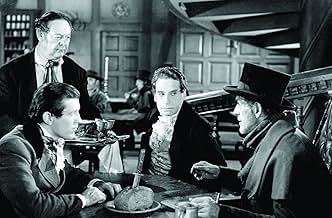
A ruthless doctor and his young prize student find themselves continually harassed by their murderous supplier of illegal cadavers.A ruthless doctor and his young prize student find themselves continually harassed by their murderous supplier of illegal cadavers.A ruthless doctor and his young prize student find themselves continually harassed by their murderous supplier of illegal cadavers.
- Director
- Writers
- Stars
- Awards
- 3 nominations total


Paula Corday
- Mrs. Marsh
- (as Rita Corday)

Ted Billings
- Townsman
- (uncredited)

Bobby Burns
- Mourner
- (uncredited)

Robert Clarke
- Richardson - Medical Student
- (uncredited)
Aina Constant
- Maidservant
- (uncredited)

Mary Gordon
- Mrs. Mary McBride
- (uncredited)
Bobbie Hale
- Townsman
- (uncredited)

Carl Kent
- Gilchrist - Medical Student
- (uncredited)

Milton Kibbee
- Dan
- (uncredited)

Ethan Laidlaw
- Pub Patron
- (uncredited)

Kermit Maynard
- Townsman
- (uncredited)
- Director
- Writers
- All cast & crew
- Production, box office & more at IMDbPro
7.311.1K
1
2
3
4
5
6
7
8
9
10
Featured reviews
One Of Karloff's Best!
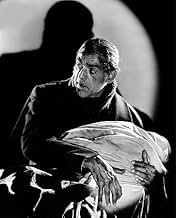
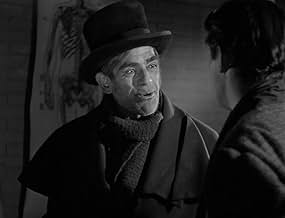
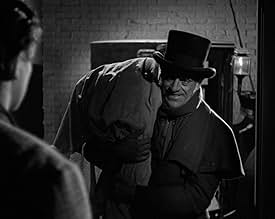
One could easily argue, as I surely will attempt to do so, that this film, The Body Snatcher, based on the classic story by Robert Louis Stevenson and produced by the wonderfully creative and inventive producer Val Lewton, is the home of Boris Karloff's best performance. Some will argue that his portrayal of Frankenstein's creature was his greatest role, and I would not argue with that. But his role as Cabman Gray is his best performance as an actor. It gives us a chance to see the real Boris and his entire acting range. He plays with relish a character wicked as can be , yet full of contradictions. This villainous rogue that steals bodies from graves and then creates bodies through murder is given an amiable side. He is the most interesting character in the story. He is the core of the story, and it is all due to Karloff's wonderful and witty portrayal. The story is excellent as our the other actors in the film, most notably Henry Daniell as the doctor abused and tormented by Karloff and past secrets. Although this was the last film to have both Karloff and Lugosi, it is a lopsided affair as Lugosi is given very little screen time and an even smaller role as a blackmailing servant. The best scene with both of them is the murder scene of Lugosi's character, and it is one last glimpse of the two great boogeymen sharing the screen once more together. Outstanding film, competent direction, and excellent acting make this film one of the better horror films of the 40s and one of Karloff's finest moments on the screen period.
One of my favorite Val Lewtons
This is unlike some of the other Val Lewton mystery/horror films from the 1940s in that it is a classic Gothic horror tale with a classic Gothic horror topic - 19th century grave robbing for the purpose of medical research. There's no wartime engineer married to a mysterious and troubled woman who is afraid she'll turn into a leopard if sexually aroused in THIS Lewton film! But I digress.
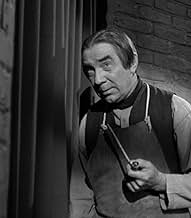
Dr. MacFarlane (Henry Daniells) is a famous surgeon and medical school professor in Edinburgh. He gives a job to medical school student Donald Fettes because, otherwise, Fettes will have to leave school because he can't afford tuition and his living expenses, and MacFarlane thinks Fettes has the makings of a fine doctor. But, among other things, the job involves the intake of cadavers for dissection. And those bodies are the product of graverobbing by cabman John Gray (Boris Karloff). Of course the graverobbing is bad enough, but it soon escalates to murder on the part of Gray. And MacFarlane really can't do much about Gray who turns up at his home and lab unwanted and at all hours just to torment him. That's because of a secret of MacFarlane's that Gray has been keeping all of these years since MacFarlane was in medical school. Complications ensue.
Very atmospheric, this is the e creepiest I've ever seen Karloff. Such a versatile actor he was. Hard to believe he also portrayed the amiable Mr. Wong. Henry Daniell actually played a sympathetic character here with Karloff so effectively menacing him. With a terrifying final scene that some say was censored in England, I'd highly recommend this one.
Dr. MacFarlane (Henry Daniells) is a famous surgeon and medical school professor in Edinburgh. He gives a job to medical school student Donald Fettes because, otherwise, Fettes will have to leave school because he can't afford tuition and his living expenses, and MacFarlane thinks Fettes has the makings of a fine doctor. But, among other things, the job involves the intake of cadavers for dissection. And those bodies are the product of graverobbing by cabman John Gray (Boris Karloff). Of course the graverobbing is bad enough, but it soon escalates to murder on the part of Gray. And MacFarlane really can't do much about Gray who turns up at his home and lab unwanted and at all hours just to torment him. That's because of a secret of MacFarlane's that Gray has been keeping all of these years since MacFarlane was in medical school. Complications ensue.
Very atmospheric, this is the e creepiest I've ever seen Karloff. Such a versatile actor he was. Hard to believe he also portrayed the amiable Mr. Wong. Henry Daniell actually played a sympathetic character here with Karloff so effectively menacing him. With a terrifying final scene that some say was censored in England, I'd highly recommend this one.
Mr. Stevenson's "Corpus"
Robert Louis Stevenson has had a rough going in modern literary tastes. When he died in 1894, he was rightly regarded as one of the finest writers and stylists of his day - for grown-up readers! However, the enmity of a one time friend , W.E.Henley, diminished his reputation. Henley said that Stevenson was too superficial, and was basically a writer of pot-boilers. This view was somewhat softened into a "boy's" writer of adventure stories (TREASURE ISLAND and KIDNAPPED were the titles that usually were pushed as boy's novels).
Actually Stevenson was far from a writer for youths. TREASURE ISLAND has the perplexing, exasperating figure of Long John Silver as it's anti-hero, chum and protector of Jim Hawkins, but mutineer, pirate leader, and murderer. KIDNAPPED does the same with Aleck Breck Stewart, whose weaknesses (such as gambling and drinking) ruin a political mission. He was hardly a simple adventure novelist, anymore than the real Jules Verne was simply a French chap with an outlandish imagination regarding scientific progress.
The movies have done well by Stevenson. TREASURE ISLAND and KIDNAPPED have been made several times, as was THE MASTER OF BALLENTRAE. His novella DR. JECKYLL AND MR. HYDE was made more frequently than any other title of his. In 1931, it earned it's star (Fredric March) the Best Actor Oscar. Even some of the lesser known works have gotten into film: THE WRONG BOX (one of two novels written with Stevenson's stepson Lloyd Osbourne) became a marvelously funny comedy about a scramble over a legacy. THE EBB TIDE was a film with Ray Milland, Lloyd Nolan, Oscar Homolka, and Barry Fitzgerald, and a good television version was made with Robby Coltrane in it. The tales of Prince Florizel of Bohemia from THE NEW ARABIAN NIGHTS became TROUBLE FOR TWO with Robert Montgomery, Rosalind Russell, Frank Morgan, and Reginald Owen. Finally there is this nice gem, THE BODY SNATCHER. It is based on one of Stevenson's best short stories, a moody, psychological drama about the evil that is committed supposedly in the way of greater good.
In most of these films the scripts start out with the novel or short story, but branch out into their own scenarios. Gray, the murderous but sympathetic cab man in the film is (in the story) a drunk who MacFarland actually hates. When he kills Gray for his corpse (for medical study) MacFarland is actually settling a score. The conclusion of the story is similar to the film, except that Gray's mysterious resurrection to confront the frightened MacFarland does not lead to his death, but to his total demoralization. He flees into his own oblivion at the conclusion.
Stevenson was very into history including crime and the vagaries of the law.
It has been noted in the other posts that this story owes much to the crimes of the West Port murderers of 1827-28, William Burke and William Hare (in the film Gray sings a tune about them to the drunken (and doomed) blackmailer Joseph). But this is not unusual for Stevenson. The final blow to Alan Breck Stewart's mission in KIDNAPPED is the hue and cry against him as a suspect in the Appin Murder of 1752, which led to the judicial murder of James "of the Glen" Stewart. The latter story is told in the sequel novel CATRIONA. DR.JECKYLL AND MR.HYDE is based on the story of Deacon Brodie, a wealthy cabinet maker and town councilor of Edinburgh in the 1770s and 1780s, who was a burglar at night, and who was eventually hanged on a a scaffold he had built for the city. Even in his best novel (the unfinished WEIR OF HERMISTON)the title character of Hanging Judge Weir is based on that legendary jurist Lord Braxfield, a man of strong prejudices and harsh statements.
THE BODY SNATCHER was not the first historical movie by Val Lewton's production unit. But THE BODY SNATCHER was the first of three films (all first rate) starring Boris Karloff (the others being ISLE OF THE DEAD and BEDLAM). THE BODY SNATCHER manages to set the period of the 1830s pretty well, although an early distance shot is from some routine film stock and (if you look carefully) shows a car in the distance near a flock of sheep outside of Edinburgh Castle.
The acting is actually quite good, in particular Karloff's Gray and Daniell's astonishing MacFarland. Henry Daniell was one of the best screen villains of his period, in films like CAMILLE (as Baron De Varville) and THE SEA HAWKE (as Wolfingham). He also could do comic villains (Garbitsch in Chaplin's THE GREAT DICTATOR). But this is a rare occasion where he actually shared a full screenplay with a fellow actor.
Daniell's MacFarland is in a battle to the death with Karloff's Gray, one that his mistress knows will destroy both. Both have flaws (Daniell's intellectual arrogance; Karloff's willingness to kill anyone who is expendable). But both are human too. Daniell is aware that his operation on the little girl is "flawless" but nothing improves her ability to walk. All he can do is harshly order the little girl to walk (and she doesn't). Gray sneers at him in their famous scene in the tavern, where Daniell explains his confusion at the failure of a successful operation and hits on the actual missing aspect - Gray knows that the basic cause of life is not something that MacFarland can fix, but the basis of life itself (God or nature itself - something beyond a puny mortal like the doctor). But Gray, for his cynicism and murderous ability, does wish the "wee" one could walk. Oddly enough, hearing his horse move causes the poor girl to walk finally.
It is a fine movie, and gave both Karloff and Daniell a shining moment on the screen.
Actually Stevenson was far from a writer for youths. TREASURE ISLAND has the perplexing, exasperating figure of Long John Silver as it's anti-hero, chum and protector of Jim Hawkins, but mutineer, pirate leader, and murderer. KIDNAPPED does the same with Aleck Breck Stewart, whose weaknesses (such as gambling and drinking) ruin a political mission. He was hardly a simple adventure novelist, anymore than the real Jules Verne was simply a French chap with an outlandish imagination regarding scientific progress.
The movies have done well by Stevenson. TREASURE ISLAND and KIDNAPPED have been made several times, as was THE MASTER OF BALLENTRAE. His novella DR. JECKYLL AND MR. HYDE was made more frequently than any other title of his. In 1931, it earned it's star (Fredric March) the Best Actor Oscar. Even some of the lesser known works have gotten into film: THE WRONG BOX (one of two novels written with Stevenson's stepson Lloyd Osbourne) became a marvelously funny comedy about a scramble over a legacy. THE EBB TIDE was a film with Ray Milland, Lloyd Nolan, Oscar Homolka, and Barry Fitzgerald, and a good television version was made with Robby Coltrane in it. The tales of Prince Florizel of Bohemia from THE NEW ARABIAN NIGHTS became TROUBLE FOR TWO with Robert Montgomery, Rosalind Russell, Frank Morgan, and Reginald Owen. Finally there is this nice gem, THE BODY SNATCHER. It is based on one of Stevenson's best short stories, a moody, psychological drama about the evil that is committed supposedly in the way of greater good.
In most of these films the scripts start out with the novel or short story, but branch out into their own scenarios. Gray, the murderous but sympathetic cab man in the film is (in the story) a drunk who MacFarland actually hates. When he kills Gray for his corpse (for medical study) MacFarland is actually settling a score. The conclusion of the story is similar to the film, except that Gray's mysterious resurrection to confront the frightened MacFarland does not lead to his death, but to his total demoralization. He flees into his own oblivion at the conclusion.
Stevenson was very into history including crime and the vagaries of the law.
It has been noted in the other posts that this story owes much to the crimes of the West Port murderers of 1827-28, William Burke and William Hare (in the film Gray sings a tune about them to the drunken (and doomed) blackmailer Joseph). But this is not unusual for Stevenson. The final blow to Alan Breck Stewart's mission in KIDNAPPED is the hue and cry against him as a suspect in the Appin Murder of 1752, which led to the judicial murder of James "of the Glen" Stewart. The latter story is told in the sequel novel CATRIONA. DR.JECKYLL AND MR.HYDE is based on the story of Deacon Brodie, a wealthy cabinet maker and town councilor of Edinburgh in the 1770s and 1780s, who was a burglar at night, and who was eventually hanged on a a scaffold he had built for the city. Even in his best novel (the unfinished WEIR OF HERMISTON)the title character of Hanging Judge Weir is based on that legendary jurist Lord Braxfield, a man of strong prejudices and harsh statements.
THE BODY SNATCHER was not the first historical movie by Val Lewton's production unit. But THE BODY SNATCHER was the first of three films (all first rate) starring Boris Karloff (the others being ISLE OF THE DEAD and BEDLAM). THE BODY SNATCHER manages to set the period of the 1830s pretty well, although an early distance shot is from some routine film stock and (if you look carefully) shows a car in the distance near a flock of sheep outside of Edinburgh Castle.
The acting is actually quite good, in particular Karloff's Gray and Daniell's astonishing MacFarland. Henry Daniell was one of the best screen villains of his period, in films like CAMILLE (as Baron De Varville) and THE SEA HAWKE (as Wolfingham). He also could do comic villains (Garbitsch in Chaplin's THE GREAT DICTATOR). But this is a rare occasion where he actually shared a full screenplay with a fellow actor.
Daniell's MacFarland is in a battle to the death with Karloff's Gray, one that his mistress knows will destroy both. Both have flaws (Daniell's intellectual arrogance; Karloff's willingness to kill anyone who is expendable). But both are human too. Daniell is aware that his operation on the little girl is "flawless" but nothing improves her ability to walk. All he can do is harshly order the little girl to walk (and she doesn't). Gray sneers at him in their famous scene in the tavern, where Daniell explains his confusion at the failure of a successful operation and hits on the actual missing aspect - Gray knows that the basic cause of life is not something that MacFarland can fix, but the basis of life itself (God or nature itself - something beyond a puny mortal like the doctor). But Gray, for his cynicism and murderous ability, does wish the "wee" one could walk. Oddly enough, hearing his horse move causes the poor girl to walk finally.
It is a fine movie, and gave both Karloff and Daniell a shining moment on the screen.
Craftsmanship at its best.
SPOILERS.
You don't really want to miss this one unless you've been weaned on Arnold Schwarzenegger action movies or Nightmare on Elm Street, Part Twenty, the PreSequal. There is horror galore but served up with frisson.
One can't help admiring Val Lewton and his crew at RKO, working on tiny budgets, but producing miniature gems. It's like painting a masterpiece on the head of a pin. Robert Wise was his director here but the credit goes mainly to producer Lewton, the Russian master of Who Torok. Lewton was insistent on authenticity. The songs we hear are contemporary Scottish folk songs and the wardrobe as close to the real thing as they could get. And Lewton saw to it that "reality" was evoked by small items from the prop department and small incidents on screen. At night, for instance, in order to see something in a dark basement, the doctor calls out for someone to bring a candle. In a less thoughtful movie the deserted basement would have a couple of lanterns already lighted, or the set would be brightly lighted with no visible lanterns at all. A small thing, as I say.
But it's not just historical accuracy that makes Lewton's RKO pictures so appealing. His plots are rooted in time. And his scripts are -- how can one put this without sounding snotty? -- "literate". ("Oh, how we cozzened them!") I don't know how closely the dialogue sticks to Stevenson's original story but it works very well, partly because the actors are so competent. Stealing the dialogue isn't necessarily a bad thing when the words are good to begin with. John Huston lifted most of his dialogue for "The Maltese Falcon" directly from Hammett's novel. And Shakespeare ripped off whole sections of Plutarch's "Lives" for "Julius Caesar." Henry Daniell, like Robert Douglas, later became stereotyped as heavies in Errol Flynn swashbucklers, but Danielle has a far more complex role here -- proud of his medical skills but driven insane by that pride. The accents are mostly American, alas, but the performers at least LOOK right.
Then there is the plot. I know it sounds odd in a producer of horror movies but Lewton was a man of good taste. Driven to find a dead body to sell to Daniell, Karloff decides to murder a sweet-faced young blind girl who is a street singer. A modern movie would give us a bathtub full of blood. Here's what Lewton does. The little girl walks alone down a deserted cobblestone street at night, singing a melancholy tune as she goes. The camera is held on her as she walks under a bridge and disappears in the darkness on the other side. Without any cuts, Karloff's horse and coach enter the frame, plodding slowly along in the girl's wake. The coach disappears into the same darkness under the bridge. We hear the girl's carol cut off at the end of a note with a slight squeak. End of shot. It's a far more moving moment than a dozen multiple on screen slashings and throat cuttings and we haven't seen any of it.
The ending, however, is fairly explicit. Daniell, now mad, gallops furiously through the rainy night along muddy roads, the recently "resurrected" dead body bouncing along in the seat beside him. Instead of the dead woman he has just disinterred, the body is now that of Karloff, revealed only when lightning blindingly illuminates the crazily rocking coach.
"The Body Snatcher" doesn't have the easy shocks of some of Lewton's other works, like "The Curse of the Cat People," no "buses" as Lewton called them.
But there is a sense of evil throughout, or let's call it corruption, and it grows as the film moves quietly along. In its own way it's the equal of anything Lewton did before or after.
Outstanding.
You don't really want to miss this one unless you've been weaned on Arnold Schwarzenegger action movies or Nightmare on Elm Street, Part Twenty, the PreSequal. There is horror galore but served up with frisson.
One can't help admiring Val Lewton and his crew at RKO, working on tiny budgets, but producing miniature gems. It's like painting a masterpiece on the head of a pin. Robert Wise was his director here but the credit goes mainly to producer Lewton, the Russian master of Who Torok. Lewton was insistent on authenticity. The songs we hear are contemporary Scottish folk songs and the wardrobe as close to the real thing as they could get. And Lewton saw to it that "reality" was evoked by small items from the prop department and small incidents on screen. At night, for instance, in order to see something in a dark basement, the doctor calls out for someone to bring a candle. In a less thoughtful movie the deserted basement would have a couple of lanterns already lighted, or the set would be brightly lighted with no visible lanterns at all. A small thing, as I say.
But it's not just historical accuracy that makes Lewton's RKO pictures so appealing. His plots are rooted in time. And his scripts are -- how can one put this without sounding snotty? -- "literate". ("Oh, how we cozzened them!") I don't know how closely the dialogue sticks to Stevenson's original story but it works very well, partly because the actors are so competent. Stealing the dialogue isn't necessarily a bad thing when the words are good to begin with. John Huston lifted most of his dialogue for "The Maltese Falcon" directly from Hammett's novel. And Shakespeare ripped off whole sections of Plutarch's "Lives" for "Julius Caesar." Henry Daniell, like Robert Douglas, later became stereotyped as heavies in Errol Flynn swashbucklers, but Danielle has a far more complex role here -- proud of his medical skills but driven insane by that pride. The accents are mostly American, alas, but the performers at least LOOK right.
Then there is the plot. I know it sounds odd in a producer of horror movies but Lewton was a man of good taste. Driven to find a dead body to sell to Daniell, Karloff decides to murder a sweet-faced young blind girl who is a street singer. A modern movie would give us a bathtub full of blood. Here's what Lewton does. The little girl walks alone down a deserted cobblestone street at night, singing a melancholy tune as she goes. The camera is held on her as she walks under a bridge and disappears in the darkness on the other side. Without any cuts, Karloff's horse and coach enter the frame, plodding slowly along in the girl's wake. The coach disappears into the same darkness under the bridge. We hear the girl's carol cut off at the end of a note with a slight squeak. End of shot. It's a far more moving moment than a dozen multiple on screen slashings and throat cuttings and we haven't seen any of it.
The ending, however, is fairly explicit. Daniell, now mad, gallops furiously through the rainy night along muddy roads, the recently "resurrected" dead body bouncing along in the seat beside him. Instead of the dead woman he has just disinterred, the body is now that of Karloff, revealed only when lightning blindingly illuminates the crazily rocking coach.
"The Body Snatcher" doesn't have the easy shocks of some of Lewton's other works, like "The Curse of the Cat People," no "buses" as Lewton called them.
But there is a sense of evil throughout, or let's call it corruption, and it grows as the film moves quietly along. In its own way it's the equal of anything Lewton did before or after.
Outstanding.
Dark and Gloomy
In 1831, in Edinburgh, the prominent doctor and professor Dr. Wolfe 'Toddy' MacFarlane (Henry Daniell) buys corpses for his studies and classes of anatomy from the notorious cabman John Gray (Boris Karloff), who is also a body snatcher. When his talented student Donald Fettes (Russell Wade) tells that he will quit medical school since his family cannot afford to support him, MacFarlane hires him as his assistant to permit Fettes to proceed his studies. Fettes meets a little girl that cannot walk anymore due to a coach accident, and he tries to convince Dr. MacFarlane to operate her but the doctor is reluctant. Soon Fettes discovers that Dr. MacFarlane has a secret from his past and Gray blackmails him. When Fettes learns how Gray obtains the corpses for Dr. MacFarlane, he has an inner conflict and does not want to continue as Dr. MacFarlane's protégée. But isn't it too late?
"The Body Snatcher" is a dark and gloomy horror tale with a creepy story about ethic in medicine, or how far a doctor should go in his researches. Boris Karloff has a magnificent performance, maybe the best I have ever seen of this actor. The direction of Robert Wise is sharp and the cinematography in black and white is impressive. My vote is seven.
Title (Brazil): "O Túmulo Vazio" ("The Empty Grave")
"The Body Snatcher" is a dark and gloomy horror tale with a creepy story about ethic in medicine, or how far a doctor should go in his researches. Boris Karloff has a magnificent performance, maybe the best I have ever seen of this actor. The direction of Robert Wise is sharp and the cinematography in black and white is impressive. My vote is seven.
Title (Brazil): "O Túmulo Vazio" ("The Empty Grave")


Did you know
- TriviaAlthough based on a fictional short story by Robert Louis Stevenson, the author came up with the idea from actual events occurring in 19th century England and Edinburgh, Scotland in 1827, called the West Port murders of 1828.
At that time, medical schools lacked sufficient funding or the resources to provide their students with cadavers for study. Seeing a financial opportunity there, William Burke suggested to his landlord, William Hare, that they sell the body of a recently deceased boarder to Dr. Robert Knox, an instructor at a Surgeon's Square anatomy school. Knox was grateful to have a specimen for his class and Burke and Hare began a lucrative operation that quickly moved from grave-robbing to murder. They killed their victims by suffocating or "burking" them. Estimates were that they murdered up to 28 people, preying on drunks, prostitutes, and the destitute elderly.
- GoofsAt the beginning, a castle is shown during the credits, then "In Edinburgh In 1831-"; then after that there is a closer view of the castle and a horse and carriage. Two or three automobiles are parked next to the castle.
- Quotes
Cabman John Gray: I am a small man, a humble man. Being poor I have had to do much that I did not want to do. But so long as the great Dr McFarlane comes to my whistle, that long am I a man. If I have not that then I have nothing. Then I am only a cabman and a grave robber. You'll never get rid of me, Toddy.
- Crazy creditsClosing credits epilogue: "It is through error that man tries and rises. It is through tragedy he learns. All the roads of learning begin in darkness and go out into the light" Hippocrates of Cos
- Alternate versionsFive cuts were made by the British censors on its initial release, mainly references to Burke and Hare, the original bodysnatchers. This cut print has been the only one available in the UK until 1998, when a complete version appeared on the budget video label 4-Front.
- ConnectionsEdited into Mondo Lugosi - A Vampire's Scrapbook (1987)
- SoundtracksHuntingtower
(uncredited)
("When Ye Gang Awa, Jamie")
(Traditional Scottish folk song)
sung by Donna Lee
- How long is The Body Snatcher?Powered by Alexa
Details
Box office
- Budget
- $125,000 (estimated)
- Runtime
- 1h 18m(78 min)
- Color
- Aspect ratio
- 1.37 : 1
Contribute to this page
Suggest an edit or add missing content