IMDb RATING
6.6/10
3.5K
YOUR RATING

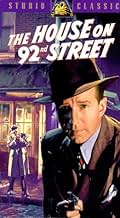
Bill Dietrich becomes a double agent for the F.B.I. in a German spy ring.Bill Dietrich becomes a double agent for the F.B.I. in a German spy ring.Bill Dietrich becomes a double agent for the F.B.I. in a German spy ring.
- Director
- Writers
- Stars
- Won 1 Oscar
- 4 wins total




William Post Jr.
- Walker
- (as William Post)


William Adams
- Customs Officer
- (uncredited)
Frieda Altman
- Saboteur
- (uncredited)
William Beach
- Saboteur
- (uncredited)
Carl Benson
- German Spy Trainee
- (uncredited)
Hamilton Benz
- Saboteur
- (uncredited)
- Director
- Writers
- All cast & crew
- Production, box office & more at IMDbPro
6.63.4K
1
2
3
4
5
6
7
8
9
10
Featured reviews
Spy Address.
Henry Hathaway directed this spy film presented in semi-documentary fashion starring Lloyd Nolan as FBI Inspector George Briggs, who is in charge of the counter-terrorist division that recruits German-speaking William Dietrich(played by William Eythe) to infiltrate a cell of German spies sent to America to gather information on the construction of the atomic bomb. The FBI allows its 92nd. street headquarters to remain open in order to identify its highest-level operatives, which involve a Mr. Christopher, though Dietrich's main contact is a woman(played by Signe Hasso) How long before he can identify his targets, or end up identified himself? Fine film effectively uses the semi-documentary approach, with Lloyd Nolan the standout, and would reprise the role in semi-sequel "The Street With No Name".
Breaking the code
This semi documentary film, shows the FBI at work in those early days of the European conflict. Henry Hathaway, the director, focus on the work behind the scenes of a group of German spies, operating in New York and how the FBI is able to infiltrate the group.
The film, as seen today, still holds the viewer's attention, although the technology is obsolete by today standards. We are given a suspenseful story about the group that established the base of operations in the house on 92nd Street and Madison Avenue in the Manhattan of the 40s. The crisp black and white cinematography by Norbert Brodine still looks pristine and sharp.
The cast headed by Lloyd Nolan as Briggs, do a good job under Mr. Hathaway's direction. Best of all is Signe Hasso as Elsa Gebhart, the designing woman with a lot of secrets. Leo G. Carroll is also seen as one of the spies. Gene Lockhart also has a minor role.
It was fun to watch uncredited New York based actors in the background such as E.G. Marshall, Vincent Gardenia, Paul Ford, among others making small contributions to the film.
The film, as seen today, still holds the viewer's attention, although the technology is obsolete by today standards. We are given a suspenseful story about the group that established the base of operations in the house on 92nd Street and Madison Avenue in the Manhattan of the 40s. The crisp black and white cinematography by Norbert Brodine still looks pristine and sharp.
The cast headed by Lloyd Nolan as Briggs, do a good job under Mr. Hathaway's direction. Best of all is Signe Hasso as Elsa Gebhart, the designing woman with a lot of secrets. Leo G. Carroll is also seen as one of the spies. Gene Lockhart also has a minor role.
It was fun to watch uncredited New York based actors in the background such as E.G. Marshall, Vincent Gardenia, Paul Ford, among others making small contributions to the film.
Still chilling espionage thriller with gritty documentary approach...
Highly popular during the mid-'40s was this thriller that resembles other spy dramas produced by Fox during this era--most notably, films like 13 RUE MADELEINE or BOOMERANG! which also used a documentary style. The location footage in New York City is fascinating as a time capsule and the story gets strong support from the excellent B&W photography.
Standout in the cast is Signe Hasso in a plum role as a woman running a dress shop as a front for espionage activities. She shows toughness and determination all the way through and is completely convincing in the female lead. William Eythe does a nice job as the agent sent by the FBI to expose the spy ring. In fact, all of the performances are first rate and the suspense is maintained until the surprise climax.
Well worth watching as an example of tight, suspenseful and gritty film noir in a style typical of the hard bitten dramas of the '40s.
Standout in the cast is Signe Hasso in a plum role as a woman running a dress shop as a front for espionage activities. She shows toughness and determination all the way through and is completely convincing in the female lead. William Eythe does a nice job as the agent sent by the FBI to expose the spy ring. In fact, all of the performances are first rate and the suspense is maintained until the surprise climax.
Well worth watching as an example of tight, suspenseful and gritty film noir in a style typical of the hard bitten dramas of the '40s.
Some gripping scenes, some documentary footage, and an up and down patchwork
The House on 92nd Street (1945)
Henry Hathaway has directed some great film noirs (Kiss of Death is indisputably great), but he also didn't mind the dull assignment here and there, as in the competent Call Northside 777 and this one, both revealing American crime detection in action. Yes, this is actually well made, but it has a documentary feel that leaves it in a straitjacket as good crime drama. It's strong stuff, and filled with significance, real Nazi activities on U.S. soil leading to the a-bomb. But you'll see, as soon as the familiar narrator starts to explain the events, that it's a formulaic approach.
To some extent, you can't really watch this without noticing it feels, from the next century (2010 as I write) like propaganda. Not that it isn't honest, it just is filled with uncritical pride. The FBI in particular comes across as flawless and brilliant, and I'm sure it often was, but not quite without complications, nuances, and personal quirks that make the best fiction films take off. This one was made just as World War II was over in Europe, and there was nothing but patriotism in the air, naturally.
I actually like Leo G. Carroll a lot, and he holds up his scenes well, and Swedish actress Signe Hasso is a surprise, strong and sharp (wait until she takes her wig off and transforms in ten seconds). Much of the movie, especially after the first half hour with all its narration and actual documentary footage, has the feel of any well constructed drama and those are the parts, for me, to hook into. Besides, there is a quality here that's really pretty fun--a glimpse into the attitude of 1945 America that isn't the usual brazen, lonely, taut film noir response. Fiction makes for better movie-going, in this case, but here is a watchable quasi-documentary that holds up pretty well, off and on, if you keep expectations in check.
Henry Hathaway has directed some great film noirs (Kiss of Death is indisputably great), but he also didn't mind the dull assignment here and there, as in the competent Call Northside 777 and this one, both revealing American crime detection in action. Yes, this is actually well made, but it has a documentary feel that leaves it in a straitjacket as good crime drama. It's strong stuff, and filled with significance, real Nazi activities on U.S. soil leading to the a-bomb. But you'll see, as soon as the familiar narrator starts to explain the events, that it's a formulaic approach.
To some extent, you can't really watch this without noticing it feels, from the next century (2010 as I write) like propaganda. Not that it isn't honest, it just is filled with uncritical pride. The FBI in particular comes across as flawless and brilliant, and I'm sure it often was, but not quite without complications, nuances, and personal quirks that make the best fiction films take off. This one was made just as World War II was over in Europe, and there was nothing but patriotism in the air, naturally.
I actually like Leo G. Carroll a lot, and he holds up his scenes well, and Swedish actress Signe Hasso is a surprise, strong and sharp (wait until she takes her wig off and transforms in ten seconds). Much of the movie, especially after the first half hour with all its narration and actual documentary footage, has the feel of any well constructed drama and those are the parts, for me, to hook into. Besides, there is a quality here that's really pretty fun--a glimpse into the attitude of 1945 America that isn't the usual brazen, lonely, taut film noir response. Fiction makes for better movie-going, in this case, but here is a watchable quasi-documentary that holds up pretty well, off and on, if you keep expectations in check.
A Model of Studio Craftmanship
Where in the world did they find hawk-nosed, beady-eyed Lydia St. Clair, the German Gestapo agent. One look from her, and I'd spill my guts in a flash. This is her only movie credit, so I'm guessing she had the same effect on the producers. Speaking of producers, Louis De Rochemont and TCF led the docu-drama trend that greatly influenced post-war crime drama. This is an early entry, and as a model of craftsmanship, there's none better, at least in my view. The location photography, FBI footage, and voice-over narration combine seamlessly with the melodramatic elements supposedly based on fact. Credit much of this to director Hathaway, one of Hollywood's supreme craftsmen.
Sure, the movie sometimes plays like an advertisement for the FBI. But if the data cited is correct, they had a lot to brag about in terms of counter-espionage. Notice, however, no mention is made of the thousands of Japanese-American citizens illegally interned on the West Coast. The Mr. Cristopher charade may be a gimmick, but it does build suspense as we guess the whereabouts of the mastermind. And when the "unveiling" finally comes, I suspect a few 1945 audiences were mildly startled. Seems a stretch to call this a noir since the lighting and atmosphere are naturalistic throughout. Anyway, as a blend of documentary style with story interest, it's hard to beat this tautly efficient little thriller.
In passing—check out the movie's initial release date, barely a month after the first public disclosure of the A-bomb following Hiroshima and Nagasaki. Looks to me like this required some furious re-writing and maybe some changes in Lockhart's role of research professor. No doubt inclusion of the new weapon was used to sell the film to information hungry audiences.
Sure, the movie sometimes plays like an advertisement for the FBI. But if the data cited is correct, they had a lot to brag about in terms of counter-espionage. Notice, however, no mention is made of the thousands of Japanese-American citizens illegally interned on the West Coast. The Mr. Cristopher charade may be a gimmick, but it does build suspense as we guess the whereabouts of the mastermind. And when the "unveiling" finally comes, I suspect a few 1945 audiences were mildly startled. Seems a stretch to call this a noir since the lighting and atmosphere are naturalistic throughout. Anyway, as a blend of documentary style with story interest, it's hard to beat this tautly efficient little thriller.
In passing—check out the movie's initial release date, barely a month after the first public disclosure of the A-bomb following Hiroshima and Nagasaki. Looks to me like this required some furious re-writing and maybe some changes in Lockhart's role of research professor. No doubt inclusion of the new weapon was used to sell the film to information hungry audiences.


Did you know
- TriviaThe movie deals with the theft by German spies of the fictional "Process 97", a secret formula which, the narrator tells us, "was crucial to the development of the atomic bomb." The movie was released on September 10, 1945, only a month after the atomic bombs had been dropped on Japan, and barely a week after Japan's formal surrender. While making the film, the actors and Director Henry Hathaway did not know that the atomic bomb existed, nor that it would be incorporated as a story element in the movie. (None of the actors in the film mentioned the atomic bomb.) However, co-Director and Producer Louis De Rochemont (who produced the "March of Time" newsreel films) and Narrator Reed Hadley were involved in producing government films on the development of the atomic bomb. (Hadley was present at the final test of the bomb in Los Alamos, New Mexico, in July, 1945.) After the bomb was dropped on Hiroshima, Hadley and Screenwriter John Monks, Jr. hastily wrote some additional voice-over narration linking "Process 97" to the atomic bomb, and Rochemont inserted it into the picture in time for the film's quick release.
- GoofsThe description of a one-way mirror as an "X-ray" mirror at the beginning is nonsense. A one-way mirror is in fact merely a partially-silvered mirror. It becomes "one-way" by virtue of different lighting on either side - one side dimly lit, the other brightly lit. From the side that's brightly lit, it appears to be a normal mirror because the reflection washes out any light coming through from the dim side. But from within the dim side, everything on the bright side is readily visible because the light coming through predominates over the reflection seen from the dim side.
- Quotes
Agent George A. Briggs: We know all about you, Roper. We've traced you to the day you were born. We even know the approximate day you will die.
- Crazy creditsOpening credits are shown as someone flipping through the pages of a file.
- ConnectionsFeatured in Hollywood Spies on Spies (1999)
- SoundtracksTra-La-La-La
(uncredited)
Music by Harry Warren
Played as background music at the talent agent's office
- How long is The House on 92nd Street?Powered by Alexa
Details
- Release date
- Country of origin
- Official sites
- Languages
- Also known as
- Hamburg Seven, Seven, Seven
- Filming locations
- Hamburg, Germany(second unit)
- Production company
- See more company credits at IMDbPro
Box office
- Gross US & Canada
- $2,500,000
- Runtime
- 1h 28m(88 min)
- Color
- Aspect ratio
- 1.37 : 1
Contribute to this page
Suggest an edit or add missing content