IMDb RATING
7.6/10
2.6K
YOUR RATING


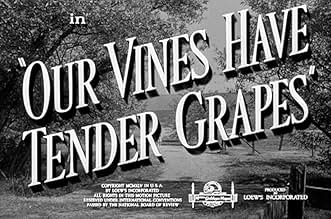
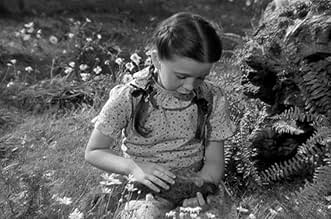
A Norwegian farmer lovingly raises his daughter in rural World War II-era Benson Junction, Wisconsin.A Norwegian farmer lovingly raises his daughter in rural World War II-era Benson Junction, Wisconsin.A Norwegian farmer lovingly raises his daughter in rural World War II-era Benson Junction, Wisconsin.
- Director
- Writers
- Stars
- Awards
- 2 wins total






Abigail Adams
- Girl
- (uncredited)
Robert Anderson
- School Boy
- (uncredited)
- Director
- Writers
- All cast & crew
- Production, box office & more at IMDbPro
7.62.5K
1
2
3
4
5
6
7
8
9
10
Featured reviews
like Debussey's music
Of course you don't know me, but if you believe that I am the furthest thing from a sentimental person, you should trust me when I say this film (the title of which I cannot even bring myself to reproduce it's such a HORRIBLE title, one of the worst ever) blew me away. This film is like Debussey's music, it flows along and has a spontaneous quality to it, as if it weren't planned at all. The LACK of conflict for at least the first hour is a BOLD move esthetically. It took real guts to make this film, and real skill too. Those who would criticize its lack of "realism," its failure to acknowledge the DARK SIDE know not what they do. We NEED movies which acknowledge the fact that life can be good, that childhood can be fun, that the effortless insights of children make us laugh. I am still laughing at Arnold, who in one scene in the barn bombards Martinius and Selma with "why" after "why" after "why." "Why can't I go to school?" asks Arnold. "Because you're too young," answers Selma. "Why am I too young?" he asks. "Just because you are." "But why?" he asks again. "Because." Maybe it's just me, but that is one hilarious exchange of dialogue, one of many in the film. Margaret O'brien is BRILLIANT in these scenes, astonishingly natural in front of the camera.
Sure there are attempts to get deep about the war, and there are other "literary" moments of forced deepness, but overall this is one RARE piece of film ART, and an unjustly ignored CLASSIC.
Sure there are attempts to get deep about the war, and there are other "literary" moments of forced deepness, but overall this is one RARE piece of film ART, and an unjustly ignored CLASSIC.
lovely Americana
Every once in a while, Hollywood would turn out simple, almost humble films that were salutes to a kind of idealized America that still resonates in our collective American memory. "I Remember Mama" is one example, and the Norwegian-American community must have been a rich source for such reflection, because the Norwegian-Americans of Fuller Junction, Wisconsin, are the subject of yet another in "Our Vines Have Tender Grapes." It's amusing that the source of the title is the line from the Song of Songs that begins, "The Little Foxes"--a quote that made the title of quite a different film about quite different American values.
"Our Vines Have Tender Grapes" traces the fortunes of a small middle-American community, with particular focus on the Jacobson family, consisting of father Martinius (Edward G. Robinson), mother Bruna (Agnes Moorehead), and 7-year-old Selma (Margaret O'Brien). Selma's cousin Arnold is also featured, as is the editor of the local paper, other farming neighbors, the new schoolteacher (doing her practicum for a PhD in education, back in Milwaukee), and others.
There isn't necessarily a narrative here; the film provides an episodic look at a year in the life of this community, with tragedy, comedy, and all the human drama. Sometimes it gets a little too episodic, perhaps, as in the dribs of information we get on the life of an emotionally-disturbed neighbor girl. But we are not being asked to follow a narrative, we are merely being asked to spend some time with these people and observe their lives.
The request pays back the time spent. All the performances (with the possible exception of a rather wooden Butch Jenkins as Arnold, whose lips can be seen to move with Margaret O'Brien's lines in their first scene) are engaging. The great Edward G. Robinson once again shows his range (was there any kind of role that man couldn't play??), and Agnes Moorehead gets a chance to show range she isn't generally allowed to display. Margaret O'Brien's Selma can be seen as an outgrowth of Tootie from "Meet Me in St Louis," but I believe Selma is a much more emotionally-complex part and O'Brien takes that ball and runs with it. Her rendition of the Nativity story is JUST this side of saccharine, and it works, especially given the visceral punch of the final lines.
The screenplay was written by Dalton Trumbo, in his last Hollywood effort before the blacklist. Trumbo got the story from a book by George Victor Martin, who was the husband of the woman Selma became. According to the catalog of the American Film Institute, Selma Martin (then estranged from her husband) and her cousin Arnold sued MGM on the basis that the film caused them "undue public attention, mental anguish and humiliation." Staggering news, given the gentle, lovely portrayals of them the film provides.
This film shows up on Turner Classic Movies from time to time. You won't regret giving a couple of hours of your day to this story; it's truly worth it.
"Our Vines Have Tender Grapes" traces the fortunes of a small middle-American community, with particular focus on the Jacobson family, consisting of father Martinius (Edward G. Robinson), mother Bruna (Agnes Moorehead), and 7-year-old Selma (Margaret O'Brien). Selma's cousin Arnold is also featured, as is the editor of the local paper, other farming neighbors, the new schoolteacher (doing her practicum for a PhD in education, back in Milwaukee), and others.
There isn't necessarily a narrative here; the film provides an episodic look at a year in the life of this community, with tragedy, comedy, and all the human drama. Sometimes it gets a little too episodic, perhaps, as in the dribs of information we get on the life of an emotionally-disturbed neighbor girl. But we are not being asked to follow a narrative, we are merely being asked to spend some time with these people and observe their lives.
The request pays back the time spent. All the performances (with the possible exception of a rather wooden Butch Jenkins as Arnold, whose lips can be seen to move with Margaret O'Brien's lines in their first scene) are engaging. The great Edward G. Robinson once again shows his range (was there any kind of role that man couldn't play??), and Agnes Moorehead gets a chance to show range she isn't generally allowed to display. Margaret O'Brien's Selma can be seen as an outgrowth of Tootie from "Meet Me in St Louis," but I believe Selma is a much more emotionally-complex part and O'Brien takes that ball and runs with it. Her rendition of the Nativity story is JUST this side of saccharine, and it works, especially given the visceral punch of the final lines.
The screenplay was written by Dalton Trumbo, in his last Hollywood effort before the blacklist. Trumbo got the story from a book by George Victor Martin, who was the husband of the woman Selma became. According to the catalog of the American Film Institute, Selma Martin (then estranged from her husband) and her cousin Arnold sued MGM on the basis that the film caused them "undue public attention, mental anguish and humiliation." Staggering news, given the gentle, lovely portrayals of them the film provides.
This film shows up on Turner Classic Movies from time to time. You won't regret giving a couple of hours of your day to this story; it's truly worth it.
Nurturing Those Tender Grapes
One of Edward G. Robinson's most beloved films is this one in which he totally reverses type and becomes the wise father of Margaret O'Brien. Our Vines Have Tender Grapes and the tender grapes referred to are the children in their innocence, Margaret O'Brien and Jackie Jenkins.
In this rural Wisconsin town where few even have electricity, the settlers are mostly Norwegian immigrants who did like our American Midwest climate because it was so similar to Norway. They are a tight knit group and are a reserved bunch. But as the film shows, during a crisis they do come together.
O'Brien and Jenkins are an appealing pair of youngsters. Their childhood is a whole lot like Tom Sawyer's and Huck Finn's. Of course in one instance they try duplicating something Tom and Huck did that nearly turns tragic.
Agnes Moorehead also shows what a capable player she is in playing Robinson's wife and O'Brien's mother. I'm sure she was grateful for not playing an evil woman for a change.
There is a subplot involving a romance of editor James Craig and new school teacher Frances Gifford. Gifford is first quite resistant to the town, she's a big city girl, but she warms up to them and Craig.
But the film really belongs to Robinson and O'Brien. Robinson has a tough fight, but he more than holds his own in scenes with the little moppet. Sad he didn't do more films like this.
Our Vines Have Tender Grapes is a timeless classic, I think children and families of any age will identify and love it.
In this rural Wisconsin town where few even have electricity, the settlers are mostly Norwegian immigrants who did like our American Midwest climate because it was so similar to Norway. They are a tight knit group and are a reserved bunch. But as the film shows, during a crisis they do come together.
O'Brien and Jenkins are an appealing pair of youngsters. Their childhood is a whole lot like Tom Sawyer's and Huck Finn's. Of course in one instance they try duplicating something Tom and Huck did that nearly turns tragic.
Agnes Moorehead also shows what a capable player she is in playing Robinson's wife and O'Brien's mother. I'm sure she was grateful for not playing an evil woman for a change.
There is a subplot involving a romance of editor James Craig and new school teacher Frances Gifford. Gifford is first quite resistant to the town, she's a big city girl, but she warms up to them and Craig.
But the film really belongs to Robinson and O'Brien. Robinson has a tough fight, but he more than holds his own in scenes with the little moppet. Sad he didn't do more films like this.
Our Vines Have Tender Grapes is a timeless classic, I think children and families of any age will identify and love it.
A heart-warming tale of rural life in the 1940's for an immigrant family.
This movie is a wonderful story about farm life in 1940's Wisconsin starring Edward G Robinson, Margaret O'Brien and Agnes Moorehead.
E.G. Robinson's role in this movie is a vast departure from his usual Tough Guy and Gangster films. He plays a very warm and tender hearted Father and Husband who owns a small farm in rural Wisconsin. His portrayal is superb, and totally surprised me!
Margaret O'Brien plays 7 year old Selma, in a performance that is outstanding. From moments of usual Child-like Innocence, to subtle yet profound moments of Fear, Joy, Anger and Sadness, this performance is one of her best that I have ever seen!
Agnes Moorehead plays the Matriarch of the family, a stern, yet loving wife and mother, who stands by her husband with unwavering faith and shows her daughter what life is all about with love, tenderness and truth.
This movie captivated me, charmed me, and opened my eyes to small town America in the 1940's, and shows a wonderfully simple style of life, that I wish we could all go back to. I hope you will enjoy this movie!
E.G. Robinson's role in this movie is a vast departure from his usual Tough Guy and Gangster films. He plays a very warm and tender hearted Father and Husband who owns a small farm in rural Wisconsin. His portrayal is superb, and totally surprised me!
Margaret O'Brien plays 7 year old Selma, in a performance that is outstanding. From moments of usual Child-like Innocence, to subtle yet profound moments of Fear, Joy, Anger and Sadness, this performance is one of her best that I have ever seen!
Agnes Moorehead plays the Matriarch of the family, a stern, yet loving wife and mother, who stands by her husband with unwavering faith and shows her daughter what life is all about with love, tenderness and truth.
This movie captivated me, charmed me, and opened my eyes to small town America in the 1940's, and shows a wonderfully simple style of life, that I wish we could all go back to. I hope you will enjoy this movie!
A Charming Film That Offers Lessons In Living
This simple story offers sentiment without saccharine in its story of a farming family in a small community. Episodic in nature, the film follows the adventures of daughter Selma (Margaret O'Brien) and her friend Arnold (Jackie "Butch" Jenkins) as they, like the crops under her parents' care, grow into caring, loving individuals.
The cast is the great thing here. O'Brien was a gifted little actress, charming in her prissiness, and Jenkins equals her as her slightly pouty friend. Both offer memorable performances--but the truly remarkable performances here, the ones for which the film should be prized, come from Edward G. Robinson and Agnes Moorehead, who are cast against type in the roles of Selma's parents. Robinson, of course, is best remembered for his tough-guy roles, full of energetic bluster; Moorehead is most often recalled as one of the most memorable shrews in Hollywood history. But both show the range of their talents in this film, playing quietly, simply, and very movingly--and one regrets that both (particularly Moorehead) were not given more opportunity to play such in-depth roles more often.
Ultimately, VINES is about how parents teach their children and shape their lives--and about how children, for good or ill, learn from their parents. Simply filmed, beautifully performed, and memorable from start to finish, it is a film that deserves wider recognition than it normally receives. An excellent family film that both parents and children will enjoy.
Gary F. Taylor, aka GFT, Amazon Reviewer
The cast is the great thing here. O'Brien was a gifted little actress, charming in her prissiness, and Jenkins equals her as her slightly pouty friend. Both offer memorable performances--but the truly remarkable performances here, the ones for which the film should be prized, come from Edward G. Robinson and Agnes Moorehead, who are cast against type in the roles of Selma's parents. Robinson, of course, is best remembered for his tough-guy roles, full of energetic bluster; Moorehead is most often recalled as one of the most memorable shrews in Hollywood history. But both show the range of their talents in this film, playing quietly, simply, and very movingly--and one regrets that both (particularly Moorehead) were not given more opportunity to play such in-depth roles more often.
Ultimately, VINES is about how parents teach their children and shape their lives--and about how children, for good or ill, learn from their parents. Simply filmed, beautifully performed, and memorable from start to finish, it is a film that deserves wider recognition than it normally receives. An excellent family film that both parents and children will enjoy.
Gary F. Taylor, aka GFT, Amazon Reviewer


Did you know
- TriviaJerry Maren, a member of the Lollipop Guild from The Wizard of Oz (1939), stood in for Margaret O'Brien in the scene where she is floating down the river in a bathtub.
- GoofsIn the opening scene, during the two-shot of Selma Jacobson and Arnold Hanson, he can be seen mouthing her lines as she says them.
- Quotes
Martinius Jacobson: [Entering Bjornson's new barn] You can still smell the new wood... finest smell on the earth.
- ConnectionsFeatured in A Night at the Movies: Merry Christmas! (2011)
- SoundtracksEntry of the Gladiators
(1897) (uncredited)
Written by Julius Fucík
In the score during the elephant sequence
- How long is Our Vines Have Tender Grapes?Powered by Alexa
Details
- Runtime
- 1h 45m(105 min)
- Color
- Aspect ratio
- 1.37 : 1
Contribute to this page
Suggest an edit or add missing content