IMDb RATING
7.4/10
1.2K
YOUR RATING

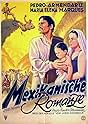
The discovery of a perfect pearl forever changes the lives of a poor Mexican fisherman and his family.The discovery of a perfect pearl forever changes the lives of a poor Mexican fisherman and his family.The discovery of a perfect pearl forever changes the lives of a poor Mexican fisherman and his family.
- Director
- Writers
- Stars
- Awards
- 9 wins & 6 nominations total


José Arratia
- Tratante de perlas
- (uncredited)
Guillermo Calles
- Indio rastreador
- (uncredited)
Enrique Cancino
- Pueblerino
- (uncredited)
Maria Elena Cuadros
- Juanita
- (uncredited)
Enedina Díaz de León
- Yerbera
- (uncredited)

Columba Domínguez
- Pueblerina
- (uncredited)
Agustín Fernández
- Pueblerino
- (uncredited)
Rogelio Fernández
- Pueblerino
- (uncredited)
Raquel García
- Pueblerina
- (uncredited)
- Director
- Writers
- All cast & crew
- Production, box office & more at IMDbPro
7.41.2K
1
2
3
4
5
6
7
8
9
10
Featured reviews
Beautifully shot and told film
This is a wonderfully shot film whose story, while not totally believable, could serve as allegory. Perhaps the family of the Mexican fisherman-diver played by Armendariz would have been happier if he had not discovered the pearl at all, but the poverty that endangers their baby's life makes his joy at this discovery (in a good underwater scene) credible. Immediately afterward, he finds himself beset by freeloaders and robbers (including his own brother), and the spiral continues until it ends in flight, hunger, death and a sort of redemption: the pearl is hurled back into the sea that spawned it. Apart from the story, the highlight is the Mexican scenery, the village and villagers, and the skillful and evocative camera angles. As one reviewer wrote, it's unlikely a villagers' celebration would have been as elaborate as the one shown in "La Perla," but it is enjoyable. Perhaps one semi-cynical message that could be gained from this film is that if you strike it rich, tell as few people as possible.
A Masterpiece of world film-making
Making an adaptation off John Steinbeck's short novel wasn't easy and always a feat.But Emilio Fernandez and Gabriel Figueroa did it in a succesful way.
Pedro Armendariz repeats on a high class of acting role as in 'Maria Candelaria'. Once again the cinematography of Gabriel Figueroa ranks among the best he's done. (the cinematography of this movie earned him, a prize at the Cannes Film Festival).
The aid of Mr. Steinbeck himself, helped Emilio to adapt the screenplay just as good as the novel itself.
This movie has no flaws and it ranks among the best in Mexico Film History, a must see.
Pedro Armendariz repeats on a high class of acting role as in 'Maria Candelaria'. Once again the cinematography of Gabriel Figueroa ranks among the best he's done. (the cinematography of this movie earned him, a prize at the Cannes Film Festival).
The aid of Mr. Steinbeck himself, helped Emilio to adapt the screenplay just as good as the novel itself.
This movie has no flaws and it ranks among the best in Mexico Film History, a must see.
This is a story that old men tell to children. They aren't sure where it happened or when.
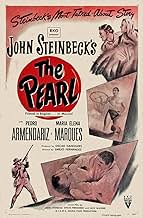
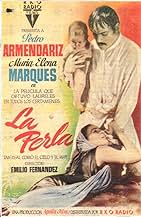
The Pearl is directed by Emilio Fernández and John Steinbeck co-adapts his own novella of the same name with Fernández and Jack Wagner. It stars Pedro Armendariz, María Elena Marqués, Fernando Wagner, Gilberto González, Juan García and Charles Rooner. Music is by Antonio Díaz Conde and cinematography by Gabriel Figueroa.
We are in La Paz, Mexico, and when Quino and Juana's son is stung by a scorpion the couple are anguished by not having the finances to pay for medical treatment. Hope springs eternal when Quino discovers a large pearl, something which is seemingly the answer to their prayers - is it?
What we basically have here is a morality play about the corruption of greed. Once the pearl of the title is discovered the ugliness of mankind rears its vile head. People around Quino and Juana - a homely honest but poor couple - suddenly have designs on the financial gains that the pearl can bring - with some of them willing to commit cardinal sins to achieve their aim. The pearl also begins to drive a wedge between the loving couple, and thus we are held enthral of the story to see exactly where this will all end up?
Though it's not very subtle in the telling, with Steinbeck's literary bent often as heavy as a sledgehammer, this is undeniably compelling stuff. That it's also a visual delight also considerably aids the viewing experience. Fernández and Figueroa bring truly atmospheric cinematography into play as a key character of the piece, with kinked frames and low level shots perfectly embracing the discord of the troubling human conditioning on view. Come 1947 what we would come to know as the film noir style of film making was in full effect, fans of such should for sure add The Pearl to their must seek out lists. 8/10
We are in La Paz, Mexico, and when Quino and Juana's son is stung by a scorpion the couple are anguished by not having the finances to pay for medical treatment. Hope springs eternal when Quino discovers a large pearl, something which is seemingly the answer to their prayers - is it?
What we basically have here is a morality play about the corruption of greed. Once the pearl of the title is discovered the ugliness of mankind rears its vile head. People around Quino and Juana - a homely honest but poor couple - suddenly have designs on the financial gains that the pearl can bring - with some of them willing to commit cardinal sins to achieve their aim. The pearl also begins to drive a wedge between the loving couple, and thus we are held enthral of the story to see exactly where this will all end up?
Though it's not very subtle in the telling, with Steinbeck's literary bent often as heavy as a sledgehammer, this is undeniably compelling stuff. That it's also a visual delight also considerably aids the viewing experience. Fernández and Figueroa bring truly atmospheric cinematography into play as a key character of the piece, with kinked frames and low level shots perfectly embracing the discord of the troubling human conditioning on view. Come 1947 what we would come to know as the film noir style of film making was in full effect, fans of such should for sure add The Pearl to their must seek out lists. 8/10
Cinematic masterpiece, but the cruellest possible story
By the advent of the pearl, everyone appears to be changed in character into a monster of greed, except the protagonists, the fisherman, his wife and their baby, who instead turn into refugees and victims. It's an anatomy of greed with a definite morality, that a great fortune must lead to greed, criminality, death and loneliness. It doesn't have to be like that, but in this story, that is definitely the case in hopeless despair with no illusions surviving, As the pearl enters their lives they start dreaming of all the possibilities it imports, and there is great festivity in the entire village, as all the poor people rejoice in the fisherman's good fortune, but there are always opportunists, and at the appearance of a chance of fortune they will go at any length and sacrifice all human values for their greed. A return to absolute poverty seems to be the only solution to the problem. John Steinbeck's story is a grim study in the weakness of common man, what is lacking here is any wisdom in any man, the fisherman doesn't even have any reliable friend whom he can trust for advice, and the one who helps him gets shot for it. It is impossible not to have objections against such a hopelessly dark and bleak assessment of man, since there must be alternatives. Nothing is completely black, and although the fisherman and his wife survive their via crucis, there must be a new life for them.
I never knew this existed
Adaptation of John Steinbeck's "The Pearl". I had to read the short novel in junior high. I found it bleak and depressing but powerful. I never even knew there was a film of this until TCM showed it tonight. I was very impressed.
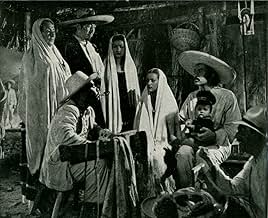
It's a Mexican film and the story was changed to fit into that environment. I never even knew Mexico had a film industry back in the 1940s--films like this are never shown. That's a shame because this film was great. The acting was just OK but that's good--if it had been better acted this might have been unbearable. They didn't lighten up the book or change the ending like Hollywood would have done. And the direction and cinematography were just beautiful--this film should be seen just for the imagery alone. From the opening shot of the women in white robes standing silently by the sea the movie pulls you right in.
This is not for everyone. It's dark and depressing but just great. Despite the change of setting it retains all the power of the short novel. The only debit I could think of was the sometimes intrusive music score--some scenes would have worked much better silently. Still, well worth seeing. I give it an 8.
It's a Mexican film and the story was changed to fit into that environment. I never even knew Mexico had a film industry back in the 1940s--films like this are never shown. That's a shame because this film was great. The acting was just OK but that's good--if it had been better acted this might have been unbearable. They didn't lighten up the book or change the ending like Hollywood would have done. And the direction and cinematography were just beautiful--this film should be seen just for the imagery alone. From the opening shot of the women in white robes standing silently by the sea the movie pulls you right in.
This is not for everyone. It's dark and depressing but just great. Despite the change of setting it retains all the power of the short novel. The only debit I could think of was the sometimes intrusive music score--some scenes would have worked much better silently. Still, well worth seeing. I give it an 8.


Did you know
- TriviaEmilio Fernández, who was in love with Olivia de Havilland, thought she was the ideal actress to play the female starring role. De Havilland never knew of his secret love, but the director was able to get the government of Mexico City to change the name of the street he grew up on to "Dulce Olivia" (Sweet Olivia).
- Quotes
Narrator: This is a story that old men tell to children. They aren't sure where it happened or when.
- Alternate versionsA short version (77') was shown in the USA, France and West Germany whereas a longer version (85 to 87') was shown in Mexico and East Germany.
- ConnectionsAlternate-language version of The Pearl (1948)
- How long is The Pearl?Powered by Alexa
Details
- Runtime
- 1h 25m(85 min)
- Color
- Aspect ratio
- 1.37 : 1
Contribute to this page
Suggest an edit or add missing content