

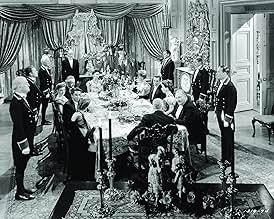
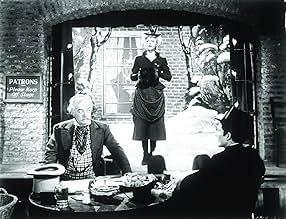
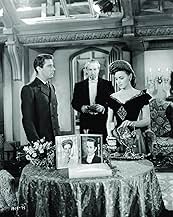
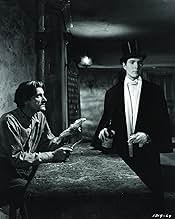
Londoner Dorian Gray stays young, but his portrait ages.Londoner Dorian Gray stays young, but his portrait ages.Londoner Dorian Gray stays young, but his portrait ages.
- Won 1 Oscar
- 3 wins & 4 nominations total


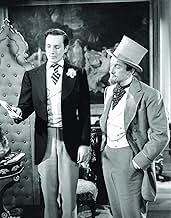
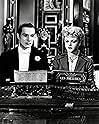


Renee Carson
- Young French Woman
- (as Renie Carson)

Lilian Bond
- Kate
- (as Lillian Bond)
Devi Dja
- Lead Dancer
- (as Devi Dja and Her Balinese Dancers)
- Director
- Writers
- All cast & crew
- Production, box office & more at IMDbPro
7.515.7K
1
2
3
4
5
6
7
8
9
10
Featured reviews
It's better to look good than to feel good
Hurd Hatfield sells his soul so that his portrait ages and reflects his evil while he stays young in "The Picture of Dorian Gray," based on the classic novel by Oscar Wilde.
The film also stars George Sanders, Angela Lansbury, Donna Reed, and Peter Lawford. After wishing to stay young forever and falling prey to the words of a cynical friend, Gray goes against what might have been a decent nature and embarks on a vicious life that brings cruelty, sadness, and even death to those with whom he interacts.
The film is striking for several reasons: There is very little of what one would call action; many scenes are quite short; the film relies heavily on narration; the leading man's face remains impassive throughout.
This could have been a recipe for disaster, but instead, "The Picture of Dorian Gray" is an extremely compelling film. This sumptuous production is meticulously photographed, with wonderful use of shadows which help create a dark atmosphere.
The performances are excellent, particularly those of a very young Angela Lansbury and George Sanders. Peter Lawford and Donna Reed are the beautiful young things who don't have to depend on a portrait for youth.
Hurd Hatfield had one of the strangest faces in film - he certainly looked the part of a young, almost pretty Englishman, with his unlined face, high cheekbones, and full lips. As the role dictates, he was appropriately detached and lacking emotion.
Six or seven years earlier, this role would have been perfect for Tyrone Power, who would have imbued it with more charm - making the evil inside Dorian all the more difficult to accept among his friends, and thus, his true personality would have seemed more treacherous.
Given the way Hatfield played it, I had no problem believing he was capable of anything, and wondered why his friends didn't buy the nasty rumors.
As for the portrait - what a concept. Would that we all had one in our closets. It would put plastic surgeons out of business.
The film also stars George Sanders, Angela Lansbury, Donna Reed, and Peter Lawford. After wishing to stay young forever and falling prey to the words of a cynical friend, Gray goes against what might have been a decent nature and embarks on a vicious life that brings cruelty, sadness, and even death to those with whom he interacts.
The film is striking for several reasons: There is very little of what one would call action; many scenes are quite short; the film relies heavily on narration; the leading man's face remains impassive throughout.
This could have been a recipe for disaster, but instead, "The Picture of Dorian Gray" is an extremely compelling film. This sumptuous production is meticulously photographed, with wonderful use of shadows which help create a dark atmosphere.
The performances are excellent, particularly those of a very young Angela Lansbury and George Sanders. Peter Lawford and Donna Reed are the beautiful young things who don't have to depend on a portrait for youth.
Hurd Hatfield had one of the strangest faces in film - he certainly looked the part of a young, almost pretty Englishman, with his unlined face, high cheekbones, and full lips. As the role dictates, he was appropriately detached and lacking emotion.
Six or seven years earlier, this role would have been perfect for Tyrone Power, who would have imbued it with more charm - making the evil inside Dorian all the more difficult to accept among his friends, and thus, his true personality would have seemed more treacherous.
Given the way Hatfield played it, I had no problem believing he was capable of anything, and wondered why his friends didn't buy the nasty rumors.
As for the portrait - what a concept. Would that we all had one in our closets. It would put plastic surgeons out of business.
Let's Talk About Hurd Hatfield
This film adaptation of Wilde's story is certainly one of the great atmospheric black and white films of the 40's. Reminiscent of Greg Toland's ground breaking deep focus cinematography in "Citizen Kane",the shades of black, greys and whites are sharp and clearly deliniated to produce an unforgettable, somewhat eerie look to the film. There are a couple of short Technicolor shots that will make you jump. Cinematography is the star here but let's talk about Hurd Hatfield. I have seen this film on numerous occasions and have yet to figure out whether Hatfield is a great actor or just a woodenly inanimate object. Whichever is the case, this is the role of a lifetime.....it calls for an unfeeling, blank-faced characterization which is exactly as Hatfield played it. His smooth unlined visage hides many things and his apparent lack of emoting is right on target. Does that mean that he just couldn't act and fell into a role that suited his style or does it mean that he rose to the task and his interpretation was the sign of a great actor, living the part. I don't know....all I do know is that he pulls it off with great panache! He was playing against one of the great scene stealers of all times, George Sanders, who spouts Wilde epigrams with his own inimitable class and Hatfield holds his own. The other players are adequate but I don't know what all the excitement is about Angela Lansbury's acting....she was much better in "Gaslight". All in all, this is a movie that I would recommend but beware....it moves slowly, very slowly. Once you see it maybe you can answer the question about Hurd Hatfield's acting.....or maybe not!!!
It's only shallow people who require years to get rid of an emotion.
The Picture of Dorian Gray is directed by Albert Lewin, and he also adapts the screenplay from the novel written by Oscar Wilde. It stars Hurd Hatfield, George Sanders, Angela Lansbury, Donna Reed, Peter Lawford, Lowell Gilmore, Richard Fraser and Douglas Walton. Music is by Herbert Stothart and cinematography by Harry Stradling Sr.
Dorian Gray of Mayfair and Selby.
Oscar Wilde's Faustian tale about a young Victorian gentleman who sells his soul to retain his youth is given a magnificent make-over by MGM. Pumping into it a budget reputedly of $2 million, the look and feel is perfect for this macabre observation of vanity, greed and self destruction. In many ways it's still an under valued movie, mainly because there will always be Wilde purists who think it lacks the writer's poetic spikiness, while horror fans quite often venture into the picture expecting some sort of violent classic ripe with sex, drugs and debauchery unbound.
Lewin crafts his film in understated manner, never allowing the themes in the source material to become overblown just for dramatic purpose. He cloaks it all with an atmosphere of eeriness, thus keeping the debasing nature of Dorian Gray subdued. The horror aspects here mostly are implied or discussed in elegantly stated conversations, where the horror in fact is purely in the characterisation of Dorian himself. We really don't need to see actual things on screen, we are urged to be chilled to the marrow by his mere presence, and this works because Lewin has personalised us into this man's sinful descent by way of careful pacing and character formation.
There are some jolt moments of course, notably the famous inserts of Technicolor into the black and white film, the impact of such bringing the portrait of the title thundering into our conscious. However, this is not about thrill rides and titillation, because the film, like its source, is intellectual. Lewin is aided considerably by Stradling's beautiful photography, which in turn either vividly realises the opulent abodes or darkens the dens of iniquities, so just like Lewin, Stradling and the art department work wonders and prove to be fine purveyors of their craft.
Hatfield is wonderful, it's an inspired piece of casting, with his angular features and cold dead eyes, he effortlessly suggests the black heart now beating where once there was a soul. Yet even he, and the rest of the impressive cast, are trumped by Sanders as Lord Henry. Cynical, brutal yet rich with witticisms, in Sanders' excellent hands Lord Henry becomes the smiling devil like mentor perched on Dorian's shoulder. Dorian and Lord Henry are movie monsters, proof positive that not all monsters need to be seen hacking off limbs or drinking blood. In this case, the decaying of the soul is a far more terrifying experience.
Fascinating, eloquent, intelligent and frightening. 9/10
Dorian Gray of Mayfair and Selby.
Oscar Wilde's Faustian tale about a young Victorian gentleman who sells his soul to retain his youth is given a magnificent make-over by MGM. Pumping into it a budget reputedly of $2 million, the look and feel is perfect for this macabre observation of vanity, greed and self destruction. In many ways it's still an under valued movie, mainly because there will always be Wilde purists who think it lacks the writer's poetic spikiness, while horror fans quite often venture into the picture expecting some sort of violent classic ripe with sex, drugs and debauchery unbound.
Lewin crafts his film in understated manner, never allowing the themes in the source material to become overblown just for dramatic purpose. He cloaks it all with an atmosphere of eeriness, thus keeping the debasing nature of Dorian Gray subdued. The horror aspects here mostly are implied or discussed in elegantly stated conversations, where the horror in fact is purely in the characterisation of Dorian himself. We really don't need to see actual things on screen, we are urged to be chilled to the marrow by his mere presence, and this works because Lewin has personalised us into this man's sinful descent by way of careful pacing and character formation.
There are some jolt moments of course, notably the famous inserts of Technicolor into the black and white film, the impact of such bringing the portrait of the title thundering into our conscious. However, this is not about thrill rides and titillation, because the film, like its source, is intellectual. Lewin is aided considerably by Stradling's beautiful photography, which in turn either vividly realises the opulent abodes or darkens the dens of iniquities, so just like Lewin, Stradling and the art department work wonders and prove to be fine purveyors of their craft.
Hatfield is wonderful, it's an inspired piece of casting, with his angular features and cold dead eyes, he effortlessly suggests the black heart now beating where once there was a soul. Yet even he, and the rest of the impressive cast, are trumped by Sanders as Lord Henry. Cynical, brutal yet rich with witticisms, in Sanders' excellent hands Lord Henry becomes the smiling devil like mentor perched on Dorian's shoulder. Dorian and Lord Henry are movie monsters, proof positive that not all monsters need to be seen hacking off limbs or drinking blood. In this case, the decaying of the soul is a far more terrifying experience.
Fascinating, eloquent, intelligent and frightening. 9/10
An ingenious horror classic
Based on a story by Oscar Wilde, The Picture of Dorian Gray tells the story of a man that sells his soul for eternal youth. After having his portrait done, Dorian Gray, under the influence of the eloquent Lord Henry Wotton, wishes for the picture to age instead of him so that he may be blessed with eternal youth. After the death of his wife-to-be, Dorian embarks on a life of pleasure and sins, which don't affect the man in the slightest, but leaves it mark on the portrait which descends into a horrid impression of the handsome young man it's portraying...
This film is fantastically well put together. The acting, directing and writing are all stellar, which make this film one pleasant viewing indeed. The real plaudits for this movie, however, go to the writer of the original novel; Oscar Wilde. The story itself is ingenious. Of course, the idea of selling one's soul had been done before (the German legend, Faust, springs to mind instantly), but never in this way. The portrait itself is a genius idea and it allows us to see the man and the sin as different things. However, through it's ending; it also allows the audience to see that the two are linked, and overall giving a good commentary on body, soul and sin. The story has obvious themes of vanity and the lust for eternal youth entwined within it, both of which are sins in themselves. The main character of Dorian Gray is a man that is a victim of influence, and we can feel for him in that way; but he's also an ugly sinner on the inside, making the audience hate him. This is a strange situation for an audience to be in, and in the end; all that's left for him is indifference.
The film moves slowly, but this is definitely to it's advantage as it allows us to get to know the characters, and if it wasn't for that the horror wouldn't be able to work as it needs our emotional impact to function. The horror in the story is rather subdued, but this is one of the most horrific tales ever told. I think most people will agree that this kind of horror - the brooding, personal kind - is much more horrifying than anything that men with knives and any amount of jumpy moments can muster.
This film is fantastically well put together. The acting, directing and writing are all stellar, which make this film one pleasant viewing indeed. The real plaudits for this movie, however, go to the writer of the original novel; Oscar Wilde. The story itself is ingenious. Of course, the idea of selling one's soul had been done before (the German legend, Faust, springs to mind instantly), but never in this way. The portrait itself is a genius idea and it allows us to see the man and the sin as different things. However, through it's ending; it also allows the audience to see that the two are linked, and overall giving a good commentary on body, soul and sin. The story has obvious themes of vanity and the lust for eternal youth entwined within it, both of which are sins in themselves. The main character of Dorian Gray is a man that is a victim of influence, and we can feel for him in that way; but he's also an ugly sinner on the inside, making the audience hate him. This is a strange situation for an audience to be in, and in the end; all that's left for him is indifference.
The film moves slowly, but this is definitely to it's advantage as it allows us to get to know the characters, and if it wasn't for that the horror wouldn't be able to work as it needs our emotional impact to function. The horror in the story is rather subdued, but this is one of the most horrific tales ever told. I think most people will agree that this kind of horror - the brooding, personal kind - is much more horrifying than anything that men with knives and any amount of jumpy moments can muster.
Genuine horror
This wonderfully atmospheric retelling of Oscar Wilde's chilling novel is one of the best horror films ever made. It outdoes DRACULA and FRANKENSTEIN because it is about a man -- not a monster. Yet the monster IS the man -- and hides within all of us. The story works even more effectively than the similar plot in Robert Louis Stevenson's STRANGE CASE OF DR. JEKYLL AND MR HYDE because here we have the dual sides of a man portrayed not as two separate characters but as two reflecting images -- like two mirrors facing each other, sending the images out to infinity. The painting itself is one of the most horrifing images ever created in films -- a surreal reflection of what each of us can become if we lose our humanity and replace it with careless egotism.


Did you know
- TriviaIvan Le Lorraine Albright's famous painting of the decayed Dorian Gray, which took approximately one year to complete, is now owned by the Art Institute of Chicago, where it has been on display for many years. Albright's twin brother Malvin, better known as a sculptor, was also commissioned to create a painting of the young Dorian for this movie, although his work went unused. The March 27, 1944, issue of Life Magazine included a story and photos of the brothers working on their paintings for this movie. Henrique Medina created the initial portrait of young Dorian that sets the story in motion.
- GoofsTwenty years go by, bringing us to 1906, but there does not seem to be any updating of clothing or vehicles. Even at the end it still looks very much 1886.
- Quotes
Lord Henry Wotton: "If I could get back my youth, I'd do anything in the world except get up early, take exercise or be respectable."
- Alternate versionsSome prints are slightly edited, omitting Dorian's prayer and Lord Henry's line, "Heaven forgive me" in the final scene.
- ConnectionsFeatured in The Cinematographer (1951)
- SoundtracksGood-Bye, Little Yellow Bird
(uncredited)
Lyrics and Music by C.W. Murphy and William Hargreaves
Performed by Angela Lansbury
Details
- Release date
- Country of origin
- Official site
- Language
- Also known as
- El retrato de Dorian Gray
- Filming locations
- Production company
- See more company credits at IMDbPro
Box office
- Budget
- $3,500,000 (estimated)
- Runtime
- 1h 50m(110 min)
- Color
- Aspect ratio
- 1.37 : 1
Contribute to this page
Suggest an edit or add missing content