IMDb RATING
6.7/10
2.4K
YOUR RATING

A mortally-wounded female gangster recounts how she and her gang revived an executed killer from the gas chamber to try to find out where he buried a fortune in cash.A mortally-wounded female gangster recounts how she and her gang revived an executed killer from the gas chamber to try to find out where he buried a fortune in cash.A mortally-wounded female gangster recounts how she and her gang revived an executed killer from the gas chamber to try to find out where he buried a fortune in cash.


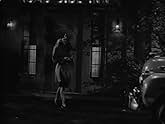

Jean Gillie
- Margot Shelby
- (as Miss Jean Gillie)


Philip Van Zandt
- Tommy
- (as Phil Van Zandt)

Walden Boyle
- Chaplain
- (uncredited)

Martin Cichy
- Policeman
- (uncredited)
Tom Coleman
- Trucker at Roadside Inn
- (uncredited)

Franco Corsaro
- Kelsey
- (uncredited)
Madge Crane
- First Visitor
- (uncredited)

Dick Elliott
- Driver
- (uncredited)

Virginia Farmer
- Georgia - Margot's Maid
- (uncredited)
- Director
- Writers
- All cast & crew
- Production, box office & more at IMDbPro
6.72.3K
1
2
3
4
5
6
7
8
9
10
Featured reviews
DECOY (Jack Bernhard, 1946) ***
Given this film’s rarity (it went unseen for 30 years), I guess even self-confessed film nuts could be excused for never having heard of it – that is, until its announcement as part of Warners’ fourth “Film Noir Collection” on DVD. While some of the pairings in that 10-Movie 5-Disc Set were done without rhyme or reason – and it had seemed to me to be so here as well! – the film actually had a connection to its companion piece, CRIME WAVE (1954; which I’ve just watched a couple of days ago), via the credit on both of blacklisted scriptwriter/actor Nedrick Young (he appeared in the latter but only wrote DECOY).
Being a Monogram production, the film wears its Poverty Row status on its sleeve – with a bizarre plot (involving the re-animation of the dead: this has to be the only vintage crime outing to take the genre into the realm of sci-fi!), gritty look and second-rate cast – but which it generally manages to turn in its favor. In my review for CRIME WAVE itself, I had written how surprised I was that the film proved to be so good – this, then, came as even more of a shock (joining the ranks of such ramshackle ‘B’ noir gems as DETOUR, DILLINGER {both 1945} and GUNMAN IN THE STREETS [1950])! The film was devised as a showcase for British actress Jean Gillie by her husband, director Bernhard – however, the couple would divorce soon after and (even more sadly) Gillie herself would be dead of pneumonia in just a couple of years’ time! Still, hers is one of the most unscrupulous femme fatales ever conceived – ensnaring practically the entire male cast in her obsessive pursuit of money – and which she plays in a slightly overstated (but, under the circumstances, entirely fitting) manner.
The rest of the cast includes Edward Norris as Gillie’ crooked associate, Robert Armstrong as her ageing gangster boyfriend currently on Death Row and the only one who knows the location of a stashed cache' containing $400,000, Herbert Rudley as the small-town doctor enticed by Gillie into her unholy revivification scheme, and Sheldon Leonard as the cagey and dogged cop on their trail. Norris is somewhat stiff, while Armstrong (the original Carl Denham of “King Kong” fame) brings his typical zest to the role of love-struck and over-the-hill duped mobster – but both Rudley (bemoaning his betrayal of the code governing his profession) and Leonard (secretly enamored of Gillie himself, he’s willing to answer her plea at the moment of death to “stoop to her level”…but she just laughs in his face!) match the lady’s display of cool elegance disguising an essentially hard-boiled nature. Incidentally, Gillie’s character anticipated such celebrated noir bad girls of the ‘deadly sweet’ variety as Jane Greer in OUT OF THE PAST (1947) and Peggy Cummins (coincidentally, another British actress) in GUN CRAZY (1950) – but also Gaby Rodgers in KISS ME DEADLY (1955) in view of her similar histrionic outburst when finally laying hands on the long sought-after object of contention.
Unfortunately, it’s been revealed that the print of DECOY utilized for the DVD is slightly censored: one of the main characters is trampled no less than three times by a car which has Gillie at the wheel – however, we only get to see this once in the current version! For the record, Bernhard (whose first directorial effort this was) had been an executive at Universal – responsible for such popular ‘B’ horror outings as HORROR ISLAND and MAN-MADE MONSTER (1941; which I still haven’t managed to check out!). Finally, I’m to follow DECOY with another noir of his – the evocatively-titled BLONDE ICE (1948), via the “Special Edition” released by VCI…
Being a Monogram production, the film wears its Poverty Row status on its sleeve – with a bizarre plot (involving the re-animation of the dead: this has to be the only vintage crime outing to take the genre into the realm of sci-fi!), gritty look and second-rate cast – but which it generally manages to turn in its favor. In my review for CRIME WAVE itself, I had written how surprised I was that the film proved to be so good – this, then, came as even more of a shock (joining the ranks of such ramshackle ‘B’ noir gems as DETOUR, DILLINGER {both 1945} and GUNMAN IN THE STREETS [1950])! The film was devised as a showcase for British actress Jean Gillie by her husband, director Bernhard – however, the couple would divorce soon after and (even more sadly) Gillie herself would be dead of pneumonia in just a couple of years’ time! Still, hers is one of the most unscrupulous femme fatales ever conceived – ensnaring practically the entire male cast in her obsessive pursuit of money – and which she plays in a slightly overstated (but, under the circumstances, entirely fitting) manner.
The rest of the cast includes Edward Norris as Gillie’ crooked associate, Robert Armstrong as her ageing gangster boyfriend currently on Death Row and the only one who knows the location of a stashed cache' containing $400,000, Herbert Rudley as the small-town doctor enticed by Gillie into her unholy revivification scheme, and Sheldon Leonard as the cagey and dogged cop on their trail. Norris is somewhat stiff, while Armstrong (the original Carl Denham of “King Kong” fame) brings his typical zest to the role of love-struck and over-the-hill duped mobster – but both Rudley (bemoaning his betrayal of the code governing his profession) and Leonard (secretly enamored of Gillie himself, he’s willing to answer her plea at the moment of death to “stoop to her level”…but she just laughs in his face!) match the lady’s display of cool elegance disguising an essentially hard-boiled nature. Incidentally, Gillie’s character anticipated such celebrated noir bad girls of the ‘deadly sweet’ variety as Jane Greer in OUT OF THE PAST (1947) and Peggy Cummins (coincidentally, another British actress) in GUN CRAZY (1950) – but also Gaby Rodgers in KISS ME DEADLY (1955) in view of her similar histrionic outburst when finally laying hands on the long sought-after object of contention.
Unfortunately, it’s been revealed that the print of DECOY utilized for the DVD is slightly censored: one of the main characters is trampled no less than three times by a car which has Gillie at the wheel – however, we only get to see this once in the current version! For the record, Bernhard (whose first directorial effort this was) had been an executive at Universal – responsible for such popular ‘B’ horror outings as HORROR ISLAND and MAN-MADE MONSTER (1941; which I still haven’t managed to check out!). Finally, I’m to follow DECOY with another noir of his – the evocatively-titled BLONDE ICE (1948), via the “Special Edition” released by VCI…
Jean Gillie is an awesome Femme Fatale in this sci-fi flavored Noir.
(April, 2000): Just saw a rare print at the American Cinematheque Noir festival and the film knocked my socks off. As evidenced by this performance, Jean Gillie would have been one of the greats of Noir had she not died in 1949. She powers through this film, getting man after man to do her bidding, never taking no for an answer. And the obstacles that would stop a lesser character don't bother her in the least. The problem confronting her: her boyfriend is on death row. Only he knows where $400,000 from a robbery is. And she uses her feminine wiles to persuade him, and two other men, to discern the location of that dough because, *she wants that money.* Even the gas chamber doesn't slow her down ... which is where the slight sci-fi element is introduced. If this turns up on late-night video, set your VCR. You will be amazed.
Nice effort
Jean Gillie (Margot) devises a plan to spring her lover Robert Armstrong (Frank) from prison. She gets help for her plan from Edward Norris (Jim) and an unwilling Herbert Rudley (Dr Craig)). The idea is to get Armstrong to locate some hidden money for them to share. However, there are ulterior motives at play......
Methylene blue is at the centre of this story. It is used in the plot to revive Robert Armstrong after he has been killed as it is an antidote to cyanide poisoning. However, be careful if you want to experiment on someone you don't like very much as it serves as an antidote to the poison while you are living and not after you have died. It takes nothing away from the good idea for the plot though. However, poor Robert Armstrong doesn't live for very long after he is revived and so we don't get to see the side-effects of this drug, which turns your urine green and makes the whites of your eyes blue - we would then have been in a completely different film genre, possibly a comedy horror.
The cast do well despite 3 of them not being very good at acting - Jean Gillies, Herbert Rudley and, in a minor part, Marjorie Woodworth. Jean Gillies, while she is the driving force behind the film is either very good as demonstrated by her ruthlessness while at the steering wheel on the way to dig up the money and her determined self-confidence as she knows what she needs to do, or dreadfully unconvincing as in her scene when she talks about coming from the dirty street to which she never wants to return (her posh Kensington accent fools nobody - she's NEVER been a girl from the streets) and her insane encouragement to Herbert Rudley to dig for the money. Her OTT hysterics are not convincing in both these examples. It is funny to watch, though. Herbert Rudley plays a broken man for most of the film and comes across as a wet fish which is frustrating, although he comes good right at the beginning when he finally becomes a man and pulls a trigger. Still, he is annoying to watch for most of the time as this story unfolds in flashback. As for Marjorie Woodworth who plays Rudley's nurse and girlfriend.....ha ha ha....she's just terrible.
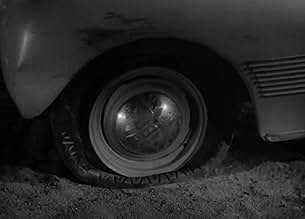
The film is well-paced and atmospheric, eg, the scene when Herbert Rudley is reviving Robert Armstrong and the scene where Jean Gillies engineers a flat tyre situation as she, Rudley and Norris make it to the location where the loot is buried. It is a shame that the film has been cut as it would have been far more powerful and disturbing to see Gillies do what she does to Norris twice as originally filmed as opposed to the one time she does it (which is shocking enough). And her laughter as she fools Sheldon Leonard who plays Sergeant Joe Portugal provides a memorable ending. She was one mean bitch.
The acting is sometimes wooden, the dialogue is sometimes woeful (a very annoying comedy duo at the morgue provide an example of this along with the claptrap speech about coming from that dirty street that Gillies delivers), a posh English accent seems a wrong choice for the lead role and the music is sometimes way too over dramatic but somehow, it doesn't seem to matter. What would normally be a recipe for disaster strangely has a very different effect and produces an entertaining film.
It is sad to discover that in real life, Jean Gillies died of pneumonia 3 years later in 1949 in London.
Methylene blue is at the centre of this story. It is used in the plot to revive Robert Armstrong after he has been killed as it is an antidote to cyanide poisoning. However, be careful if you want to experiment on someone you don't like very much as it serves as an antidote to the poison while you are living and not after you have died. It takes nothing away from the good idea for the plot though. However, poor Robert Armstrong doesn't live for very long after he is revived and so we don't get to see the side-effects of this drug, which turns your urine green and makes the whites of your eyes blue - we would then have been in a completely different film genre, possibly a comedy horror.
The cast do well despite 3 of them not being very good at acting - Jean Gillies, Herbert Rudley and, in a minor part, Marjorie Woodworth. Jean Gillies, while she is the driving force behind the film is either very good as demonstrated by her ruthlessness while at the steering wheel on the way to dig up the money and her determined self-confidence as she knows what she needs to do, or dreadfully unconvincing as in her scene when she talks about coming from the dirty street to which she never wants to return (her posh Kensington accent fools nobody - she's NEVER been a girl from the streets) and her insane encouragement to Herbert Rudley to dig for the money. Her OTT hysterics are not convincing in both these examples. It is funny to watch, though. Herbert Rudley plays a broken man for most of the film and comes across as a wet fish which is frustrating, although he comes good right at the beginning when he finally becomes a man and pulls a trigger. Still, he is annoying to watch for most of the time as this story unfolds in flashback. As for Marjorie Woodworth who plays Rudley's nurse and girlfriend.....ha ha ha....she's just terrible.
The film is well-paced and atmospheric, eg, the scene when Herbert Rudley is reviving Robert Armstrong and the scene where Jean Gillies engineers a flat tyre situation as she, Rudley and Norris make it to the location where the loot is buried. It is a shame that the film has been cut as it would have been far more powerful and disturbing to see Gillies do what she does to Norris twice as originally filmed as opposed to the one time she does it (which is shocking enough). And her laughter as she fools Sheldon Leonard who plays Sergeant Joe Portugal provides a memorable ending. She was one mean bitch.
The acting is sometimes wooden, the dialogue is sometimes woeful (a very annoying comedy duo at the morgue provide an example of this along with the claptrap speech about coming from that dirty street that Gillies delivers), a posh English accent seems a wrong choice for the lead role and the music is sometimes way too over dramatic but somehow, it doesn't seem to matter. What would normally be a recipe for disaster strangely has a very different effect and produces an entertaining film.
It is sad to discover that in real life, Jean Gillies died of pneumonia 3 years later in 1949 in London.
Jean Gillie redefines femme fatale.
And makes Barbara Stanwyck and Ann Savage look like Ned(Jane?)in the first reader in the process. And, in "Decoy", femme fatality is a more apt term as all the male characters she encounters have less chance of surviving than Elisha Cook Jr. did going against Jack Palance in "Shane"...zip,nada,none,nought,zap and gone. Sheldon Leonard survives an encounter but only because she is dying when he shows up. The surprise is that she didn't take him out on the way out. Repeated viewings still figure him for no better than even at that. The taglines and blurbs on the posters and ads paint the following picture of her Margot Shelby character: "SHE TREATS MEN THE WAY THEY'VE BEEN TREATING WOMEN FOR YEARS!" Another line defines that as; "She Two-Times, Steals, Cheats, Double-Crosses...Anything To Get What She Wants...and then KISSES THEM OFF." Actually, she runs a car over Edward Norris, which was lack of good judgement on his part for hanging around with a broad known for..."kissing quick and killing quicker." She takes doctor Herbert Rudley away from Marjorie Woodworth,as she needs him to revive her just-executed in the gas chamber boy friend---no lack of plot in this one---which accounts for the only credibility gap in the film...somebody please tell me why Marjorie Woodworth wanted Herbert Rudley in the first place. Good riddance,Marjorie, you can do better although, come to think of it, you seldom did. Gillie gives Rudley a shovel, makes him dig up the buried money and then, in payment for past favors and services, shoots him dead. She had to double check to make certain as there wasn't much difference in his performance either way. Bottom line: Jean Gillie gets a wing to herself in the Femme Fatale Hall of Fame.
'Margot' Is One Mean, Money-Hungry 'Mother'
This movie, recently made available through a set of film noirs (Volume 4) packaged with two on each disc, gets points for originality. I mean, how many movies - much less film noirs - do you see someone executed, then brought back to life, then shot in the back minutes later? Now that's what you call having a rough day!
Robert Armstrong's "Frank Olins" had to endure all that one day. He's the crook who has the money stashed away somewhere and "Margot Shelby" (Jean Gille) is the woman who is bound-and-determined to get it - all of it. "Frank" claims a few times that if he isn't going get the money when he gets out of jail, nobody will and those aren't words that "Margot" wants to hear! Frank knew this dame and other members of his gang, most notably "Jim Vincent" (Edward Norris) were not trustworthy.
Well, he certainly was right about "Margot." She's the femme fatale - one mean mother - who has only one thing on her mind: money. She never wants to return to her old, poor, dingy ways of her youth in small town England. Now, she's in America, part of gang and she knows how to manipulate men. Of course it helps to be extremely pretty and have a great body, which she does. She plays the men and, well.....like most noirs, the ending is not particularly a happy one for most of the characters in this story.
Personally, in this film I enjoyed seeing a lot of familiar faces from TV programs and such of the 1950s, beginning with a young Sheldon Leonard who plays the tough, pursing cop in this movie. I also thought Armstrong sounded a lot better than in his early '30s adventure stories. Speaking of sound, the music in here was ill-timed, dominating some scenes which took away from the dialog.
Make no mistake, though: this is Gilles' movie. For classic movie fans and particular film noir buffs, this is worth checking out. It's always fun to see a new "face," and that certainly applies to Gillis, whose character reminded me a bit of Peggy Cummins' one in "Gun Crazy."
I thought the ending of this film - the final minute - was especially good. So many times, you get the ending that doesn't stay true to the main character, but this one did.
Robert Armstrong's "Frank Olins" had to endure all that one day. He's the crook who has the money stashed away somewhere and "Margot Shelby" (Jean Gille) is the woman who is bound-and-determined to get it - all of it. "Frank" claims a few times that if he isn't going get the money when he gets out of jail, nobody will and those aren't words that "Margot" wants to hear! Frank knew this dame and other members of his gang, most notably "Jim Vincent" (Edward Norris) were not trustworthy.
Well, he certainly was right about "Margot." She's the femme fatale - one mean mother - who has only one thing on her mind: money. She never wants to return to her old, poor, dingy ways of her youth in small town England. Now, she's in America, part of gang and she knows how to manipulate men. Of course it helps to be extremely pretty and have a great body, which she does. She plays the men and, well.....like most noirs, the ending is not particularly a happy one for most of the characters in this story.
Personally, in this film I enjoyed seeing a lot of familiar faces from TV programs and such of the 1950s, beginning with a young Sheldon Leonard who plays the tough, pursing cop in this movie. I also thought Armstrong sounded a lot better than in his early '30s adventure stories. Speaking of sound, the music in here was ill-timed, dominating some scenes which took away from the dialog.
Make no mistake, though: this is Gilles' movie. For classic movie fans and particular film noir buffs, this is worth checking out. It's always fun to see a new "face," and that certainly applies to Gillis, whose character reminded me a bit of Peggy Cummins' one in "Gun Crazy."
I thought the ending of this film - the final minute - was especially good. So many times, you get the ending that doesn't stay true to the main character, but this one did.


Did you know
- TriviaMethylene blue is a real chemical compound, discovered in 1896 (by Heinrich Caro), which does indeed have the ability to counteract cyanide poisoning. This property was discovered in 1933 by Dr. Matilda Moldenhauer Brooks of San Francisco. It will not, however, restore life to those who have died from cyanide poisoning.
- GoofsWhen Joe walks into the bar, he pauses by the piano. The piano player raises his left hand off the keyboard to wave to Joe, but the piano music continues as if both his hands are still playing.
- Quotes
Sergeant Joe Portugal: Don't let that face of yours go to your head.
Margot Shelby: Or to yours?
Sergeant Joe Portugal: It wouldn't matter if did... People who use pretty faces like you use yours, don't live very long anyway.
- ConnectionsFeatured in Film Noir: Bringing Darkness to Light (2006)
- How long is Decoy?Powered by Alexa
Details
- Release date
- Country of origin
- Language
- Also known as
- Blonder Lockvogel
- Production company
- See more company credits at IMDbPro
- Runtime
- 1h 16m(76 min)
- Color
- Aspect ratio
- 1.33 : 1
Contribute to this page
Suggest an edit or add missing content