Returning to her Berlin apartment after years in a concentration camp, Susanne finds a doctor living there, traumatized by his war service. The two try to move past their experiences, as he ... Read allReturning to her Berlin apartment after years in a concentration camp, Susanne finds a doctor living there, traumatized by his war service. The two try to move past their experiences, as he learns a figure from his past is still living.Returning to her Berlin apartment after years in a concentration camp, Susanne finds a doctor living there, traumatized by his war service. The two try to move past their experiences, as he learns a figure from his past is still living.
- Awards
- 1 nomination total
- Dr. Hans Mertens
- (as W. Borchert)
- Bartolomaeus Timm
- (as A. Johannes)
- Otto
- (uncredited)
- Herbert
- (uncredited)
- Dienstmädchen
- (uncredited)
- Kundin
- (uncredited)
- Schwester
- (uncredited)
Featured reviews
Fine German Expressionist / Noir cinematography in the ruins of Berlin
Murders belongs to a genre called 'rubble films', shot in the rubble of Germany and frequently dealing with issues of German guilt after WW II. Murderers does not seek to deal overmuch with the people who gave the orders, but with the many Germans who followed them with little or no protest. Such as the wounded doctor in this film who stood by while even children were executed as reprisals against resistance fighters in occupied Poland. Plotwise the film works quite nicely, and I liked the atmosphere of renewal, and perhaps relief at the end of a nightmare, amongst all that ruin and rubble as the German people began to pick themselves up.
Oh How Bleak
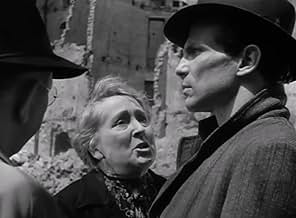
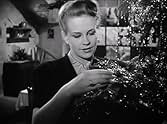
Set in Berlin in 1945, the film tells the fictional story of a former surgeon, the man in the opening scene, whose name is Dr. Mertens (Ernst Borchert). He's dispirited and cynical. He meets up with a young woman, played by Hildegard Knef. The two of them share an uninviting apartment, severely damaged in the recently ended war. Knef's character is attracted to the dejected surgeon. But he's too disheartened to care. The deaths of thousands of people in a war render a surgeon's job of saving one life rather meaningless, according to Dr. Mertens. As the plot moves along, he reunites with an older, prosperous industrialist, a man whose attitude about the war is curiously indifferent.
All of the film's photography was done in Berlin, right after the war. The destroyed buildings and brick rubble are a big part of the story, symbolic of human devastation. B&W, expressionistic cinematography is terrific, with stark shadows amid the ruins, human silhouettes against bleak, cracked walls.
Interiors remind me of those in "The Blue Angel" (1930), dilapidated, dirty, cheap, drab, and very depressing. In "The Murderers Are Among Us", background music is minimal. Most scenes lack music, and the story is more potent for it. Sound effects consist of squeaky doors, footsteps on wooden floors, and other realistic sounds. The film's casting and acting are fine.
Historically significant as the first German film made in Germany following the end of WWII, "The Murderers Are Among Us" reminds us of the horrors of war. One scene near the end is unforgettable in its severity. Outside at night, with snow gently falling, arc lights create ghostly shadows. The surgeon stands alone amid the rubble, outside a damaged church where people inside are singing "Silent Night". Faces of the people are grim. What a bleak period in human history.
Excellent piece of German history
The acting seems theatrical, at times almost political. The movie would make a great double with "The Third Man".
What struck me was the significance of this movie. That the Soviets are the ones that made it possible. That forgiveness (and legal justice) not revenge were the goals to move past the horrors of life, a message only brought about by the Soviets changing the ending. Not having known the history of this movie, I wondered about the soviet involvement, when in one street scene children were playing within a stones throw of a wrecked soviet tank. (Or was it wrecked?).
It was made in 1946. I can only imagine the hardship for everyone overrun by the wars destructive path. This movie plainly shows that life does continue.
A good film bordering on very good
Filmed in the actual ruins of Berlin in 1945/46, this film tells many stories on many levels. Excellent black & white imagery and camera work which really captures the mood and setting.
There is emotional, psychological and physical devastation here. Everything and everyone is ruined, the future wiped away replaced only by recent horrors and appalling choices. "War forces us to choose between greater or lesser evils..."
Hildegard Knef (Suzanne) is beautiful and restrained. She wants a "normal life", whatever that is, in post-apocalyptic Berlin, and will fashion it from what comes to hand. Her past, in a concentration camp, is so bad, that it is not mentioned by her or the film makers, only hinted at. Wilhelm Borchert (Dr Hans Mertens) has also returned from war. He is hopelessly damaged... No spoilers.
Although acted expertly, Knef's story doesn't quite hold up, hence the 7 and not higher. But otherwise this film is limited only by the circumstances and zero resources.
A very interesting and worthwhile film. Watch The Murderers Are Among Us and see what you think. T.
Landmark first film made in East Germany after World War II by the celebrated DEFA film studios.
Did you know
- TriviaThis was the first German movie made after World War II.
- Quotes
[English subtitled version]
Herr Mondschein: You are a poor soul, Dr. Mertens.
Dr. Hans Mertens: We all are, my friend.
- ConnectionsFeatured in Century of Cinema: Die Nacht der Regisseure (1995)
- How long is Murderers Among Us?Powered by Alexa
Details
- Runtime
- 1h 25m(85 min)
- Color
- Sound mix
- Aspect ratio
- 1.37 : 1