Returning to her Berlin apartment after years in a concentration camp, Susanne finds a doctor living there, traumatized by his war service. The two try to move past their experiences, as he ... Read allReturning to her Berlin apartment after years in a concentration camp, Susanne finds a doctor living there, traumatized by his war service. The two try to move past their experiences, as he learns a figure from his past is still living.Returning to her Berlin apartment after years in a concentration camp, Susanne finds a doctor living there, traumatized by his war service. The two try to move past their experiences, as he learns a figure from his past is still living.
- Awards
- 1 nomination total
- Dr. Hans Mertens
- (as W. Borchert)
- Bartolomaeus Timm
- (as A. Johannes)
- Otto
- (uncredited)
- Herbert
- (uncredited)
- Dienstmädchen
- (uncredited)
- Kundin
- (uncredited)
- Schwester
- (uncredited)
Featured reviews
Fine German Expressionist / Noir cinematography in the ruins of Berlin
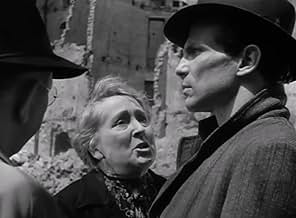
Murders belongs to a genre called 'rubble films', shot in the rubble of Germany and frequently dealing with issues of German guilt after WW II. Murderers does not seek to deal overmuch with the people who gave the orders, but with the many Germans who followed them with little or no protest. Such as the wounded doctor in this film who stood by while even children were executed as reprisals against resistance fighters in occupied Poland. Plotwise the film works quite nicely, and I liked the atmosphere of renewal, and perhaps relief at the end of a nightmare, amongst all that ruin and rubble as the German people began to pick themselves up.
Very good immediately post-WWII German film
Landmark first film made in East Germany after World War II by the celebrated DEFA film studios.
Excellent piece of German history
The acting seems theatrical, at times almost political. The movie would make a great double with "The Third Man".
What struck me was the significance of this movie. That the Soviets are the ones that made it possible. That forgiveness (and legal justice) not revenge were the goals to move past the horrors of life, a message only brought about by the Soviets changing the ending. Not having known the history of this movie, I wondered about the soviet involvement, when in one street scene children were playing within a stones throw of a wrecked soviet tank. (Or was it wrecked?).
It was made in 1946. I can only imagine the hardship for everyone overrun by the wars destructive path. This movie plainly shows that life does continue.
Excellent film for fans of mid-20th century movies
But the reason a movie lover wants to watch this film is two-fold. One, the stark B/W cinematography of this film is deeply affecting and very unique for the time period. And two, the wonderful, sublime beauty of a young Hildegard Knef. She is so fragile in this film, it's a real contrast with her later persona of the German song chantreuse of the 60s.
It's hard to find this movie on DVD, but it's out there. If you find it to buy or rent, give it a watch, well worth the time. 8/10 rating.
Did you know
- TriviaThis was the first German movie made after World War II.
- Quotes
[English subtitled version]
Herr Mondschein: You are a poor soul, Dr. Mertens.
Dr. Hans Mertens: We all are, my friend.
- ConnectionsFeatured in Century of Cinema: Die Nacht der Regisseure (1995)
- How long is Murderers Among Us?Powered by Alexa
Details
- Runtime
- 1h 25m(85 min)
- Color
- Sound mix
- Aspect ratio
- 1.37 : 1