Returning to her Berlin apartment after years in a concentration camp, Susanne finds a doctor living there, traumatized by his war service. The two try to move past their experiences, as he ... Read allReturning to her Berlin apartment after years in a concentration camp, Susanne finds a doctor living there, traumatized by his war service. The two try to move past their experiences, as he learns a figure from his past is still living.Returning to her Berlin apartment after years in a concentration camp, Susanne finds a doctor living there, traumatized by his war service. The two try to move past their experiences, as he learns a figure from his past is still living.
- Awards
- 1 nomination total
- Dr. Hans Mertens
- (as W. Borchert)
- Bartolomaeus Timm
- (as A. Johannes)
- Otto
- (uncredited)
- Herbert
- (uncredited)
- Dienstmädchen
- (uncredited)
- Kundin
- (uncredited)
- Schwester
- (uncredited)
Featured reviews
Landmark first film made in East Germany after World War II by the celebrated DEFA film studios.
Excellent film for fans of mid-20th century movies
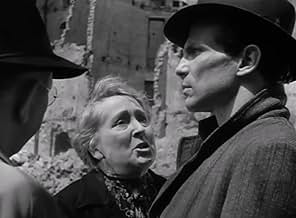
But the reason a movie lover wants to watch this film is two-fold. One, the stark B/W cinematography of this film is deeply affecting and very unique for the time period. And two, the wonderful, sublime beauty of a young Hildegard Knef. She is so fragile in this film, it's a real contrast with her later persona of the German song chantreuse of the 60s.
It's hard to find this movie on DVD, but it's out there. If you find it to buy or rent, give it a watch, well worth the time. 8/10 rating.
Not all citizens blindly bowed to Nazi Regime's Insanity
A main character was a commanding officer responsible for horrible acts against innocent civilians, while another had refused to take part in such evil. The final scenes "drive home" the message how some feel no remorse for their evil deeds, while others remain plagued with the images of those mercilessly tortured and murdered.
Seeing the young woman who had been victimized by the evil regime step in to prevent a altercation between the man she loves and the man responsible for much of the suffering shows that humans are capable of forgiving and thus surviving into a better life, free of hate and vengeance.
I highly recommend the original German version with or without the subtitles. Many of the effects require the original sound track. This would be a valuable teaching tool for an advanced German class, or a related European History lesson
Excellent piece of German history
The acting seems theatrical, at times almost political. The movie would make a great double with "The Third Man".
What struck me was the significance of this movie. That the Soviets are the ones that made it possible. That forgiveness (and legal justice) not revenge were the goals to move past the horrors of life, a message only brought about by the Soviets changing the ending. Not having known the history of this movie, I wondered about the soviet involvement, when in one street scene children were playing within a stones throw of a wrecked soviet tank. (Or was it wrecked?).
It was made in 1946. I can only imagine the hardship for everyone overrun by the wars destructive path. This movie plainly shows that life does continue.
The Melancholy of the Film
In this regard, the film acts as a conscience for the people of East Germany, slowly asking themselves about their past and how they are going to live with it. It was a tumultuous period of reconciliation that the Germans were trying to live through. This movie tries to act on those feelings.
Silberman notes that another film of this time, Rotation, "constructs a narration based on identification and emotional catharsis rather than on the cognitive terms of epic distanciation." The Murderers Are Among Us also tries to wipe the slate clean. It comes out and admits that what happened was wrong, hence the horrible feelings that the doctor is going through. They cannot completely distance themselves from these previous events, these earth-shattering events, unless they work through these feelings.
Did you know
- TriviaThis was the first German movie made after World War II.
- Quotes
[English subtitled version]
Herr Mondschein: You are a poor soul, Dr. Mertens.
Dr. Hans Mertens: We all are, my friend.
- ConnectionsFeatured in Century of Cinema: Die Nacht der Regisseure (1995)
- How long is Murderers Among Us?Powered by Alexa
Details
- Runtime
- 1h 25m(85 min)
- Color
- Sound mix
- Aspect ratio
- 1.37 : 1