IMDb RATING
6.1/10
3.4K
YOUR RATING


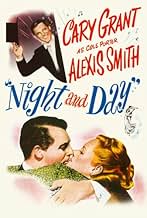
A fictionalized biopic of composer Cole Porter from his days at Yale in the 1910s through the height of his success to the 1940s.A fictionalized biopic of composer Cole Porter from his days at Yale in the 1910s through the height of his success to the 1940s.A fictionalized biopic of composer Cole Porter from his days at Yale in the 1910s through the height of his success to the 1940s.
- Nominated for 1 Oscar
- 2 nominations total


6.13.4K
1
2
3
4
5
6
7
8
9
10
Featured reviews
My Heart Belongs To Cole
Unlike film biographies of George Gershwin, Jerome Kern, and Sigmund Romberg or for that matter Rodgers&Hart, those artists were gone by the time the silver screen told their stories. But Cole Porter was very much still with us when Night and Day was released in 1946 and some of his best work was yet to come.
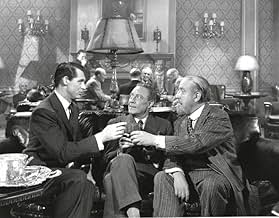
If Cole Porter had his druthers Cary Grant would never have played the part of himself. Porter fancied himself as more the Fred Astaire type. But given the nature of what happened to Porter in his life, a dancing Cole Porter was out of the question.
There's not too much that's accurate in this film. Cole Porter was born and raised in Indiana in affluent surroundings. Yes he went to Yale and his best and lifelong friend that he acquired from Yale was Monty Woolley. Yes he did marry the older and glamorous Linda Lee Thomas. And yes he composed some of the most beautiful and sophisticated songs ever done.
Of course his marriage to Linda Lee was a sham. In the vernacular of the time Linda served as his beard, his cover as it were because Cole Porter was gay. As was his lifelong friend Monty Woolley.
Were they ever involved with each other. Maybe as youths, but from what I've heard their tastes were different. Porter liked his male partners as sophisticated as he was and as beautiful as his songs were. Monty on the other hand was known for picking up street kids from Maine to California until he died.
One thing that was true although glamorized for the film, Porter did serve in the French army during World War I. No wounds however, no hearing of African rhythms from Senegalese troops were he got the idea for Night and Day.
Night and Day sure jumbles up even the order of his shows. Porter was writing songs from before Yale, but he did not score a commercial musical comedy hit until the show Paris in 1928 where the song Let's Do It was featured. I sure didn't know that In the Still of the Night was originally done as a Christmas Carol way back in his youth for instance.
In fact Where the Still of the Night, along with I've Got You Under My Skin, Rosalie, and Easy to Love were all written for MGM musicals. You can take it to the bank that Louis B. Mayer soaked Jack Warner for plenty to get those songs heard in a Warner Brothers film. Similarly the title song Night and Day, heard in The Gay Divorce on Broadway first, made its screen debut in RKO's The Gay Divorcée. Jack Warner must have paid RKO plenty for that one also.
The other true thing is the fall from a horse that Porter suffered in the late thirties, the constant pain he was in all of his life. It took 28 operations to save his legs back in the thirties. In 1958 long after the story in the film ended, Porter did eventually lose a leg and from then on lived as a recluse in his suite at the Waldorf Towers. Linda Lee Thomas Porter had passed away about a decade before.
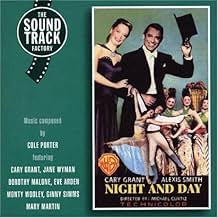
Alexis Smith plays Linda Lee here and the cast of Night and Day also includes Jane Wyman, Dorothy Malone, Selena Royle, Tom D'Andrea, Henry Stephenson, Donald Woods. Playing themselves are Mary Martin and Monty Woolley. Singer Ginny Simms of the Kay Kyser band sang many of the Porter tunes for the film.
Night and Day certainly captures Porter's sophistication. Of course the gay lifestyle and a pretty hedonistic one at that which Porter led would not be shown at all back in the days of the Code. Some might complain about that pleasure driven pursuit that Porter had his whole life. If he sought beauty and pleasure in the world, Cole Porter certainly gave enough of it back to the world to justify it.
After Night and Day, Cole Porter had still yet to write such film scores as The Pirate, High Society, and Les Girls and such Broadway shows as Kiss Me Kate, Out of this Wolrd, Can-Can, and Silk Stockings. You could score a film with just the material he had yet to write.
It's not a great biographical film, but Night and Day provides as good an excuse as any to listen and appreciate the art that was Cole Porter.
If Cole Porter had his druthers Cary Grant would never have played the part of himself. Porter fancied himself as more the Fred Astaire type. But given the nature of what happened to Porter in his life, a dancing Cole Porter was out of the question.
There's not too much that's accurate in this film. Cole Porter was born and raised in Indiana in affluent surroundings. Yes he went to Yale and his best and lifelong friend that he acquired from Yale was Monty Woolley. Yes he did marry the older and glamorous Linda Lee Thomas. And yes he composed some of the most beautiful and sophisticated songs ever done.
Of course his marriage to Linda Lee was a sham. In the vernacular of the time Linda served as his beard, his cover as it were because Cole Porter was gay. As was his lifelong friend Monty Woolley.
Were they ever involved with each other. Maybe as youths, but from what I've heard their tastes were different. Porter liked his male partners as sophisticated as he was and as beautiful as his songs were. Monty on the other hand was known for picking up street kids from Maine to California until he died.
One thing that was true although glamorized for the film, Porter did serve in the French army during World War I. No wounds however, no hearing of African rhythms from Senegalese troops were he got the idea for Night and Day.
Night and Day sure jumbles up even the order of his shows. Porter was writing songs from before Yale, but he did not score a commercial musical comedy hit until the show Paris in 1928 where the song Let's Do It was featured. I sure didn't know that In the Still of the Night was originally done as a Christmas Carol way back in his youth for instance.
In fact Where the Still of the Night, along with I've Got You Under My Skin, Rosalie, and Easy to Love were all written for MGM musicals. You can take it to the bank that Louis B. Mayer soaked Jack Warner for plenty to get those songs heard in a Warner Brothers film. Similarly the title song Night and Day, heard in The Gay Divorce on Broadway first, made its screen debut in RKO's The Gay Divorcée. Jack Warner must have paid RKO plenty for that one also.
The other true thing is the fall from a horse that Porter suffered in the late thirties, the constant pain he was in all of his life. It took 28 operations to save his legs back in the thirties. In 1958 long after the story in the film ended, Porter did eventually lose a leg and from then on lived as a recluse in his suite at the Waldorf Towers. Linda Lee Thomas Porter had passed away about a decade before.
Alexis Smith plays Linda Lee here and the cast of Night and Day also includes Jane Wyman, Dorothy Malone, Selena Royle, Tom D'Andrea, Henry Stephenson, Donald Woods. Playing themselves are Mary Martin and Monty Woolley. Singer Ginny Simms of the Kay Kyser band sang many of the Porter tunes for the film.
Night and Day certainly captures Porter's sophistication. Of course the gay lifestyle and a pretty hedonistic one at that which Porter led would not be shown at all back in the days of the Code. Some might complain about that pleasure driven pursuit that Porter had his whole life. If he sought beauty and pleasure in the world, Cole Porter certainly gave enough of it back to the world to justify it.
After Night and Day, Cole Porter had still yet to write such film scores as The Pirate, High Society, and Les Girls and such Broadway shows as Kiss Me Kate, Out of this Wolrd, Can-Can, and Silk Stockings. You could score a film with just the material he had yet to write.
It's not a great biographical film, but Night and Day provides as good an excuse as any to listen and appreciate the art that was Cole Porter.
A celebration of Porter's music.
Those looking for a biopic of Cole Porter would be better served elsewhere. This is the 1946 version of his life and it leaves out a lot of truth and stylizes the rest. The ending of the film gives those in the know a clue. When his wife (Alexis Smith) runs into his arms all excited, the camera shows that he isn't really as glad to see her as she is to see him. Maybe, that is because she left him, not for being a workaholic and ignoring her, as the movie suggests, but because his homosexuality was becoming more open in Hollywood.
But, despite the glossy image of Porter, it was still a worthwhile film and it did get an Oscar nomination for the music, which should be no surprise to anyone. Porter's music is some of the best written and performed in the country and there are almost twenty of his songs featured in the film, some sung by Jane Wyman, the only Oscar winner that was the wife of a future president.
Cary Grant is magnificent as Cole Porter. He makes the film worth viewing for his presence alone.
But, despite the glossy image of Porter, it was still a worthwhile film and it did get an Oscar nomination for the music, which should be no surprise to anyone. Porter's music is some of the best written and performed in the country and there are almost twenty of his songs featured in the film, some sung by Jane Wyman, the only Oscar winner that was the wife of a future president.
Cary Grant is magnificent as Cole Porter. He makes the film worth viewing for his presence alone.
Hollywood Loves to Fictionalize
The only reason to watch this is:
COLE PORTER'S MUSIC COLE PORTER'S MUSIC
Hey.....I am a big fan of Cary Grant, but the only reason to watch this is:
COLE PORTER'S MUSIC COLE PORTER'S MUSIC
The musical productions are pretty, the musical arrangements are enjoyable. And the only reason to watch this is:
COLE PORTER'S MUSIC COLE PORTER'S MUSIC
Most of this story was completely fabricated because Hollywood just didn't deal with gay life then. It was verbotten...everything had to be glazed over. Hollywood made such an industry of Fictionalized Biographies that I must choose my favorite of these genre: the George Gershwin "story" called RHAPSODY IN BLUE.
So, if you haven't guessed yet what the only reason to watch this movie is...it's:
COLE PORTER'S MUSIC!!!
COLE PORTER'S MUSIC COLE PORTER'S MUSIC
Hey.....I am a big fan of Cary Grant, but the only reason to watch this is:
COLE PORTER'S MUSIC COLE PORTER'S MUSIC
The musical productions are pretty, the musical arrangements are enjoyable. And the only reason to watch this is:
COLE PORTER'S MUSIC COLE PORTER'S MUSIC
Most of this story was completely fabricated because Hollywood just didn't deal with gay life then. It was verbotten...everything had to be glazed over. Hollywood made such an industry of Fictionalized Biographies that I must choose my favorite of these genre: the George Gershwin "story" called RHAPSODY IN BLUE.
So, if you haven't guessed yet what the only reason to watch this movie is...it's:
COLE PORTER'S MUSIC!!!
Cole Porter Bio
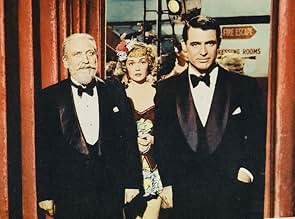
Have you ever liked a film you knew wasn't all that great, yet one you simply enjoyed watching? That's the way I feel about "Night and Day," a musical bio with a large dose of fantasy mixed in on that great American songwriter Cole Porter. Perhaps it's the pleasure of watching Cary Grant having a ball playing the composer, and even singing a few tunes to boot. Or maybe it's the youthful Alexis Smith as a perfect "Mrs. Porter," coping with challenges as a famous songwriter's spouse. Certainly Monty Woolley is amusing as himself, playing a role he reportedly lived with the real-life composer. Then there's that honey-coated contralto Ginny Simms looking gorgeous in Technicolor and beautifully singing some of Porter's most expressive music and lyrics. In the supporting cast is a sprighty Jane Wyman (before she became laden with heavy dramatic roles) doing several comic-singing turns, and even a surprise bit from Eve Arden as a French cabaret star, "Gabrielle," performing an early, lesser-known show number. The screen has only one bio of this outstanding American songwriter, one who is respected by both popular and "serious" composer-peers, as well as by the critics and general public alike. Surely the scripters "did a job" on Porter's factual life, yet at least we have this elaborate effort, with a gung-ho cast that's ready & willing to give it their all. They all look like they're having a great time, and I for one have fun with them. Until a better Porter bio comes along, this one will have to do.
Cary Grant in the life story of Cole Porter.
Thanks to the TCM channel, we can easily view old classics like this. Although nicely shot in Technicolor, the print is just a shade pastel, and looks better with the TV's color cranked up just a little bit. The movie starts in 1914, with Porter at Yale and already writing songs, even though he was a law student. However, at Christmas break, after he told his mother that he wasn't going back, he was going to focus on writing music instead, 'Oh, I could be a lawyer, but not a very good one. When I look at a lawbook I think of a song. When I read a legal case, I hear a melody.' Like almost any biographical movie, certain parts are fictionalized, and many things have to be left out. But this movie gives us the pleasure of many Cole Porter classics and a glimpse into the man behind the songs. A good movie for anyone who is a fan of Porter's, or American musical history in general.
Cary Grant was 41/42 when this was filmed, so it is a bit of a stretch imagining him, in the beginning, as a college student. This movie came out the same year (1946) as 'Notorious', and one year before one of my favorite Cary Grant movies, where he plays an angel in 'The Bishop's Wife (1947).'
Cary Grant was 41/42 when this was filmed, so it is a bit of a stretch imagining him, in the beginning, as a college student. This movie came out the same year (1946) as 'Notorious', and one year before one of my favorite Cary Grant movies, where he plays an angel in 'The Bishop's Wife (1947).'


Did you know
- TriviaAfter attending the premiere of the film, Cole Porter supposedly remarked to his wife, Linda, "if I could survive that, I can survive anything."
- GoofsWhen in England, there are street performers singing "Rosalie". The accordion player's hands never press the keys; in fact, his right hand is static throughout the whole scene.
- Quotes
Monty Woolley: Haven't you ever wanted to be alone?
Gracie Harris: Yes, but with somebody.
- ConnectionsEdited from Don't Fence Me In (1945)
- SoundtracksNight and Day
(1932) (uncredited)
Written by Cole Porter
Played during the opening credits and often in the score
Sung by Bill Days
Reprised by passengers on a train
- How long is Night and Day?Powered by Alexa
Details
Box office
- Budget
- $4,445,000 (estimated)
- Runtime
- 2h 8m(128 min)
- Aspect ratio
- 1.37 : 1
Contribute to this page
Suggest an edit or add missing content