

A man is reunited with his childhood friend and her husband who believes he knows the truth about the death of her rich aunt years earlier.A man is reunited with his childhood friend and her husband who believes he knows the truth about the death of her rich aunt years earlier.A man is reunited with his childhood friend and her husband who believes he knows the truth about the death of her rich aunt years earlier.
- Director
- Writers
- Stars
- Nominated for 1 Oscar
- 2 wins & 2 nominations total




Gene Ashley
- Man
- (uncredited)

Walter Baldwin
- Dempsey
- (uncredited)

Gino Corrado
- Nightclub Waiter
- (uncredited)

Catherine Craig
- French Maid
- (uncredited)
- Director
- Writers
- All cast & crew
- Production, box office & more at IMDbPro
7.411.9K
1
2
3
4
5
6
7
8
9
10
Featured reviews
Star Power to Spare
A powerhouse cast is assembled for "The Strange Love of Martha Ivers." It's a treat to watch this able quintet at work, making for an engrossing film experience.
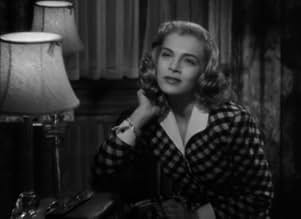
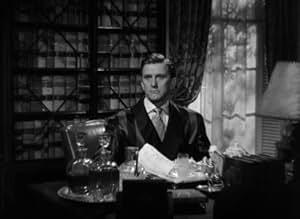
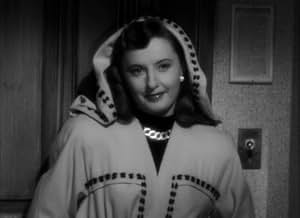
Barbara Stanwyck is at her peak--sure, confident, and unfailing. Van Heflin's natural talent makes everything he does seem effortless. Kirk Douglas offers a most impressive film debut in what, in retrospect, is an uncharacteristic role. Lizabeth Scott (who seems to me a fascinating cross between Lauren Bacall and Rosemary Clooney) is constantly engaging. Long after her part has faded, Scott's image remains indelibly fixed in the memory. And finally, the great Judith Anderson is on in a strong character role.
Miklos Rozsa's compositional style is remarkable in its adaptablity. Close one's eyes, and the film could well be set a thousand years earlier--or any point in between. Which is to say, it's general, while at the same time, specific.
The writing team headed by Robert Rossen created a slick and saucy script, which holds interest throughout, and Hal B. Wallis was sharp enough to retain this productional team formula for many years. Were the film to have been given a perhaps more poetic--less Gothic--title, it might have enjoyed even greater stature in the annals of the genre.
As it is, "Ivers" is a worthy member of the noir film family.
Barbara Stanwyck is at her peak--sure, confident, and unfailing. Van Heflin's natural talent makes everything he does seem effortless. Kirk Douglas offers a most impressive film debut in what, in retrospect, is an uncharacteristic role. Lizabeth Scott (who seems to me a fascinating cross between Lauren Bacall and Rosemary Clooney) is constantly engaging. Long after her part has faded, Scott's image remains indelibly fixed in the memory. And finally, the great Judith Anderson is on in a strong character role.
Miklos Rozsa's compositional style is remarkable in its adaptablity. Close one's eyes, and the film could well be set a thousand years earlier--or any point in between. Which is to say, it's general, while at the same time, specific.
The writing team headed by Robert Rossen created a slick and saucy script, which holds interest throughout, and Hal B. Wallis was sharp enough to retain this productional team formula for many years. Were the film to have been given a perhaps more poetic--less Gothic--title, it might have enjoyed even greater stature in the annals of the genre.
As it is, "Ivers" is a worthy member of the noir film family.
Underrated Noir with an excellent cast.
Knowing absolutely NOTHING about this movie (apart from it being the screen debut of Kirk Douglas) I thought it was going to be a potboiler, but I was pleasantly surprised at how good it was. It veers between Noir and melodrama, and I gotta say I was hooked from the get go. I'm not the biggest Barbara Stanwyck fan in the world, but she was well cast as the ruthless matriarch of a small town, and Douglas really pulled off an unusual role for him (basically a drunken wimp). Van Heflin ('Shane') plays the "hero" and holds his own against those two, and I also really liked Lizabeth Scott, an actress I'm not familiar with, who plays Heflin's love interest (sorta). 'The Strange Love Of Martha Ivers' will please fans of 1940s Noir. It deserves to be better known than it is.
Madam Strangelove
Odd title to this movie. There's never any love in the Martha Ivers' circle. She never got enough chance in early life to become acquainted with the real article. Her dye is already cast by the time the old boyhood friend shows up again. You only get to actual love with Sam and Toni, or especially Sam for Toni. He's a sensitive and caring fellow. Martha needed his influence for that reason. Maybe he could have helped her be human had he been able to stay around early on.
I had trouble focusing on the unfoldings at the beginning due to recognition of the aunt, Judith Anderson. Why, that's Mrs. Danvers from "Rebecca." Same creepy type of woman.
**Possible spoiler paragraph** It is interesting to watch this again with what you learn from the first viewing. About Sam, that is, and what he doesn't know. You watch it the first time with everyone thinking that Sam is back to cash in on what he knows about the aunt's demise. You know better than that, that the return is accidental and the revisit spontaneous. But you have no reason not to think he saw what happened on the stairs. Then, he seems pretty indifferent to the event as he reacquaints. You think, well, he doesn't care. But then we learn that he left the house before it happened. Now, watch it again with that in mind.
Everyone notices Kirk Douglas. He's so attractive you wish for him to be a more virile character. Didn't have to wait very long for that to come about. There were a couple more weak guy roles, and then he took off with mastery. And, a case could be made for it requiring ability to play a weak person as well as a stronger one.
Van Heflin - Something very attractive about him. He was almost always a guy with inner stability, aiding the balance of those around him, usually women. To me, that inner quality WAS his attractiveness. He's the one that could always walk into a mess and immediately start sorting it out.
Lizabeth Scott had a certain strong allure that seemed could have gone best with a stronger character. I don't have much patience with the pathetic drama she dishes out here. Those weepy, tragic type dames showed up a lot in the streetwise pictures of the era, and I always found them irritating. Usually, they have some guy like Heflin trying to bolster them up because some bully type is grinding them down. If you ask me, that type is asking to be ground. "Good grief; give it a rest, sister," I say to the screen. Oh well, nowadays we can fast forward.
Barbara Stanwyck is at the height of her beauty here or maybe one of her more glamorous roles. She seemed slated to be an evil woman or remembered most for those roles. In contrast, I recall her in an early picture called "The Mad Miss Manton," in which she is an airhead bounding around all over the place. That was really enjoyable, but it was a type that she would naturally move away from to go on to other things. But she was really fun to watch in that.
If you don't mind walking on the dark side a bit, this is an interesting one to watch.
I had trouble focusing on the unfoldings at the beginning due to recognition of the aunt, Judith Anderson. Why, that's Mrs. Danvers from "Rebecca." Same creepy type of woman.
**Possible spoiler paragraph** It is interesting to watch this again with what you learn from the first viewing. About Sam, that is, and what he doesn't know. You watch it the first time with everyone thinking that Sam is back to cash in on what he knows about the aunt's demise. You know better than that, that the return is accidental and the revisit spontaneous. But you have no reason not to think he saw what happened on the stairs. Then, he seems pretty indifferent to the event as he reacquaints. You think, well, he doesn't care. But then we learn that he left the house before it happened. Now, watch it again with that in mind.
Everyone notices Kirk Douglas. He's so attractive you wish for him to be a more virile character. Didn't have to wait very long for that to come about. There were a couple more weak guy roles, and then he took off with mastery. And, a case could be made for it requiring ability to play a weak person as well as a stronger one.
Van Heflin - Something very attractive about him. He was almost always a guy with inner stability, aiding the balance of those around him, usually women. To me, that inner quality WAS his attractiveness. He's the one that could always walk into a mess and immediately start sorting it out.
Lizabeth Scott had a certain strong allure that seemed could have gone best with a stronger character. I don't have much patience with the pathetic drama she dishes out here. Those weepy, tragic type dames showed up a lot in the streetwise pictures of the era, and I always found them irritating. Usually, they have some guy like Heflin trying to bolster them up because some bully type is grinding them down. If you ask me, that type is asking to be ground. "Good grief; give it a rest, sister," I say to the screen. Oh well, nowadays we can fast forward.
Barbara Stanwyck is at the height of her beauty here or maybe one of her more glamorous roles. She seemed slated to be an evil woman or remembered most for those roles. In contrast, I recall her in an early picture called "The Mad Miss Manton," in which she is an airhead bounding around all over the place. That was really enjoyable, but it was a type that she would naturally move away from to go on to other things. But she was really fun to watch in that.
If you don't mind walking on the dark side a bit, this is an interesting one to watch.
An Engrossing Film-Noir
An engrossing and creative film-noir, "The Strange Love of Martha Ivers" offers an interesting and unpredictable story with quite a bit of commentary about its characters. Van Heflin gives a particularly memorable performance, with plenty of help from Barbara Stanwyck and a very young-looking Kirk Douglas.
The story is very well-conceived, showing first a tumultuous series of events in the youth of its main characters, and then showing how their adult lives are still shaped by things that happened long ago. The three child actors are all able to make their characters ring true with the adult versions played later by the stars, and the script makes good use of the opportunities that the setup offers.
The tension is built up skillfully, and it never lets up. Although the danger and the drama involving the characters is more than enough to carry a good movie, it also brings out plenty of observations about the characters' personalities and their decisions in life, and this adds additional depth to an already very interesting story.
The story is very well-conceived, showing first a tumultuous series of events in the youth of its main characters, and then showing how their adult lives are still shaped by things that happened long ago. The three child actors are all able to make their characters ring true with the adult versions played later by the stars, and the script makes good use of the opportunities that the setup offers.
The tension is built up skillfully, and it never lets up. Although the danger and the drama involving the characters is more than enough to carry a good movie, it also brings out plenty of observations about the characters' personalities and their decisions in life, and this adds additional depth to an already very interesting story.
One of the best of the noirs!
This is a well-written, well-acted, thoroughly absorbing film noir. The always-great Barbara Stanwyck is at her sultriest as Martha, and Van Heflin is incredibly sexy and masculine as Sam. Watching this movie, you wouldn't think Kirk Douglas, who plays the weak-willed, alcoholic Walter, would soon become a bigger star than Heflin and play the tough, romantic hero parts like Sam Masterson. Douglas excelled at those parts, as he did with a very different type of part in this movie, but I can't help thinking that if Heflin had gotten more of those roles, he would have been just as big a star. Husky-voiced Lizabeth Scott rounds out the star foursome nicely as Toni, a wrong-side-of-the-tracks girl who's been burned by trusting the wrong men. This movie, more than most of its era, trades in shades of gray; the "bad" characters, Martha and Walter, have reasons for the evil they do, while the "good" characters, Sam and Toni, are no angels--he's a decorated war hero, but he makes his living by gambling and once killed a man in self-defense, while she just got out of jail. This complexity adds to the film's interest. The film also provides a believable depiction of small-town life; it's realistic, no Bedford Falls. The flashback portraying several of the characters as teenagers has the spark of reality as well. Highly recommended.


Did you know
- TriviaThe Strange Love of Martha Ivers (1946) is an American noir tragedy film directed by Lewis Milestone and starring Barbara Stanwyck, Hal B. Wallis and Lizabeth Scott. The screenplay was written by Robert Rossen (and an uncredited Robert Riskin), adapted from the short story "Love Lies Bleeding" by playwright John Patrick, the rights to which were acquired by screenwriter Rossen for a sum of $35,000.
- GoofsBefore taking the shower in the hotel, while slipping her coat off, Toni winks up in the air with her left eye and shows a little smirk apparently to someone from the film crew.
- Quotes
Sailor: [after Sam has crashed his car] What happened?
Sam Masterson: The road curved, but I didn't.
- Crazy creditsOpening credits prologue: IVERSTOWN 1928.
- ConnectionsFeatured in Paramount Presents (1974)
Details
- Release date
- Country of origin
- Official sites
- Language
- Also known as
- El extraño caso de Martha Ivers
- Filming locations
- Los Angeles, California, USA(Southern Pacific Railroad yard)
- Production company
- See more company credits at IMDbPro
- Runtime
- 1h 56m(116 min)
- Color
- Aspect ratio
- 1.37 : 1
Contribute to this page
Suggest an edit or add missing content