

An investigator from the War Crimes Commission travels to Connecticut to find an infamous Nazi.An investigator from the War Crimes Commission travels to Connecticut to find an infamous Nazi.An investigator from the War Crimes Commission travels to Connecticut to find an infamous Nazi.
- Nominated for 1 Oscar
- 2 nominations total



David Bond
- Student
- (uncredited)
John Brown
- Passport Photographer
- (uncredited)

Nancy Evans
- Undetermined Role
- (uncredited)

Adolph Faylauer
- War Crimes Commision Member
- (uncredited)
Fred Godoy
- Undetermined Role
- (uncredited)

Theodore Gottlieb
- Fairbright
- (uncredited)
Joseph Granby
- Undetermined Role
- (uncredited)

Ethan Laidlaw
- Todd
- (uncredited)
7.330.3K
1
2
3
4
5
6
7
8
9
10
Featured reviews
Welles's least favorite and least personal film is one of his most enjoyable; an exciting film noir with an excellent performance from Edward G. Robinson
The IMDb trivia page says this is Orson Welles's least favorite and least personal film. Aside from "Citizen Kane" and "The Magnificent Ambersons," I think this potent film noir is his most enjoyable—certainly more so than the ugly "Lady from Shanghai" or the overbaked and convoluted "Touch of Evil."
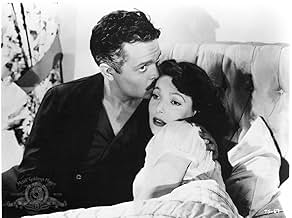
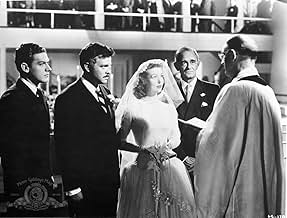
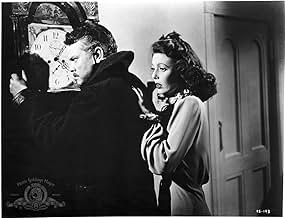
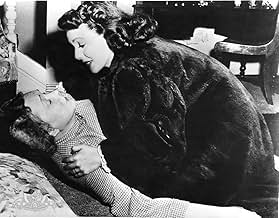
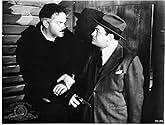
Charles Rankin (Orson Welles) is a professor in a respectable Connecticut town about to marry the daughter of a U.S. Supreme Court justice. But his name is fake and his past is filthy. An earnest convert to Christianity (Konstantin Shayne), who once ran a Nazi concentration camp, is capable of exposing him. "Rankin" kills this little old man and buries his body in the forest. But he isn't safe because an investigator (Edward G. Robinson) from the War Crimes Commission is on his tail. Rankin needs his own wife (Loretta Young) to help him elude capture. But his fascination with the local clock tower may prove his undoing.
As a director, Welles strains a bit too hard for effect in this film—and much too hard in everything but "Kane" and "Ambersons." In those two films all of his technical effects, striking as they are, seem effortless and exactly the right choices. Here, he has imperfect moments—such as the scene where his character is frantically, and inexplicably, trying to pick up pieces of paper—but everything else is splendid, especially the climax.
As an actor he's always compelling, but I think he makes one bad choice here. He's too guilty-looking in the early scenes. It makes us wonder why no one suspects him; and it robs us of a dramatic contrast when he begins to realize he's in imminent danger.
Loretta Young is generally a dull actress. She doesn't have enough skill to make an impression in the early scenes; but once the part requires histrionics she performs her duties well enough. Certainly her character is morally dubious and therefore fascinating in itself.
The best performance by far is Edward G. Robinson's. One of the great actors of his time, this ugly man has enough talent and star quality to underplay his role to great effect.
Orson Welles fans might find this exciting, well-plotted thriller too un-Wellesian to suit them. Otherwise, this is highly recommended.
Charles Rankin (Orson Welles) is a professor in a respectable Connecticut town about to marry the daughter of a U.S. Supreme Court justice. But his name is fake and his past is filthy. An earnest convert to Christianity (Konstantin Shayne), who once ran a Nazi concentration camp, is capable of exposing him. "Rankin" kills this little old man and buries his body in the forest. But he isn't safe because an investigator (Edward G. Robinson) from the War Crimes Commission is on his tail. Rankin needs his own wife (Loretta Young) to help him elude capture. But his fascination with the local clock tower may prove his undoing.
As a director, Welles strains a bit too hard for effect in this film—and much too hard in everything but "Kane" and "Ambersons." In those two films all of his technical effects, striking as they are, seem effortless and exactly the right choices. Here, he has imperfect moments—such as the scene where his character is frantically, and inexplicably, trying to pick up pieces of paper—but everything else is splendid, especially the climax.
As an actor he's always compelling, but I think he makes one bad choice here. He's too guilty-looking in the early scenes. It makes us wonder why no one suspects him; and it robs us of a dramatic contrast when he begins to realize he's in imminent danger.
Loretta Young is generally a dull actress. She doesn't have enough skill to make an impression in the early scenes; but once the part requires histrionics she performs her duties well enough. Certainly her character is morally dubious and therefore fascinating in itself.
The best performance by far is Edward G. Robinson's. One of the great actors of his time, this ugly man has enough talent and star quality to underplay his role to great effect.
Orson Welles fans might find this exciting, well-plotted thriller too un-Wellesian to suit them. Otherwise, this is highly recommended.
Orson welles directs and stars in vivid postwar Nazi hunt.
A little much in parts, particularly the use of headlight direction that Welles loves to employ, nevertheless, this is a film that rates three stars in the Wellesian collection.
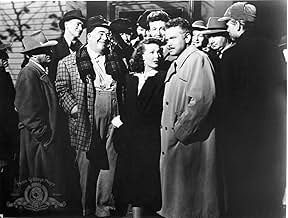
Edward G. Robinson is superb as the laid-back, all-knowing, in-your-face detective and Loretta Young scores as Orson's wife but it's big Billy House who is the real scene-stealer. House plays the man who owns the self-service store in town who likes playing checkers with his customers.
Welles, who looks a little strange--no doubt to match up with the title-provides a commanding performance throughout in a film that reflects the era's revulsion with the Nazi dream.
Edward G. Robinson is superb as the laid-back, all-knowing, in-your-face detective and Loretta Young scores as Orson's wife but it's big Billy House who is the real scene-stealer. House plays the man who owns the self-service store in town who likes playing checkers with his customers.
Welles, who looks a little strange--no doubt to match up with the title-provides a commanding performance throughout in a film that reflects the era's revulsion with the Nazi dream.
Stylish Cat and Mouse
Stylish noir trading on public's concern with escaped Nazis following WWII. First part is especially intriguing since we can't be sure what's happening or who Franz Kindler is. The atmosphere is typically Wellesian— shadows galore, imaginative camera set-ups, along with dramatic use of sound. Two features, however, standout for me.
Once the plot comes into focus, we know Kindler (Welles) must do away with Meinicke (Shayne), but how. The forest scene is inspired, more menacing I think than the finale. The two men are on bended knee, in apparent communion with the forces of good, except one of them is not.
Second is Welles' depiction of small town America through druggist Potter (House, in a splendid performance). Grossly over-weight, he sits all day in front of his checkerboard, hoping to entice some sucker into a game, so he can cheat them out of a quarter. Worse, he makes customers serve themselves, apparently so he won't have to move his bulk. Not exactly the neighborly small town of Shadow of a Doubt (1943), for example.
Given the movie's many arresting features, I'm not sure why its profile isn't higher among both noirs and the Welles canon. My best guess concerns a general absence of ambiguity among both characters and situations. Instead, the screenplay is a straight pursuit film of good vs. evil that makes good use of cat and mouse, and of atmosphere, but is unexceptional in storyline. So if you're looking for stylish suspense without tricky moral complications, this is a movie to catch.
Once the plot comes into focus, we know Kindler (Welles) must do away with Meinicke (Shayne), but how. The forest scene is inspired, more menacing I think than the finale. The two men are on bended knee, in apparent communion with the forces of good, except one of them is not.
Second is Welles' depiction of small town America through druggist Potter (House, in a splendid performance). Grossly over-weight, he sits all day in front of his checkerboard, hoping to entice some sucker into a game, so he can cheat them out of a quarter. Worse, he makes customers serve themselves, apparently so he won't have to move his bulk. Not exactly the neighborly small town of Shadow of a Doubt (1943), for example.
Given the movie's many arresting features, I'm not sure why its profile isn't higher among both noirs and the Welles canon. My best guess concerns a general absence of ambiguity among both characters and situations. Instead, the screenplay is a straight pursuit film of good vs. evil that makes good use of cat and mouse, and of atmosphere, but is unexceptional in storyline. So if you're looking for stylish suspense without tricky moral complications, this is a movie to catch.
Good Thriller With Welles, Robinson, & More
It's quite interesting to see two acting legends like Orson Welles and Edward G. Robinson working together, and with a cast that includes those two plus Loretta Young, along with an interesting story, "The Stranger" is a pretty good thriller.
Welles and Robinson play an interesting cat-and-mouse game in the search for a former Nazi who is hiding out in a peaceful Connecticut town. It's fair to point out, as others have done, that the dialogue at times leaves a little to be desired, but Welles and Robinson have more than enough ability to carry it off anyway.
Loretta Young has a difficult role as the wife of Welles's character. The script does her no favors, either, but she gives a creditable performance as a character who is important to the story. Among the supporting cast, Billy House particularly stands out, getting surprisingly good mileage out of his role as the store-keeper.
Perhaps the most creative aspect of the movie is the effective use of the clock tower, both as a plot device and as an idea, along with the related themes of clocks and time. The tense climax makes good use of all of these elements.
Welles and Robinson were both parts of so many outstanding movies that sometimes their merely good movies can seem to suffer by comparison. As long as you don't try to compare "The Stranger" with some other film, but just watch it for itself, it's a good thriller and an entertaining movie.
Welles and Robinson play an interesting cat-and-mouse game in the search for a former Nazi who is hiding out in a peaceful Connecticut town. It's fair to point out, as others have done, that the dialogue at times leaves a little to be desired, but Welles and Robinson have more than enough ability to carry it off anyway.
Loretta Young has a difficult role as the wife of Welles's character. The script does her no favors, either, but she gives a creditable performance as a character who is important to the story. Among the supporting cast, Billy House particularly stands out, getting surprisingly good mileage out of his role as the store-keeper.
Perhaps the most creative aspect of the movie is the effective use of the clock tower, both as a plot device and as an idea, along with the related themes of clocks and time. The tense climax makes good use of all of these elements.
Welles and Robinson were both parts of so many outstanding movies that sometimes their merely good movies can seem to suffer by comparison. As long as you don't try to compare "The Stranger" with some other film, but just watch it for itself, it's a good thriller and an entertaining movie.
I'm traveling for my health
I picked up this movie, mostly because of the cover and the price ($4). I was happily surprised as to the quality of the movie.
The story takes place after the end of World War II. Edward G. Robinson plays a government official named Mr. Wilson. He is in charge of the Allied War Crime commission. He is looking for an elusive war criminal. His name is Franz Kindler (Orson Welles). He is suppose to be the one who came up with the Nazi plan of mass annihilation. There is no evidence, nor any photographs of Kindler. To find Franz, Wilson releases Kindler's assistant (Konrad). Konrad inadvertently leads Wilson to Harper, Connecticut. Kindler is hiding out at an all boys school as a professor named Charles Rankin. Konrad arrives on Charles' wedding day. He is getting married to the daughter of a liberal Supreme Court justice.
This movie is definitely film noir, in the lighting and the grittiness of the events. It is also quite evident that this movie was directed by Welles himself. If you have seen any one of his movies, you can see how he functions. The story is enjoyable, if not slightly predictable (especially if you have seen other film noir films or have listened to any golden age radio programs). Overall, it is nice to see Edward G. Robinson playing the good guy for a change. I also thought Billy House had a standout performance as Mr. Potter (the owner of the local general store). He provides most of the comedy relief. I highly recommend this movie for fans of Edward G. Robinson, Welles or the film noir genre.
-Celluloid Rehab
The story takes place after the end of World War II. Edward G. Robinson plays a government official named Mr. Wilson. He is in charge of the Allied War Crime commission. He is looking for an elusive war criminal. His name is Franz Kindler (Orson Welles). He is suppose to be the one who came up with the Nazi plan of mass annihilation. There is no evidence, nor any photographs of Kindler. To find Franz, Wilson releases Kindler's assistant (Konrad). Konrad inadvertently leads Wilson to Harper, Connecticut. Kindler is hiding out at an all boys school as a professor named Charles Rankin. Konrad arrives on Charles' wedding day. He is getting married to the daughter of a liberal Supreme Court justice.
This movie is definitely film noir, in the lighting and the grittiness of the events. It is also quite evident that this movie was directed by Welles himself. If you have seen any one of his movies, you can see how he functions. The story is enjoyable, if not slightly predictable (especially if you have seen other film noir films or have listened to any golden age radio programs). Overall, it is nice to see Edward G. Robinson playing the good guy for a change. I also thought Billy House had a standout performance as Mr. Potter (the owner of the local general store). He provides most of the comedy relief. I highly recommend this movie for fans of Edward G. Robinson, Welles or the film noir genre.
-Celluloid Rehab


Did you know
- TriviaKnowing Orson Welles' reputation for long exposition scenes, International Pictures gave editor Ernest J. Nims the freedom to cut any sequences from the film he felt were unnecessary. To Welles' disgust, Nims ended up cutting almost 30 minutes of Welles' final version, including 19 minutes from the film's opening. The footage is believed lost, as even the original negatives have gone missing.
- GoofsTwo palm trees are visible in the first scene depicting the fictional Connecticut town.
- Quotes
Mr. Wilson: Well, who but a Nazi would deny that Karl Marx was a German because he was a Jew?
- Alternate versionsAlso available in a computer-colorized version.
- ConnectionsEdited into Ninja the Mission Force: Citizen Ninja (2012)
Details
Box office
- Budget
- $1,034,000 (estimated)
- Runtime
- 1h 35m(95 min)
- Color
- Aspect ratio
- 1.37 : 1
Contribute to this page
Suggest an edit or add missing content