

An investigator from the War Crimes Commission travels to Connecticut to find an infamous Nazi.An investigator from the War Crimes Commission travels to Connecticut to find an infamous Nazi.An investigator from the War Crimes Commission travels to Connecticut to find an infamous Nazi.
- Nominated for 1 Oscar
- 2 nominations total



David Bond
- Student
- (uncredited)
John Brown
- Passport Photographer
- (uncredited)

Nancy Evans
- Undetermined Role
- (uncredited)

Adolph Faylauer
- War Crimes Commision Member
- (uncredited)
Fred Godoy
- Undetermined Role
- (uncredited)

Theodore Gottlieb
- Fairbright
- (uncredited)
Joseph Granby
- Undetermined Role
- (uncredited)

Ethan Laidlaw
- Todd
- (uncredited)
7.330.3K
1
2
3
4
5
6
7
8
9
10
Featured reviews
I'm traveling for my health
I picked up this movie, mostly because of the cover and the price ($4). I was happily surprised as to the quality of the movie.
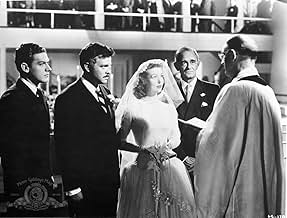
The story takes place after the end of World War II. Edward G. Robinson plays a government official named Mr. Wilson. He is in charge of the Allied War Crime commission. He is looking for an elusive war criminal. His name is Franz Kindler (Orson Welles). He is suppose to be the one who came up with the Nazi plan of mass annihilation. There is no evidence, nor any photographs of Kindler. To find Franz, Wilson releases Kindler's assistant (Konrad). Konrad inadvertently leads Wilson to Harper, Connecticut. Kindler is hiding out at an all boys school as a professor named Charles Rankin. Konrad arrives on Charles' wedding day. He is getting married to the daughter of a liberal Supreme Court justice.
This movie is definitely film noir, in the lighting and the grittiness of the events. It is also quite evident that this movie was directed by Welles himself. If you have seen any one of his movies, you can see how he functions. The story is enjoyable, if not slightly predictable (especially if you have seen other film noir films or have listened to any golden age radio programs). Overall, it is nice to see Edward G. Robinson playing the good guy for a change. I also thought Billy House had a standout performance as Mr. Potter (the owner of the local general store). He provides most of the comedy relief. I highly recommend this movie for fans of Edward G. Robinson, Welles or the film noir genre.
-Celluloid Rehab
The story takes place after the end of World War II. Edward G. Robinson plays a government official named Mr. Wilson. He is in charge of the Allied War Crime commission. He is looking for an elusive war criminal. His name is Franz Kindler (Orson Welles). He is suppose to be the one who came up with the Nazi plan of mass annihilation. There is no evidence, nor any photographs of Kindler. To find Franz, Wilson releases Kindler's assistant (Konrad). Konrad inadvertently leads Wilson to Harper, Connecticut. Kindler is hiding out at an all boys school as a professor named Charles Rankin. Konrad arrives on Charles' wedding day. He is getting married to the daughter of a liberal Supreme Court justice.
This movie is definitely film noir, in the lighting and the grittiness of the events. It is also quite evident that this movie was directed by Welles himself. If you have seen any one of his movies, you can see how he functions. The story is enjoyable, if not slightly predictable (especially if you have seen other film noir films or have listened to any golden age radio programs). Overall, it is nice to see Edward G. Robinson playing the good guy for a change. I also thought Billy House had a standout performance as Mr. Potter (the owner of the local general store). He provides most of the comedy relief. I highly recommend this movie for fans of Edward G. Robinson, Welles or the film noir genre.
-Celluloid Rehab
Welles's least favorite and least personal film is one of his most enjoyable; an exciting film noir with an excellent performance from Edward G. Robinson
The IMDb trivia page says this is Orson Welles's least favorite and least personal film. Aside from "Citizen Kane" and "The Magnificent Ambersons," I think this potent film noir is his most enjoyable—certainly more so than the ugly "Lady from Shanghai" or the overbaked and convoluted "Touch of Evil."
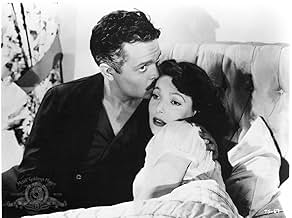
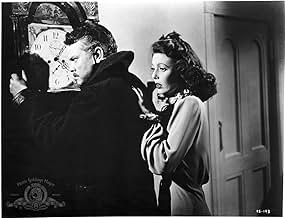
Charles Rankin (Orson Welles) is a professor in a respectable Connecticut town about to marry the daughter of a U.S. Supreme Court justice. But his name is fake and his past is filthy. An earnest convert to Christianity (Konstantin Shayne), who once ran a Nazi concentration camp, is capable of exposing him. "Rankin" kills this little old man and buries his body in the forest. But he isn't safe because an investigator (Edward G. Robinson) from the War Crimes Commission is on his tail. Rankin needs his own wife (Loretta Young) to help him elude capture. But his fascination with the local clock tower may prove his undoing.
As a director, Welles strains a bit too hard for effect in this film—and much too hard in everything but "Kane" and "Ambersons." In those two films all of his technical effects, striking as they are, seem effortless and exactly the right choices. Here, he has imperfect moments—such as the scene where his character is frantically, and inexplicably, trying to pick up pieces of paper—but everything else is splendid, especially the climax.
As an actor he's always compelling, but I think he makes one bad choice here. He's too guilty-looking in the early scenes. It makes us wonder why no one suspects him; and it robs us of a dramatic contrast when he begins to realize he's in imminent danger.
Loretta Young is generally a dull actress. She doesn't have enough skill to make an impression in the early scenes; but once the part requires histrionics she performs her duties well enough. Certainly her character is morally dubious and therefore fascinating in itself.
The best performance by far is Edward G. Robinson's. One of the great actors of his time, this ugly man has enough talent and star quality to underplay his role to great effect.
Orson Welles fans might find this exciting, well-plotted thriller too un-Wellesian to suit them. Otherwise, this is highly recommended.
Charles Rankin (Orson Welles) is a professor in a respectable Connecticut town about to marry the daughter of a U.S. Supreme Court justice. But his name is fake and his past is filthy. An earnest convert to Christianity (Konstantin Shayne), who once ran a Nazi concentration camp, is capable of exposing him. "Rankin" kills this little old man and buries his body in the forest. But he isn't safe because an investigator (Edward G. Robinson) from the War Crimes Commission is on his tail. Rankin needs his own wife (Loretta Young) to help him elude capture. But his fascination with the local clock tower may prove his undoing.
As a director, Welles strains a bit too hard for effect in this film—and much too hard in everything but "Kane" and "Ambersons." In those two films all of his technical effects, striking as they are, seem effortless and exactly the right choices. Here, he has imperfect moments—such as the scene where his character is frantically, and inexplicably, trying to pick up pieces of paper—but everything else is splendid, especially the climax.
As an actor he's always compelling, but I think he makes one bad choice here. He's too guilty-looking in the early scenes. It makes us wonder why no one suspects him; and it robs us of a dramatic contrast when he begins to realize he's in imminent danger.
Loretta Young is generally a dull actress. She doesn't have enough skill to make an impression in the early scenes; but once the part requires histrionics she performs her duties well enough. Certainly her character is morally dubious and therefore fascinating in itself.
The best performance by far is Edward G. Robinson's. One of the great actors of his time, this ugly man has enough talent and star quality to underplay his role to great effect.
Orson Welles fans might find this exciting, well-plotted thriller too un-Wellesian to suit them. Otherwise, this is highly recommended.
Taught, suspenseful thriller
This film has been knocked by many people saying that Orson Welles was forced to work within the strict confines of the Hollywood system. I have absolutely no problem with this. Welles is a master craftsman. He made great films, period. In an interview he said that the studio cut out " a couple of reels" that take place in South America at the beginning of the story that he felt was the best part of the movie. As a viewer I feel that the film is compact and taut. Adding more to it would not help(in my opinion). On the contrary, I think adding more might make the film sluggish. As it stands the film remains dark. You feel that evil is present. You are just not sure what is going to happen next.
The performances in this film are for the most part excellent. Edward G. Robinson is amazing. This could have been a cardboard thin good-guy part. Instead he turns the character of Wilson into a smart, cunning hero. He is self-assured not obsessed. He understands what most people in the town don't: Kindler is a monster who is capable of anything. To catch such a man you have to be several steps ahead of him. Also excellent is Konstantin Shayne as Meinike. You can see the fear and madness in his eyes as he repeats "I am travelling for my health, I am travelling for my health..." before going through customs. Make no mistake, this man is "an obscenity that must be destroyed" to quote Wilson. Just look at his scene with the photographer in South America. He is used to people following his orders. Welles is also very good as Kindler/Rankin. There are moments that you actually feel sympathy for him. His obsession with fixing the town clock is very significant. Here is a man who needs things to be precise and structured. He wants total control of his environment(a good example is how he treats his wife). Welles hints at this man's mania but keeps him human. Even though you want him to be caught, you can't help wondering if he'll get away. Loretta Young is unfortunately just average in this film. She has some good moments (especially in the final scene when she confronts Rankin/Kindler)but her hysterics are just too much. The scene where Wilson is showing her the Nazi atrocities is well played. She keeps a certain composure that works well.
Overall, a very well made thriller with top notch performances and solid direction by one of cinema's masters. I give it 8 clock towers out of 10.
The performances in this film are for the most part excellent. Edward G. Robinson is amazing. This could have been a cardboard thin good-guy part. Instead he turns the character of Wilson into a smart, cunning hero. He is self-assured not obsessed. He understands what most people in the town don't: Kindler is a monster who is capable of anything. To catch such a man you have to be several steps ahead of him. Also excellent is Konstantin Shayne as Meinike. You can see the fear and madness in his eyes as he repeats "I am travelling for my health, I am travelling for my health..." before going through customs. Make no mistake, this man is "an obscenity that must be destroyed" to quote Wilson. Just look at his scene with the photographer in South America. He is used to people following his orders. Welles is also very good as Kindler/Rankin. There are moments that you actually feel sympathy for him. His obsession with fixing the town clock is very significant. Here is a man who needs things to be precise and structured. He wants total control of his environment(a good example is how he treats his wife). Welles hints at this man's mania but keeps him human. Even though you want him to be caught, you can't help wondering if he'll get away. Loretta Young is unfortunately just average in this film. She has some good moments (especially in the final scene when she confronts Rankin/Kindler)but her hysterics are just too much. The scene where Wilson is showing her the Nazi atrocities is well played. She keeps a certain composure that works well.
Overall, a very well made thriller with top notch performances and solid direction by one of cinema's masters. I give it 8 clock towers out of 10.
Nazis In The Belfry
The reason people talk about "The Stranger" 60 years later is because it was Orson Welles' first directorial effort after he was evicted from the Mercury Theater cocoon which gave us "Citizen Kane" as well as its worthy follow-ups "The Magnificent Ambersons" and "It's All True." The reason "The Stranger" is worth talking about is because it features one of the greatest performances by that criminally-ignored actor, Edward G. Robinson.
Robinson plays Mr. Wilson, an anti-Nazi hot on the trail of a war-crimes-tribunal escapee Wilson hopes will lead him to Franz Kindler, architect of the Final Solution. Kindler, we quickly discover, has set himself up as a history teacher, Mr. Rankin, at a Connecticut prep school. There he is about to marry Mary Longstreet, the daughter of a U.S. Supreme Court justice, "a liberal," Kindler relates with chilling amusement.
As Kindler, Welles gives a weak performance. There's a scene where he chews on more than his dinner as he gives himself away, by saying Marx was not a German because he was a Jew. Actually, I'd say the jig was up when he revealed his novel notions of reconstruction. The scenes between him and Loretta Young, who plays his too-trusting bride, are uncomfortably clichéd.
But Robinson is a marvel throughout the film. Of course, he is best remembered for playing a gangster, but he shone playing good guys, too. "Double Indemnity" is the best of them, though "Confessions Of A Nazi Spy" is good, too, and somewhat to the point here as it features Robinson playing a role similar to "The Stranger," though at the beginning of World War II rather than the end.
Robinson's character here, Mr. Wilson, might in fact be "the stranger" of the title, though it seems to refer to Kindler. Frankly, Kindler may be a Nazi bent on killing innocents, but Wilson is about as coldblooded a character. From the beginning, he seems to be half-playing a game with the Nazi he is chasing, smoking his pipe and staring directly into the eyes of his fearful prey. Perhaps the war crimes he has immersed himself in investigating have stripped him of any human kindness. The way he works on Mary's brother Noah and his father the judge is remarkable for Wilson's lack of humane concern, perhaps necessary, but still bone-chilling. He's like that all the way to the end. Just think for a moment about that final line he says to Mary, after all she's just been through. He's on the side of the angels, but Robinson turns in one of his most devilish performances.
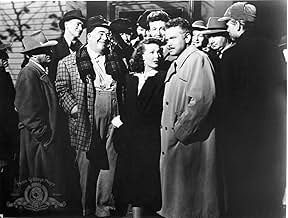
There are nice scenes in and around the town of Harper, and I agree with those viewers who see shades of "Shadow Of A Doubt" in its depiction of small-town life, even though that took place in California and this is happening in Connecticut. Billy House as Mr. Potter dominates the scenes he is in with his amiable whimsy and the eyeshade he dons when he's in the middle of a serious checkers game (quarter stakes).
But "The Stranger" never really gels as a movie. Welles as director is strangely ill at ease with Wells as star. Too many cow-eyed portentous stares, not enough subtle moments like that low-key moment with Mr. Potter when he pays for a soda after finding out Mr. Wilson's hot on his trail. Young may have been a fine actress, but she doesn't get much help from a script that serves up every frail female stereotype in the book. Her every reaction seems more suited to soap opera.
Yet there's more to like here than dislike. Take the satisfying conclusion, where Kindler/Rankin has his moment of truth in the church tower where he has been working on the clock. It's the one effective scene between him and Mary, and very gripping. Welles was a gifted artist, but a superb craftsman, too, and if "The Stranger" offers more evidence of the latter, who are we to quibble? Pleasant dreams
Robinson plays Mr. Wilson, an anti-Nazi hot on the trail of a war-crimes-tribunal escapee Wilson hopes will lead him to Franz Kindler, architect of the Final Solution. Kindler, we quickly discover, has set himself up as a history teacher, Mr. Rankin, at a Connecticut prep school. There he is about to marry Mary Longstreet, the daughter of a U.S. Supreme Court justice, "a liberal," Kindler relates with chilling amusement.
As Kindler, Welles gives a weak performance. There's a scene where he chews on more than his dinner as he gives himself away, by saying Marx was not a German because he was a Jew. Actually, I'd say the jig was up when he revealed his novel notions of reconstruction. The scenes between him and Loretta Young, who plays his too-trusting bride, are uncomfortably clichéd.
But Robinson is a marvel throughout the film. Of course, he is best remembered for playing a gangster, but he shone playing good guys, too. "Double Indemnity" is the best of them, though "Confessions Of A Nazi Spy" is good, too, and somewhat to the point here as it features Robinson playing a role similar to "The Stranger," though at the beginning of World War II rather than the end.
Robinson's character here, Mr. Wilson, might in fact be "the stranger" of the title, though it seems to refer to Kindler. Frankly, Kindler may be a Nazi bent on killing innocents, but Wilson is about as coldblooded a character. From the beginning, he seems to be half-playing a game with the Nazi he is chasing, smoking his pipe and staring directly into the eyes of his fearful prey. Perhaps the war crimes he has immersed himself in investigating have stripped him of any human kindness. The way he works on Mary's brother Noah and his father the judge is remarkable for Wilson's lack of humane concern, perhaps necessary, but still bone-chilling. He's like that all the way to the end. Just think for a moment about that final line he says to Mary, after all she's just been through. He's on the side of the angels, but Robinson turns in one of his most devilish performances.
There are nice scenes in and around the town of Harper, and I agree with those viewers who see shades of "Shadow Of A Doubt" in its depiction of small-town life, even though that took place in California and this is happening in Connecticut. Billy House as Mr. Potter dominates the scenes he is in with his amiable whimsy and the eyeshade he dons when he's in the middle of a serious checkers game (quarter stakes).
But "The Stranger" never really gels as a movie. Welles as director is strangely ill at ease with Wells as star. Too many cow-eyed portentous stares, not enough subtle moments like that low-key moment with Mr. Potter when he pays for a soda after finding out Mr. Wilson's hot on his trail. Young may have been a fine actress, but she doesn't get much help from a script that serves up every frail female stereotype in the book. Her every reaction seems more suited to soap opera.
Yet there's more to like here than dislike. Take the satisfying conclusion, where Kindler/Rankin has his moment of truth in the church tower where he has been working on the clock. It's the one effective scene between him and Mary, and very gripping. Welles was a gifted artist, but a superb craftsman, too, and if "The Stranger" offers more evidence of the latter, who are we to quibble? Pleasant dreams
Who Says Fear of Terrorism Is a Contemporary Problem
Who says that fear of terrorism is a new development, post 9/11. Imagine the fears and exposed nerve endings of the average towns person living in the shadow of World War II. There was the fear of infiltration by the Nazis with their secret agents, blending in with our everyday citizens. Orson Welles plays just such a guy. He is kind, pleasant, quiet, and very dangerous. He even sets about marrying a woman as part of his secret plot. Edward G. Robinson, who normally would have been the heavy, plays a tired, hard working investigator who is leaving no stone unturned. The plot is intricate, though predictable, and the whole thing is hard to take your eyes off. Welles was a great director, but perhaps an even better actor. He keeps this thing going, raising it above the common fair of the time. The writing keeps the good guys at bay, but the clues continue to sit there, ripe for discovery. The clock tower is a great symbol, continuing to remind us of the urgency of everything. The dramatic irony presented makes us continually uncomfortable. We are treated to the movements and activities of the villain, and being let in, it makes everything more enjoyable. See this if you can.


Did you know
- TriviaKnowing Orson Welles' reputation for long exposition scenes, International Pictures gave editor Ernest J. Nims the freedom to cut any sequences from the film he felt were unnecessary. To Welles' disgust, Nims ended up cutting almost 30 minutes of Welles' final version, including 19 minutes from the film's opening. The footage is believed lost, as even the original negatives have gone missing.
- GoofsTwo palm trees are visible in the first scene depicting the fictional Connecticut town.
- Quotes
Mr. Wilson: Well, who but a Nazi would deny that Karl Marx was a German because he was a Jew?
- Alternate versionsAlso available in a computer-colorized version.
- ConnectionsEdited into Ninja the Mission Force: Citizen Ninja (2012)
Details
Box office
- Budget
- $1,034,000 (estimated)
- Runtime
- 1h 35m(95 min)
- Color
- Aspect ratio
- 1.37 : 1
Contribute to this page
Suggest an edit or add missing content