Release calendarTop 250 moviesMost popular moviesBrowse movies by genreTop box officeShowtimes & ticketsMovie newsIndia movie spotlight
    What's on TV & streamingTop 250 TV showsMost popular TV showsBrowse TV shows by genreTV news
    What to watchLatest trailersIMDb OriginalsIMDb PicksIMDb SpotlightFamily entertainment guideIMDb Podcasts
    OscarsBest Of 2025Holiday Watch GuideGotham AwardsCelebrity PhotosSTARmeter AwardsAwards CentralFestival CentralAll events
    Born todayMost popular celebsCelebrity news
    Help centerContributor zonePolls
For industry professionals
  • Language
  • Fully supported
  • English (United States)
    Partially supported
  • Français (Canada)
  • Français (France)
  • Deutsch (Deutschland)
  • हिंदी (भारत)
  • Italiano (Italia)
  • Português (Brasil)
  • Español (España)
  • Español (México)
Watchlist
Sign in
  • Fully supported
  • English (United States)
    Partially supported
  • Français (Canada)
  • Français (France)
  • Deutsch (Deutschland)
  • हिंदी (भारत)
  • Italiano (Italia)
  • Português (Brasil)
  • Español (España)
  • Español (México)
Use app
  • Cast & crew
  • User reviews
  • Trivia
  • FAQ
IMDbPro

No Regrets for Our Youth

Original title: Waga seishun ni kuinashi
  • 1946
  • PG
  • 1h 50m
IMDb RATING
7.1/10
4.4K
YOUR RATING
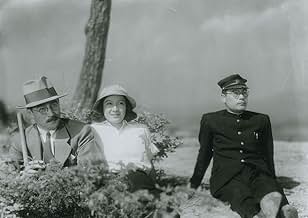
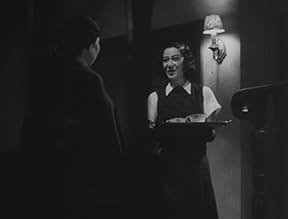
Susumu Fujita and Setsuko Hara in No Regrets for Our Youth (1946)
JapaneseDrama

The daughter of a politically disgraced university professor struggles to find a place for herself in love and life, in the uncertain world of Japan leading into WWII.The daughter of a politically disgraced university professor struggles to find a place for herself in love and life, in the uncertain world of Japan leading into WWII.The daughter of a politically disgraced university professor struggles to find a place for herself in love and life, in the uncertain world of Japan leading into WWII.

  • Director
    • Akira Kurosawa
  • Writers
    • Eijirô Hisaita
    • Akira Kurosawa
    • Keiji Matsuzaki
  • Stars
    • Setsuko Hara
    • Susumu Fujita
    • Denjirô Ôkôchi
  • See production info at IMDbPro
  • IMDb RATING
    7.1/10
    4.4K
    YOUR RATING
    • Director
      • Akira Kurosawa
    • Writers
      • Eijirô Hisaita
      • Akira Kurosawa
      • Keiji Matsuzaki
    • Stars
      • Setsuko Hara
      • Susumu Fujita
      • Denjirô Ôkôchi
    • 41User reviews
    • 40Critic reviews
  • See production info at IMDbPro
  • See production info at IMDbPro
  • Photos81

    View Poster
    View Poster
    View Poster
    View Poster
    View Poster
    View Poster
    View Poster
    + 74
    View Poster

    Top Cast23

    Edit
    Setsuko Hara
    Setsuko Hara
    • Yukie Yagihara
    Susumu Fujita
    Susumu Fujita
    • Ryukichi Noge
    Denjirô Ôkôchi
    Denjirô Ôkôchi
    • Professor Yagihara
    Haruko Sugimura
    Haruko Sugimura
    • Madame Noge
    Eiko Miyoshi
    Eiko Miyoshi
    • Madame Yagihara
    Kokuten Kôdô
    Kokuten Kôdô
    • Mr. Noge
    Akitake Kôno
    Akitake Kôno
    • Itokawa
    Takashi Shimura
    Takashi Shimura
    • Police Commissioner Dokuichigo
    Taizô Fukami
    • Minister of Education
    Masao Shimizu
    Masao Shimizu
    • Professor Hakozaki
    Haruo Tanaka
    Haruo Tanaka
    • Student
    Kazu Hikari
    • Detective
    Hisako Hara
    • Itokawa's Mother
    Shin Takemura
    • Prosecutor
    Tateo Kawasaki
    • Servant
    Fusako Fujima
    • Old Woman
    Sayuri Tanima
    • Lady
    Itoko Kôno
    Itoko Kôno
    • Lady
    • Director
      • Akira Kurosawa
    • Writers
      • Eijirô Hisaita
      • Akira Kurosawa
      • Keiji Matsuzaki
    • All cast & crew
    • Production, box office & more at IMDbPro

    User reviews41

    7.14.3K
    1
    2
    3
    4
    5
    6
    7
    8
    9
    10

    Featured reviews

    7gavin6942

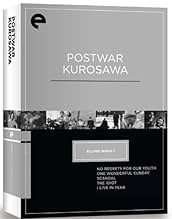
    PostwarKurosawa

    The daughter (Setsuko Hara) of a politically disgraced university professor (Denjiro Okochi) struggles to find a place for herself in love and life, in the uncertain world of Japan leading into WWII.

    One character was inspired by the real-life Hotsumi Ozaki, who assisted the famous Soviet spy Richard Sorge and so became the only Japanese citizen to suffer the death penalty for treason during World War II. It is this aspect that makes the film particularly interesting, as it reflects on the role Japan played in the world from 1933-1945.

    The film as a whole is interesting for being made so soon after World War II. Clearly the budget and production value is limited, but you might expect a country ravaged by war would be too busy with other things to make movies. Not so when you have a man named Kurosawa.
    8EUyeshima

    Political Passions Flared by Kurosawa and Hara in Post-WWII Japan

    I could hardly believe the actress playing the mercurial Yukie would soon be playing the serene and self-effacing Noriko in Yasujiro Ozu's home drama classics such as "Early Summer" and "Tokyo Story". Such was Setsuko Hara's versatility and malleability that she could move easily between Ozu's saintly goddess and Akira Kurosawa's passionate, reluctant heroine in this 1946 anti-war melodrama. In his first post-WWII film and the only one he ever made focused on a female protagonist, Kurosawa (with co-writer Eijirô Hisaita) has fashioned an emotionally ripe, politically charged and time-spanning story around Yukie, the daughter of a college professor, a one-time idealist who loses his job in face of the growing fascism engulfing Japan in 1933. Beautiful and skating precariously on the surface of her life, she finds herself caught between two men, both former students of her father - Noge, the son of peasant rice farmers, who becomes a secretive anti-war activist, and Itokawa, the conservative prosecutor and a symbol of the passive conformity that allowed Japan to enter a no-win war.

    Yukie is excited by Noge's political passion, and they begin an intense, inevitably short-lived affair. When Noge goes to prison, she becomes politically enlightened to Japan's oppressive state, and after he dies, she decides to take his ashes to his parents and stay with them to work the fields. She endures a great deal of hardship, both from his uncaring parents and neighbors, who harass the family of a "traitor". Against the odds, Yukie endures and triumphs and despite a brief sojourn back to Kyoto, realizes her life is far more fulfilling with the peasants. Much of the plot is rather convoluted and the storyline jumpy, as the politically motivated Kurosawa seems more interested in drawing certain emotional responses from the viewer. Clarity is only a secondary consideration here, as he busily applies much of the visual flair that he would exhibit with greater impact in his later masterworks like "Rashomon" and "Seven Samurai".

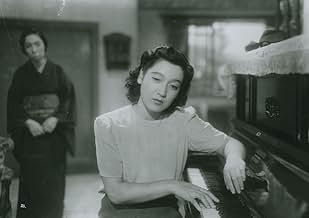
    Even at this early stage in his directorial career (it's only his fifth film), there are a number of his stylistic touches evident - a series of quick freeze shots to illustrate Yukie's traumatized response behind a closed door to Noge's surprise departure; the use of a slow exposure camera that causes an unearthly (and sometimes irritating) blurring effect when people are in motion; people lying in a pastoral setting staring skywards (mimicked recently by Chinese filmmakers like Yimou Zhang); Yukie's oddly exaggerated, out-of-sync piano playing; and large crowds rushing down steps in an Eisenstein-like manner. However, the film gains real emotional heft toward the end when Yukie struggles in the rice fields with Noge's mother (played almost unrecognizably by another Ozu regular, Haruko Sugimura) under Yukie's mantra of the dead husband/son, "No regrets in my life, no regrets whatsoever". It's a moving sequence which brings the story to its resonant conclusion.

    Proving why she was one of Japan's favorite post-WWII film stars, Hara is superb in showing Yukie's initial flightiness and evolving political consciousness. The other performances are reasonable but hardly as memorable - Susumu Fujita as Noge, Akitake Kono as Itokawa (whom Yukie rejects at the end as unworthy to know where Noge's grave is due likely to his pro-war stance) and Denjiro Okochi as Yukie's father. The combination of the illustrious Kurosawa and the incandescent Hara is certainly compelling enough to warrant viewing.
    10crossbow0106

    Wow

    Obstensibly it is a story about Hun, played by Setsuko Hara, who falls in love with a spy, in a time of great turmoil and protests to combat fascism. What makes it a 10 star film is that as it goes along it becomes much more absorbing, with the characters becoming deeper in their beliefs. Here it is: Setsuko Hara does an amazing job playing the young girl. This is her first great role and I was astounded by the depth of her performance. She plays sweet, young, very pretty, but over the course of the film, which spans approximately 11 years, she falls not on hard times, but wields a meditation on personal sacrifice. Having only seen her up to now in Ozu films, I thought she was one of the greatest. Now, I know she was. She plays this character with everything. She even credibly ages over the film. You have to give Mr. Kurosawa credit also, of course, but Ms. Hara's performance makes this an incredible film, which only gets better as it goes along. This film is now part of a box set, and very highly recommended. Any complaints, which I'll mention but are very minor, are sometimes the subtitles are wrong and the film is at times blurry when there is movement (I have this film on an earlier box set, maybe these problems have been rectified). Just know that this is an incredibly absorbing film starring the excellent Setsuko Hara and directed by the great Akira Kurosawa. That alone makes this worth the price of admission, and it delivers wonderfully.
    9jmverville

    Heartfelt story of Personal Courage

    The technical aspects of the film are very good. The camera used in this film uses abnormally slow shutter speeds causing the most slight (yet noticeable) distortions in movement, lending to the film a certain artistic sense that others do not have. It gives almost an eerie sense to it, and often times it seems to be somewhat drab, however: it seems to add very much to the mood of the story.

    In addition to the artistic filming itself, the script truly drives the story and leads us to believe more of what Akira Kurosawa believed -- anti-Fascism, anti-Militarism, through the portrayal of events concerning Japanese imperial rule in the film. Through the eyes of Yukie we learn what it is like to be oppressed, and we learn the strength of the human spirit in its' resolute resistance to the militarism and fascism of her day; the power of the will is truly highlighted in this film, and the persistent commitment to doing good (similar to that portrayed by Watanabe in Ikiru) is very present.

    The flashbacks to youth, the conjuring of memories, and the portrayal of the good times right next to the bad times, and the depth of human emotion that is revealed truly makes this film something worth watching. Some of the emotionality of the scenes (especially Yukie's emotional moments) portrays the existential angst that we all have, and her strength & perseverance represent everything we would like to have. It was a truly impacting story.

    I was especially keen on the ability of Akira Kurosawa to take some of the most inward, personal moments of extreme sadness and put them into the film and, without any seeming prior explanation, the viewer is able to relate in their own way. This film highlights a philosophy of oneself against the world, and the importance of being true to one self. The message was portrayed very clearly and the end result is a masterpiece of Cinema that is greatly overlooked.
    gkbazalo

    A terrific Setsuko Hara/Kurosawa film

    In my opinion, all of Kurosawa's films from 1946 through 1966 (I've seen about 18 which are available on video) are highly recommended. They are not only good the first time through, but hold up to multiple viewings. The star of No Regrets For our Youth is Setsuko Hara, who also starred in Kurosawa's The Idiot and in several Yasujiro Ozu films including Tokyo Story and Early Summer. From what I have heard on the commentaries, she was a big, big star in Japan and it's easy to see why. She conveys a tremendous amount of emotion and generates great sympathy for her characters. She was outstanding in Tokyo Story. We also have a short appearance by Takashi Shimura as a bad guy.

    I was very impressed by how the film made the characters convincing in both the first act where they are college students, and then again nearly 10 years later. The characters have changed not only in appearance but in personality and mannerisms. It made the passing years very convincing.

    The film is interesting from both an historical viewpoint and as a pure drama. This was made just a year or so after the Japanese surrender in World War II, and we get a good feel for how the militaristic government in Japan was able to gain the unquestioning support of most of the population. Some things never change, do they?

    Highly recommended, although if you are starting out on Kurosawa, you may want to try something from the 1955 to 66 period.

    More like this

    One Wonderful Sunday
    7.2
    One Wonderful Sunday
    The Men Who Tread on the Tiger's Tail
    6.7
    The Men Who Tread on the Tiger's Tail
    Scandal
    7.2
    Scandal
    The Quiet Duel
    7.3
    The Quiet Duel
    Sanshiro Sugata, Part Two
    6.0
    Sanshiro Sugata, Part Two
    Sanshiro Sugata
    6.7
    Sanshiro Sugata
    Drunken Angel
    7.6
    Drunken Angel
    I Live in Fear
    7.3
    I Live in Fear
    The Idiot
    7.1
    The Idiot
    The Most Beautiful
    5.6
    The Most Beautiful
    The Lower Depths
    7.2
    The Lower Depths
    Dodes'ka-den
    7.3
    Dodes'ka-den

    Related interests

    Hidetoshi Nishijima and Tôko Miura in Drive My Car (2021)
    Japanese
    Naomie Harris, Mahershala Ali, Janelle Monáe, André Holland, Herman Caheej McGloun, Edson Jean, Alex R. Hibbert, and Tanisha Cidel in Moonlight (2016)
    Drama

    Storyline

    Edit

    Did you know

    Edit
    • Trivia
      Filming in 1946, just after the war, many of the cast and crew were living very poor lives, going hungry quite often. One of the actors recalled a personal story of his stomach growling during filming, causing the scene to have to be shot again.
    • Quotes

      Title Card: After the Manchurian Incident the militarists attempted to unify domestic opinions in order to realize their ambition to invade Asia. They denounced as "Red" any ideology that might hinder their policy. Professors and students fought the suppression. The Kyoto University Disturbance was one of their struggles for freedom.

    • Connections
      Featured in The Pacific Century: Reinventing Japan (1992)

    Top picks

    Sign in to rate and Watchlist for personalized recommendations
    Sign in

    FAQ14

    • How long is No Regrets for Our Youth?Powered by Alexa

    Details

    Edit
    • Release date
      • June 6, 1980 (United States)
    • Country of origin
      • Japan
    • Language
      • Japanese
    • Also known as
      • Bez žaljenja za našom mladošću
    • Filming locations
      • Kyoto University, Kyoto, Japan
    • Production company
      • Toho
    • See more company credits at IMDbPro

    Tech specs

    Edit
    • Runtime
      • 1h 50m(110 min)
    • Color
      • Black and White
    • Sound mix
      • Mono
    • Aspect ratio
      • 1.37 : 1

    Contribute to this page

    Suggest an edit or add missing content
    • Learn more about contributing
    Edit page

    More to explore

    Recently viewed

    Please enable browser cookies to use this feature. Learn more.
    Get the IMDb App
    Sign in for more accessSign in for more access
    Follow IMDb on social
    Get the IMDb App
    For Android and iOS
    Get the IMDb App
    • Help
    • Site Index
    • IMDbPro
    • Box Office Mojo
    • License IMDb Data
    • Press Room
    • Advertising
    • Jobs
    • Conditions of Use
    • Privacy Policy
    • Your Ads Privacy Choices
    IMDb, an Amazon company

    © 1990-2025 by IMDb.com, Inc.