

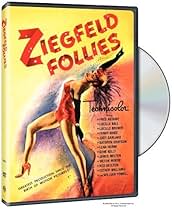
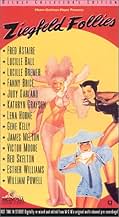
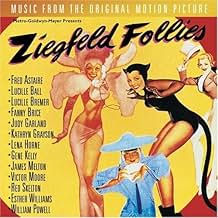
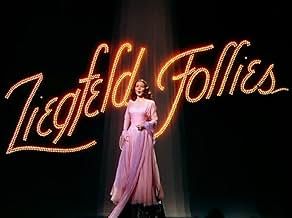
The late, great impresario Florenz Ziegfeld Jr. looks down from Heaven and ordains a new revue in his grand old style.The late, great impresario Florenz Ziegfeld Jr. looks down from Heaven and ordains a new revue in his grand old style.The late, great impresario Florenz Ziegfeld Jr. looks down from Heaven and ordains a new revue in his grand old style.
- Awards
- 1 win & 1 nomination total

William Powell
- Florenz Ziegfeld Jr.
- (segment "Prologue")

Judy Garland
- The Star
- (segment "A Great Lady Has 'An Interview'")

Lucille Ball
- Lucille Ball
- (segment "Prologue")

Fred Astaire
- Fred Astaire
- (segments "Prologue", "This Heart of Mine", "Limehouse Blues", "The Babbit and the Bromide")
- …

Lucille Bremer
- Princess
- (segments "This Heart of Mine", "Limehouse Blues")
- …

Fanny Brice
- Norma Edelman
- (segment "A Sweepstakes Ticket")

Kathryn Grayson
- Kathryn Grayson
- (segment "Beauty")

Lena Horne
- Lena Horne
- (segment "Love")

Gene Kelly
- Gentleman
- (segment "The Babbit and the Bromide")

James Melton
- Alfredo
- (segment "Traviata")

Victor Moore
- Lawyer's Client
- (segment "Pay the Two Dollars")

Red Skelton
- J. Newton Numbskull
- (segment "When Television Comes")

Esther Williams
- Esther Williams
- (segment "A Water Ballet")

Edward Arnold
- Lawyer
- (segment "Pay the Two Dollars")
Marion Bell
- Violetta
- (segment "Traviata")

Cyd Charisse
- Ballerina
- (segment "Beauty")

Hume Cronyn
- Monty
- (segment "A Sweepstakes Ticket")

William Frawley
- Martin
- (segment "A Sweepstakes Ticket")
6.43.9K
1
2
3
4
5
6
7
8
9
10
Featured reviews
Sparkly and fun but with next to no substance... Astaire shines though!
If you're watching ZIEGFELD FOLLIES expecting a plot of any kind, or even an attempt at one, you'd probably be quite horrifically let down by this film. It's best to approach and accept it for what it is--a crazy filmic patchwork of song and dance and sketches, with some that undoubtedly work better than others, and some that are best left forgotten in the annals of film history. If you *do* bear this in mind, ZIEGFELD FOLLIES is an amusing way to spend a couple of hours as you watch these famous stars, including Fred Astaire, Lucille Ball, Gene Kelly, Judy Garland and many many more trying their utmost best to entertain you. (Admittedly, some with better success than others!)
The film opens with William Powell as Florenz Ziegfeld (reprising his role in THE GREAT ZIEGFELD for what really amounts to a cameo), looking down from heaven as he plans to put up one last, great Ziegfeld follies using the best stars of the day. What immediately follows is the trademark very very pink number, with girls galore floating by on merry-go-round horses, that segues into a rather surreal bit with Lucille Ball (properly attired in a pink fluffy concoction) brandishing a whip (oh dear) against several girls in very sexily-cut black leather body suits. It's an... interesting way to kick the film off, let's leave it at that.
There's no real way to summarise ZIEGFELD FOLLIES except by singling out one's own favourite numbers. And in the forest of boring (Keenan Wynn wastes his talents in a grating and predictable phone sketch), over-the-top (feast your eyes on Esther Williams' water ballet or Kathryn Grayson's operatic warbling as Cyd Charisse dances through bubble mountains) and just plain weird (Judy Garland performing what could well be the first rap in Classic Hollywood--it's not an altogether pretty picture), all of Astaire's contributions to the film stand out.
Astaire is the ostensible star of the film, appearing no less than four times with three gorgeous dance sequences that could certainly count among his personal best. In two of them he's partnered with Lucille Bremer to pleasing effect. "This Heart Of Mine" features Astaire in his rogue persona as he romances Bremer with dance (doesn't he always?) only to steal her jewelry... and for her to steal his heart. The better of their collaborations is the odd but intriguing "Limehouse Blues" with the two of them made up like Chinese (Astaire almost--*almost*--carries it off but ends up looking a little silly). Leaving aside stereotypes, the ballet in Tai Long's fevered dreams is quite stunning, and impeccably staged. I'm still trying to figure out how Astaire and Bremer managed to remember the exact way in which to flip their fans... I hate to think how many times they must have reshot that just to get it all perfectly synchronised!
My favourite number in ZIEGFELD FOLLIES, small surprise, is the one I was looking out for: the penultimate number, "The Babbitt & The Bromide", featuring Astaire and Kelly together on screen, performing the same routine for once in their long illustrious careers. It's a funny little number, with the two fellows they play meeting each other at every stage of their lives, only to have the same inane, mundane conversation. Then follows a small bout of onemanupship as they try to out-dance the other, right into the gates of Heaven. Watching them together is a real treat, because you know these are probably the two best dancer/singer/actors ever committed to film. It's a bit of a shame that their styles don't quite gel: Astaire floats his way through the routine as Kelly pounds the ground as only he can, so their dancing is polished, in perfect time (the timing is absolutely amazing!), but just a little bit off-kilter. It's still the best number in ZIEGFELD FOLLIES though, with Kelly's irrepressible mischief playing against Astaire's ruffled charm.
ZIEGFELD FOLLIES is really just a big, sparkly candy box of a movie--if you bear in mind that a plot was never particularly high on the mind of writers, producers, or directors, and you have a good book by your side to tide you through the (fortunately not too numerous) stretches of boredom, you're set for the evening. Keep the video ready for whenever Astaire breaks onto the screen; that's always a sign of quality. 7/10
The film opens with William Powell as Florenz Ziegfeld (reprising his role in THE GREAT ZIEGFELD for what really amounts to a cameo), looking down from heaven as he plans to put up one last, great Ziegfeld follies using the best stars of the day. What immediately follows is the trademark very very pink number, with girls galore floating by on merry-go-round horses, that segues into a rather surreal bit with Lucille Ball (properly attired in a pink fluffy concoction) brandishing a whip (oh dear) against several girls in very sexily-cut black leather body suits. It's an... interesting way to kick the film off, let's leave it at that.
There's no real way to summarise ZIEGFELD FOLLIES except by singling out one's own favourite numbers. And in the forest of boring (Keenan Wynn wastes his talents in a grating and predictable phone sketch), over-the-top (feast your eyes on Esther Williams' water ballet or Kathryn Grayson's operatic warbling as Cyd Charisse dances through bubble mountains) and just plain weird (Judy Garland performing what could well be the first rap in Classic Hollywood--it's not an altogether pretty picture), all of Astaire's contributions to the film stand out.
Astaire is the ostensible star of the film, appearing no less than four times with three gorgeous dance sequences that could certainly count among his personal best. In two of them he's partnered with Lucille Bremer to pleasing effect. "This Heart Of Mine" features Astaire in his rogue persona as he romances Bremer with dance (doesn't he always?) only to steal her jewelry... and for her to steal his heart. The better of their collaborations is the odd but intriguing "Limehouse Blues" with the two of them made up like Chinese (Astaire almost--*almost*--carries it off but ends up looking a little silly). Leaving aside stereotypes, the ballet in Tai Long's fevered dreams is quite stunning, and impeccably staged. I'm still trying to figure out how Astaire and Bremer managed to remember the exact way in which to flip their fans... I hate to think how many times they must have reshot that just to get it all perfectly synchronised!
My favourite number in ZIEGFELD FOLLIES, small surprise, is the one I was looking out for: the penultimate number, "The Babbitt & The Bromide", featuring Astaire and Kelly together on screen, performing the same routine for once in their long illustrious careers. It's a funny little number, with the two fellows they play meeting each other at every stage of their lives, only to have the same inane, mundane conversation. Then follows a small bout of onemanupship as they try to out-dance the other, right into the gates of Heaven. Watching them together is a real treat, because you know these are probably the two best dancer/singer/actors ever committed to film. It's a bit of a shame that their styles don't quite gel: Astaire floats his way through the routine as Kelly pounds the ground as only he can, so their dancing is polished, in perfect time (the timing is absolutely amazing!), but just a little bit off-kilter. It's still the best number in ZIEGFELD FOLLIES though, with Kelly's irrepressible mischief playing against Astaire's ruffled charm.
ZIEGFELD FOLLIES is really just a big, sparkly candy box of a movie--if you bear in mind that a plot was never particularly high on the mind of writers, producers, or directors, and you have a good book by your side to tide you through the (fortunately not too numerous) stretches of boredom, you're set for the evening. Keep the video ready for whenever Astaire breaks onto the screen; that's always a sign of quality. 7/10
Don't bother (and don't judge) unless you can see a good Technicolor print
No doubt the jaded postmodern cynical viewer will find plenty to pick apart in this fluff (facile metaphysics, etc.). That is their loss.
This is not one of the great MGM musicals, but at its best it does what great musicals do: it sweeps you along in a kaleidoscope of color, movement and sound. And because of these qualities this trifle IS art as surely as Citizen Kane or La Promesse are. Cinema is not just an art of--or forum for-- philosophy; it is an art of the color palette, and with The Ziegfeld Follies the technical forces of a great studio created a sometimes exquisite canvas to behold. Unfortunately, like many old films, the canvas is fading.
I first saw this film 20 years ago projected from an exceptional 16 millimeter print that brought out the full richness of the Technicolor cinematography. None of the video versions I've seen since have come close. The same is true for the 1949 John Ford western, She Wore a Yellow Ribbon, which I saw many years ago in an unbelievably painterly 16mm Technicolor print. Prints of that film shown on the AMC network don't even come close to the richness of that print.
Its color alone is enough to make The Ziegfeld Follies visually entertaining for me, and that print I saw long ago convinces me that is one of the 10 or 20 most beautiful color films ever made. The merry go round scene (with Lucille Ball as I recall) in hot garish pink was particularly striking visually.
I contend that any film, even marginal or bad ones, made in the extinct and impossible to resurrect Technicolor process is worthy of seeing, because its very usage constitutes a lost art form in and of itself.
Like Ziegfeld Follies, middling films such as Kid Millions (1934), Trail of the Lonesome Pine (1936), Jesse James (1939), Down Argentine Way (1940), The Gang's All Here (1943) and The Captain from Castile (1947) are worth seeing almost exclusively because of their amazing color schemes.
The biggest crack about "Tech," as cine buffs call it, is that it was not "realistic" color. Bogus line of reasoning, as no cinematic color process can ever be realistic in the sense of replicating human sight. OK maybe Roger Deakins came close in "Sid and Nancy." Admiring Ziegfeld Follies solely for its color may not be enough for you, but it's enough for me in our era of dreary cinematic color.
This is not one of the great MGM musicals, but at its best it does what great musicals do: it sweeps you along in a kaleidoscope of color, movement and sound. And because of these qualities this trifle IS art as surely as Citizen Kane or La Promesse are. Cinema is not just an art of--or forum for-- philosophy; it is an art of the color palette, and with The Ziegfeld Follies the technical forces of a great studio created a sometimes exquisite canvas to behold. Unfortunately, like many old films, the canvas is fading.
I first saw this film 20 years ago projected from an exceptional 16 millimeter print that brought out the full richness of the Technicolor cinematography. None of the video versions I've seen since have come close. The same is true for the 1949 John Ford western, She Wore a Yellow Ribbon, which I saw many years ago in an unbelievably painterly 16mm Technicolor print. Prints of that film shown on the AMC network don't even come close to the richness of that print.
Its color alone is enough to make The Ziegfeld Follies visually entertaining for me, and that print I saw long ago convinces me that is one of the 10 or 20 most beautiful color films ever made. The merry go round scene (with Lucille Ball as I recall) in hot garish pink was particularly striking visually.
I contend that any film, even marginal or bad ones, made in the extinct and impossible to resurrect Technicolor process is worthy of seeing, because its very usage constitutes a lost art form in and of itself.
Like Ziegfeld Follies, middling films such as Kid Millions (1934), Trail of the Lonesome Pine (1936), Jesse James (1939), Down Argentine Way (1940), The Gang's All Here (1943) and The Captain from Castile (1947) are worth seeing almost exclusively because of their amazing color schemes.
The biggest crack about "Tech," as cine buffs call it, is that it was not "realistic" color. Bogus line of reasoning, as no cinematic color process can ever be realistic in the sense of replicating human sight. OK maybe Roger Deakins came close in "Sid and Nancy." Admiring Ziegfeld Follies solely for its color may not be enough for you, but it's enough for me in our era of dreary cinematic color.
Great entertainment
Ziegfeld Follies is a musical comedy from 1946, from the time when they made lots of musical movies.There really isn't a plot in this movie, but who needs one anyway.As long the musical numbers are working, you really don't need a plot in a movie like this.And then there are also some really funny sketches in the movie.Especially I liked Red Skelton's and Keenan Wynn's acts.They really make you laugh.And then it is great fun to watch Fred Astaire's and Gene Kelly's musical number.This was their only musical act together.Ziegfeld Follies has many great musical numbers.The younger generation doesn't care so much about musical movies, but I'm a teen ager and I like these old musical movies.These kind of movies make me miss those times, and I wasn't even born back then!
The Hollywood Revue of 1946
The premise of this film is that Ziegfeld (with William Powell reprising his role) is in heaven thinking of his dream revue, with the rest of the movie just a playing out of that dream revue. I rather wonder about the direction, because this film managed to do what I've never seen done before - make William Powell appear hammy and amateurish in the opening moments as he plays Ziegfeld once again and then disappears for the rest of the film. Believe me, I say this as a huge fan of William Powell.
Thus there is no plot. It involves the big musical and comedy stars of MGM putting on a show of their various capabilities, and for all intents and purposes could be renamed "The Hollywood Revue of 1946" for those familiar with the original from 1929 which basically had the same purpose. Of course, technology has advanced considerably over the ensuing 17 years, but there are still some missteps. Basically, the musical numbers are good, but the comedy skits that punctuate them fall very flat and detract from the entire film. The highlight for me was seeing Fred Astaire and Gene Kelly perform together in a number. The musical numbers make this an above average film, but just barely.
It is most valuable because it shows MGM just as it begins to lose its grip as a leader in the film industry in the post-war era, and also because it reinforces what Buster Keaton always said - that MGM never "got" comedy.
Thus there is no plot. It involves the big musical and comedy stars of MGM putting on a show of their various capabilities, and for all intents and purposes could be renamed "The Hollywood Revue of 1946" for those familiar with the original from 1929 which basically had the same purpose. Of course, technology has advanced considerably over the ensuing 17 years, but there are still some missteps. Basically, the musical numbers are good, but the comedy skits that punctuate them fall very flat and detract from the entire film. The highlight for me was seeing Fred Astaire and Gene Kelly perform together in a number. The musical numbers make this an above average film, but just barely.
It is most valuable because it shows MGM just as it begins to lose its grip as a leader in the film industry in the post-war era, and also because it reinforces what Buster Keaton always said - that MGM never "got" comedy.
Thin veneers of fiction
If a star-studded Hollywood cast from the 'Golden' years makes you enjoy a film, that alone will be enough to tide you over the nearly 2 hours of this musical bonanza. It seems nearly everyone is present.
True to the nature of the revue, there's no story and just a series of vignettes that come and go. Among them, Fred Astaire and Gene Kelly have a dance show-off, your only chance to see one from this time. Esther Williams gives us a lovely underwater ballet, I would like to see more of her.
In spite of the scale of the production, the lavish sets and elaborate costumes, this is not, of course, aristocratic entertainment for those with a refined taste in music and dance but low brow frill aimed at the broad audience.
The revue was television of its time - an opportunity to shift among a few fluffy entertainments after a long day, nothing demanding our engagement beyond the few minutes of a skit. These days it seems to survive in SNL. The bits here alternate between broad comedy skits and song and dance numbers.
It's not bad, not particularly great either. It's not what I look for in a musical, and I will always opt for the fuller engagement of long narrative.
More interesting for me here are all the self-referential bits.
In the Astaire/Kelly show-off Fred, established musical royalty, plays a joke of pretending to not know who Kelly is.
Judy Garland enters her segment as herself, musing to a chorus of reporters about preferring song and dance roles rather than dramatic.
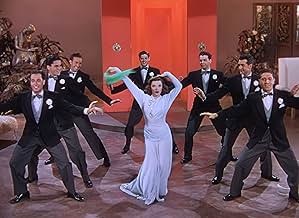
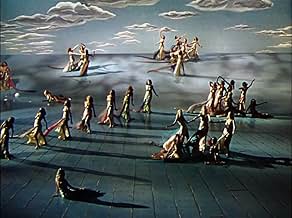
These people are here as themselves, the veneer of fiction is thin, opportunity for scenery and costume. You'll see some gorgeous examples of both, among the standouts for me being the all red ballroom in which Astaire swindles the rich countess and the dreamy finale, with chorus girls swirling through billows of bubbly foam. Briefly glimpsed among them is Cyd Charissee in her first appearance.
The whole is framed as Ziegfeld in heaven reminiscing about the shows he put on.
My favorite bit is the Chinatown skit with Astaire as a poor coolie dreaming about a woman he passes by on the street. His unrequited love becomes a dance they have together holding hand fans.
True to the nature of the revue, there's no story and just a series of vignettes that come and go. Among them, Fred Astaire and Gene Kelly have a dance show-off, your only chance to see one from this time. Esther Williams gives us a lovely underwater ballet, I would like to see more of her.
In spite of the scale of the production, the lavish sets and elaborate costumes, this is not, of course, aristocratic entertainment for those with a refined taste in music and dance but low brow frill aimed at the broad audience.
The revue was television of its time - an opportunity to shift among a few fluffy entertainments after a long day, nothing demanding our engagement beyond the few minutes of a skit. These days it seems to survive in SNL. The bits here alternate between broad comedy skits and song and dance numbers.
It's not bad, not particularly great either. It's not what I look for in a musical, and I will always opt for the fuller engagement of long narrative.
More interesting for me here are all the self-referential bits.
In the Astaire/Kelly show-off Fred, established musical royalty, plays a joke of pretending to not know who Kelly is.
Judy Garland enters her segment as herself, musing to a chorus of reporters about preferring song and dance roles rather than dramatic.
These people are here as themselves, the veneer of fiction is thin, opportunity for scenery and costume. You'll see some gorgeous examples of both, among the standouts for me being the all red ballroom in which Astaire swindles the rich countess and the dreamy finale, with chorus girls swirling through billows of bubbly foam. Briefly glimpsed among them is Cyd Charissee in her first appearance.
The whole is framed as Ziegfeld in heaven reminiscing about the shows he put on.
My favorite bit is the Chinatown skit with Astaire as a poor coolie dreaming about a woman he passes by on the street. His unrequited love becomes a dance they have together holding hand fans.


Did you know
- TriviaAt the beginning of the "Bring On The Beautiful Girls" number, several older women are shown; these are women who actually appeared in the original Ziegfeld Follies on stage.
- GoofsTowards the end of "This Heart of Mine", as Fred Astaire and Lucille Bremer begin to dance back to the palace, dancers in the background (screen left) struggle to stabilize some of the antler-tree props.
- Quotes
Florenz Ziegfeld Jr.: Children play with the dreams of tomorrow. And old men play with the memories of yesterday.
- Alternate versionsThere is an Italian edition of this film on DVD, "FOLLIE DI ZIEGFELD", re-edited in double version (1.33:1 and 1.78:1) with the contribution of film historian Riccardo Cusin This version is also available for streaming on some platforms.
- ConnectionsEdited into Hollywood: The Dream Factory (1972)
- SoundtracksHere's to the Girls
Music by Roger Edens
Lyrics by Arthur Freed
Sung by Fred Astaire, chorus
Danced by Cyd Charisse, Lucille Ball, chorus
- How long is Ziegfeld Follies?Powered by Alexa
Details
- Release date
- Country of origin
- Language
- Also known as
- Ziegfeld Follies of 1944
- Filming locations
- Production company
- See more company credits at IMDbPro
Box office
- Budget
- $3,240,816 (estimated)
- Runtime
- 1h 50m(110 min)
- Color
- Aspect ratio
- 1.37 : 1
Contribute to this page
Suggest an edit or add missing content