

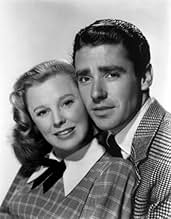
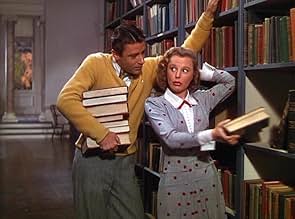
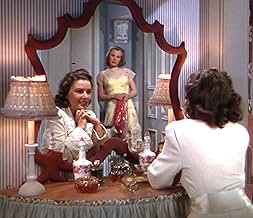
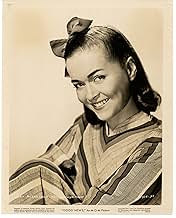
Golden Globe winner June Allyson and Peter Lawford star in this enjoyable musical about a football hero who falls in love with his French tutor.Golden Globe winner June Allyson and Peter Lawford star in this enjoyable musical about a football hero who falls in love with his French tutor.Golden Globe winner June Allyson and Peter Lawford star in this enjoyable musical about a football hero who falls in love with his French tutor.
- Nominated for 1 Oscar
- 1 nomination total


Robert E. Strickland
- Peter Van Dyne III
- (as Robert Strickland)


King Baggot
- Man at Coat Check Counter
- (uncredited)

William A. Boardway
- Dance Guest
- (uncredited)
6.72.9K
1
2
3
4
5
6
7
8
9
10
Featured reviews
Don't Get Yourself in a Sweat !
Great MGM color musical from 1947 that boasts terrific performances from June Allyson and Peter Lawford as the stars and Joan McCracken, Ray McDonald, Patricia Marshall, Connie Gilchrist, Donald McBride, Mel Torme, Tom Dugan, Clint Sundberg, and Jane Green in support.
"Pass That Peacepipe" is one of the best production numbers I've ever seen, and McCracken and McDonald are super in it. It seems to have only 3 cuts in it and it's an amazing production numbers full of color and energy.
Allyson and Lawford have so much fun in the "Varsity Drag" number on a huge stage that it's infectious (but watch for the female dancer in pink who falls). Good songs throughout from the 20s stage show like the title song as well as "Lucky in Love," "The Best Things in Life Are Free," "Lady's Man," "Good News," "The French Lesson," and the sad song "Just Imagine" Allyson sings. Lively, colorful, and totally fun, this is an grossly underrated musical from MGM's golden years.
The 40s riff on 20s songs works thanks to Kay Thompson, Betty Comden and Adolph Green. Great fun from the opening sequence til the end. Joan McCracken, by the way, was married to Bob Fosse.
"Pass That Peacepipe" is one of the best production numbers I've ever seen, and McCracken and McDonald are super in it. It seems to have only 3 cuts in it and it's an amazing production numbers full of color and energy.
Allyson and Lawford have so much fun in the "Varsity Drag" number on a huge stage that it's infectious (but watch for the female dancer in pink who falls). Good songs throughout from the 20s stage show like the title song as well as "Lucky in Love," "The Best Things in Life Are Free," "Lady's Man," "Good News," "The French Lesson," and the sad song "Just Imagine" Allyson sings. Lively, colorful, and totally fun, this is an grossly underrated musical from MGM's golden years.
The 40s riff on 20s songs works thanks to Kay Thompson, Betty Comden and Adolph Green. Great fun from the opening sequence til the end. Joan McCracken, by the way, was married to Bob Fosse.
The musical is pretty good, the transfers I've seen need a touch up
The musical itself is everything you expect from an MGM musical of the late 1940's - rather light on story and heavy on visual style and good music. I've had the advantage of seeing the original movie musical from 1930, at least what's left of it, which is actually the entire film minus the Technicolor finale. That original has the disadvantage of not having the technical advantages in sound recording and camera mobility. However, the original 1930 movie does have the character of Babe being played by the pixie-like Bessie Love of "Broadway Melody of 1929", and she is every inch the mischievious flapper that Joan McCracken just is not. In fact, the coeds in the 1947 film seem very much like they're from 1947, they're just dressed up in the fashions and driving the cars of the 1920's.
In this film, Connie (June Allyson) is tutoring Tommy (Peter Lawford) in French just as in the 1930 version - except there the subject was astronomy. However, there are two big differences here. In the 1947 film, Lawford's motivation for studying French is to win the affection of a beautiful new student. Also, Tommy knows exactly who Connie is, and their attraction builds slowly. In the 1930 film, the first time Tommy sees Connie she isn't exactly wildly attractive, but she is the best student in the subject at the college. Also, Tommy is already enrolled in French, he is just in danger of failing it and not being able to play in the big game. Also notice in this later film the presence of a very young Mel Torme who seems to be standing in for Cliff Edwards from the 1930 version, complete with ukelele.
In this film, Connie (June Allyson) is tutoring Tommy (Peter Lawford) in French just as in the 1930 version - except there the subject was astronomy. However, there are two big differences here. In the 1947 film, Lawford's motivation for studying French is to win the affection of a beautiful new student. Also, Tommy knows exactly who Connie is, and their attraction builds slowly. In the 1930 film, the first time Tommy sees Connie she isn't exactly wildly attractive, but she is the best student in the subject at the college. Also, Tommy is already enrolled in French, he is just in danger of failing it and not being able to play in the big game. Also notice in this later film the presence of a very young Mel Torme who seems to be standing in for Cliff Edwards from the 1930 version, complete with ukelele.
The good news is...this is a delightful musical
There are definitely better musicals than 'Good News' made before, during and since. That doesn't matter, because although it has imperfections it is still a delight in so many ways.
Starting with 'Good News' problems, it is agreed that the scene with Connie Gilchrist is overwritten and overacted (in fact, some of the humour is tiresomely flat) and that the football scene is overlong and drags. It is also a shame that Mel Torme, by far the best singer in the cast, has very little to do, a singer of his calibre deserves better than that.
On the other hand, 'Good News' is very lavishly produced. It is true that the costumes and hair-styles are more 1940s than 1920s, but they do look lovely, and numbers like "Pass that Peace Pipe" and "Varsity Drag" are filmed beautifully. The music is wonderful, especially "Pass that Peace Pipe", "Varsity Drag", the title number, "Imagine" and the most famous song "The Best Things in Life are Free". "The French Lesson" is very funny as well. The choreography similarly dazzles, especially in "Pass that Peace Pipe" and "Varsity Drag", which are two of the energetic musical numbers of the 40s.
Charles Walters directs excellently, hard to believe that this was his directorial debut. The script is mostly very amusing and fills the heart with warmth, the film crackles with energy and while the story is fluffy and predictable admittedly it is also light-hearted, heart-warming and charming with solid pacing, also not being as contrived or corny as some musicals' stories were.
June Allyson has a role that fits her to the bone and it shows off her personality and strengths so well. She sings "Imagine" touchingly wistfully. Am not usually a fan of Peter Lawford, but while his singing is only adequate if even that he does give some charm to a rather caddish character and his dancing looks more comfortable than in other musicals he participated in. He and Allyson sparkle together, especially in "The French Lesson", even if they are too old to pass for college students. Joan McCracken is crackling fun that it beggars belief that her career wasn't bigger.
In conclusion, has flaws but 'Good News' is a delight on the most part. 8/10 Bethany Cox
Starting with 'Good News' problems, it is agreed that the scene with Connie Gilchrist is overwritten and overacted (in fact, some of the humour is tiresomely flat) and that the football scene is overlong and drags. It is also a shame that Mel Torme, by far the best singer in the cast, has very little to do, a singer of his calibre deserves better than that.
On the other hand, 'Good News' is very lavishly produced. It is true that the costumes and hair-styles are more 1940s than 1920s, but they do look lovely, and numbers like "Pass that Peace Pipe" and "Varsity Drag" are filmed beautifully. The music is wonderful, especially "Pass that Peace Pipe", "Varsity Drag", the title number, "Imagine" and the most famous song "The Best Things in Life are Free". "The French Lesson" is very funny as well. The choreography similarly dazzles, especially in "Pass that Peace Pipe" and "Varsity Drag", which are two of the energetic musical numbers of the 40s.
Charles Walters directs excellently, hard to believe that this was his directorial debut. The script is mostly very amusing and fills the heart with warmth, the film crackles with energy and while the story is fluffy and predictable admittedly it is also light-hearted, heart-warming and charming with solid pacing, also not being as contrived or corny as some musicals' stories were.
June Allyson has a role that fits her to the bone and it shows off her personality and strengths so well. She sings "Imagine" touchingly wistfully. Am not usually a fan of Peter Lawford, but while his singing is only adequate if even that he does give some charm to a rather caddish character and his dancing looks more comfortable than in other musicals he participated in. He and Allyson sparkle together, especially in "The French Lesson", even if they are too old to pass for college students. Joan McCracken is crackling fun that it beggars belief that her career wasn't bigger.
In conclusion, has flaws but 'Good News' is a delight on the most part. 8/10 Bethany Cox
Great fun! "Pass That Peace Pipe!" is the Cat's Meow!!
Neglected MGM musical has some great things going for it.
For one thing, it has an amusing Adolph & Green script, some dazzling dance numbers choreographed to perfection, and a simple plot (two gals in love with the same fellow) that never gets in the way of the well staged song-and-dance numbers. It gives a charming look at college life in the 1920s--in non-realistic fashion, of course!
June Allyson's singing voice never impressed me but she's a good dancer and here she proves it in the "Varsity Drag" number. Peter Lawford is surprisingly good considering he's miscast as the football player (where was Van Johnson?) Joan McCracken almost steals the show with her frantic dancing amid talented chorus boys in the "Pass That Peace Pipe" number in a drugstore, a highlight among the dance routines. Allyson and Lawford are terrific on "The French Lesson" and she is properly wistful in her rendition of "The Best Things In Life Are Free". Patricia Marshall does well as "the other girl" in a role originally offered to Gloria de Haven who rejected it as too similar to her other "spoiled girl" roles. Some of the humor falls flat and dates the picture badly, particularly the overdone scene with Connie Gilchrist repeating words June has written for her.
All in all, a fun-filled, tuneful college comedy about academics and football with an early glimpse of Mel Torme. Lighthearted plot with a solid score!
Trivia note: It's amazing how far JUNE ALLYSON went on virtually no singing voice to speak of, and a modest talent for kicking up her heels. But she and Lawford are charming here.
For one thing, it has an amusing Adolph & Green script, some dazzling dance numbers choreographed to perfection, and a simple plot (two gals in love with the same fellow) that never gets in the way of the well staged song-and-dance numbers. It gives a charming look at college life in the 1920s--in non-realistic fashion, of course!
June Allyson's singing voice never impressed me but she's a good dancer and here she proves it in the "Varsity Drag" number. Peter Lawford is surprisingly good considering he's miscast as the football player (where was Van Johnson?) Joan McCracken almost steals the show with her frantic dancing amid talented chorus boys in the "Pass That Peace Pipe" number in a drugstore, a highlight among the dance routines. Allyson and Lawford are terrific on "The French Lesson" and she is properly wistful in her rendition of "The Best Things In Life Are Free". Patricia Marshall does well as "the other girl" in a role originally offered to Gloria de Haven who rejected it as too similar to her other "spoiled girl" roles. Some of the humor falls flat and dates the picture badly, particularly the overdone scene with Connie Gilchrist repeating words June has written for her.
All in all, a fun-filled, tuneful college comedy about academics and football with an early glimpse of Mel Torme. Lighthearted plot with a solid score!
Trivia note: It's amazing how far JUNE ALLYSON went on virtually no singing voice to speak of, and a modest talent for kicking up her heels. But she and Lawford are charming here.
Pleasant Light Entertainment
Pleasant light entertainment with a rather nostalgic feel, "Good News" works fine as long as you aren't expecting too much substance. The plot, characters, and setting are all pretty familiar, but the cast gives it an upbeat tone and a good energy level. As the two leads, Peter Lawford and June Allyson keep their characters likable and sympathetic with solid performances.
The setting is a 1940s conception of what a 1920s college campus was like, and it is thus something of a mythical world that never actually existed. Yet it's a setting that lends itself well to the story and to the musical numbers, and the cast all seem at home in it. Lawford plays the football star whose academic and romantic difficulties threaten his place on the team, and Allyson plays a bookish girl designed to win the audience's sympathy. Patricia Marshall plays a rather innocent version of a campus vamp.
The musical numbers fit well with the story, and while neither contains anything particularly memorable, they are entertaining. The movie maintains pretty much the same pace and tone for the whole running time, and it's a good way to pass an hour and a half or so when you just want to see something light and positive.
The setting is a 1940s conception of what a 1920s college campus was like, and it is thus something of a mythical world that never actually existed. Yet it's a setting that lends itself well to the story and to the musical numbers, and the cast all seem at home in it. Lawford plays the football star whose academic and romantic difficulties threaten his place on the team, and Allyson plays a bookish girl designed to win the audience's sympathy. Patricia Marshall plays a rather innocent version of a campus vamp.
The musical numbers fit well with the story, and while neither contains anything particularly memorable, they are entertaining. The movie maintains pretty much the same pace and tone for the whole running time, and it's a good way to pass an hour and a half or so when you just want to see something light and positive.


Did you know
- TriviaSince Peter Lawford spoke French fluently and June Allyson did not, Lawford had to teach Allyson how to teach him to speak French in "The French Lesson" scene.
- GoofsDuring the "Varsity Drag" musical number, one of the chorus girls is accidentally pushed out of step.
Possibly (even likely) intentional as non-professional (i.e., high school, college) productions are rarely perfectly performed.
- Quotes
Pooch: Come on, Bobby, get your uniform off.
Bobby Turner: Aw, gee, Poochy. I get so little chance to wear it I like to keep it on until the last minute. Sometimes I even rub a little dirt on it just to convince myself I'm really on the team.
- ConnectionsFeatured in MGM Parade: Episode #1.4 (1955)
- SoundtracksGood News
(uncredited)
Music by Ray Henderson
Lyrics by Lew Brown and Buddy G. DeSylva
Sung by Joan McCracken and chorus
- How long is Good News?Powered by Alexa
Details
- Release date
- Country of origin
- Languages
- Also known as
- ¡Viva el amor!
- Filming locations
- Production company
- See more company credits at IMDbPro
Box office
- Budget
- $1,662,718 (estimated)
- Runtime
- 1h 33m(93 min)
- Aspect ratio
- 1.37 : 1
Contribute to this page
Suggest an edit or add missing content