IMDb RATING
7.2/10
3.7K
YOUR RATING

WW2 veteran Lucky Gagin arrives in a New Mexico border-town intent on revenging against mobster Frank Hugo but FBI agent Bill Retz, who also wants Hugo, tries to keep Gagin out of trouble.WW2 veteran Lucky Gagin arrives in a New Mexico border-town intent on revenging against mobster Frank Hugo but FBI agent Bill Retz, who also wants Hugo, tries to keep Gagin out of trouble.WW2 veteran Lucky Gagin arrives in a New Mexico border-town intent on revenging against mobster Frank Hugo but FBI agent Bill Retz, who also wants Hugo, tries to keep Gagin out of trouble.
- Nominated for 1 Oscar
- 1 win & 1 nomination total



7.23.7K
1
2
3
4
5
6
7
8
9
10
Featured reviews
Excellent noir crime drama directed by Robert Montgomery...
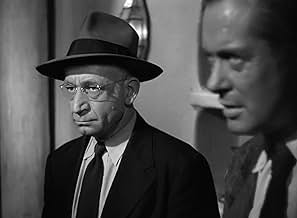
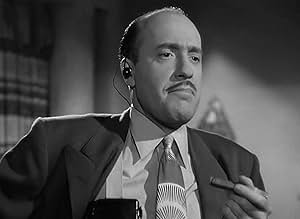
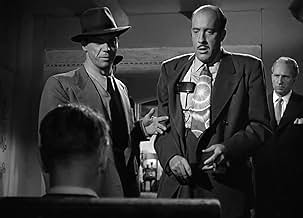
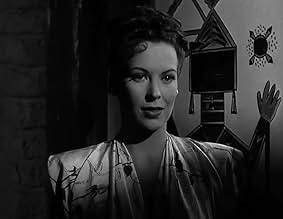
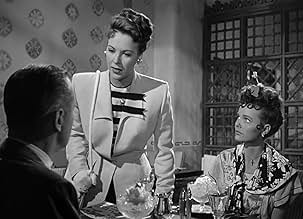
In one of a couple of films done at Universal starring Montgomery that are hard to find. Ex-solider Lucky Gagin (Robert Montgomery) arrives in the little southwestern town of San Pablo during a hectic fiesta weekend. He's come here seeking revenge against the man he holds responsible for his friend's death. But his quest may be derailed by one of the motley assortment of characters he meets: scheming federal agent Retz (Art Smith, spooky-eyed young Mexican girl Pilar (Wanda Hendrix), and boisterous carousel operator Pancho (Thomas Gomez), among others.
Montgomery does a very good job in both the directing and acting departments. The film showcases several stylish flourishes, and maintains an evocative, "stranger in a strange land" aura of uncertainty and mild paranoia. His performance as the plainspoken Gagin is also a nice stretch from his usual smooth charmer. He's blunt, occasionally rude, maybe not the sharpest guy in the room, but cunning enough to be a threat to those he targets.
The movie takes an unexpected turn in the last third which helps set it apart from the other crime pictures of the period, but in my opinion it weakened the resolution a bit. I liked Hendrix, and Gomez is affable in a character type he would go on to play several times in the future. Fred Clark, as a crime boss, and Art Smith as the fed, are unusual casting choices that work. The movie earned an Oscar nomination for Best Supporting Actor for Thomas Gomez.
Montgomery does a very good job in both the directing and acting departments. The film showcases several stylish flourishes, and maintains an evocative, "stranger in a strange land" aura of uncertainty and mild paranoia. His performance as the plainspoken Gagin is also a nice stretch from his usual smooth charmer. He's blunt, occasionally rude, maybe not the sharpest guy in the room, but cunning enough to be a threat to those he targets.
The movie takes an unexpected turn in the last third which helps set it apart from the other crime pictures of the period, but in my opinion it weakened the resolution a bit. I liked Hendrix, and Gomez is affable in a character type he would go on to play several times in the future. Fred Clark, as a crime boss, and Art Smith as the fed, are unusual casting choices that work. The movie earned an Oscar nomination for Best Supporting Actor for Thomas Gomez.
"When you're young, everybody sticks knife in you"
Weird, off-beat, and dark even by noir standards, RIDE THE PINK HORSE is the definite cultish item, a film of some other order that happens the way it does either by accident/inexperience on the filmmaker's part or from some kind of intuitive design, a basic way of saying "everyone makes films this way but what if I take out these little parts and see how it works". Knowing that Robert Montgomery helmed LADY IN THE LAKE, a Raymond Chandler adaptation shot entirely from Marlowe's POV seemingly for novelty's sake, doing something for the simple pleasure of finding out how it turns out, I'm inclined to think it's the second, with the first factoring somewhere in the process. For all Montgomery knew the result could've been a muddled incoherent mess. But it's not.
For some reason, it's mysterious and elusive, oddly captivating and dreamlike even when it doesn't make a whole lot of sense (or perhaps because of it), because the characters are left incomplete and indecipherable, the way real people are most of the time, doing what they do out of some sense of personal obligation or skewed honor they can't even explain to themselves. Hollywood usually explains that motivation and in doing so turnes characters into plot devices created to move the story forward or halt it long enough for the necessary exposition to fill the gaps. Montgomery instead opens the film with his protagonist, a disillusioned former GI turned blackmailer, wandering around in a small New Mexican town the day before a fiesta and doesn't bother explaining why's there or what's he there to do until we're a good 20 minutes in.
In the meantime, the movie has soaked up enough eerie smalltown atmosphere and a sense of impending doom, grinning Mexicans giving the protagonist false directions to his hotel and a weird wideyed girl giving him strange charms to ward off bad luck, that when the plot kicks into motion we've established so much mood that the story need not be anything more than a basic skeleton. The second half is not as great as the first because the potboilerish noir aspects take hold, something about a typical blackmail scheme and characters trying to outwit and deceive each other as they're wont to do when the film noir is their natural habitat while a government agent stalks in the perimeters trying to arrest the victim of the blackmail for the same crime he's being blackmailed, but thankfully it's not for too long.
Soon we get dingy Mexican taverns and the fiesta pouring through the streets and a crane shot that rises to meet the ghastly Zozobra figure towering above the town; we get a great set piece in a merry-go-round from which the movie takes its bizarre title, stabbings in the back of restaurants, our knifed protagonist staggering in the dark around town automaton-like to god knows where, the government agent showing up at just the right time to bail him out or tell him things he needs to be wary off like a deus ex machina or a Campbellian mentor, rumbling monologues against flag-waving and working 9 to 5 that reveal a movie as disillusioned with the postwar American dream as its own characters, all these wrapped in a structure that has an odd mystical/mythic quality about it.
And of course, we get Pancho, the merry-go-round owner, and his pearls of wisdom such as "when you're young, everyone sticks knife in you" (which I remember someone had as his sig here). A true delight for the cult movie aficionado and the film noir fan who always cared more for BLAST OF SILENCE than THE MALTESE FALCON. Great stuff.
For some reason, it's mysterious and elusive, oddly captivating and dreamlike even when it doesn't make a whole lot of sense (or perhaps because of it), because the characters are left incomplete and indecipherable, the way real people are most of the time, doing what they do out of some sense of personal obligation or skewed honor they can't even explain to themselves. Hollywood usually explains that motivation and in doing so turnes characters into plot devices created to move the story forward or halt it long enough for the necessary exposition to fill the gaps. Montgomery instead opens the film with his protagonist, a disillusioned former GI turned blackmailer, wandering around in a small New Mexican town the day before a fiesta and doesn't bother explaining why's there or what's he there to do until we're a good 20 minutes in.
In the meantime, the movie has soaked up enough eerie smalltown atmosphere and a sense of impending doom, grinning Mexicans giving the protagonist false directions to his hotel and a weird wideyed girl giving him strange charms to ward off bad luck, that when the plot kicks into motion we've established so much mood that the story need not be anything more than a basic skeleton. The second half is not as great as the first because the potboilerish noir aspects take hold, something about a typical blackmail scheme and characters trying to outwit and deceive each other as they're wont to do when the film noir is their natural habitat while a government agent stalks in the perimeters trying to arrest the victim of the blackmail for the same crime he's being blackmailed, but thankfully it's not for too long.
Soon we get dingy Mexican taverns and the fiesta pouring through the streets and a crane shot that rises to meet the ghastly Zozobra figure towering above the town; we get a great set piece in a merry-go-round from which the movie takes its bizarre title, stabbings in the back of restaurants, our knifed protagonist staggering in the dark around town automaton-like to god knows where, the government agent showing up at just the right time to bail him out or tell him things he needs to be wary off like a deus ex machina or a Campbellian mentor, rumbling monologues against flag-waving and working 9 to 5 that reveal a movie as disillusioned with the postwar American dream as its own characters, all these wrapped in a structure that has an odd mystical/mythic quality about it.
And of course, we get Pancho, the merry-go-round owner, and his pearls of wisdom such as "when you're young, everyone sticks knife in you" (which I remember someone had as his sig here). A true delight for the cult movie aficionado and the film noir fan who always cared more for BLAST OF SILENCE than THE MALTESE FALCON. Great stuff.
Definitely recommended.
From the film's opening scene, which shows the protagonist, Lucky Gagin, emerging from a bus into a dusty Mexican town, the viewer is hooked. There are so many good things about this film, primarily the acting performances -- Robert Montgomery is a standout, as are Wanda Hendrix, Fred Clark, Thomas Gomez, and Art Smith. They each completely occupy their characters and make them come to life. Another highlight is the dialogue -- there are numerous memorable exchanges between Montgomery and Hendrix, and Clark delivers two especially well-written diatribes that serve to solidify his character in the consciousness. The story itself is quite simple, and is driven far more by characterization than by plot, but that is what makes the film so good. The film also contains its share of classically dark noir imagery -- most memorable is the scene in which the Gomez character is savagely beaten by two hoods while a group of neighborhood children sail along on the nearby merry-go-round, at first gaily enjoying the free ride but growing increasingly somber and afraid as they witness the brutal attack. This one is a definite must-see, particularly for film noir buffs, but also for film lovers of all types.
This is a great movie based on a great book
I was in the process of reading this book and then started watching a movie without knowing what the movie was. It was deja vu all of the sudden. It turned out to be this movie. I think that Robert Montgomery did a great job of capturing the character that was in the book. Tough but naive at the same time. A very good noir film that should get more play and recognition.
The dark atmosphere,the craziness of the music and the partying in the background all the time as the story unfolds. Maybe I had a leg up reading the book almost first. It's very rare when I think a movie based on a book is just as good as the book. I felt sympathy for Robert Montgomery's character. All the time thinking he was going to lose to the cheats. He had his own principals and stuck to them.
Can't say enough.
Good movie.
The dark atmosphere,the craziness of the music and the partying in the background all the time as the story unfolds. Maybe I had a leg up reading the book almost first. It's very rare when I think a movie based on a book is just as good as the book. I felt sympathy for Robert Montgomery's character. All the time thinking he was going to lose to the cheats. He had his own principals and stuck to them.
Can't say enough.
Good movie.
Top-Notch Noir - Ride the Pink Horse
I don't really care very much for Robert Montgomery as a serious actor; they must have been at least a half dozen or more Hollywood actors at the time who could have handled the role better: Bogart, Cagney, Flynn, Power, Holden, Ford (etc). But despite being miscast, Montgomery pulls it off with some help from a great supporting cast. Great writing by a woman writer, Dorothy B Hughes, and a great screenplay by Lederer and Hecht (Lancaster's old buddy) provides the viewer with a real treat for atmosphere and storytelling. Gagin comes to New Mexico to square accounts with the guy who shot his partner, Shorty. Mr. Hugo is well-played by. Fred Clark. But the person who steals this film is not Montgomery, Clark or even Thomas Gomez, who was nominated for a Best Supporting Actor role as Pancho in the film. No, the film is stolen by actress, Wanda Hendrix as Pila, a wild-looking, space cadet, who is fiercely loyal to Gagin. One of the best film noir pieces you will ever see.


Did you know
- TriviaFilmed in Santa Fe, the burning of Zozobra, which began in 1924, is still an annual festival occurring in September.
- GoofsOpening scene at the bus station, Montgomery walks over to the gum machine to insert his coin, but the gum package is already present before he inserts it.
- Crazy creditsThe main title card reads, "as LUCKY GAGIN in RIDE THE PINK HORSE." The film's title is in far smaller type than the character name.
- ConnectionsFeatured in Pulp Cinema (2001)
- How long is Ride the Pink Horse?Powered by Alexa
Details
- Release date
- Country of origin
- Languages
- Also known as
- Reite auf dem rosa Pferd
- Filming locations
- Production company
- See more company credits at IMDbPro
Box office
- Gross US & Canada
- $2,000,000
- Runtime
- 1h 41m(101 min)
- Color
- Aspect ratio
- 1.37 : 1
Contribute to this page
Suggest an edit or add missing content