IMDb RATING
7.2/10
4.1K
YOUR RATING

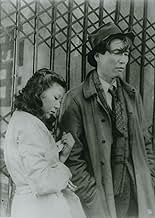
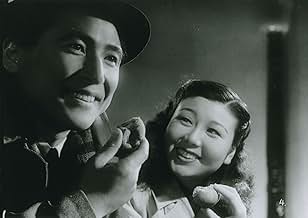
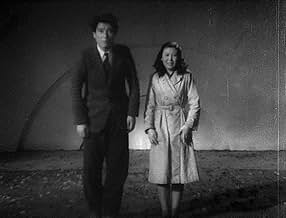
During a Sunday trip into war-ravaged Tokyo, despairing Yuzo and optimistic Masako look for work and lodging, as well as affordable entertainments to pass the time.During a Sunday trip into war-ravaged Tokyo, despairing Yuzo and optimistic Masako look for work and lodging, as well as affordable entertainments to pass the time.During a Sunday trip into war-ravaged Tokyo, despairing Yuzo and optimistic Masako look for work and lodging, as well as affordable entertainments to pass the time.
- Director
- Writers
- Stars
- Awards
- 2 wins total



Sachio Sakai
- Shady Ticket Man
- (uncredited)
- Director
- Writers
- All cast & crew
- Production, box office & more at IMDbPro
7.24K
1
2
3
4
5
6
7
8
9
10
Featured reviews
Kurosawa and Postwar Politics in Occupied Japan
I loved this film for all the reasons already advanced on this board. A story about two lovers who have only each other in a devastated, corrupted, and occupied society is universal in every sense.
I think Kurosawa's postwar films are especially interesting from a political point of view. All of his films had to pass U.S. censors, and so his political comments are shrouded in symbolism and cinematic sleight of hand. American occupation authorities doubtlessly viewed this film as a simple tale of struggling lovers. But a closer look reveals much more.
"Yuzo" is a war veteran down on his luck. Millions of Japanese war veterans returned home to a society ashamed of their service and anxious to forget their failure. "Masako" is his lover but their future together is rendered difficult by their mutual poverty.
Kurosawa gives us glimpses of pathetic war orphans, destitute women forced into prostitution, and a new economic oligarchy made wealthy by black markets. The ruins of Tokyo are presented only on distant horizons or as incidental background, but the damage inflicted by the 20th U.S. Air Force is clearly implied. None of these elements would ever pass U.S. censorship had they been essential to the story.
Postwar Japanese audiences. however, doubtlessly recognized these subtle references to their occupied and devastated country. That Kurosawa could express these matters without provoking American censorship is itself a testament to his artistic skills.
I think Kurosawa's postwar films are especially interesting from a political point of view. All of his films had to pass U.S. censors, and so his political comments are shrouded in symbolism and cinematic sleight of hand. American occupation authorities doubtlessly viewed this film as a simple tale of struggling lovers. But a closer look reveals much more.
"Yuzo" is a war veteran down on his luck. Millions of Japanese war veterans returned home to a society ashamed of their service and anxious to forget their failure. "Masako" is his lover but their future together is rendered difficult by their mutual poverty.
Kurosawa gives us glimpses of pathetic war orphans, destitute women forced into prostitution, and a new economic oligarchy made wealthy by black markets. The ruins of Tokyo are presented only on distant horizons or as incidental background, but the damage inflicted by the 20th U.S. Air Force is clearly implied. None of these elements would ever pass U.S. censorship had they been essential to the story.
Postwar Japanese audiences. however, doubtlessly recognized these subtle references to their occupied and devastated country. That Kurosawa could express these matters without provoking American censorship is itself a testament to his artistic skills.
Signs of a budding genius director
ONE WONDERFUL SUNDAY (1947) has a simple little plot. A young Tokyo couple have almost no money to spend on their only day available for a date. It isn't long until the money is gone, as well as the young man's spirit. The ending is uncomfortably corny, you will squirm in your seat. There is signs of Akira Kurosawa becoming a great director. He makes us pay attention to the decreasing amount of money (much like he made us pay attention to the number of slain bandits in SEVEN SAMURAI, and his stab at Frank Capra style humor is pretty good. A must see for the student of this great director.
A truly beautiful film and criminally underseen
Not one of my favourites from Akira Kurosawa- hard because he is one of cinema's greatest directors with a lot of great films- but when talking about his most underrated films One Wonderful Sunday would be a strong contender. A few scenes go on for a little too long, other than that there was not really anything that came across as wrong. Admittedly the ending is an odd one but also amusing and affecting, one of those endings that wasn't a problem for me but one also that will work for some and not so much for others. While not the most audacious visually of Kurosawa's films One Wonderful Sunday is still beautifully shot, going for the simple (but not simplistic) approach rather than one that, considering the tone of the film, could fall into overblown-style territory. Kurosawa's direction for so early on in his career directs more than capably, One Wonderful Sunday is different in a way for him- one of his most simple films for sure- but there is clear evidence of knowing how to direct with style and he seems to be very comfortable with it. The music when used fits very well and will please any listener. The writing is amusing and uplifting while also peaceful and poignant, and with the story there is a playful tone in places, a dream-like one in others and then there are a lot of scenes where it is endearingly sweet and has a lot of emotional impact. There is poverty as a theme but it's not used heavy-handedly at all. The acting is very good if not among the greatest performances of a Kurosawa film. Then again, you shouldn't expect that, and that is the same with the film too, even if it isn't one of Kurosawa's finest it does deserve to be judged on its own merits of which One Wonderful Sunday has a great many. Coming back to the acting, Chieko Nakakita is captivating right from her appearance to how she grabs the attention of the viewer even in the simplest of things. Overall, a beautiful film and deserves to be better known and seen much more than it is at the moment. 9/10 Bethany Cox
Yuzo and Masako-Enough Said
This is almost like a play and it is a deceptively simple story. Its about a poor couple who get together on Sundays for a date. Essentially, this film is about one of the dates. Nothing earthshattering happens, pretty much life happens. I was at first not convinced by it, but as the film progressed I began to listen to the characters more, meaning the story took on a deeper meaning. The two lead actors are superb, and one thing I do like is that especially Masako is played by a lady who is not beautiful but sweet and just attractive (if this film was remade in America tomorrow, Beyonce would be the star). Actually, its a shame this film wasn't re-made in the United States about 25 years ago. I could see Meryl Streep really flexing her always considerable acting muscles on a role like this. So, it is a film about a date, but its a film about hopes, disappointments and dreams. It gets better as it goes along. I recommend it, its worth your time.
A little-known Kurosawa that's well worth rediscovering
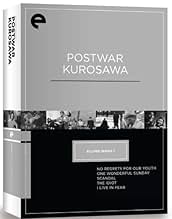
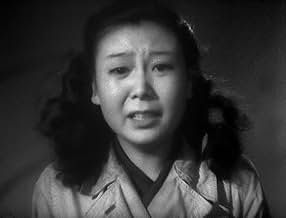
I had said two weeks ago, in a review of Scandal, that Eclipse's new Kurosawa box set could just as easily be called Lesser Kurosawa. That's not fair. I know there are those who champion The Idiot and No Regrets for Our Youth, and even the one film I had previously seen from the set, I Live in Fear, is quite good (though it's hard to argue with it being a lesser film is such an outstanding oeuvre). The truth was, I was hoping very much to find some lesser-known Kurosawa classics. Which brings us to One Wonderful Sunday. Judging solely by IMDb's votes, it's Kurosawa's third least seen movie. And it ranks #26 out of 30 when listed by ratings. Well, I'll be happy to act like I was the first who discovered this hidden gem in Kurosawa's catalogue. This really is a wonderful little film. Influenced very much by Vittorio de Sica, one of Kurosawa's favorite directors, One Wonderful Sunday follows two young lovers, Yuzo and Masako (Isao Numasaki and Chieko Nakakita), spending the titular day together with nothing but ¥35 between them. The two experience sadness and hardship as they go about their date. The structure is episodic, as the lovers experience odd vignettes, meeting various post-war types, like bums and orphans and ticket scalpers. The two try to be happy with each other's company, but Yuzo's poverty makes him feel like less of a man. In one of the strongest sequences in Kurosawa's career, Yuzo decides to act like a cad to drive Masako away. Kurosawa was hardly ever the subtle type, and he is not known for long periods of silence or long takes. This sequence demonstrates a different side of the director. The climax of the film involves an odd breaking of the fourth wall resembling the device in J.M. Barrie's Peter Pan. As far as I know, this is the only time Kurosawa ever attempted such a thing. That wouldn't be too surprising, though, as film audiences rarely interact with characters on screen. It's just too out there for the medium. But God bless Kurosawa for trying it. It's kind of schmaltzy, but I loved the characters so much that at least I thought about clapping for them. A forgotten near-masterpiece.


Did you know
- TriviaThe film's climax was considered a failure in both Japan and the U.S. as audiences refused to clap for the lead characters, though supposedly it went over very well in France, gaining much audience participation.
- GoofsA clock is seen above a shop in the baseball scene. The time showing is 5:05, but it is still only morning.
- SoundtracksLa Cumparsita
Composed by Gerardo Matos Rodríguez
- How long is One Wonderful Sunday?Powered by Alexa
Details
- Release date
- Country of origin
- Language
- Also known as
- Un maravilloso domingo
- Filming locations
- Toho Studios, Tokyo, Japan(Studio)
- Production company
- See more company credits at IMDbPro
- Runtime
- 1h 48m(108 min)
- Color
- Sound mix
- Aspect ratio
- 1.37 : 1
Contribute to this page
Suggest an edit or add missing content