

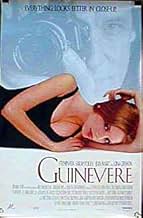
A young girl from an affluent family rebels and becomes involved with a much older photographer.A young girl from an affluent family rebels and becomes involved with a much older photographer.A young girl from an affluent family rebels and becomes involved with a much older photographer.
- Awards
- 2 wins & 7 nominations total



- Leslie
- (as Sharon Mcnight)


- Director
- Writer
- All cast & crew
- Production, box office & more at IMDbPro
Featured reviews
A disturbingly good movie
Rea is truly manipulative as Connor, more pathetic than sinister, who preys on young women - you're never quite sure if you should loathe or pity him. Finally, Jean Smart does an excellent job as the hard-as-nails matriarch, miles away from her smarmy character on Designing Women.
Well worth the price of admission.
The truth about scaredy-cats and horndogs
The writer-director, Audrey Wells, doesn't show much interest in anything else, either. The author of the scripts for GEORGE OF THE JUNGLE and INSPECTOR GADGET, her first indie feature has more than a whiff of the dilettante. Like AMERICAN BEAUTY, GUINEVERE likes to flirt with the idea of having an "edge," then shies away from it. Both of these movies are just too damned clear. The pleasure of that seduction scene is that Harper responds in ways that are messy, funny, unprogrammed; every other scene in the picture makes its point in letters so bold the thickest member of the audience couldn't miss it.
You can take the girl out of the studio, but ain't no way you're taking the studio out of the girl. The lechy photographer's big sin--the thing that makes him evanesce in Harper's eyes--is that, at fifty, he's still stumping and hustling for cash. Can Audrey Wells really intend that it's okay for Connie to be a serial phony, an ego-inflating come-on artist, but his real Achilles' heel is that he never made real money? (Wells' point seems to be: Connie gets Harper's tender young flesh--he could at least pay the bills.) Every scene is so blandly overdetermined it reeks of falsity--especially the much-applauded one where Harper's bitchy mom (Jean Smart) comes into Connie's loft and undoes their relationship with a single cutting observation. (Would these lovers react with such shock to such an obvious accusation?)
For someone making a movie about the romance of the artist's life, Wells seems to have no clue how artists talk to each other, or even behave--she seems to think that's egghead stuff the audience won't care about. But it's that, not sex, that's supposed to be the fundament of Connie and Harper's relationship. Despite Rea's and Polley's efforts, the movie drowns in big-movie timidity. And the ending--a Felliniesque princess fantasy where all of Connie's sweet young things gather for an All That Jazz adieu--maybe intended to be tender. It comes across as a final, passive-aggressive flipping of the bird to a half-forgotten, dirty-minded teacher.
Interesting, but not sadly misses "something"
Interesting that (along with another reviewer) I saw the connection between the Stephen Rea character, Connie, in this movie and Herman Wouk's Noel Airman in the 50's novel "Marjorie Morningstar" and talked about that as we walked home. And as big a bitch as Harper's mother was, she had it right as she saw through Connie. Beautifully acted by all principals!
Jean Smart Steals the Show
Inevitably, of course, their relationship develops beyond the mentor/protege stage, and she learns some things about him that ultimately lead to complications. And she discovers that her reign as Queen Guinevere may not be all that she had expected it to be.
Wells convincingly presents the allurement of a lifestyle free of constraints and overwhelming demands, which makes it quite understandable that the indecisive Harper would choose to go with Connie, rather than adhere to the wishes of her parents, who are rather cold and impersonal and altogether controlling (especially her mother). The fact that Alan dotes on Susan and could seemingly care less about Harper, as well as Deborah's apparent lack of actual concern for Harper, qualifies the facility with which Harper is able to effect her plans so readily. And even when Deborah finds out what Harper is up to (which, of course, was inevitable), she seems to take it as a personal affront more than anything, and is content with merely denigrating the relationship into which her daughter has entered, rather than even trying to change it, which ostensibly at least, would be the appropriate reaction of a concerned parent.
Polley is well cast as Harper, as physically and emotionally she is able to fit Harper's profile perfectly, and she gives a credible performance, though given her unassuming manner and fairly nondescript appearance, it says more about Connie than it does about her. And what you have already been able to deduce about Connie from his pursuit of Harper is further underscored during a scene in which Deborah confronts him with her views on the situation (which is arguably the most powerful scene in the film).
Rea is perfectly cast, as well, affecting a patient, reserved manner, touched with an almost forlorn weariness evocative of a certain wisdom-of-the-world attitude that makes Harper's attraction to him believable. And as the story unfolds, he very subtly allows you to see more of what lies beneath the surface until, in the end, you have a concise picture of who Connie really is. It's a fine, understated performance, and a good bit of work by Rea.
In a supporting role that demands mention, Jean Smart gives a smoldering performance as Deborah, a woman of seemingly insatiable needs and an overwhelming desire to dominate. And Smart plays it perfectly, from the look in her eye to the telling way she carries herself, making the most of her limited screen time and making Deborah the most memorable character of the film.
The supporting cast includes Gina Gershon (Billie), Paul Dooley (Walter), Carrie Preston (Patty), Tracy Letts (Zack), Sharon McNight (Leslie), Sandra Oh (Cindy), Grace Una (April) and Jasmine Guy (Linda). Though not a film with which you can get too emotionally involved, `Guinevere' has it's moments and does manage to maintain interest. The characters are real enough, but they evoke a sense of ambivalence; these are not people you are necessarily going to like or dislike. In the final analysis, it's a good film, and worth seeing-- but with the possible exception of Smart's character, there is nothing especially memorable or compelling about it. I rate this one 6/10.
Fascinating story with a few flaws
Director/writer Audrey Wells, whose best previous writing credits were for "The Truth About Cats and Dogs" does an excellent job bringing this story to the screen in her directing debut. Her shooting of the scenes was sensitively done and brought forth a lot of the emotional elements of the story and the characters. It is clear that this was a labor of love for Wells, but as is often the case, directing one's own work takes away the objectivity about the script leaving most of the plot problems intact.
It is believable that an insecure girl could be lured into a relationship by a charming older man who overtly appreciates her and believes in her abilities. May/September romances (or more aptly in this case April/August) are common and usually happen for all the reasons depicted here. The biggest problem with the story was the introduction of Billie (Gina Gershon), one of Connie's earlier alumni, so early in the story. Billie warns Harper of the specific manipulative lines that Connie uses repeatedly with each of his love interests, almost by rote. She gives great detail right down to the way he touched her and the fact that he calls them all Guinevere.
At that point, Harper does exactly what one might expect, she leaves him. Shortly thereafter, the story loses all credibility as she eagerly goes running back to him, knowing full well that she is being totally and impersonally manipulated. The entire relationship after that waits for an emotional explosion that never comes. The whole thing just sort of withers away with the eventual breakup being no more than a fait accompli. The breakup scene was weak and cowardly, which detracted greatly from the dramatic potential. If Wells had put Billie's scene closer to the end of the story to create the last straw it would have been more effective.
Wells also misses a great opportunity to add fireworks by not emphasizing Harper's relationship with her mother (Jean Smart). There was a natural emotional tension between the two and she was the one character who had complete clarity about the relationship. Finally, without giving too much away, the gathering of the five Connie alumni at the end was a bit goofy and highly implausible given the gravity of the situation. However, Wells does eventually redeem herself with a good ending and some of the best imagery of the film.
Sarah Polley was well cast in this film and exuded the pure naivety of a young woman inexperienced in the ways of love. She was wonderfully awkward and vulnerable and it was very believable that she could fall prey to the ministrations of an older man. Polley has a Winona Ryder quality about her and has excellent potential as an actress. It remains to be seen if she can break out of the role of quirky teen.
Stephen Rea was hopelessly miscast in this role. He didn't have the emotional horsepower to play this character. His acting is somewhat stoic and wooden and this character needed to be charming, passionate and obsessive. The part required an actor more like Michael Caine.
The best performance of the film goes to Jean Smart as Harper's outspoken and gregarious mother. She completely steals the movie with her confrontational scene with Connie, explaining to him why he can't make it with women his own age. She is terrific in every scene she is in and the fortune cookie scene is fantastic.
Overall, I rated this film a 7/10. This film will probably be most appealing to men over 50 and women under 25. None of the flaws were fatal, but the pace was slow and the plot implausible in parts. That detracted from an otherwise engaging story and some very good technical filmmaking.


Did you know
- TriviaDuring the non-union shoot in San Francisco, crew members struck and were joined by star Sarah Polley, who walked the picket line. Striking crew members report that they were quite touched by her action, which was more than a gesture, but rather a sincere belief in workers' rights. On her part, Polley called her union, the Screen Actors Guild, to tell them of her action, and the union representative told her they'd back her if she crossed the picket line. SAG assumed that she was calling to ask whether she could defy the strike and cross the picket line! A shocked and dismayed Polley stayed out with the strikers, and the strike ended after three days when their grievances were met. Subsequently, Polley has stated that she has been told that she lost several job offers due to this incident as producers don't want a union 'militant' despite the film industry being a craft industry dominated by the guild (union) system and she did what she felt was right.
- GoofsThe wet spots on Harper's shirt after taking a shower. They're inconsistent.
- Quotes
Deborah Sloane: For starters, I don't really think that your young girl predilection has much to do... with their firm, young flesh. I mean, when someone like you is out with someone like Harper, you must invite all kinds of comparison and ridicule, which can't be much fun... for either of you. Right, honey?
[look towards daughter]
Deborah Sloane: So then, what is... a man of, uh, your age... doing with my 21-year-old daughter? It'd be easy enough to say you're afraid of mature women, but that's so glib. Afraid of what, exactly? So I kept thinking. And then it hit me. I know exactly what she has that I haven't got. Awe. That's it, isn't it? I mean, no real woman - no woman of experience would ever stand in front of you with awe in her eyes... and say, "Wow, Look at that man. Look at that bohemian wedding photographer... with holes in his jeans. Gosh, isn't he something?" No. I mean, it takes a naive girl for that. It takes Harper for that.
[long pause, comment matter-of-factly]
Deborah Sloane: So what do you think? Am I right?
Connie Fitzpatrick: You are some woman, Deborah.
Deborah Sloane: Mrs. Sloane. I'm Mrs. Sloane.
- SoundtracksCoquette
Music by Carmen Lombardo & Johnny Green
Lyrics by Gus Kahn
Performed by John Pizzarelli
Courtesy of The RCA Records Label of BMG Entertainment
- How long is Guinevere?Powered by Alexa
Details
Box office
- Budget
- $2,600,000 (estimated)
- Gross US & Canada
- $632,283
- Opening weekend US & Canada
- $54,145
- Sep 26, 1999
- Gross worldwide
- $635,680
- Runtime
- 1h 44m(104 min)
- Color
- Sound mix
- Aspect ratio
- 1.85 : 1