IMDb RATING
6.6/10
6.6K
YOUR RATING


Spurred by divine voices and visions, fifteenth century teen Joan d'Arc leads French forces against the English.Spurred by divine voices and visions, fifteenth century teen Joan d'Arc leads French forces against the English.Spurred by divine voices and visions, fifteenth century teen Joan d'Arc leads French forces against the English.
- Won 1 Primetime Emmy
- 15 wins & 29 nominations total
Browse episodes




6.66.5K
1
2
3
4
5
6
7
8
9
10
Featured reviews
Great depiction of the story of Maid of Orleans!
A lot of films have been made about this person, but none of them seems to be as powerful as this one. The reason is not only the fact that few films of such topics include such a great cast (most of the characters are played by great stars of cinema). It is, I think, the way that Mr Duguay portrayed Joan of Arc, really as she most probably was like: a young, sweet maiden who dared say the British: "I will lead my nation to victory through God's help!" She turns out to be a saint rather than, like in some other movies, a religious fanatic.
The portrayal of Joan is created perfectly by a young, beautiful actress, with Polish ancestry, Leelee Sobieski. Throughout the movie, she beautifully stresses her innocence and gentleness going in pairs with the capability of leadership. In my opinion, no matter if Leelee will appear in other 50 films in her life career, this role will always be UNFORGETTABLE!
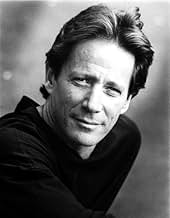
Others who shine in their roles are, of course, Peter O'Toole as bishop Cauchon. On the one hand, he judges Joan and accuses her of pride and vanity; but on the other hand, fights for her "eternal soul". Maximilian Schell also gives a fine performance as a cruel and double faced representative of inquisition. But I particularly like Peter Strauss as La Hire, a commander of the French army. This role is typical for him: someone hesitating and doubting, but in the long run, opening his eyes and totally setting his heart on the values.
"I stopped to believe in others and started to believe myself only. At Orleans, I stopped to believe myself, I started to believe in you," as he says once to Joan - REALLY POWERFUL!
The mini series about Joan of Arc is a must in my film gallery. Without hesitation, I give it 9/10. GREAT STORY, WONDERFUL CAST, EXCELLENT MUSIC, MEMORABLE QUOTES, GREAT LOCATIONS (old castles in the Czech Republic)! This movie is really visually stunning. Do see it! Having seen once, you will feel a need to see this at least for the second time.
The portrayal of Joan is created perfectly by a young, beautiful actress, with Polish ancestry, Leelee Sobieski. Throughout the movie, she beautifully stresses her innocence and gentleness going in pairs with the capability of leadership. In my opinion, no matter if Leelee will appear in other 50 films in her life career, this role will always be UNFORGETTABLE!
Others who shine in their roles are, of course, Peter O'Toole as bishop Cauchon. On the one hand, he judges Joan and accuses her of pride and vanity; but on the other hand, fights for her "eternal soul". Maximilian Schell also gives a fine performance as a cruel and double faced representative of inquisition. But I particularly like Peter Strauss as La Hire, a commander of the French army. This role is typical for him: someone hesitating and doubting, but in the long run, opening his eyes and totally setting his heart on the values.
"I stopped to believe in others and started to believe myself only. At Orleans, I stopped to believe myself, I started to believe in you," as he says once to Joan - REALLY POWERFUL!
The mini series about Joan of Arc is a must in my film gallery. Without hesitation, I give it 9/10. GREAT STORY, WONDERFUL CAST, EXCELLENT MUSIC, MEMORABLE QUOTES, GREAT LOCATIONS (old castles in the Czech Republic)! This movie is really visually stunning. Do see it! Having seen once, you will feel a need to see this at least for the second time.
Best thing on television in a long time
It's not often that television movies compete with big screen productions, but this one does.
Leelee Sobieski's performance is one of the best I've seen by a young actress. She really looked like someone who had seen a vision of divine power, and yet she also looked like a young girl, driven beyond her personal strength by the force of the visions. Many of the other performances were good also, but hers was so outstanding that the others paled next to hers.
The script writers took some creative license with the history. In some cases they did it for length and clarity, improving the storytelling at the expense of the history. In other cases, I didn't see how the story as written improved on the story as understood by history (although they didn't weaken the story either). But overall, the story was excellent storytelling and still good history. And since Leelee's performance was so spectacular, it was good that the script kept her on screen through most of the story.
The battle scenes show how medieval warfare was often more a matter of morale than casualties or tactics. They manage to capture the mood and chaos of battle, without the unnecessary gore that would make the movie inappropriate for children (or television). Most important, the battles feel like they're decided by the morale of the soldiers, and that those soldiers' morale depends on the presence of Joan.
This movie far outclasses almost all television movie-making. Even by the tougher standards of big screen movies, it's still an excellent movie. It makes me want to see more about the Joan of Arc story.
Leelee Sobieski's performance is one of the best I've seen by a young actress. She really looked like someone who had seen a vision of divine power, and yet she also looked like a young girl, driven beyond her personal strength by the force of the visions. Many of the other performances were good also, but hers was so outstanding that the others paled next to hers.
The script writers took some creative license with the history. In some cases they did it for length and clarity, improving the storytelling at the expense of the history. In other cases, I didn't see how the story as written improved on the story as understood by history (although they didn't weaken the story either). But overall, the story was excellent storytelling and still good history. And since Leelee's performance was so spectacular, it was good that the script kept her on screen through most of the story.
The battle scenes show how medieval warfare was often more a matter of morale than casualties or tactics. They manage to capture the mood and chaos of battle, without the unnecessary gore that would make the movie inappropriate for children (or television). Most important, the battles feel like they're decided by the morale of the soldiers, and that those soldiers' morale depends on the presence of Joan.
This movie far outclasses almost all television movie-making. Even by the tougher standards of big screen movies, it's still an excellent movie. It makes me want to see more about the Joan of Arc story.
Wonderful rendition
I had to write a comment after reading the previous one. I found this to be a very refreshingly straightforward rendition of the Joan of Arc story that taught me, as one who only knows the story from movies, a great deal about the political and social realities at the time, including the hunger for real leadership and real spiritual authority. Not too different from our own times now.
Apparently a great deal of research was done, including a thorough reading of the transcripts of Joan's actual trial in the original French, to get both the setting and Joan's personality right. And I think it shows. It certainly held my interest, and nothing about its budget distracted me.
Plus they did not make her a complete victim - she knew enough to go willingly to the stake. And that's a courageous move on the part of the film's creators which adds that final necessary element of spiritual integrity. Enough so I willingly cried many times through it without feeling manipulated... these matters of soul and spirit felt real to me, and for a skeptical Scorpio like me that's high praise for work well done.
Apparently a great deal of research was done, including a thorough reading of the transcripts of Joan's actual trial in the original French, to get both the setting and Joan's personality right. And I think it shows. It certainly held my interest, and nothing about its budget distracted me.
Plus they did not make her a complete victim - she knew enough to go willingly to the stake. And that's a courageous move on the part of the film's creators which adds that final necessary element of spiritual integrity. Enough so I willingly cried many times through it without feeling manipulated... these matters of soul and spirit felt real to me, and for a skeptical Scorpio like me that's high praise for work well done.
15th Century France Goes to War Inspired By a Teenage Girl??
Yes. It wouldn't happen today, that's for sure, but it really did happen once upon a time in France, some 580 years ago. A nation managed to unite against an occupying power, inspired and led by a girl who responded to the request of her mysterious "voices" to do something about it when she was about seventeen years of age. Growing up in Domremy in what was then Lorraine, this girl clearly ended up quite the tomboy, typically dressed in jerkin, doublet and hose, her hair cropped short, ready upon instruction from her voices to don armour and wield the sword if necessary to raise France like a phoenix from the ashes. The film doesn't show this, but in Domremy she was called "Jeanette," when she arrived in France she was called "Joan," and in the actual transcripts of her trial she states, "as for my surname, I know of none," unlike the title of this film which borrows the popular English version of the name by which she is known today.
The story of Joan makes for a daring plot, and were it not for the fact that the transcripts of Joan's trial still indeed exist today -- making her one of the best known persons in history -- and attest to the events described as being most certain in fact, we might otherwise think such a story line to be quite incredible, if not simply ridiculous.
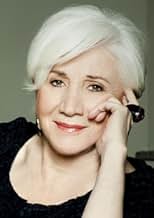
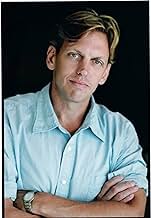
So let's make no mistake about it: Leelee Sobieski had the nerve to play one of the most riveting characters in history, a risky role that many a great actor has already played with determined success. Yet, like the powerful personage she portrays, Ms. Sobieski achieves a major victory in the final scheme of things. Not that Peter O'Toole didn't turn in his usual stunning performance, or that Ms. Sobieski wasn't also well-supported by Neil Patrick Harris, Maury Chaykin, Maximilian Schell, Shirley MacLaine, Chad Willet, and all under the fine direction of Christian Duguay, but let's face it -- it really boils down to being pretty much a one-kid show.
For a change, Hollywood really did this one right. Joan was a teenager, Joan should obviously be played by a teenager, and Leelee Sobieski was clearly the right kid for the job. Ms. Sobieski captured Joan's many contradictions brilliantly. With Joan, pious spirituality took its place along with a frisky charm, a sense of things serious and urgent often relaxed to humor and a sharp wit, the relentless pain of arrows that pierced her body was surely dulled by her thriving desire to live and her unfailing commitment to lead France to its place in a free world that she herself would sadly never see. Leelee Sobieski wove all of these into the highly textured character of Joan, not leaving a single aspect untouched, even though Joan's personality could occasionally disturb those of us who are far less saintly. Ms. Sobieski captured the spirit of a teenaged girl who actually led France to war in the 15th Century, and managed to create a crystalline character that convincingly showed us how that just might happen.
This film borrows freely from history but, to its credit, it thankfully doesn't borrow much of anything from the many previous films about Joan. Leelee Sobieski goes beyond being the best "Joan" in film so far. She so superbly plays the role that one could rightly say that she is the only Joan so far. For this reason alone, don't miss this film.
We don't know much about what Joan looked like, as no portraits or detailed descriptions of her were made from anyone who actually saw her during her short life. We don't know if Leelee Sobieski physically resembles the historical Joan or not and, since it seems we'll never know, it also doesn't matter. Joan was in her teens at her finest hour, Leelee is a teenager, and that's close enough. Furthermore, there are so many interesting facts pertaining to Joan's life, her character, her family, her friends, her enemies, the logistics of the battles, and so forth and so on, that a film would need to go on for hours to even begin to capture most of it, so I think it's quite fair to forgive the film's several omissions. If viewers are inspired to know more about Joan (and after seeing this film they certainly should be), then I'd recommend perusing Regine Pernoud's book entitled, "Joan of Arc by Herself and Her Witnesses," (Scarborough House; Lanham, Maryland; 1994), still considered by many to be the best written work on the subject.
One final and perplexing thought: the mini-series "Joan of Arc" is but one of several films on this character that are being produced within the span of only a couple of years. It almost seems as though Joan (after several hundreds of years have gone by) has somehow caught our imagination as we approach the end of the millenium. Perhaps in our uncertain times when heros seem to be in short supply, we somehow hope that the spirit of a young teenage girl from 15th Century France will guide us and lead us to freedom as we enter upon a new age in history. At any rate, aside from mere coincidence, I just don't know quite how else to explain this phenomenon.
The story of Joan makes for a daring plot, and were it not for the fact that the transcripts of Joan's trial still indeed exist today -- making her one of the best known persons in history -- and attest to the events described as being most certain in fact, we might otherwise think such a story line to be quite incredible, if not simply ridiculous.
So let's make no mistake about it: Leelee Sobieski had the nerve to play one of the most riveting characters in history, a risky role that many a great actor has already played with determined success. Yet, like the powerful personage she portrays, Ms. Sobieski achieves a major victory in the final scheme of things. Not that Peter O'Toole didn't turn in his usual stunning performance, or that Ms. Sobieski wasn't also well-supported by Neil Patrick Harris, Maury Chaykin, Maximilian Schell, Shirley MacLaine, Chad Willet, and all under the fine direction of Christian Duguay, but let's face it -- it really boils down to being pretty much a one-kid show.
For a change, Hollywood really did this one right. Joan was a teenager, Joan should obviously be played by a teenager, and Leelee Sobieski was clearly the right kid for the job. Ms. Sobieski captured Joan's many contradictions brilliantly. With Joan, pious spirituality took its place along with a frisky charm, a sense of things serious and urgent often relaxed to humor and a sharp wit, the relentless pain of arrows that pierced her body was surely dulled by her thriving desire to live and her unfailing commitment to lead France to its place in a free world that she herself would sadly never see. Leelee Sobieski wove all of these into the highly textured character of Joan, not leaving a single aspect untouched, even though Joan's personality could occasionally disturb those of us who are far less saintly. Ms. Sobieski captured the spirit of a teenaged girl who actually led France to war in the 15th Century, and managed to create a crystalline character that convincingly showed us how that just might happen.
This film borrows freely from history but, to its credit, it thankfully doesn't borrow much of anything from the many previous films about Joan. Leelee Sobieski goes beyond being the best "Joan" in film so far. She so superbly plays the role that one could rightly say that she is the only Joan so far. For this reason alone, don't miss this film.
We don't know much about what Joan looked like, as no portraits or detailed descriptions of her were made from anyone who actually saw her during her short life. We don't know if Leelee Sobieski physically resembles the historical Joan or not and, since it seems we'll never know, it also doesn't matter. Joan was in her teens at her finest hour, Leelee is a teenager, and that's close enough. Furthermore, there are so many interesting facts pertaining to Joan's life, her character, her family, her friends, her enemies, the logistics of the battles, and so forth and so on, that a film would need to go on for hours to even begin to capture most of it, so I think it's quite fair to forgive the film's several omissions. If viewers are inspired to know more about Joan (and after seeing this film they certainly should be), then I'd recommend perusing Regine Pernoud's book entitled, "Joan of Arc by Herself and Her Witnesses," (Scarborough House; Lanham, Maryland; 1994), still considered by many to be the best written work on the subject.
One final and perplexing thought: the mini-series "Joan of Arc" is but one of several films on this character that are being produced within the span of only a couple of years. It almost seems as though Joan (after several hundreds of years have gone by) has somehow caught our imagination as we approach the end of the millenium. Perhaps in our uncertain times when heros seem to be in short supply, we somehow hope that the spirit of a young teenage girl from 15th Century France will guide us and lead us to freedom as we enter upon a new age in history. At any rate, aside from mere coincidence, I just don't know quite how else to explain this phenomenon.
True to Both History & Theology - Some Background
Do great times call forth grand souls or do grand souls change great events or both? Joan's World - Historical Background. It was a time when the English crown controlled huge territories in France - and not by way of some invasion or occupation, but as the direct result of the fact the English King, Henry IV, (also Duke of Lancaster) and his son Henry V (both of Shakespeare fame)were descendants of the original French Duke of Normandy, William, who had conquered England in 1066 and thus the King of England continued to remain the feudal "owner" of Normandy, Brittainy and Acquitaine. This English King, Henry V would stake the biggest claim and actually force the King of France to appoint this same English King, his "lawful" successor to the French throne.
Combine this with the fact the the English had a willing French ally in the form of Charles, Duke of Burgundy who was a rival for the French crown. Its no surprise that the Burgundians were the bully boys of this era. They were allies of the English and thus their French-speaking local "enforcers." The English would control these areas for over 300 years. The "Hundred Years War" would be fought to maintain that English control.
So at the time of this story, the Dauphine of France, the weak French prince Charles was not yet the crowned King of France and controlled only a fraction of the country. Even he saw his chances for the crown as limited. Another Charles, the Duke of Burgundy, France, was far more powerful than the Dauphine and to offset his limited powers, Burgandy had allied themselves with the English.
It was into this was brutal world, that Joan of Arc was born. A savage time of "might makes right" and a nobility class-sanctioned brutalization of a citizen population caught in a titanic chess match as pawns between a class of nobles who, although they had taken ancient oaths sworn to guard the defenseless, nevertheless preyed on the very people they were sworn to defend.
There are parallels to many parts of the world where so-called "war lords" have re-imposed a modern-day feudalism of protectors and protected.
Joan was inspired, (and just by what/who, remains a hotly debated theological and psychological discussion to this day) to free France of English domination. Why? Catholics might argue that she was called to this by God in order to preserve France as a bastion of Catholicism against the invading "heresy" of the Protestant Revolution. Think how events might have turned out if England had conquered all of France and imposed Protestantism on France.
Historical Sequel to Joan of Arc.
Henry V would die in France of a fever and never assert this claim. With Joan's military successes as precedents, and the Duke of Burgandy eventually abandoning his English allies, Henry V's son, Henry VI, a weak-willed but pious monarch, would be VERY unsuccessful in asserting any of his father Henry V's claims even though another war, the "Thirty Years" war would be fought by Henry VI's dukes to try to take back lost regions. The English would eventually lose that war and surrender, city by city, castle by castle, the entire regions of Normandy and Aquitaine back to the French. Ultimately, the Ennglish would control only the port city of Calais before losing that last foothold on the Continent. A new war in England, a civil war between the houses and Dukes of York and Lancaster would be fought, in part, from the failures of the Lancastrian King, Henry VI to keep those hard-fought territories - "The War of the Roses."
Now why is the movie great? Because it faithfully captures the life of a illiterate and simple peasant girl, called by unseen forces to change the world around her in direct conflict with the brutality, the conflict, the religious zeal/fanaticism and the lust for power of he times into which Jean D'Arc was born into.
If you don't know much about either Joan or the times, you learn a great deal from this wonderful movie. Joan was on a "mission from God," at least to her way of thinking and the religious forces of her day in the form of the Church hierarchy were dumbfounded initially and enraged, eventually that some "mere girl" would dare to tell them anything about God's will for either herself, let alone her King and country.
The Maid of Orleans' life is a testament to one person, even a unschooled young girl's in an age of female political impotence to change events on a grand scale.
Combine this with the fact the the English had a willing French ally in the form of Charles, Duke of Burgundy who was a rival for the French crown. Its no surprise that the Burgundians were the bully boys of this era. They were allies of the English and thus their French-speaking local "enforcers." The English would control these areas for over 300 years. The "Hundred Years War" would be fought to maintain that English control.
So at the time of this story, the Dauphine of France, the weak French prince Charles was not yet the crowned King of France and controlled only a fraction of the country. Even he saw his chances for the crown as limited. Another Charles, the Duke of Burgundy, France, was far more powerful than the Dauphine and to offset his limited powers, Burgandy had allied themselves with the English.
It was into this was brutal world, that Joan of Arc was born. A savage time of "might makes right" and a nobility class-sanctioned brutalization of a citizen population caught in a titanic chess match as pawns between a class of nobles who, although they had taken ancient oaths sworn to guard the defenseless, nevertheless preyed on the very people they were sworn to defend.
There are parallels to many parts of the world where so-called "war lords" have re-imposed a modern-day feudalism of protectors and protected.
Joan was inspired, (and just by what/who, remains a hotly debated theological and psychological discussion to this day) to free France of English domination. Why? Catholics might argue that she was called to this by God in order to preserve France as a bastion of Catholicism against the invading "heresy" of the Protestant Revolution. Think how events might have turned out if England had conquered all of France and imposed Protestantism on France.
Historical Sequel to Joan of Arc.
Henry V would die in France of a fever and never assert this claim. With Joan's military successes as precedents, and the Duke of Burgandy eventually abandoning his English allies, Henry V's son, Henry VI, a weak-willed but pious monarch, would be VERY unsuccessful in asserting any of his father Henry V's claims even though another war, the "Thirty Years" war would be fought by Henry VI's dukes to try to take back lost regions. The English would eventually lose that war and surrender, city by city, castle by castle, the entire regions of Normandy and Aquitaine back to the French. Ultimately, the Ennglish would control only the port city of Calais before losing that last foothold on the Continent. A new war in England, a civil war between the houses and Dukes of York and Lancaster would be fought, in part, from the failures of the Lancastrian King, Henry VI to keep those hard-fought territories - "The War of the Roses."
Now why is the movie great? Because it faithfully captures the life of a illiterate and simple peasant girl, called by unseen forces to change the world around her in direct conflict with the brutality, the conflict, the religious zeal/fanaticism and the lust for power of he times into which Jean D'Arc was born into.
If you don't know much about either Joan or the times, you learn a great deal from this wonderful movie. Joan was on a "mission from God," at least to her way of thinking and the religious forces of her day in the form of the Church hierarchy were dumbfounded initially and enraged, eventually that some "mere girl" would dare to tell them anything about God's will for either herself, let alone her King and country.
The Maid of Orleans' life is a testament to one person, even a unschooled young girl's in an age of female political impotence to change events on a grand scale.


Did you know
- TriviaJoan of Arc was left-handed.
- GoofsAfter examining plague victims, Joan uses flaming alcohol to sterilize her hands. However, the existence of micro-organisms and their connection to disease was not known at that time - in fact, hand-washing did not become common medical practice until 500 years later.
- Quotes
Bishop Cauchon: Poor, deluded Joan. She has no idea she has put a monster on the throne. Those are my last words as Your Majesty's spiritual advisor.
- Alternate versionsThe DVD (180 minutes) is the complete miniseries, as it contains 40 minutes cut from the VHS, which is 140 minutes.
- ConnectionsFeatured in The 51st Annual Primetime Emmy Awards (1999)
- SoundtracksPanis Angelicus
Written by César Franck
Arranged by Julian Smith
Performed by Charlotte Church
Courtesy of Sony Music Entertainment (UK) Ltd.
- How many seasons does Joan of Arc have?Powered by Alexa
Details
Contribute to this page
Suggest an edit or add missing content