

- Awards
- 3 wins & 12 nominations total



Misato Tate
- Peach Trees' Fairy
- (segment "The Peach Orchard")

Catherine Cadou
- A woman in the fields
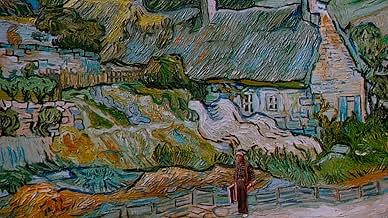
- (segment "Crows")
- Directors
- Writers
- All cast & crew
- Production, box office & more at IMDbPro
7.731.9K
1
2
3
4
5
6
7
8
9
10
Featured reviews
A personal film from Japan's greatest director
Dreams is not a movie for everybody. To some, it may be too artsy of a film for their tastes (what are you doing watching movies then?), others may be annoyed by some of the stories not having clear messages, or leaving questions unanswered. Well, that is because Dreams is a film that was born inside of Kurosawa, and lives inside of him, it's a very personal film that not everybody will appreciate.
The movie consists of eight short stories. Most of which center around the issue of people's relationships with other elements that make up this world that we live in.
The cinematography in Dreams is breathtaking, and is the reason why some people claim that it is a film that puts "Style" above "story". I think that nobody can truly completely understand this film but Kurosawa himself. It is a product of his mind, a film that we cannot fully comprehend since we are not him. But since film is a form of art and in its truest form, a reflection of one's own self, Dreams may have just been one of Kurosawa's personal favorites in his long, amazing career.
The movie consists of eight short stories. Most of which center around the issue of people's relationships with other elements that make up this world that we live in.
The cinematography in Dreams is breathtaking, and is the reason why some people claim that it is a film that puts "Style" above "story". I think that nobody can truly completely understand this film but Kurosawa himself. It is a product of his mind, a film that we cannot fully comprehend since we are not him. But since film is a form of art and in its truest form, a reflection of one's own self, Dreams may have just been one of Kurosawa's personal favorites in his long, amazing career.
it's a film worth contemplating...
More than Just a Dream By Cris Evert Berdin Lato
A series of subconscious peregrinations is not new to the world of cinema. The list is endless when talking about movie plots occurring in dreams. Too often, viewers become so engrossed and thrilled only to find out in the end that “it was all but a dream”. Yet, Akira Kurosawa’s Dreams (Yume) was more of diverting the normal-dream-occurrence-escapade into something worth analyzing and comprehending. It was more of the cinematography rather than the dialog, though there were a number of striking lines worth pondering. Cinematography speaks for the movie itself.
Dreams have woven together the stories of people from different generations. The first two stories Sunshine through the Rain and the Peach Orchard focuses on the little boy (though the 2nd story is not a sequel of the first)—directly telling viewers about childhood. Kurosawa interprets childhood as a period of uncertainty, where one is bound to obedience and is often overcome by innocence and free will.
For those who are not open-minded, Sunshine through the Rain may seem like a showcase of lopsidedness (the mother actually putting more weight on beliefs rather than protecting her own child). The power that culture carries is almost always unstoppable.
The obvious choreography of the foxes was both entertaining and interesting. Entertaining because they look like “out of this world beings” who can’t do anything to straighten their lives. Amazing and interesting because such organization is peculiar for creatures like them.
Peach Orchard on the other hand, tells us about child’s innocence. How hard the boy explained to the imperial spirits that he tried to stop destruction. The story was also about metamorphosis—how a simple and ordinary scenario can turn into something spectacular and extraordinary. Likewise, it tells us about man’s destructive nature and how such abusive act brought so much suffering to the boy. Yes, childhood of uncertainty but this period is also the moment when values are shaped, stain-free, pure and untouched.
For the first two stories, Kurosawa magnificently presented childhood, a stage where thoughts are initially shaped, learnings are taught bit by bit and values are molded.
The next two (The Blizzard and the Tunnel) tackled Kurosawa’s struggle with the self, when an individual seeks his individuality. But such searching happens tumultuously.
When all else fails, one has the tendency to give up and let things be. And just when things get all the worse, you suddenly find the strength to survive.
The Blizzard’s atmosphere was good but I find the scene where the other mountain climbers got up after the storm absurd. Yet I commend the climber who never gave up to his frozen exhaustion.
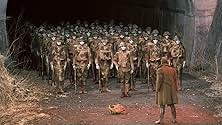
The most effective story was The Tunnel. Astonishingly, Kurosawa has shown that memories of the past could never be hidden even though it may appear to be forgotten. The Tunnel expresses feelings, memories in retrospect. One cannot be ostentatious—pretending to know nothing or as if nothing happened. “Time cannot ease the pain of old wounds, instead the scars it leaves continues to be seen and serves as a reminder of what has transcribed.”
But I was totally dumbfounded when the dead soldiers obeyed their superior. It was both heartwarming and nerve-breaking.
A major shift happened on the fifth segment Crows. For the previous two movies, the atmosphere has been hazy, cold depicting emotional struggles. With Crows, it was finding one self in solitude, learning from experienced people. Virtually stimulating, Crows invites viewers to get to know Van Gogh’s paintings, as the young Japanese artist likewise “invaded” the world of Van Gogh’s paintings.
As one travels through the sands of time, one also discovers his true self.
As the film moves on, Kurosawa evidently led viewers to a more mature stage. After childhood (Sunshine through the Rain and Peach Orchard), adolescence towards the path of seeking our individuality, to a peaceful self-realization (Crows. Towards the end of the film, Kurosawa introduced man’s role to society. That after finding one’s self, an individual can now relate himself to the society.
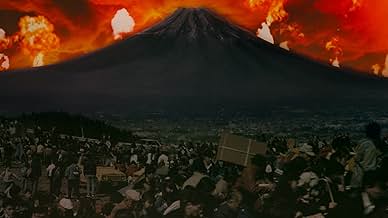
Mount Fiji in Red, the Weeping Demon, and the Village of Watermills were all environmentally inclined. It appears succinct that environment is important; yet if one takes more plodding work, one realizes that merely saying how important environment is is truly different from experiencing that importance. As a metascience fiction of visualization of the end of the world, it awakens feelings of guilt and fear.
“Flowers are crippled,” is a very striking statement in The Weeping Demon. It tells viewers how environmental pollution can destroy everything. Among the eight films, I found the title of this segment ironical but appropriate. I’ve never heard of a demon weeping since all I can reckon is a laughing and chuckling one.
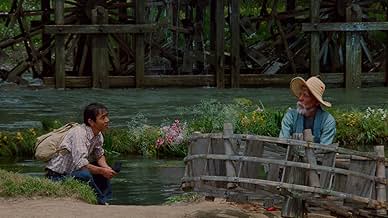
Village of the Watermills significantly features a Utopian place, a place where man blends harmoniously with the environment.
Actors of Dreams portrayed roles well although for some segment I found certain dialogues inappropriate and some actors needed more practice. But as a whole Dreams was a movie which invites viewers to dig deeper, to fathom the real meaning of each dream, understanding them both with the mind and the heart. Dreams, a movie which allows viewers to think and analyze more. In the end, all the efforts were rewarded.
A series of subconscious peregrinations is not new to the world of cinema. The list is endless when talking about movie plots occurring in dreams. Too often, viewers become so engrossed and thrilled only to find out in the end that “it was all but a dream”. Yet, Akira Kurosawa’s Dreams (Yume) was more of diverting the normal-dream-occurrence-escapade into something worth analyzing and comprehending. It was more of the cinematography rather than the dialog, though there were a number of striking lines worth pondering. Cinematography speaks for the movie itself.
Dreams have woven together the stories of people from different generations. The first two stories Sunshine through the Rain and the Peach Orchard focuses on the little boy (though the 2nd story is not a sequel of the first)—directly telling viewers about childhood. Kurosawa interprets childhood as a period of uncertainty, where one is bound to obedience and is often overcome by innocence and free will.
For those who are not open-minded, Sunshine through the Rain may seem like a showcase of lopsidedness (the mother actually putting more weight on beliefs rather than protecting her own child). The power that culture carries is almost always unstoppable.
The obvious choreography of the foxes was both entertaining and interesting. Entertaining because they look like “out of this world beings” who can’t do anything to straighten their lives. Amazing and interesting because such organization is peculiar for creatures like them.
Peach Orchard on the other hand, tells us about child’s innocence. How hard the boy explained to the imperial spirits that he tried to stop destruction. The story was also about metamorphosis—how a simple and ordinary scenario can turn into something spectacular and extraordinary. Likewise, it tells us about man’s destructive nature and how such abusive act brought so much suffering to the boy. Yes, childhood of uncertainty but this period is also the moment when values are shaped, stain-free, pure and untouched.
For the first two stories, Kurosawa magnificently presented childhood, a stage where thoughts are initially shaped, learnings are taught bit by bit and values are molded.
The next two (The Blizzard and the Tunnel) tackled Kurosawa’s struggle with the self, when an individual seeks his individuality. But such searching happens tumultuously.
When all else fails, one has the tendency to give up and let things be. And just when things get all the worse, you suddenly find the strength to survive.
The Blizzard’s atmosphere was good but I find the scene where the other mountain climbers got up after the storm absurd. Yet I commend the climber who never gave up to his frozen exhaustion.
The most effective story was The Tunnel. Astonishingly, Kurosawa has shown that memories of the past could never be hidden even though it may appear to be forgotten. The Tunnel expresses feelings, memories in retrospect. One cannot be ostentatious—pretending to know nothing or as if nothing happened. “Time cannot ease the pain of old wounds, instead the scars it leaves continues to be seen and serves as a reminder of what has transcribed.”
But I was totally dumbfounded when the dead soldiers obeyed their superior. It was both heartwarming and nerve-breaking.
A major shift happened on the fifth segment Crows. For the previous two movies, the atmosphere has been hazy, cold depicting emotional struggles. With Crows, it was finding one self in solitude, learning from experienced people. Virtually stimulating, Crows invites viewers to get to know Van Gogh’s paintings, as the young Japanese artist likewise “invaded” the world of Van Gogh’s paintings.
As one travels through the sands of time, one also discovers his true self.
As the film moves on, Kurosawa evidently led viewers to a more mature stage. After childhood (Sunshine through the Rain and Peach Orchard), adolescence towards the path of seeking our individuality, to a peaceful self-realization (Crows. Towards the end of the film, Kurosawa introduced man’s role to society. That after finding one’s self, an individual can now relate himself to the society.
Mount Fiji in Red, the Weeping Demon, and the Village of Watermills were all environmentally inclined. It appears succinct that environment is important; yet if one takes more plodding work, one realizes that merely saying how important environment is is truly different from experiencing that importance. As a metascience fiction of visualization of the end of the world, it awakens feelings of guilt and fear.
“Flowers are crippled,” is a very striking statement in The Weeping Demon. It tells viewers how environmental pollution can destroy everything. Among the eight films, I found the title of this segment ironical but appropriate. I’ve never heard of a demon weeping since all I can reckon is a laughing and chuckling one.
Village of the Watermills significantly features a Utopian place, a place where man blends harmoniously with the environment.
Actors of Dreams portrayed roles well although for some segment I found certain dialogues inappropriate and some actors needed more practice. But as a whole Dreams was a movie which invites viewers to dig deeper, to fathom the real meaning of each dream, understanding them both with the mind and the heart. Dreams, a movie which allows viewers to think and analyze more. In the end, all the efforts were rewarded.
Beautifully made and achieved
I was pleasantly surprised with dreams, not only in terms of content but also aesthetically. There are very few films that manage to embody personal, local and global concerns as Akira Kurosava has managed in this production. There are so many underlying topics that it is difficult to concentrate in just a few for the purpose of this review, but I believe it is fair to say that Dreams portrays our individual and collective dreams and nightmares, reflecting that sometimes what we dream of today is what will keep us awake tomorrow. A nice range of representations of concerns from the deepest and most personal childhood worries and fantasies to the more complex issues of mental illness, extreme ambition, destruction of our environment and death. In all I recommend this film to anyone who has the chance to see it, It is possible that Dreams may not appeal to a mainstream audience in terms of content because there is a lot of symbolism and critical engagement but the photography and sceneries are for sure something that should not go amiss for anyone. If you get the chance it is truly worth giving it your time, a fantastic experience.
A way of life
I am not inclined to post my opinion on web pages. In fact, this is the first time that I feel compelled to let my words be heard on the web. However, having read from other users that "Yume" is "a waste of time" and "too personal" to be enjoyed, I was so disappointed that I felt the right time to speak up had come.
I am the first one to agree that this is not a film for everyone. It is actually far from that. Alas, in this world where the vastest majority of people feel that the necessary and sufficient condition for a film to be good is to have as much special effects as possible, "Yume" sadly faces no other fate than to be overlooked by almost everybody.
It is those few people that might consider watching this film that have the opportunity to appreciate its full greatness. There are still many hurdles on the way, though. For many Western people, including myself, the fact that "Yume" orbits around Japanese legends is a big obstacle to overcome, as we are not well acquainted with their meaning. I am convinced that Kurosawa's "Dreams" conceal much of their true objective to us who are not familiar enough with the Japanese culture.
But my advice is: forget these problems. There are thousands of other details to enjoy. From just a cinematographic point of view, Kurosawa's mastery of colour is unrivaled, and a sound reason to watch this film, yet not the only one by far. The true value of "Yume", in my opinion, is the use of the parabolas presented disguised as dreams to teach us a way of life. The absurdity of war. The beauty of nature. The need to preserve our environment. In summary: a praise to life. And yet, Kurosawa being old himself when he filmed his "Dreams", looks at death and presents it as the last station of a wonderful journey. Carpe diem, yes, but not to the point of being scared. Life will follow its course as does the river at the end of the movie, with or without us being here to enjoy it. Just be thankful for the small things in life; they are the most important. Enjoy them while you can and you will leave this existence in peace with yourself.
"Yume" is one of these small, humble things, so humble that it can be overlooked by many. It would be a waste. Don't let this happen to you. You would miss a true masterpiece. You would miss Kurosawa's way of life.
I am the first one to agree that this is not a film for everyone. It is actually far from that. Alas, in this world where the vastest majority of people feel that the necessary and sufficient condition for a film to be good is to have as much special effects as possible, "Yume" sadly faces no other fate than to be overlooked by almost everybody.
It is those few people that might consider watching this film that have the opportunity to appreciate its full greatness. There are still many hurdles on the way, though. For many Western people, including myself, the fact that "Yume" orbits around Japanese legends is a big obstacle to overcome, as we are not well acquainted with their meaning. I am convinced that Kurosawa's "Dreams" conceal much of their true objective to us who are not familiar enough with the Japanese culture.
But my advice is: forget these problems. There are thousands of other details to enjoy. From just a cinematographic point of view, Kurosawa's mastery of colour is unrivaled, and a sound reason to watch this film, yet not the only one by far. The true value of "Yume", in my opinion, is the use of the parabolas presented disguised as dreams to teach us a way of life. The absurdity of war. The beauty of nature. The need to preserve our environment. In summary: a praise to life. And yet, Kurosawa being old himself when he filmed his "Dreams", looks at death and presents it as the last station of a wonderful journey. Carpe diem, yes, but not to the point of being scared. Life will follow its course as does the river at the end of the movie, with or without us being here to enjoy it. Just be thankful for the small things in life; they are the most important. Enjoy them while you can and you will leave this existence in peace with yourself.
"Yume" is one of these small, humble things, so humble that it can be overlooked by many. It would be a waste. Don't let this happen to you. You would miss a true masterpiece. You would miss Kurosawa's way of life.
Beautiful
Truly one of the most beautiful films I have ever seen. I saw this film for the first time in 1993 and it was placed forever in my mind as one of my greatest cinematic experiences. I agree with what another reviewer said about this film, that it is not for everyone. It is very artistic in that the cinematography carries a lot of the story and some may become bored with it. Hollywood has a way of brainwashing a lot of viewers into needing a lot of dialog or action. If that's what you're after, you wont find it here. You have to use your brain for this one. This movie is Japanese and what little dialog there is, is in subtitled for the American viewer. So you may need to do a little reading. This is not simply a movie; it is several short, amazing stories that stem from the mind of Akira Kurosawa (a genius in my book). One is like a beautiful fairytale and another is a nightmarish fable and still another is a terribly haunting ghost story, there are others but all are done very well. This film needs to be seen in the letterbox format as it was intended. The cinematography, as I said earlier, contributes so much that it should be viewed completely. I really don't know what else to say about this movie except that if you have an artistic streak and like to see how movies can become art I would highly recommend Yume (Dreams).


Did you know
- TriviaAkira Kurosawa had trouble getting financing from studios in Japan, blaming much on the political nature of his criticism of nuclear power in the film. He sent a copy of his script to Steven Spielberg, who liked it, and helped get a deal for the film through Warner Bros.
- ConnectionsEdited into Gli ultimi giorni dell'umanità (2022)
- SoundtracksIn the Village
(from "Caucasian Sketches, Suite for Orchestra Op. 10, No. 2")
Music by Mikhail Ippolitov-Ivanov (as Ippolitov-Ivanov)
Conducted by Vladimir Fedoseyev (as Vladimir Fedoseev)
Performed by Moscow Radio Symphony Orchestra
- How long is Dreams?Powered by Alexa
Details
- Release date
- Countries of origin
- Languages
- Also known as
- Akira Kurosawa's Dreams
- Filming locations
- Daio Wasabi Farm, Azumino, Nagano, Japan(The Watermill village)
- Production company
- See more company credits at IMDbPro
Box office
- Budget
- $12,000,000 (estimated)
- Gross US & Canada
- $1,963,207
- Gross worldwide
- $2,974,809
- Runtime
- 1h 59m(119 min)
- Sound mix
- Aspect ratio
- 1.85 : 1
Contribute to this page
Suggest an edit or add missing content