

- Awards
- 3 wins & 12 nominations total



Misato Tate
- Peach Trees' Fairy
- (segment "The Peach Orchard")

Catherine Cadou
- A woman in the fields
- (segment "Crows")
- Directors
- Writers
- All cast & crew
- Production, box office & more at IMDbPro
7.731.9K
1
2
3
4
5
6
7
8
9
10
Featured reviews
An art film for thoughtful meditation
Most people dream but I wonder how many are rewarded with such beauty when their eyelids close and they drift into semi-consciousness. Kurosawa has collected some of his dreams and shares them with us. I don't ever remember seeing such vivid colours in my own dreams, but like Kurosawa's they are often fragmented and incomplete with a mystical quality involving spirits and the dead.
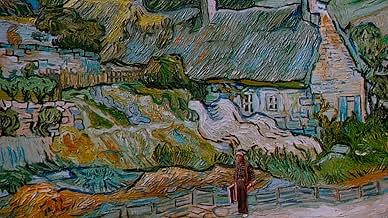
I like the peach tree scene where true repentance makes things right. Not only the peach blossom but also the kimono of the characters tiered up the hillside are most pleasing to the eye. As also is the meeting with van Gogh when his paintings with mad whirls of colour are brought to life and form part of the landscape.
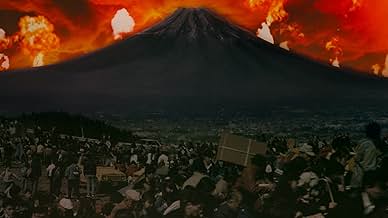
Some dreams can be very frustrating when we are caught in a dangerous situation from which there is no ready means of escape. This is dramatically illustrated in the Mt. Fuji episode in which nuclear plants explode and a fog of coloured radio-active gases envelopes the characters. There is a strong message here about saving the environment. This message is also accented in the ogre scene and the peach tree scene and the water mill scene.
Some viewers might find the going slow at times. For example, the mountain climbers struggling in knee-deep snow seem to move at the rate of a few steps each minute and being encouraged by their leader to keep going as they strive to reach their camp. A mystical event occurs and in the morning when the heavy fog clears, a surprise awaits them. This feeling of striving and getting nowhere is common in dreams, at least in mine.
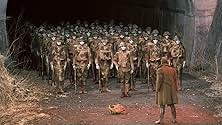
There is also mysticism involved in the tunnel scene where an ex-soldier meets the remainder of his platoon all of whom were killed in battle. The sound of their marching feet echoing through the empty tunnel is quite chilling.
Apart from a few dramatic moments the film is somewhat subdued. It is an art film beautifully conceived and should be reserved for one of those quiet moments when we are in a meditative mood.
I like the peach tree scene where true repentance makes things right. Not only the peach blossom but also the kimono of the characters tiered up the hillside are most pleasing to the eye. As also is the meeting with van Gogh when his paintings with mad whirls of colour are brought to life and form part of the landscape.
Some dreams can be very frustrating when we are caught in a dangerous situation from which there is no ready means of escape. This is dramatically illustrated in the Mt. Fuji episode in which nuclear plants explode and a fog of coloured radio-active gases envelopes the characters. There is a strong message here about saving the environment. This message is also accented in the ogre scene and the peach tree scene and the water mill scene.
Some viewers might find the going slow at times. For example, the mountain climbers struggling in knee-deep snow seem to move at the rate of a few steps each minute and being encouraged by their leader to keep going as they strive to reach their camp. A mystical event occurs and in the morning when the heavy fog clears, a surprise awaits them. This feeling of striving and getting nowhere is common in dreams, at least in mine.
There is also mysticism involved in the tunnel scene where an ex-soldier meets the remainder of his platoon all of whom were killed in battle. The sound of their marching feet echoing through the empty tunnel is quite chilling.
Apart from a few dramatic moments the film is somewhat subdued. It is an art film beautifully conceived and should be reserved for one of those quiet moments when we are in a meditative mood.
One of the best spins on the evolution of man since 2001: A Space Odyssey
"Dreams" is one of the greatest puzzles to hit the screen since Tetris. If you're up for the challenge, you should definitely give it a try. Here Kurosawa presents us with 8 fragments which may seem confusing at first, but ultimately they tell a powerful story of man's evolution beginning at childhood in a traditional setting, taking us through adulthood, war and waste, to a postapocalyptic future that could be called "scifi", and ultimately capping the story with a stunning piece I won't ruin for you.
The story loosely follows a character called "I" as he grows up in his dreams. He is presented as merely an observer, almost like the faceless interviewer in "Citizen Kane," or for you literature fans he may remind you a lot of Dante in the epic "Divine Comedy". That is, he observes humankind through its sins. Aye, don't be fooled by Kurosawa's gorgeous, bright, uplifting visuals; this is perhaps Kurosawa's darkest tale.
The 8 stories are: 1) As a young child, he inadvertantly disrupts a secret ritual of foxes in the forest. 2) Still a child, he meets the ghosts of trees that his family destroyed. 3) Now a young adult, he is the leader of an ill-fated mountain expedition visited by a mysterious spirit. 4) Older yet, past the age of youthful fire, he is a soldier returning from a terrible war and haunted by ghosts of his battalion. 5) Now a middle aged artist, he encounters the ghost of Vincent Van Gogh. 6) Abruptly he finds himself in the middle of a (deliberately) insane disaster flick. 7) The scifi segment where he wakes up in a postapocalyptic future full of cannibal demons (yes, Kurosawa made a zombie flick). And ultimately 8) The one I won't mention because it's for you see how it all ends.
All 8 stories follow the same theme of "I" meeting ghosts who tell of man's sins. Worthy of note is our hero's passivity which is itself one of the failings of man. As "I" grows up and faces increasingly devastating consequences for humankind's shortsightendess, we realize Kurosawa's poignant message. Each "dream" is a stark warning.
If you watch this film, I suggest paying close attention to 1 subtle but important thing. Notice Kurosawa's use of "special effects" because that is the key to a deeper message. In the beginning when "I" is a child, the special effects (forest spirits) are merely people dressed up in elaborate masks--a very childlike way of perceiving fantasy. In the young adult segments, the special effects (ghosts of soldiers) are disturbingly realistic yet stylized. In middle age, the excellent Van Gogh segment, the special effects are magnificently overwhelming, literally engulfing the entire screen. Then for the 2 climactic "scifi" segments, suddenly the effects are almost absurd like a cheesy disaster flick (this was deliberate. Kurosawa even enlisted the assistance of his friend Ishiro Honda who directed a few Godzilla flicks). And we end on the 8th magical segment which has no special effects at all.
Kurosawa was telling us a story through the evolution of visuals, just as much as he was telling us a story of sequential events. If you can follow these and other clues that are peppered throughout, you'll realize that "Dreams" has a very clear path and a very cryptic but powerful story. So put down your sodoku; this is the real deal.
The story loosely follows a character called "I" as he grows up in his dreams. He is presented as merely an observer, almost like the faceless interviewer in "Citizen Kane," or for you literature fans he may remind you a lot of Dante in the epic "Divine Comedy". That is, he observes humankind through its sins. Aye, don't be fooled by Kurosawa's gorgeous, bright, uplifting visuals; this is perhaps Kurosawa's darkest tale.
The 8 stories are: 1) As a young child, he inadvertantly disrupts a secret ritual of foxes in the forest. 2) Still a child, he meets the ghosts of trees that his family destroyed. 3) Now a young adult, he is the leader of an ill-fated mountain expedition visited by a mysterious spirit. 4) Older yet, past the age of youthful fire, he is a soldier returning from a terrible war and haunted by ghosts of his battalion. 5) Now a middle aged artist, he encounters the ghost of Vincent Van Gogh. 6) Abruptly he finds himself in the middle of a (deliberately) insane disaster flick. 7) The scifi segment where he wakes up in a postapocalyptic future full of cannibal demons (yes, Kurosawa made a zombie flick). And ultimately 8) The one I won't mention because it's for you see how it all ends.
All 8 stories follow the same theme of "I" meeting ghosts who tell of man's sins. Worthy of note is our hero's passivity which is itself one of the failings of man. As "I" grows up and faces increasingly devastating consequences for humankind's shortsightendess, we realize Kurosawa's poignant message. Each "dream" is a stark warning.
If you watch this film, I suggest paying close attention to 1 subtle but important thing. Notice Kurosawa's use of "special effects" because that is the key to a deeper message. In the beginning when "I" is a child, the special effects (forest spirits) are merely people dressed up in elaborate masks--a very childlike way of perceiving fantasy. In the young adult segments, the special effects (ghosts of soldiers) are disturbingly realistic yet stylized. In middle age, the excellent Van Gogh segment, the special effects are magnificently overwhelming, literally engulfing the entire screen. Then for the 2 climactic "scifi" segments, suddenly the effects are almost absurd like a cheesy disaster flick (this was deliberate. Kurosawa even enlisted the assistance of his friend Ishiro Honda who directed a few Godzilla flicks). And we end on the 8th magical segment which has no special effects at all.
Kurosawa was telling us a story through the evolution of visuals, just as much as he was telling us a story of sequential events. If you can follow these and other clues that are peppered throughout, you'll realize that "Dreams" has a very clear path and a very cryptic but powerful story. So put down your sodoku; this is the real deal.
Living is exciting
Akira Kurosawa's insights on man's need to harmonize with nature, the costs of war and the bad fruits that nuclear power can bear. This is the first Kurosawa movie I have seen, but I can see how true it is that Kurosawa is a master of creating atmosphere in a film. Such as the dark, post-nuclear apocalyptic world of THE WEEPING DEMON. Or the very first episode when the little boy sees something he is not supposed to see in the forest.
I found THE BLIZZARD rather strange, and you'll see a scary part when the mountainman is having his mirage of the beautiful woman who symbolizes the snowstorm. I'm not sure what the significance of the dog was in THE TUNNEL, but I guess it illustrates the fact that though he was the commander of Third Platoon , he felt like a coward because of his command, his men paid the price.... yet he is guilty of still being alive; he's afraid of the dog.
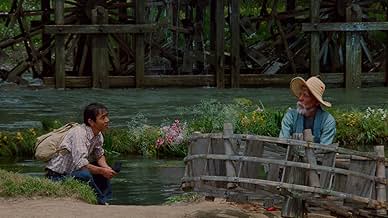
It ends rather low key, but the last episode THE VILLAGE IN THE WATERMILLS is the most insightful and bold in expressing the movie's theme... of harmonizing with nature, and maybe harmonizing with ourselves.
The procession displays the unity and the communal harmony that the villagers have. And it is the exact opposite of what is grieved about in MOUNT FUJI IN RED or THE WEEPING DEMON. The cinematography is just beautiful. The movie is beautiful and captivating.
Akira Kurosawa's YUME is Grade A- 9/10
I found THE BLIZZARD rather strange, and you'll see a scary part when the mountainman is having his mirage of the beautiful woman who symbolizes the snowstorm. I'm not sure what the significance of the dog was in THE TUNNEL, but I guess it illustrates the fact that though he was the commander of Third Platoon , he felt like a coward because of his command, his men paid the price.... yet he is guilty of still being alive; he's afraid of the dog.
It ends rather low key, but the last episode THE VILLAGE IN THE WATERMILLS is the most insightful and bold in expressing the movie's theme... of harmonizing with nature, and maybe harmonizing with ourselves.
The procession displays the unity and the communal harmony that the villagers have. And it is the exact opposite of what is grieved about in MOUNT FUJI IN RED or THE WEEPING DEMON. The cinematography is just beautiful. The movie is beautiful and captivating.
Akira Kurosawa's YUME is Grade A- 9/10
So I'm not the only one with weird dreams
Going back to what made Akira Kurosawa a star, Dreams is a film driven by a completely original concept. Like Rashomon, this is something that had never been done before. To my knowledge, nobody since has had the skill or guts to make a movie that accurately captures the spirit of........ bizarre Dreams. These stories are filmed and written just like real dreams. They're full of strange events that most of the time make no sense, yet everyone in the story totally believes it to be normal.
My favourite segments are "The Tunnel", as story where a former military commander encounters the ghosts of all the soldiers who died under his command. The Commander explaining why his soldiers died is hands down the best acting in the movie. My second favourite wold be "The Peach Orchard". This is about a young boy that finds a group of living dolls in the fields. The dolls are furious that the boy's family have destroyed all the peach tress in the Orchard. This segment was the most dreamlike. My third favourite would be "Mount Fuji In Red". In that there is a nuclear meltdown. Panic spreads and a few survivors contemplate whether or not to end their lives.
In traditional Kurosawa fashion, this movie is visually breathtaking. Kurosawa films don't just look great, they look unique and interesting. The visuals in Dreams helps create the hypnotic dream-like state. In the "Crows" story, a man enters the world of a Van Gogh painting. Parts of the scenery here are natural landscapes, and parts are made to look like a painting. In "Blizzard" mountain climbers are on the verge of death. They're rescued by a snow spirit. The blinding snow and the sort of slow motion effect when you see the Snow Fairy makes this segment perhaps the most hypnotic images Kurosawa has ever produced.
I wouldn't want anyone to get the idea that this is just a bunch of unconnected segments. Several characters appear in various segments, and some are meant to play back to back. I have to say that Dreams may not be for everyone. I'd recommend everyone alive check it out, though. Some may love it, some may not understand it. I'm on the side of this being one of the last brilliant works of the World's greatest Director.
My favourite segments are "The Tunnel", as story where a former military commander encounters the ghosts of all the soldiers who died under his command. The Commander explaining why his soldiers died is hands down the best acting in the movie. My second favourite wold be "The Peach Orchard". This is about a young boy that finds a group of living dolls in the fields. The dolls are furious that the boy's family have destroyed all the peach tress in the Orchard. This segment was the most dreamlike. My third favourite would be "Mount Fuji In Red". In that there is a nuclear meltdown. Panic spreads and a few survivors contemplate whether or not to end their lives.
In traditional Kurosawa fashion, this movie is visually breathtaking. Kurosawa films don't just look great, they look unique and interesting. The visuals in Dreams helps create the hypnotic dream-like state. In the "Crows" story, a man enters the world of a Van Gogh painting. Parts of the scenery here are natural landscapes, and parts are made to look like a painting. In "Blizzard" mountain climbers are on the verge of death. They're rescued by a snow spirit. The blinding snow and the sort of slow motion effect when you see the Snow Fairy makes this segment perhaps the most hypnotic images Kurosawa has ever produced.
I wouldn't want anyone to get the idea that this is just a bunch of unconnected segments. Several characters appear in various segments, and some are meant to play back to back. I have to say that Dreams may not be for everyone. I'd recommend everyone alive check it out, though. Some may love it, some may not understand it. I'm on the side of this being one of the last brilliant works of the World's greatest Director.
Beautiful
Truly one of the most beautiful films I have ever seen. I saw this film for the first time in 1993 and it was placed forever in my mind as one of my greatest cinematic experiences. I agree with what another reviewer said about this film, that it is not for everyone. It is very artistic in that the cinematography carries a lot of the story and some may become bored with it. Hollywood has a way of brainwashing a lot of viewers into needing a lot of dialog or action. If that's what you're after, you wont find it here. You have to use your brain for this one. This movie is Japanese and what little dialog there is, is in subtitled for the American viewer. So you may need to do a little reading. This is not simply a movie; it is several short, amazing stories that stem from the mind of Akira Kurosawa (a genius in my book). One is like a beautiful fairytale and another is a nightmarish fable and still another is a terribly haunting ghost story, there are others but all are done very well. This film needs to be seen in the letterbox format as it was intended. The cinematography, as I said earlier, contributes so much that it should be viewed completely. I really don't know what else to say about this movie except that if you have an artistic streak and like to see how movies can become art I would highly recommend Yume (Dreams).


Did you know
- TriviaAkira Kurosawa had trouble getting financing from studios in Japan, blaming much on the political nature of his criticism of nuclear power in the film. He sent a copy of his script to Steven Spielberg, who liked it, and helped get a deal for the film through Warner Bros.
- ConnectionsEdited into Gli ultimi giorni dell'umanità (2022)
- SoundtracksIn the Village
(from "Caucasian Sketches, Suite for Orchestra Op. 10, No. 2")
Music by Mikhail Ippolitov-Ivanov (as Ippolitov-Ivanov)
Conducted by Vladimir Fedoseyev (as Vladimir Fedoseev)
Performed by Moscow Radio Symphony Orchestra
- How long is Dreams?Powered by Alexa
Details
- Release date
- Countries of origin
- Languages
- Also known as
- Akira Kurosawa's Dreams
- Filming locations
- Daio Wasabi Farm, Azumino, Nagano, Japan(The Watermill village)
- Production company
- See more company credits at IMDbPro
Box office
- Budget
- $12,000,000 (estimated)
- Gross US & Canada
- $1,963,207
- Gross worldwide
- $2,977,482
- Runtime
- 1h 59m(119 min)
- Sound mix
- Aspect ratio
- 1.85 : 1
Contribute to this page
Suggest an edit or add missing content