Days of Being Wild
Original title: Ah fei jing juen
- 1h 34m
IMDb RATING
7.4/10
28K
YOUR RATING


A man tries to find out who his real mother is after the woman who raised him tells him the truth.A man tries to find out who his real mother is after the woman who raised him tells him the truth.A man tries to find out who his real mother is after the woman who raised him tells him the truth.
- Awards
- 17 wins & 9 nominations total
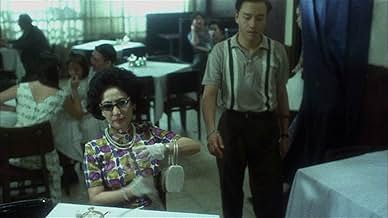



Rebecca Pan
- Rebecca
- (as Tik-Wa Poon)


Tony Leung Chiu-wai
- Chow Mo-wan
- (as Tony Chiu Wai Leung)


- Director
- Writers
- All cast & crew
- Production, box office & more at IMDbPro
7.427.9K
1
2
3
4
5
6
7
8
9
10
Featured reviews
Challenging but the payoff is worthwhile
Kar Wai Wong's 2nd feature film is considerably more abstract than his first "As Tears Go By". so if you're looking for a good first Kar Wai Wong film to watch, you should probably start there.
"Days of Being Wild" reminded me very much of the classic French book "The Stranger" by Albert Camus; in fact I wonder if Kar Wai Wong may have been influenced by that book. Both stories center around a young man who is very unemotional except at times of explosive violence. Both stories show the young man to have severe mommy issues, i.e. a disconnection from his mother resulting in never learning how to show love and caring. And in both stories, the main character follows a very existentialistic path in life. He goes wherever life may take him with no connection to people or places.
The main character is not very likable. In fact he's a downright jerk toward women. But this ties in with the story of him trying to find his mother who abandoned him when he was a child. At the same time we see the interweaving of 4 other characters: 2 girlfriends, 1 devoted friend who falls for one of the girlfriends, and a policeman who enters the story by chance. Oh yeah, there's also the young man's rich aunt (adoptive mother) and a string of men she keeps.
It may be tough keeping up with all the characters, especially when the story starts moving to different locations. Certain events may seem random, but in the end it all comes together with a very poetic thought.
If you're a cinema geek, you'll love this film for its sheer technical achievements. A lot of scenes are shot with reflections & mirrors, allowing us to see the faces of different people simultaneously (without the camera jumping back & forth to whoever is talking). For example, the camera may be on a woman while she talks to a man. He is in front of the camera with his back to us, but we see his face & expressions in the reflection of a bathroom mirror behind the woman. Yea, I'm a cinema geek so I love stuff like that. If you like little details, you'll have a great time watching "Days of Being Wild".
"Days of Being Wild" reminded me very much of the classic French book "The Stranger" by Albert Camus; in fact I wonder if Kar Wai Wong may have been influenced by that book. Both stories center around a young man who is very unemotional except at times of explosive violence. Both stories show the young man to have severe mommy issues, i.e. a disconnection from his mother resulting in never learning how to show love and caring. And in both stories, the main character follows a very existentialistic path in life. He goes wherever life may take him with no connection to people or places.
The main character is not very likable. In fact he's a downright jerk toward women. But this ties in with the story of him trying to find his mother who abandoned him when he was a child. At the same time we see the interweaving of 4 other characters: 2 girlfriends, 1 devoted friend who falls for one of the girlfriends, and a policeman who enters the story by chance. Oh yeah, there's also the young man's rich aunt (adoptive mother) and a string of men she keeps.
It may be tough keeping up with all the characters, especially when the story starts moving to different locations. Certain events may seem random, but in the end it all comes together with a very poetic thought.
If you're a cinema geek, you'll love this film for its sheer technical achievements. A lot of scenes are shot with reflections & mirrors, allowing us to see the faces of different people simultaneously (without the camera jumping back & forth to whoever is talking). For example, the camera may be on a woman while she talks to a man. He is in front of the camera with his back to us, but we see his face & expressions in the reflection of a bathroom mirror behind the woman. Yea, I'm a cinema geek so I love stuff like that. If you like little details, you'll have a great time watching "Days of Being Wild".
Going into orbit in the city that never sleeps..
I like movies where outcast characters drift through the margins of life in search for not simply meaning, this is a grand word and drifters don't have much time for grandstanding, but a small warm corner they can call their own, and there's a lot of drifting in Days of Being Wild, literal and figurative. This is one of those great movies that speak of what it means to be young and alienated, not in the angsty living-room sense of the term, but in the form of real tangible problems, the ones you face alone in the cheap room of a fleabag hotel or in an empty warehouse in the hours after work. Days of Being Wild to me is like a procession of life, in the small hours of the night, filled with beauty and pain.
Now when all the normal people with steady jobs and a steady family have gone to sleep, all those still hanging in the balance of existence come out and fly beneath the cold street lamps. Now and then their wings touch, for a fleeting moment, and then they're alone again, flying in circles around the street lamps, like a moth instinctively drawn to something that is bright and warm. This reminds me of the line spoken by Warren Oates in that quintessential American movie about alienation and drifting, Monte Hellman's Two-Lane Blacktop: "if I'm not grounded soon, I'm gonna go into orbit". Hollywood rarely understands this type of character. Only someone who has never experienced that directionless orbit can glorify the drifting. The characters here need to be grounded soon. They need human warmth and affection and to know that there's a place they can come back at night and call it home.
We usually think of a drifter as someone who sets off into the desert, into a bleak barren landscape, it's probably easier that way. It takes a step back to look at life around us, as we wait for the subway in crowd, to realize a drifter can be a drifter among people. American film noir treats the city as an 'asphalt jungle', while for some reason Asians seem to tap into the melancholy of the 'asphalt desert'. I'm thinking films like Johnnie To's PTU and Takashi Miike's Rainy Dog. This is one of those films. One of the characters is a cop who does a latenight patrol, always wandering around empty streets by himself. He confesses a little later, that he wanted to be a sailor. The metaphor is poignant.
But at the same time Wong-Kar Wai says a lot of things about compulsion, that driving monomania that sets these people into orbit, and disassociates them from the world. I like how all this plays out in a 50's Hong Kong of cold blue lights and wet streets reflecting neon lights from a distant shop sign. It's not Chungking Express yet, and I'm glad that it's not, Chungking is a vibrant colorful place, and this one is a world that begins a corner down the street from it, where the bustle of city life, where the other people live their lives, is but a faint echo. In fact, until the movie washes up in the Phillipines to get involved in a brawl and take the night train out of the world, we hardly see any people outside the six characters, the small birds whose wings touch now and then.
This is raw and touching and real, like the best of gritnik cinema done by a romantic. Sam Peckinpah was another big romantic of gritnik cinema, but his romance was masculine and fatalist, he was speaking about the ends of things. Wong-Kar Wai tells us about love and obsession, and what it takes for something to begin. Good stuff.
Now when all the normal people with steady jobs and a steady family have gone to sleep, all those still hanging in the balance of existence come out and fly beneath the cold street lamps. Now and then their wings touch, for a fleeting moment, and then they're alone again, flying in circles around the street lamps, like a moth instinctively drawn to something that is bright and warm. This reminds me of the line spoken by Warren Oates in that quintessential American movie about alienation and drifting, Monte Hellman's Two-Lane Blacktop: "if I'm not grounded soon, I'm gonna go into orbit". Hollywood rarely understands this type of character. Only someone who has never experienced that directionless orbit can glorify the drifting. The characters here need to be grounded soon. They need human warmth and affection and to know that there's a place they can come back at night and call it home.
We usually think of a drifter as someone who sets off into the desert, into a bleak barren landscape, it's probably easier that way. It takes a step back to look at life around us, as we wait for the subway in crowd, to realize a drifter can be a drifter among people. American film noir treats the city as an 'asphalt jungle', while for some reason Asians seem to tap into the melancholy of the 'asphalt desert'. I'm thinking films like Johnnie To's PTU and Takashi Miike's Rainy Dog. This is one of those films. One of the characters is a cop who does a latenight patrol, always wandering around empty streets by himself. He confesses a little later, that he wanted to be a sailor. The metaphor is poignant.
But at the same time Wong-Kar Wai says a lot of things about compulsion, that driving monomania that sets these people into orbit, and disassociates them from the world. I like how all this plays out in a 50's Hong Kong of cold blue lights and wet streets reflecting neon lights from a distant shop sign. It's not Chungking Express yet, and I'm glad that it's not, Chungking is a vibrant colorful place, and this one is a world that begins a corner down the street from it, where the bustle of city life, where the other people live their lives, is but a faint echo. In fact, until the movie washes up in the Phillipines to get involved in a brawl and take the night train out of the world, we hardly see any people outside the six characters, the small birds whose wings touch now and then.
This is raw and touching and real, like the best of gritnik cinema done by a romantic. Sam Peckinpah was another big romantic of gritnik cinema, but his romance was masculine and fatalist, he was speaking about the ends of things. Wong-Kar Wai tells us about love and obsession, and what it takes for something to begin. Good stuff.
My favorite Wong Kar Wai movie
I guess the main reason that this is my favorite WKW movie is that it's one of the least abstract of his movies and I feel like the viewer becomes more emotionally involved with the characters because of that. The music, as always with WKW, is wonderful and the cinematography is fine, I especially like all the shots of the lush tropical forests. It isn't as beautifully photographed as many of his later films like chungking express and in the mood for love. And it doesn't feature much of the fancy techniques that WKW likes to employ in movies like fallen angels or happy together. Still I think this is my favorite of Wong Kar Wai's movies, not necessarily the best, but the one I enjoy the most. Highly Recommended.
Excellent character studies, though not an especially enjoyable film to watch
This film was directed by the Chinese director, Wong Kar-Wai, who came to Western attention through his strange and quirky CHUNGKING EXPRESS. Because it was such an unusual and unique film, I decided to watch this other film. And, as in CHUNKING EXPRESS, DAYS OF BEING WILD was indeed a very unusual film--though with none of the kooky sensibilities of the other movie.
The film begins with a man trying to slowly ingratiate himself to a rather shy lady. Slowly but surely he is able to bring her out of her shell and after months of grooming her, he is able to bed her. To him, it's all a game and he has absolutely no regard for her or any other woman. But this nice lady is shattered and he could care less. Later, you see him pretty much doing the same thing in another self-centered relationship. While this is moderately interesting, what makes it even more so is his relationship with his foster mom. Their sick and dysfunctional interactions tell much about why he is who he is. The rest of the film concerns both of them as they separate and go their ways.
The DVD case compared this movie to the French film, LA RONDE. In most ways, this is very unfortunate, as both movies are excellent on their own and Wong Kar-Wai's film is not derivative. The only major similarities I saw is that both films involved sex and also showed how the two people at the beginning later had impact on others' behaviors as well. LA RONDE was about a large group of people and how sex (and an STD) unites them, while DAYS OF BEING WILD is about connections--and how some are unable to have deep or meaningful relationships. In this sense, it's a standout film. However, unfortunately, this also makes it a rather unpleasant film and is a bit difficult to watch--definitely NOT a date movie! It simply is NOT a fun film. But for someone who wants something with insights and is well directed and written, this is a film well worth seeing.
NOTE--While this film is about sexuality and the DVD case looks very steamy, there is no nudity in the film. This actually might be an excellent film for teens to see with their parents, as it opens up a great opportunity to talk about intimacy and sexuality--and how some cannot or will not combine the two.
The film begins with a man trying to slowly ingratiate himself to a rather shy lady. Slowly but surely he is able to bring her out of her shell and after months of grooming her, he is able to bed her. To him, it's all a game and he has absolutely no regard for her or any other woman. But this nice lady is shattered and he could care less. Later, you see him pretty much doing the same thing in another self-centered relationship. While this is moderately interesting, what makes it even more so is his relationship with his foster mom. Their sick and dysfunctional interactions tell much about why he is who he is. The rest of the film concerns both of them as they separate and go their ways.
The DVD case compared this movie to the French film, LA RONDE. In most ways, this is very unfortunate, as both movies are excellent on their own and Wong Kar-Wai's film is not derivative. The only major similarities I saw is that both films involved sex and also showed how the two people at the beginning later had impact on others' behaviors as well. LA RONDE was about a large group of people and how sex (and an STD) unites them, while DAYS OF BEING WILD is about connections--and how some are unable to have deep or meaningful relationships. In this sense, it's a standout film. However, unfortunately, this also makes it a rather unpleasant film and is a bit difficult to watch--definitely NOT a date movie! It simply is NOT a fun film. But for someone who wants something with insights and is well directed and written, this is a film well worth seeing.
NOTE--While this film is about sexuality and the DVD case looks very steamy, there is no nudity in the film. This actually might be an excellent film for teens to see with their parents, as it opens up a great opportunity to talk about intimacy and sexuality--and how some cannot or will not combine the two.
Days of Being Wild
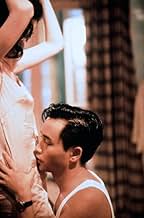
I suppose you might call the dashingly handsome "Yuddy" (Leslie Cheung) a bit of a Lothario. He has good looks and charm, and he sails through life thinking only of himself. His ideal existence comes to a bit of an abrupt halt, though, when his alcoholic courtesan of a mother "Rebecca" (Rebecca Pan) reveals to him in a drunken stupor that she isn't actually his mother at all. The rug has now been pulled from under his cocky feet and he now embarks on a rather self destructive journey to find out just who the real woman is. After an initial relationship with "Su Li-zhen" (Maggie Cheung) he finds himself hooked up with dancer "Mimi" (Carina Lau) but no nearer his ultimate goal. It's only when "Rebecca" decides to set off with her newest beau for a new life that she dispatches "Yuddy" to the Philippines where his answer lies. Meantime, "Su Li-zhen" has again found herself alone after her boyfriend decides to leave his police job and become a sailor. Is it all possible that the two might reconcile? Now, there is definitely something of the episodic - even soap opera - about this film. An unlikable and frankly selfish character seeking his own truth for his own reasons, but to be fair to the director and the writers, they manage to elevate it from the more tabloid and gradually develop the characters into creatures with whom we can, to an extent, empathise. There are façades all over the place, truth and honesty and trust are near, but in shadows - and the use of the dark, rainy, Hong Kong scenarios provides ample locations for all of those to hide - and from which to be discovered. Not my favourite of Wong Kar-wai's films - it is just a little predicable - but still, he packs lots into ninety minutes and the cast deliver well - especially Maggie Cheung - and I did enjoy it.


Did you know
- TriviaThe film was supposed to be the first part of a project. But due to its relatively poor performance at the box office when it was first released, the producers decided not to finish the second part. The nameless character that appears in the last scene played by Tony Leung Chiu-wai is supposedly the main character in the second part.
- GoofsWhen Tide checks into the hotel, the hotel manageress hands him the key to Room 206. However, in the next scene, Tide uses the key to enter Room 204. This, however, may not be so much a 'goof' as another recurrence of the number '2046' seen so often in Wong Kar-Wai's films.
- Alternate versionsA different 35mm print of the film features an altered prologue sequence and different edits during the final scenes of the film. This version decreases the length of the film from 95 to 94 minutes.
- ConnectionsFeatured in Still Love You After All These (1997)
- SoundtracksJungle Drums (Cantonese cover)
Music by Ernesto Lecuona & J. Cacabas
Lyrics by Sharon Chung
Performed by Anita Mui
- How long is Days of Being Wild?Powered by Alexa
Details
- Release date
- Country of origin
- Official site
- Languages
- Also known as
- The True Story of a Hoodlum
- Filming locations
- Production company
- See more company credits at IMDbPro
Box office
- Gross US & Canada
- $146,310
- Opening weekend US & Canada
- $18,090
- Nov 21, 2004
- Gross worldwide
- $3,257,906
- Runtime
- 1h 34m(94 min)
- Color
- Aspect ratio
- 1.85 : 1
Contribute to this page
Suggest an edit or add missing content