IMDb RATING
5.7/10
2.2K
YOUR RATING

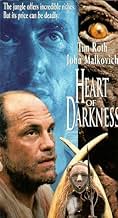
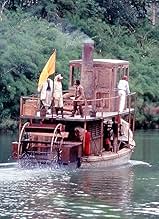
A trading company manager travels up an African river to find a missing outpost head and discovers the depth of evil in humanity's soul.A trading company manager travels up an African river to find a missing outpost head and discovers the depth of evil in humanity's soul.A trading company manager travels up an African river to find a missing outpost head and discovers the depth of evil in humanity's soul.
- Director
- Writers
- Stars
- Won 1 Primetime Emmy
- 3 wins & 3 nominations total




- Director
- Writers
- All cast & crew
- Production, box office & more at IMDbPro
5.72.2K
1
2
3
4
5
6
7
8
9
10
Featured reviews
Good made for T.V. movie.
Heart of Darkness, directed by Nicolas Roeg, is an adaptation of Joseph Conrad's tale of ivory hunting in the African jungle. Heart of Darkness was a made for T.V. film, airing on March 13, 1994 on TNT (Turner Network Television). Auteur theorists analyzing previous Roeg films may agree that this T.V. adaptation does not hold the same attributes. One may argue that it was made for television, which would place guidelines on how much Roeg could express his autuerist style. Others may believe that Roeg' style is still at work within Heart of Darkness, even though it follows the Hollywood narrative. This film analysis will argue the Roeg elements are still at work. The film begins with extreme close ups of an elephants body. Next we see Marlow (Tim Roth) explaining his expedition of the African Jungle to a group of rich British men. From there, the film cuts to a large library or museum where we see two women in black, almost identical, sitting in the front entrance of an office. Marlow, in a voice over, begins to become uneasy with the women's presence. He makes comments to himself regarding a conspiracy and the women were warning him of something. If one has seen Don't Look Now (1973) they can make a predisposition toward the two women in black and the psychic sisters. Marlow had ambiguities toward the two women, just as John (Donald Sutherland) had toward the sisters, which predicted his outcome (death). Marlow on the other hand assumed danger from the two women and danger is exactly what he found in the Congo. As the film continues we see an aborigine standing outside of a window looking in at Marlow. We later find out that he committed suicide or was speared in the chest by an unruly army headed by Kurtz (John Malkovich). In Walkabout (1971) we see the young aborigine looking into the house at the white girl. In both films the aborigine's are looking into the white man's world. Unfortunately they find the white man's world can be destructive and greedy, as seen in the Kurtz controlled outlandish army. They steal young boys and barter them for supplies. Three young boys are abducted from the camp site, one boy is killed and the others are returned for supplies.
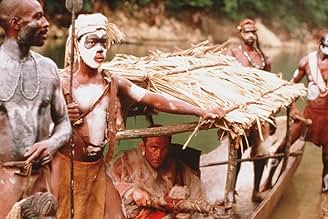
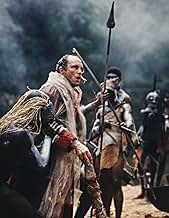
Previous to the abduction, we see random shots of a boy with an ivory necklace. We later see the necklace lying near where the boy had been sleeping. Immediately following the abduction is a dream sequence which Marlow sees a dead elephant, stripped of its' tusks, lying alongside a trail. Maggots are seen as the camera moves in for a close up. Juxtaposed with the elephant are the identical women and finally a claw tool. This sequence expresses the dangers associated with the Congo, not only on the explorers but aborigines and animals. These sequences are Roegian for its' underlying themes. What do two women, an elephant and a claw have to do with a journey in the Congo? The elephant is clearly associated with ivory and greed. The women mean a clear and present danger in the Congo. The claw depicts violence and is later seen sitting in Kurtz's hut. In one shot we see Mfumu looking into the water where it appears blood is floating on the surface, foreshadowing his own death. After he is speared Marlow throws his body overboard and blood floats atop the surface again. Roeg does not hold back on the grotesqueness within Heart of Darkness. In one scene we see another explorer repeatedly kicking and striking a black man. After Mfumu is speared, Marlow pulls on the spear and blood explodes from the chest. Surprisingly T.V. allowed this scene as well as a few others. Moments later Marlow and his guides enter Kurtz's village where there is a young boy covered in blood and tied to a tree. There are also boys' heads on stakes and on branches in trees. More boys are taken from the crew and traded, and one is killed. Kurtz's makes his appearance in the final 20 minutes of the film. He appears to be a god to the aborigine army. He is quite crazy and slowly dies away in a most unusual and unauthentic way. He is buried in an upright position and is draped in white cloth. There appears to be some sort of metal attachments from his upper body to his arms to keep them out in front of him. I am not sure what Roeg was getting at with this, but it may have to do with Kurtz being crazy and having instilled his own ideologies to the army. There is one theme in which is unusual. There is an aborigine woman that closely resembles Kurtz's white wife. The black beauty is framed with Kurtz's wife's painting. The black beauty appears to have some sort of skin ailment or body paint. Maybe Kurtz has put her up to painting or brandishing herself to slightly resemble his wife back in Britain. At the end of the film Marlow approaches the widow and tells her of Kurtz's last moments. This scene seems so out of place. The black and white woman reflecting each other in some sort of weird African fantasy makes sense, but Marlow actually going to see the widow has no real premise. It does appear Roeg intentionally mirrored Kurtz's loves, but the widow scene seemed so hurried. That did not at all seem Roegish. Finally the end montage near Kurtz's death is the most Roegistic style in the whole film. Roeg compiles every theme into about one minute of juxtaposed images containing Mfumu's death and the spear exiting his chest in slow motion. The elephant's rotting carcass, the two women being seen again, the ivory necklace and young boys are also shown again. Random shots of Kurtz's masked army are installed. The black and white women are repeated. Heart of Darkness is much so a Roeg film only with a T.V. limit.
Previous to the abduction, we see random shots of a boy with an ivory necklace. We later see the necklace lying near where the boy had been sleeping. Immediately following the abduction is a dream sequence which Marlow sees a dead elephant, stripped of its' tusks, lying alongside a trail. Maggots are seen as the camera moves in for a close up. Juxtaposed with the elephant are the identical women and finally a claw tool. This sequence expresses the dangers associated with the Congo, not only on the explorers but aborigines and animals. These sequences are Roegian for its' underlying themes. What do two women, an elephant and a claw have to do with a journey in the Congo? The elephant is clearly associated with ivory and greed. The women mean a clear and present danger in the Congo. The claw depicts violence and is later seen sitting in Kurtz's hut. In one shot we see Mfumu looking into the water where it appears blood is floating on the surface, foreshadowing his own death. After he is speared Marlow throws his body overboard and blood floats atop the surface again. Roeg does not hold back on the grotesqueness within Heart of Darkness. In one scene we see another explorer repeatedly kicking and striking a black man. After Mfumu is speared, Marlow pulls on the spear and blood explodes from the chest. Surprisingly T.V. allowed this scene as well as a few others. Moments later Marlow and his guides enter Kurtz's village where there is a young boy covered in blood and tied to a tree. There are also boys' heads on stakes and on branches in trees. More boys are taken from the crew and traded, and one is killed. Kurtz's makes his appearance in the final 20 minutes of the film. He appears to be a god to the aborigine army. He is quite crazy and slowly dies away in a most unusual and unauthentic way. He is buried in an upright position and is draped in white cloth. There appears to be some sort of metal attachments from his upper body to his arms to keep them out in front of him. I am not sure what Roeg was getting at with this, but it may have to do with Kurtz being crazy and having instilled his own ideologies to the army. There is one theme in which is unusual. There is an aborigine woman that closely resembles Kurtz's white wife. The black beauty is framed with Kurtz's wife's painting. The black beauty appears to have some sort of skin ailment or body paint. Maybe Kurtz has put her up to painting or brandishing herself to slightly resemble his wife back in Britain. At the end of the film Marlow approaches the widow and tells her of Kurtz's last moments. This scene seems so out of place. The black and white woman reflecting each other in some sort of weird African fantasy makes sense, but Marlow actually going to see the widow has no real premise. It does appear Roeg intentionally mirrored Kurtz's loves, but the widow scene seemed so hurried. That did not at all seem Roegish. Finally the end montage near Kurtz's death is the most Roegistic style in the whole film. Roeg compiles every theme into about one minute of juxtaposed images containing Mfumu's death and the spear exiting his chest in slow motion. The elephant's rotting carcass, the two women being seen again, the ivory necklace and young boys are also shown again. Random shots of Kurtz's masked army are installed. The black and white women are repeated. Heart of Darkness is much so a Roeg film only with a T.V. limit.
Heart of Darkness Movie rhetorical devices
While the book Heart of Darkness, written by Joseph Conrad, in comparison to the movie, was like comparing the mental capacity of a child and a grown adult, the movie followed along with the main themes of the book very well. It is very difficult to put together a movie to describe such a complex book, but director Nicolas Roeg and actors John Malkovich and Tim Roth did an excellent job. Symbolism was a huge component within the film and the book. For example, Kurtz, a main character, was symbolized as a God to the people within the station where he collected ivory. One man said, "You don't talk to that man, you listen to him." Another said, "They (savages) don't want him to go
They adore him." The cannibals that lived within this Heart of Darkness and the people working for him highly adored and exalted Kurtz. Another example of symbolism is the painting of Kurtz Intended, or his fiancé back in Europe. This isn't something that would have a lot of meaning to someone who didn't read the book. The painting was of this woman, but her eyes were covered by a cloth. This represents the idea described in the book about women being shielded from the craziness of our world. Conrad says "It's queer how out of touch with truth women are. They live in a world of their own, and there has never been anything like it, and never can be. It's too beautiful altogether. (Page 28)" I like that I was able to have more insight into the movie because I had previously read the book. Another rhetorical device used is allegory. While one could interpret the story of Marlow's adventure down the Congo River very literally, there's also an underlying meaning. For example, The Heart of Darkness can be referred to as the inner most ivory stations along the Congo River because of danger due to the native cannibals. But it can also describe the atmosphere of the river. Kurtz, who was previously had very good intentions with going down the river, eventually turned for the worse, becoming obsessed with the natives and even obsessed with his persona. Everything changed when he entered the Heart of Darkness. I would recommend this movie, but I would recommend reading the book in depth first. That's the order my English class did it in, and I found it very beneficial because I was introduced to many rhetorical devices and difficult topics within the book, but then I saw them come to life in the movie and I began to understand it a lot better.
Expectations were not met, however...
The movie version of Heart of Darkness has its similarities and differences to the novel. It lacks much of the information that Joseph Conrad wrote about, but still displays the story line decently. Because of this, many people did not enjoy the movie. I agree, but I believe it would be too difficult to make a movie-replica of that sort.
The book clearly makes you imagine the scenery and action as seen through Joseph Conrad's eyes. Life in Africa was not an easy picture to paint, but this clever author used his vast vocabulary and imagery skills to describe to readers his journey through the real "Heart of Darkness." The movie, however, had poorly-made backdrops and cheap scenery to act with. I feel that this was plenty enough to loose the attention of many viewers, including me. However, I defend them to say that it would be far too hard to find the place Conrad had once adventured through. Page after page was the story of his trip, but the movie only had about two hours to try and even begin to explain what he went through.
Personally, I would recommend watching the movie IF and ONLY if you have read and have a basic understanding of the novel. My expectations were not met, but I would consider giving it a try. Even though the movie was only about a quarter accurate, the director, alongside the actors, had plenty of good intentions while making this movie.
The book clearly makes you imagine the scenery and action as seen through Joseph Conrad's eyes. Life in Africa was not an easy picture to paint, but this clever author used his vast vocabulary and imagery skills to describe to readers his journey through the real "Heart of Darkness." The movie, however, had poorly-made backdrops and cheap scenery to act with. I feel that this was plenty enough to loose the attention of many viewers, including me. However, I defend them to say that it would be far too hard to find the place Conrad had once adventured through. Page after page was the story of his trip, but the movie only had about two hours to try and even begin to explain what he went through.
Personally, I would recommend watching the movie IF and ONLY if you have read and have a basic understanding of the novel. My expectations were not met, but I would consider giving it a try. Even though the movie was only about a quarter accurate, the director, alongside the actors, had plenty of good intentions while making this movie.
ultimately disappointing
This had the potential to be a much more satisfying adaption than it ultimately was, as the casting is generally impressive, and Roeg's hallmark style should have been able to achieve a great deal with the heavily symbolic text. But so much of the success of Conrad's story lies in the tone of the telling, which reveals Marlow's particular bias towards the colonial adventure, and little of that comes through in this movie. Instead we have a visually attractive film that never quite gets to its message - we don't SEE how the adventure has changed the narrator, in the way that the novella so clearly emphasises.
Structurally, the tension builds nicely to the final scenes, but the climax is disappointing. Roeg should have dwelt much longer at the Inner Station - or perhaps he did, but these scenes were cut? Malkovich looks as if he should make a great Kurtz, but his portrayal lacks both dignity and threat - and he rather hams the key death scene. Brando, even though too short, fat and under prepared for the role, was much better and much more frightening in Apocalypse Now. No doubt Welles himself would have been brilliant.
Structurally, the tension builds nicely to the final scenes, but the climax is disappointing. Roeg should have dwelt much longer at the Inner Station - or perhaps he did, but these scenes were cut? Malkovich looks as if he should make a great Kurtz, but his portrayal lacks both dignity and threat - and he rather hams the key death scene. Brando, even though too short, fat and under prepared for the role, was much better and much more frightening in Apocalypse Now. No doubt Welles himself would have been brilliant.
Faithful but uninspired
Heart of Darkness by Joseph Conrad is among my favourite works in literature and have read it numerous times, never failing to be drawn into the story of Marlow and his journey up the river to encounter the mad and enigmatic Mr. Kurtz. Knowing only it being the basis for the Francis Ford Coppola film Apocalypse Now I was eager to see an adaptation that was going to be closer in nature to the Conrad novella and being directed by the great Nicolas Roeg it was bound to be interesting. But, alas, it was disappointing, to say the least. Being a fan of Nicolas Roeg and his striking visual style and fragmentary narrative he seemed liked an ideal director to get into psychology of the characters and their story. But the direction is lazy and uninspired, the performances by Tim Roth and John Malkovich are just dull.
Sadly we were robbed of a filmed version by Orson Wells which would have had Wells playing both Marlow as well as Kurtz---a very intriguing idea and has long been a theory of mine that the story should be read psychologically of a man confronting his own worst aspects. In the story we know from the beginning that he has survived his encounter with Kurtz but has been illuminated by this encounter, retelling of his adventure to his companions. There is no mystery to be found other than him looking into the abyss of his own soul as it is manifested by Kurtz. The Coppola film is better when it came to portraying the madness of Kurtz and the need by Willard to destroy him. The Nicolas Roeg film portrays Kurtz true to the source material as a sickly and dying man and devoid of any kind of threat or menace. Brando's Kurtz was a man struggling with the extremes of his soul: the primitive and the illuminated. We can only imagine how Wells might have depicted these characters. We were given only a tantalizing glimpse with two radio adaptations.
This is for fans of Nicolas Roeg. It was made late in his career when he was working increasingly limited budgets and his films during this period were a shadow of his early days, lacking the flair and energy. It's hard to believe this was the same man who directed The Man Who Fell to Earth, Don't Look Now, Walkabout, and Bad Timing.
Sadly we were robbed of a filmed version by Orson Wells which would have had Wells playing both Marlow as well as Kurtz---a very intriguing idea and has long been a theory of mine that the story should be read psychologically of a man confronting his own worst aspects. In the story we know from the beginning that he has survived his encounter with Kurtz but has been illuminated by this encounter, retelling of his adventure to his companions. There is no mystery to be found other than him looking into the abyss of his own soul as it is manifested by Kurtz. The Coppola film is better when it came to portraying the madness of Kurtz and the need by Willard to destroy him. The Nicolas Roeg film portrays Kurtz true to the source material as a sickly and dying man and devoid of any kind of threat or menace. Brando's Kurtz was a man struggling with the extremes of his soul: the primitive and the illuminated. We can only imagine how Wells might have depicted these characters. We were given only a tantalizing glimpse with two radio adaptations.
This is for fans of Nicolas Roeg. It was made late in his career when he was working increasingly limited budgets and his films during this period were a shadow of his early days, lacking the flair and energy. It's hard to believe this was the same man who directed The Man Who Fell to Earth, Don't Look Now, Walkabout, and Bad Timing.


Did you know
- TriviaWhen Orson Welles first set up his production deal with RKO in 1940, this was to be their first movie. Excessive costs made it too prohibitive and so they proceeded with Citizen Kane (1941) instead.
- GoofsThe monkey in Kurtz' bungalow has a prehensile tail and is therefore not an African monkey, but a New World monkey.
- ConnectionsFeatured in The 52nd Annual Golden Globe Awards (1995)
Details
- Runtime
- 1h 40m(100 min)
- Color
- Sound mix
- Aspect ratio
- 1.33 : 1
Contribute to this page
Suggest an edit or add missing content