

Young Queen Margot finds herself trapped in an arranged marriage amidst a religious war between Catholics and Protestants. She hopes to escape with her new lover, but finds herself imprisone... Read allYoung Queen Margot finds herself trapped in an arranged marriage amidst a religious war between Catholics and Protestants. She hopes to escape with her new lover, but finds herself imprisoned by her powerful and ruthless family.Young Queen Margot finds herself trapped in an arranged marriage amidst a religious war between Catholics and Protestants. She hopes to escape with her new lover, but finds herself imprisoned by her powerful and ruthless family.
- Director
- Writers
- Stars
- Nominated for 1 Oscar
- 9 wins & 16 nominations total



Miguel Bosé
- Guise
- (as Miguel Bosè)


Jean-Philippe Écoffey
- Condé
- (as Jean-Philippe Ecoffey)

- Director
- Writers
- All cast & crew
- Production, box office & more at IMDbPro
7.420K
1
2
3
4
5
6
7
8
9
10
Featured reviews
A bloody French history lesson
French dynastic history in the late 16th century does not seem a promising subject for a film, but Patrice Chereau, a prominent French stage director, has teased out some personal drama out of the larger historical picture, and provided a vivid and absorbing tale. The story itself is adapted from Alexandre Dumas' novel, which is a pretty highly colored piece to begin with. Chereau theatrically plasters the set with blood and gore, and we are left in no doubt that an atrocity has occurred (the St Bartholomew's day massacre of the Hugenots.) The mendacious Queen Mother, Catherine di Medici, and her weak-minded son, Charles IX, seem to have set it off to deal with the protestant problem without realizing how bad it might get.
In all this horror is the rather cute tale of the relationship between two disparate personalities thrown together in marriage, Catherine's daughter Margo and Henry of Navarre (later Henry IV of France, and one of its better kings). Margo is repulsed at first sight by Henry `the peasant' while Henry rightly regards her as about as loving as a trapped tiger. Yet they reach an accommodation and finish up friends. Both have other lovers (and both respect that) but neither can prevent the lovers from coming to sticky ends.
It's always a bit hard to assess the acting when you are relying on sub-titles (if only the French didn't speak so fast) but Isabella Adjani at the age of 40 pulled off a remarkable job and had me convinced she really was a spoilt, willful little nymphomaniac in her early 20's. She looked as young as she did in the `Story of Adele H' 20 years earlier. Daniel Auteuil was also excellent as the unprepossessing but very intense and quick-thinking Henry. Virna Lisi, a sex symbol in her earlier film career, made a good villainess as Catherine. Most of the other principals seem to have been chosen for their looks by rent-an-ego casting though Jean-Huges Anglade was suitably pathetic as the doomed King Charles.
The rather claustrophobic sets brought home the medieval lack of privacy, even (perhaps especially) in royal palaces the old Louvre was about as spacious as the loo. The film fades a bit in the second half, but it's still not a bad story, if at times a bit difficult to follow. I have to say I found `Elizabeth' more interesting and a lot less bloody. Anyway, `Margo' is very French, and not to be judged by Hollywood standards (whatever they are).
In all this horror is the rather cute tale of the relationship between two disparate personalities thrown together in marriage, Catherine's daughter Margo and Henry of Navarre (later Henry IV of France, and one of its better kings). Margo is repulsed at first sight by Henry `the peasant' while Henry rightly regards her as about as loving as a trapped tiger. Yet they reach an accommodation and finish up friends. Both have other lovers (and both respect that) but neither can prevent the lovers from coming to sticky ends.
It's always a bit hard to assess the acting when you are relying on sub-titles (if only the French didn't speak so fast) but Isabella Adjani at the age of 40 pulled off a remarkable job and had me convinced she really was a spoilt, willful little nymphomaniac in her early 20's. She looked as young as she did in the `Story of Adele H' 20 years earlier. Daniel Auteuil was also excellent as the unprepossessing but very intense and quick-thinking Henry. Virna Lisi, a sex symbol in her earlier film career, made a good villainess as Catherine. Most of the other principals seem to have been chosen for their looks by rent-an-ego casting though Jean-Huges Anglade was suitably pathetic as the doomed King Charles.
The rather claustrophobic sets brought home the medieval lack of privacy, even (perhaps especially) in royal palaces the old Louvre was about as spacious as the loo. The film fades a bit in the second half, but it's still not a bad story, if at times a bit difficult to follow. I have to say I found `Elizabeth' more interesting and a lot less bloody. Anyway, `Margo' is very French, and not to be judged by Hollywood standards (whatever they are).
Historically inaccurate and insulting
I found this film appauling. I have intensively studied the life of Marguerite de Valois and found that the only thing this film, and Alexandra Dumas, got right was her name. She was NOT lustful and loose. She was a very inteligent and sophisticated women, even hailed as a genious by the people of her age. A women 400 years before her time. The writers didn't even get the age she died at correct. They said she died at 68... she died at 62!!! She lived from 1553-1615. You do the math. If the film had any other title and didn't claim to be about Margot, it would be an incredible film! The imagery was beautiful and the costumes, while at times were inaccurate as well, were fabulous. The wedding was very well done, even though the real colors used were blue and gold. I liked, however, that they used the color red as the main theme, since the focus was on the St. Bartholomew day Massacre. That scene was a bit long, and the gore was at times unnecessary, but it showed the horror that the Protestants underwent that night. Isabelle Adjani and Virna Lisi were very good in their roles as was Vincent Perez. One thing I found fascinating was that the gentleman who played Henry de Navarre looked exactly like the real Henry of Navarre as seen in paintings done during his life. While I was disapointed that the French made a film out of the Alexandra Dumas novel since he was so wrong about everything, if you're able to look past all the inaccuracies about her, you can truly enjoy this film.
It's about Catholics and Huguenots, but could just as well have been Hutus and Tutsis
The timing of the release of this movie was sublime, if coincidental. I was living in France in the Spring of 1994 when this movie was released, so I got to see it on the big screen in Paris. It was quite chilling really: I was sitting in a theater watching the St Bartholemew's Day Massacre right in the midst of where it happened some 420 years earlier. Torture, mutilation, immolation, throwing naked bodies in the river, all because people were of the wrong group.
Then I went home to my apartment and when I turned on the TV, I got to watch torture, mutilation, immolation, throwing naked bodies in the river, all because people were of the wrong group. This time it was in Rwanda.
Catholics and Huguenots, Hutus and Tutsis, Seine or Nile, we haven't progressed very far in a half millennium.
The movie was a bit complicated, but it seemed to catch the the politics and the scheming that was taking place in the French court at the time as well as the horror of the massacre. But it is also a movie of our times: the message that civilization is only a hair-trigger away from from the most savage acts of barbarism. And that we haven't stopped even yet. The timing and the message were an accident, and made all the more vivid for it.
I highly recommend the movie for the performances but also for the message.
Then I went home to my apartment and when I turned on the TV, I got to watch torture, mutilation, immolation, throwing naked bodies in the river, all because people were of the wrong group. This time it was in Rwanda.
Catholics and Huguenots, Hutus and Tutsis, Seine or Nile, we haven't progressed very far in a half millennium.
The movie was a bit complicated, but it seemed to catch the the politics and the scheming that was taking place in the French court at the time as well as the horror of the massacre. But it is also a movie of our times: the message that civilization is only a hair-trigger away from from the most savage acts of barbarism. And that we haven't stopped even yet. The timing and the message were an accident, and made all the more vivid for it.
I highly recommend the movie for the performances but also for the message.
A breathtakingly beautiful piece of cinema
Everything about this picture is beautiful, even the ugliness is beautiful...an oxymoron, but the only way I can describe it. This is a stunning tale of 16th century sex and violence, with a dirty realism, but still an overlay of beauty.
Isabelle Adjani is intense, beautiful, and sensuous as Margot, the highly sexed, intelligent and dutiful sister of the doomed King Charles IX of France. She is forced into a marriage of political and religious convenience by her bitterly ambitious mother, Catherine de Medici (Virna Lisi) to the repulsive Henri Navarre (sympathetically played by Daniel Auteuil). There is a tremendous amount going on, and Margot's incest with her brothers is more than hinted at.
The searingly sensual Vincent Perez plays La Mole, who eventually becomes Margot's doomed lover. Their first encounter is an acrobatic feat of anonymous sex in an alleyway that is breath-taking. Their later love scenes are intensely erotic. This film only becomes better on repeat viewings. I found I was able to grasp more on my second viewing. There is so much going on, so many twists and turns and shocks, and the film is also quite long. It never lags, and even Margot's grudging tolerance, if not love, for her husband, is believingly portrayed. Very highly recommended.
Isabelle Adjani is intense, beautiful, and sensuous as Margot, the highly sexed, intelligent and dutiful sister of the doomed King Charles IX of France. She is forced into a marriage of political and religious convenience by her bitterly ambitious mother, Catherine de Medici (Virna Lisi) to the repulsive Henri Navarre (sympathetically played by Daniel Auteuil). There is a tremendous amount going on, and Margot's incest with her brothers is more than hinted at.
The searingly sensual Vincent Perez plays La Mole, who eventually becomes Margot's doomed lover. Their first encounter is an acrobatic feat of anonymous sex in an alleyway that is breath-taking. Their later love scenes are intensely erotic. This film only becomes better on repeat viewings. I found I was able to grasp more on my second viewing. There is so much going on, so many twists and turns and shocks, and the film is also quite long. It never lags, and even Margot's grudging tolerance, if not love, for her husband, is believingly portrayed. Very highly recommended.
French history (and Isabelle Adjani) laid bare.
Back in 1994 La Reine Margot' dispensed of every preconceived notion of traditional costume drama, bringing a radical and shocking slant on history. The lavish sets and costumes remained but the atmosphere was now tainted with bloodshed, poison, lust and incest. The regal palaces that were so stereotypically populated by loyal subjects are transformed into a viper's nest of power politics, schemes and deceit where royal heritage counts for little and deviousness is the key to success.
The year is 1572; France is torn apart amidst the conflict between Catholics and Protestants whilst the King is a mere puppet, first to his domineering, Catholic, mother (Catherine de Medici, played with superlative coldness by Virna Lisi) and later to the protestant leader Coligny. In a half hearted effort to bring peace to the land Catherine marries off her daughter Margot (Isabelle Adjani) to the protestant Henri de Navarre (Daniel Auteuil), a political manoeuvre that deludes no one. Margot and Henri are certainly a less than content couple; as they walk down the aisle they engage in a hissing match with one another where Margot succinctly informs him that Just because we're married it doesn't mean I have to sleep with you' and suggests he steer clear of her bedroom. They also fail to adhere to any form of decorum during the wedding reception; whilst Henri brawls with the Catholics (and flirts with a very youthful Asia Argento, of xXx fame) Margot goes window shopping amongst the male guests, looking for a viable one night stand. When the wedding guests prove unsatisfactory she simply dons a mask and takes to the streets, masquerading as a prostitute, and continues her search amongst the hordes of Protestant soldiers, who have gathered for her wedding, eventually settling on the dour La Mole (Vincent Perez). However any illusions of peace are shattered after a botched attempt to assassinate Coligny, as the Catholics, fearing a revolt, slaughter 6,000 Protestants in what becomes known as the St. Bartholomew's Day Massacre.
The sheer horror of the massacre is reproduced with unflinching realism by director Patrick Chireau, who manages not only to shock but also recreate an atmosphere of utter chaos, exemplified by the moment when Margot is wandering amongst the palace corridors which have been besieged by soldiers and are strewn with corpses (Margot is curtly told return to your room and lock the door'). Unfortunately some of the impact of the massacre is lost due to the fact that we know barely any of the characters who are being murdered and it begs credibility that the Protestants seemingly put up no resistance. One of the few survivors of the slaughter is La Mole, who is saved by Margot when he breaks into her chamber, looking for sanctuary, which Margot freely gives to him (and more). In the aftermath of the massacre Margot also manages to save Henri de Navarre, forging a valuable alliance in the process. However, suspicion has been aroused that she is a traitor and she finds that she is in a decidedly vulnerable position where her only hope of freedom is to flee to Navarre with Henri.
Isabelle Adjani, France's premier actress, delivers one of her finest performances as the stubborn and promiscuous Margot, who despite initially coming across as vain and conceited later earns our sympathy as she finds herself in an impossible situation, where her position in the royal family is of little consequence (her brothers love her in a perversely incestuous way and her mother sees her as an inconvenience and potential threat to her authority) and the threat of assassination always looms around the corner. Whilst the political manoeuvrings and power struggles are intriguing the same cannot be said for the tepid romance between Adjani and Perez. The pair lacks any chemistry; even their scenes of erotic passion come across as frigid and awkward. They make an attractive couple, but not a particularly convincing one.
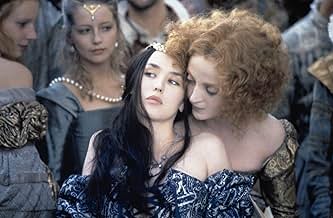
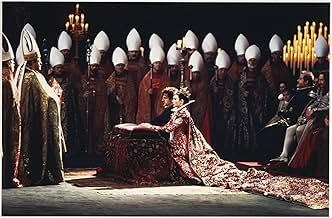
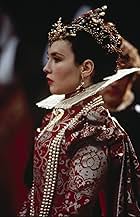
La Reine Margot is also one of the most visually sumptuous films ever released; the big budget clearly didn't go to waste in recreating the gothic decadence of the period and the costumes were deservingly nominated for an Oscar. It's easy to view La Reine Margot' as a precursor to the acclaimed 1998 film Elizabeth', as both centre around a female historical figure who has to endure the conflict between Catholics and Protestants whilst surviving assassination attempts (usually via poison) and overcome tragedy as those who they care for are systematically murdered. Indeed if nothing else La Reine Margot' provides a chilling insight into one of history's most horrific atrocities and offers an unsettling portrait of the moral bankruptcy that pervaded throughout 16th century society.
My Score: 8 out of 10
The year is 1572; France is torn apart amidst the conflict between Catholics and Protestants whilst the King is a mere puppet, first to his domineering, Catholic, mother (Catherine de Medici, played with superlative coldness by Virna Lisi) and later to the protestant leader Coligny. In a half hearted effort to bring peace to the land Catherine marries off her daughter Margot (Isabelle Adjani) to the protestant Henri de Navarre (Daniel Auteuil), a political manoeuvre that deludes no one. Margot and Henri are certainly a less than content couple; as they walk down the aisle they engage in a hissing match with one another where Margot succinctly informs him that Just because we're married it doesn't mean I have to sleep with you' and suggests he steer clear of her bedroom. They also fail to adhere to any form of decorum during the wedding reception; whilst Henri brawls with the Catholics (and flirts with a very youthful Asia Argento, of xXx fame) Margot goes window shopping amongst the male guests, looking for a viable one night stand. When the wedding guests prove unsatisfactory she simply dons a mask and takes to the streets, masquerading as a prostitute, and continues her search amongst the hordes of Protestant soldiers, who have gathered for her wedding, eventually settling on the dour La Mole (Vincent Perez). However any illusions of peace are shattered after a botched attempt to assassinate Coligny, as the Catholics, fearing a revolt, slaughter 6,000 Protestants in what becomes known as the St. Bartholomew's Day Massacre.
The sheer horror of the massacre is reproduced with unflinching realism by director Patrick Chireau, who manages not only to shock but also recreate an atmosphere of utter chaos, exemplified by the moment when Margot is wandering amongst the palace corridors which have been besieged by soldiers and are strewn with corpses (Margot is curtly told return to your room and lock the door'). Unfortunately some of the impact of the massacre is lost due to the fact that we know barely any of the characters who are being murdered and it begs credibility that the Protestants seemingly put up no resistance. One of the few survivors of the slaughter is La Mole, who is saved by Margot when he breaks into her chamber, looking for sanctuary, which Margot freely gives to him (and more). In the aftermath of the massacre Margot also manages to save Henri de Navarre, forging a valuable alliance in the process. However, suspicion has been aroused that she is a traitor and she finds that she is in a decidedly vulnerable position where her only hope of freedom is to flee to Navarre with Henri.
Isabelle Adjani, France's premier actress, delivers one of her finest performances as the stubborn and promiscuous Margot, who despite initially coming across as vain and conceited later earns our sympathy as she finds herself in an impossible situation, where her position in the royal family is of little consequence (her brothers love her in a perversely incestuous way and her mother sees her as an inconvenience and potential threat to her authority) and the threat of assassination always looms around the corner. Whilst the political manoeuvrings and power struggles are intriguing the same cannot be said for the tepid romance between Adjani and Perez. The pair lacks any chemistry; even their scenes of erotic passion come across as frigid and awkward. They make an attractive couple, but not a particularly convincing one.
La Reine Margot is also one of the most visually sumptuous films ever released; the big budget clearly didn't go to waste in recreating the gothic decadence of the period and the costumes were deservingly nominated for an Oscar. It's easy to view La Reine Margot' as a precursor to the acclaimed 1998 film Elizabeth', as both centre around a female historical figure who has to endure the conflict between Catholics and Protestants whilst surviving assassination attempts (usually via poison) and overcome tragedy as those who they care for are systematically murdered. Indeed if nothing else La Reine Margot' provides a chilling insight into one of history's most horrific atrocities and offers an unsettling portrait of the moral bankruptcy that pervaded throughout 16th century society.
My Score: 8 out of 10


Did you know
- TriviaPatrice Chéreau edited the original cut of the film (roughly 160 minutes) to a shorter 138 minutes for international release. This was due to the disappointing box-office performance in France and the criticism (by, among others, Variety critic Todd McCarthy) of the film as being too violent and often incoherent. The French press were scathing of this 'American censorship' (they described the film as having been 'given a face-lift' for American audiences), but the new version was defended by various French critics being both more coherent whilst also maintaining Chereau's artistic vision. The shorter cut was later released in France too, in the hopes of increasing the film's box-office takings. 20 years later, Chereau slightly re-edited his film again and re-mastered it for a new BluRay release with a running time of 161 minutes. This was one of Chereau's last completed acts before his untimely death, so it can be regarded as the definitive version.
- GoofsLa Mole is shot in the legs and the wounds and bloodstains are visible as he goes to execution. But when Margot views his semi-naked corpse, his legs are unmarked.
- Quotes
Charles IX: One who gives life is no longer a mother once she takes that life back.
- ConnectionsFeatured in The 52nd Annual Golden Globe Awards (1995)
Details
Box office
- Budget
- DEM 42,000,000 (estimated)
- Gross US & Canada
- $1,304,237
- Opening weekend US & Canada
- $4,985
- May 11, 2014
- Gross worldwide
- $1,318,659
Contribute to this page
Suggest an edit or add missing content