IMDb RATING
6.8/10
3.5K
YOUR RATING
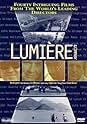
40 international directors were asked to make a short film using the original Cinematographe invented by the Lumière brothers.40 international directors were asked to make a short film using the original Cinematographe invented by the Lumière brothers.40 international directors were asked to make a short film using the original Cinematographe invented by the Lumière brothers.
Pernilla August
- Anna Åkerblom
- (segment "Liv Ullman")
- (uncredited)
Max von Sydow
- Jacob
- (segment "Liv Ullman")
- (uncredited)
Jeffe Alperi
- Policeman
- (segment "David Lynch")
Theodoros Angelopoulos
- Self
- (as Théo Angelopoulos)
Bruno Ganz
- Damiel
- (segment "Wim Wenders")
6.83.5K
1
2
3
4
5
6
7
8
9
10
Featured reviews
Great celebration!
I think this was a great idea. It works three fold: as a fun game, a slice of world cinema, and ultimately as a celebration of cinema. You get to see some more well known directors while some lesser known though not necessarily less important ones get exposure. I agree that David Lynch's film is probably the standout of the lot for its creativity within 50 seconds and the other rules of the game. But there are also many other interesting things going on throughout the whole exercise;weather the film is particularly entertaining or more personal, the whole project remains interesting. Other films I personally found memorable included the ones by Greenaway (also very creative, particularly his use of light), Zhang Yi Mou (sleight of hand with no special effects), Idrissa Ouedraogo and Gaston Kabore from Burkina Faso, Egypt's Youseff Chahine, to mention a few. Finally, after reading the other comments I wanted to say, instead of complaining that most of these directors showed no creativity why not think about and discuss what you yourself might film if given the chance.
An interesting diversion with a pioneering camera
This film was made to celebrate one-hundred years of the first camera used by the Lumiere Brothers. Forty directors from around the world were asked to make a short film with the original camera. The rules being it lasts no longer than fifty-two seconds, only three takes allowed, and no synchronous sound. The directors are predominately French, with a few notable exceptions like David Lynch, Peter Greenaway and John Boorman. Lynch's segment is far and away the most creative and satisfactory effort. Most of the others are mainly static and ordinary. But it's a fascinating documentary with insights and comments from the all the directors, and worth seeing for Lynch's film alone. That was the prime reason I watched it.
Septième Art
Lumière et Compagnie is a very interesting documentary, giving the audience different perspectives on the meaning of cinema within the concept of its birth a century ago. Heavily centered on directors from France and other countries with strong historical or linguistic bonds to France (Romania, Algeria, Burkina Faso etc.), the movie nevertheless tries to adopt a universal discourse on cinema through evaluating it as a global language of art. Among the movies of the 40 directors and a couple of Lumière examples shown in the film there are certain approaches and themes I find interesting and very much related to the questions asked to the participant directors about the meaning of cinema and its future. Peter Greenaway's segment with the passing calendar years starting from the symbolic date of 1895 with a constant sitting naked man was in that sense very much reminding me the novelty of cinema when compared to the life of humanity and civilization, just like the 52 seconds passing in the life of that man, who is young and promising. The parts combining the whole film together with interviews and shots showing the audience how these individual movies were made was also a theme itself in the movies of Sanders-Brahms, Chahine, Lelouch and Axel, all emphasizing on the making of the movie more than the movie itself as Lumière et Compagnie was about. The concept of realizing the presence of a camera and trying to be on the screen was elaborately used by Booman and Allouache, whereby the latter strikingly combined it with his country's patriarchal social structure. I really enjoy Costa-Gavras' segment, which delicately reminds me of my status of audience after 50 seconds of eye contact with the audience on the screen, for which cinema is produced at the end of the day. Haneke is again outstanding with filming an already prepared television shot, maybe challenging the three rules of the game in an original fashion but I prefer such rule violations when done more sincerely like in the case of Ouedraogo when he was caught by the camera saying "in Burkina Faso we can make four takes with the soldiers". Most of the directors are optimistic and even emotional when commenting on cinema and its future, but somehow many of them sound to me as clichés; maybe they are not so good in speech that's why they chose to make movies. However I think the strongest statement was uttered by Yoshida that cinema cannot capture every moment and the director shooting his movie at the real time of the nuclear bomb attack would be dead. Very reminiscent of Chacun Son Cinéma (2007) prepared for the Cannes Film Festival by 33 directors, it is always fun to watch samples from great directors and the use of the so-called first movie camera as the basic concept is a very challenging and as much as a successful idea.
The old camera
The idea to gather 40 recognized film directors to shoot a mini film of less than a minute, or what would have been the format the Lumiere brothers used in their revolutionary camera, seems a great idea in paper. Unfortunately, what comes out is an uneven film where some of the short films hold our interest and some others that don't go anywhere.
What must have been an interesting idea doesn't translate to brilliant film making in the finished product. This documentary is for fans of the medium, but will not be of any interest to a casual viewer. Some of the most enjoyable ones are the ones by David Lynch, Helma Sanders, Claude Lelouch, Jaco Van Dormael, and Bigas Luna, just to mention a few. The rest, hold some interest, but don't quite add anything new to the idea behind the project.
Surprising lack of talent and ideas among pretentious twits...
In making this documentary, what its makers wind up unveiling is how many of them have no ideas whatsoever. Almost all the attempts with the Lumiere camera involve just placing a lot of people in front of the camera and have them wave and/or stare, or they involve films about filmmakers. Other attempts are to recreate the banal films which were made in the era of first attempts in the history of cinema. And then you have clips that you can see that the director didn't take the project seriously at all, as in the cases of Spike Lee and John Boorman. Then you get laughably bad films made by pretentious idiots, such as the one by Peter Greenaway (who concludes that film is dying) and the one by the Japanese twit who says that film doesn't capture anything.
On the plus side, you get some interesting films along the way, particularly among the last few, like the one by David Lynch, among others.
Did you know
- TriviaPatrice Leconte's short is a remake of The Arrival of a Train (1896) filmed on the exact same place 100 years before this film.
- ConnectionsEdited from Premiers pas de bébé (1896)
- How long is Lumière and Company?Powered by Alexa
Details
- Release date
- Countries of origin
- Languages
- Also known as
- Lumière y compañía
- Filming locations
- Production companies
- See more company credits at IMDbPro
- Runtime
- 1h 28m(88 min)
- Color
- Sound mix
- Aspect ratio
- 1.33 : 1
Contribute to this page
Suggest an edit or add missing content