IMDb RATING
7.5/10
8.2K
YOUR RATING


A young woman's husband apparently commits suicide without warning or reason, leaving behind his wife and infant.A young woman's husband apparently commits suicide without warning or reason, leaving behind his wife and infant.A young woman's husband apparently commits suicide without warning or reason, leaving behind his wife and infant.
- Director
- Writers
- Stars
- Awards
- 9 wins & 1 nomination total





- Director
- Writers
- All cast & crew
- Production, box office & more at IMDbPro
7.58.2K
1
2
3
4
5
6
7
8
9
10
Featured reviews
Worth loving, worth hating. ...but is it worth 2 hours of your time?
Wow, there are some pretty extreme reviews of this film. I've read both the LOVED ITs and the HATED ITs, and I agree with both. So what's the deal? Is this the best film ever, or should it be used as a torture device at Guantanamo Bay?
All I can say is that I experienced moments of both extremes, but in the end I was unsatisfied. It begins provocatively with an interesting flashback, told very poetically through high contrast shots with deep perspective. This sets the tone very nicely and even manages to inject some suspense into the film. But the movie's downfall is excessive, gratuitous repetition in the hours that follow.
The plot develops suddenly within the first 30 mins or so. From then on, don't expect much of a story because the rest is a highly impressionistic mood-type piece with little dialogue and less action. That's not necessarily a bad thing; directors like Ming-liang Tsai (THE HOLE) have pulled it off successfully, but what irked me in this case was the gratuitous repetition. Yes, I know I said "gratuitous repetition" already. Good to see you're paying attention ;)
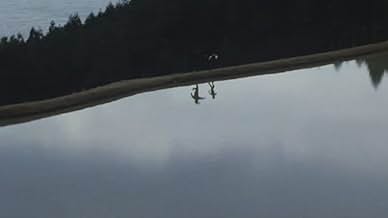
I counted 5 scenes (long ones) of the heroine sitting in a dark room staring out a window with a ghostly light illuminating her face. It was stirring the first time, but after a few more times it's simply redundant & anticlimactic. Another great image--used powerfully at first but losing its charm after the 3rd or 4th beating over the head--is a far shot of a body of water where our eye is drawn to the reflections of people on the surface. OK, Koreeda, we get the picture; the film is about the contrast between shadows and bright light, reality and deceptive illusion, that which we do not understand vs. that which we *think* we understand. If it were presented more concisely, I would have loved it. But did he really require 2 hours to say it? And if so, could he not have explored it more deeply, rather than leaving us with a somewhat shallow climactic monologue at the end? (I call it a 'monologue', but actually it's only 2 or 3 sentences which summarize the whole point of the film.)
In the end, my impression of MABOROSHI is much like my impression of Koreeda's later film AFTER LIFE (which I think is much better than this); the philosophy is very interesting, there are certain poetic moments that will captivate you, but when the film is over you get the feeling that you've just read a haiku. Nothing more.
All I can say is that I experienced moments of both extremes, but in the end I was unsatisfied. It begins provocatively with an interesting flashback, told very poetically through high contrast shots with deep perspective. This sets the tone very nicely and even manages to inject some suspense into the film. But the movie's downfall is excessive, gratuitous repetition in the hours that follow.
The plot develops suddenly within the first 30 mins or so. From then on, don't expect much of a story because the rest is a highly impressionistic mood-type piece with little dialogue and less action. That's not necessarily a bad thing; directors like Ming-liang Tsai (THE HOLE) have pulled it off successfully, but what irked me in this case was the gratuitous repetition. Yes, I know I said "gratuitous repetition" already. Good to see you're paying attention ;)
I counted 5 scenes (long ones) of the heroine sitting in a dark room staring out a window with a ghostly light illuminating her face. It was stirring the first time, but after a few more times it's simply redundant & anticlimactic. Another great image--used powerfully at first but losing its charm after the 3rd or 4th beating over the head--is a far shot of a body of water where our eye is drawn to the reflections of people on the surface. OK, Koreeda, we get the picture; the film is about the contrast between shadows and bright light, reality and deceptive illusion, that which we do not understand vs. that which we *think* we understand. If it were presented more concisely, I would have loved it. But did he really require 2 hours to say it? And if so, could he not have explored it more deeply, rather than leaving us with a somewhat shallow climactic monologue at the end? (I call it a 'monologue', but actually it's only 2 or 3 sentences which summarize the whole point of the film.)
In the end, my impression of MABOROSHI is much like my impression of Koreeda's later film AFTER LIFE (which I think is much better than this); the philosophy is very interesting, there are certain poetic moments that will captivate you, but when the film is over you get the feeling that you've just read a haiku. Nothing more.
Delicate & visual
With a cinematic eye that harks back to Kurosawa and the first color features of Antonioni (esp. Red Desert & Blowup), Maborosi is one of the quietest and most delicate little films you will ever see. It is the absolute antidote to fare like Die Hard.
Maborosi
The title of the film comes from a Japanese word that loosely translates into "illusory light". A maborosi is an inexplicable mirage that sporadically unveils itself along the waves of the sea, leading many curious sailors to their impending doom. Nobody questions where this mysterious light originates from; nobody wonders why so many men are lured by the maborosi's false promises of otherworldly beauty. The answers are patently unexplainable, leaving no feasible alternative but submissive acceptance and temperate remembrance. There are many aspects of this world whose origins are rationally indecipherable; perpetual mysteries as perplexing as the shifting of the tides or the changing of the seasons, the rising of the sun or the positioning of the stars, the birth of a son or the death of a father. The lesson of the maborosi is quite comforting in its reductive simplicity; there are some tragedies in life that cannot be readily understood or accounted for, but these setbacks should always be treated with a tacit acceptance of the unalterable past, and an unbroken willingness to overcome.
Yumiko is confronted with such a confounding loss following the unanticipated death of her husband, Ikuo, an otherwise cheerful individual occasionally prone to brief interludes of somberness and incredulity. As the film opens, we are shown passing indicators of the memories that will continue to haunt Yumiko long after her husband has departed: the stolen bicycle that the couple re-painted together, the intrusively endless loop of train-tracks that entangle the neighborhood, the dark empty hallways of a home encompassed by unfulfilled hopes and abandoned promises. These are the lingering images of a time long since passed, but never forgotten; the remaining links to a previous era divided by enigmatic fate, replacing the comforts of life's certainties with an encircling string of unanswerable inquiries. As Yumiko struggles to combat her own doubts and insecurities, her regrets and reservations, she is forced to reconcile the unaccountable cause for her grief with the prospect of an eventual regeneration of love and companionship. While Yumiko cannot escape from the memories of her past, she can still find hope in embracing an unforeseen direction, discovering solace and comfort in the arms of another man. But even the blissful serenity of the ocean's archaic blue cannot remove the painful memorials from the deepest recesses of Yumiko's imagination. The crashing of the offshore waves does not represent the progressive cleansing of the past, but the uninterrupted calamity of the storm, suggesting that Yumiko's thoughts are just as violently conflicted as the impartial forces of her surroundings.
Yumiko's struggle to assimilate her ways into an unfamiliar terrain is further compounded by the insolvable puzzle echoing throughout the barren corners of her new home, reverberating off the timeless waves of the indifferent sea. In spite of this continuous anxiety, there are many fleeting moments that would indicate a sense of personal advancement: images of a family finding comfort in each other's tragedy, reciprocally seeking to forge new identities out of an identical past. Some of the film's most memorable scenes occur with Yumiko's new found source of compassion, as Koreeda primarily focuses on the more joyful, celebratory moments of a strengthening bond between intimate strangers. However, a return visit to the city of Osaka brings back a flood of painful reminders, returning Yumiko to her previous state of inescapable depression. The journey further complicates the delicate situation unfolding within the confounding confines of her deepening psychological turmoil, exacerbating the tensity of her gradual acclimatization. Yumiko's inability to fully commit herself to her second husband is a direct consequence of her inability to comprehend the destabilizing effects of her innermost fixation; a persistent uncertainty concerning the nature of death, and a refusal to receptively acknowledge that which we cannot control.
Koreeda's transcendent depiction of the esoteric natural beauty of Yumiko's rural environment is a calculated effort to further reinforce the principle message of the film, which is simply the message of the maborosi. Why does Yumiko's husband selfishly succumb to the unfathomable temptations of the mystic light beyond the horizon? Why does the maborosi indiscriminately engulf the souls of its unwarranted victims? These are questions without answers, frustratingly enlightening reminders of the limits of our mortality, and the fragility of our most basic human certainties. The point of the film, however, is not to mock or ridicule our rational sensibilities, nor does Koreeda intend to paint an exceedingly bleak portrait of untenable despair and incomprehensible misfortune. Rather, the lesson of the maborosi is an alleviating reaffirmation of hope and anticipation, providing an acceptable resolution to an inconclusive affliction, dispensing clues to the solution of one of life's greatest riddles. The maborosi fable teaches us that closure cannot begin without acceptance, and that acceptance is ultimately earned through procession.
Yumiko is confronted with such a confounding loss following the unanticipated death of her husband, Ikuo, an otherwise cheerful individual occasionally prone to brief interludes of somberness and incredulity. As the film opens, we are shown passing indicators of the memories that will continue to haunt Yumiko long after her husband has departed: the stolen bicycle that the couple re-painted together, the intrusively endless loop of train-tracks that entangle the neighborhood, the dark empty hallways of a home encompassed by unfulfilled hopes and abandoned promises. These are the lingering images of a time long since passed, but never forgotten; the remaining links to a previous era divided by enigmatic fate, replacing the comforts of life's certainties with an encircling string of unanswerable inquiries. As Yumiko struggles to combat her own doubts and insecurities, her regrets and reservations, she is forced to reconcile the unaccountable cause for her grief with the prospect of an eventual regeneration of love and companionship. While Yumiko cannot escape from the memories of her past, she can still find hope in embracing an unforeseen direction, discovering solace and comfort in the arms of another man. But even the blissful serenity of the ocean's archaic blue cannot remove the painful memorials from the deepest recesses of Yumiko's imagination. The crashing of the offshore waves does not represent the progressive cleansing of the past, but the uninterrupted calamity of the storm, suggesting that Yumiko's thoughts are just as violently conflicted as the impartial forces of her surroundings.
Yumiko's struggle to assimilate her ways into an unfamiliar terrain is further compounded by the insolvable puzzle echoing throughout the barren corners of her new home, reverberating off the timeless waves of the indifferent sea. In spite of this continuous anxiety, there are many fleeting moments that would indicate a sense of personal advancement: images of a family finding comfort in each other's tragedy, reciprocally seeking to forge new identities out of an identical past. Some of the film's most memorable scenes occur with Yumiko's new found source of compassion, as Koreeda primarily focuses on the more joyful, celebratory moments of a strengthening bond between intimate strangers. However, a return visit to the city of Osaka brings back a flood of painful reminders, returning Yumiko to her previous state of inescapable depression. The journey further complicates the delicate situation unfolding within the confounding confines of her deepening psychological turmoil, exacerbating the tensity of her gradual acclimatization. Yumiko's inability to fully commit herself to her second husband is a direct consequence of her inability to comprehend the destabilizing effects of her innermost fixation; a persistent uncertainty concerning the nature of death, and a refusal to receptively acknowledge that which we cannot control.
Koreeda's transcendent depiction of the esoteric natural beauty of Yumiko's rural environment is a calculated effort to further reinforce the principle message of the film, which is simply the message of the maborosi. Why does Yumiko's husband selfishly succumb to the unfathomable temptations of the mystic light beyond the horizon? Why does the maborosi indiscriminately engulf the souls of its unwarranted victims? These are questions without answers, frustratingly enlightening reminders of the limits of our mortality, and the fragility of our most basic human certainties. The point of the film, however, is not to mock or ridicule our rational sensibilities, nor does Koreeda intend to paint an exceedingly bleak portrait of untenable despair and incomprehensible misfortune. Rather, the lesson of the maborosi is an alleviating reaffirmation of hope and anticipation, providing an acceptable resolution to an inconclusive affliction, dispensing clues to the solution of one of life's greatest riddles. The maborosi fable teaches us that closure cannot begin without acceptance, and that acceptance is ultimately earned through procession.
Full, full, full of painterly light
Steeped in the traditions of the lush visual beauties of Japanese cinema, and influenced by the likes of Taiwanese (?) director Hsiao Hsien Hou (I believe there are several fairly direct quotes) or the luminous cinematography of Bergman's long time cameraman, Sven Nykvist. This film directly mines the visual effects of some of the most glorious European painters of light like Vermeer, Caravaggio, and Georges de la Tour. From the subtitles it seems that MABOROSI means 'strange light' and Kore eda uses almost nothing but strange, rich luminosity to tell his story (although he also gets a fine, somber perfomance from his female lead). Each shot is deeply thought out and composed to the maximum. Literally, every single shot. The results are tranquil and beautiful. The story is as quiet as the light, and probably if you require your film to have a strong direct narrative you should stay away from this as the story is told very subtly using light and almost subliminal sound (it seemed to me there were ocean waves in the sub background even in the city shots, for example). It works great as cinema. I would suggest that you watch at least the first 20 minutes or so again, after watching the whole film. The same motifs cross and criss cross all through the film and it really builds a wonderful texture.
I would recommend this as a double bill with something like the Actor's Revenge by Ichikawa- also deeply steeped in lush visual beauties and light. Or else Angel Dust by Sogo Ishii-a very opposite film full of passion, madness and violence, but where you see that meticulous, relentless search for supercomposition on almost a frame for frame basis. Or lastly, the tranquil, and beautiful, and very painterly Why Has Bodhidharma Left For The East- a Korean film by Bae Yong Kyun and something of a successful Zen meditation. Well one more, Mystery of Rampo-by Kazuyoshi Okuyama- very offbeat with bewitchingly lush visual beauty. (Rampo is Japanese for Edgar Allen Poe and the first Japanese mystery writer adopted Rampo as his nom de plume)
I would recommend this as a double bill with something like the Actor's Revenge by Ichikawa- also deeply steeped in lush visual beauties and light. Or else Angel Dust by Sogo Ishii-a very opposite film full of passion, madness and violence, but where you see that meticulous, relentless search for supercomposition on almost a frame for frame basis. Or lastly, the tranquil, and beautiful, and very painterly Why Has Bodhidharma Left For The East- a Korean film by Bae Yong Kyun and something of a successful Zen meditation. Well one more, Mystery of Rampo-by Kazuyoshi Okuyama- very offbeat with bewitchingly lush visual beauty. (Rampo is Japanese for Edgar Allen Poe and the first Japanese mystery writer adopted Rampo as his nom de plume)
Plot and pacing unlike Hollywood's formula
And beautiful and fascinating film with a gentle lyric quality. Runs directly counter to the usual Hollywood expectations. The most emotionally packed scene is filmed in extreme longshot! You can't even see the faces of the actors but the location and the action that you can see are enough. If you want to see a standard hollywood formula, then stay away. If you like quiet and moving films shot in entirely new ways (granted the director owes much to Ozu) then get this film.


Did you know
- TriviaHirokazu Koreeda's directorial film debut.
- How long is Maborosi?Powered by Alexa
Details
Box office
- Gross worldwide
- $144,025
Contribute to this page
Suggest an edit or add missing content