IMDb RATING
7.5/10
8.2K
YOUR RATING


A young woman's husband apparently commits suicide without warning or reason, leaving behind his wife and infant.A young woman's husband apparently commits suicide without warning or reason, leaving behind his wife and infant.A young woman's husband apparently commits suicide without warning or reason, leaving behind his wife and infant.
- Director
- Writers
- Stars
- Awards
- 9 wins & 1 nomination total





- Director
- Writers
- All cast & crew
- Production, box office & more at IMDbPro
7.58.2K
1
2
3
4
5
6
7
8
9
10
Featured reviews
A Directing Triumph
Rarely do I rate films so highly, but Maborosi earned it's nine. A large part of my enjoyment of the film was due to the beautiful and subtle directing that seemed to compliment the story itself perfectly. Koreeda is a very promising Japanese director. I recommend this one to all serious movie watchers, and I await his future films.
Full, full, full of painterly light
Steeped in the traditions of the lush visual beauties of Japanese cinema, and influenced by the likes of Taiwanese (?) director Hsiao Hsien Hou (I believe there are several fairly direct quotes) or the luminous cinematography of Bergman's long time cameraman, Sven Nykvist. This film directly mines the visual effects of some of the most glorious European painters of light like Vermeer, Caravaggio, and Georges de la Tour. From the subtitles it seems that MABOROSI means 'strange light' and Kore eda uses almost nothing but strange, rich luminosity to tell his story (although he also gets a fine, somber perfomance from his female lead). Each shot is deeply thought out and composed to the maximum. Literally, every single shot. The results are tranquil and beautiful. The story is as quiet as the light, and probably if you require your film to have a strong direct narrative you should stay away from this as the story is told very subtly using light and almost subliminal sound (it seemed to me there were ocean waves in the sub background even in the city shots, for example). It works great as cinema. I would suggest that you watch at least the first 20 minutes or so again, after watching the whole film. The same motifs cross and criss cross all through the film and it really builds a wonderful texture.
I would recommend this as a double bill with something like the Actor's Revenge by Ichikawa- also deeply steeped in lush visual beauties and light. Or else Angel Dust by Sogo Ishii-a very opposite film full of passion, madness and violence, but where you see that meticulous, relentless search for supercomposition on almost a frame for frame basis. Or lastly, the tranquil, and beautiful, and very painterly Why Has Bodhidharma Left For The East- a Korean film by Bae Yong Kyun and something of a successful Zen meditation. Well one more, Mystery of Rampo-by Kazuyoshi Okuyama- very offbeat with bewitchingly lush visual beauty. (Rampo is Japanese for Edgar Allen Poe and the first Japanese mystery writer adopted Rampo as his nom de plume)
I would recommend this as a double bill with something like the Actor's Revenge by Ichikawa- also deeply steeped in lush visual beauties and light. Or else Angel Dust by Sogo Ishii-a very opposite film full of passion, madness and violence, but where you see that meticulous, relentless search for supercomposition on almost a frame for frame basis. Or lastly, the tranquil, and beautiful, and very painterly Why Has Bodhidharma Left For The East- a Korean film by Bae Yong Kyun and something of a successful Zen meditation. Well one more, Mystery of Rampo-by Kazuyoshi Okuyama- very offbeat with bewitchingly lush visual beauty. (Rampo is Japanese for Edgar Allen Poe and the first Japanese mystery writer adopted Rampo as his nom de plume)
Worth loving, worth hating. ...but is it worth 2 hours of your time?
Wow, there are some pretty extreme reviews of this film. I've read both the LOVED ITs and the HATED ITs, and I agree with both. So what's the deal? Is this the best film ever, or should it be used as a torture device at Guantanamo Bay?
All I can say is that I experienced moments of both extremes, but in the end I was unsatisfied. It begins provocatively with an interesting flashback, told very poetically through high contrast shots with deep perspective. This sets the tone very nicely and even manages to inject some suspense into the film. But the movie's downfall is excessive, gratuitous repetition in the hours that follow.
The plot develops suddenly within the first 30 mins or so. From then on, don't expect much of a story because the rest is a highly impressionistic mood-type piece with little dialogue and less action. That's not necessarily a bad thing; directors like Ming-liang Tsai (THE HOLE) have pulled it off successfully, but what irked me in this case was the gratuitous repetition. Yes, I know I said "gratuitous repetition" already. Good to see you're paying attention ;)
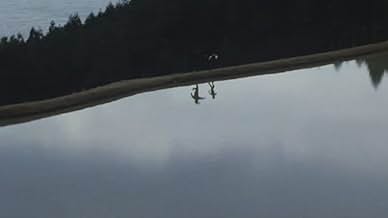
I counted 5 scenes (long ones) of the heroine sitting in a dark room staring out a window with a ghostly light illuminating her face. It was stirring the first time, but after a few more times it's simply redundant & anticlimactic. Another great image--used powerfully at first but losing its charm after the 3rd or 4th beating over the head--is a far shot of a body of water where our eye is drawn to the reflections of people on the surface. OK, Koreeda, we get the picture; the film is about the contrast between shadows and bright light, reality and deceptive illusion, that which we do not understand vs. that which we *think* we understand. If it were presented more concisely, I would have loved it. But did he really require 2 hours to say it? And if so, could he not have explored it more deeply, rather than leaving us with a somewhat shallow climactic monologue at the end? (I call it a 'monologue', but actually it's only 2 or 3 sentences which summarize the whole point of the film.)
In the end, my impression of MABOROSHI is much like my impression of Koreeda's later film AFTER LIFE (which I think is much better than this); the philosophy is very interesting, there are certain poetic moments that will captivate you, but when the film is over you get the feeling that you've just read a haiku. Nothing more.
All I can say is that I experienced moments of both extremes, but in the end I was unsatisfied. It begins provocatively with an interesting flashback, told very poetically through high contrast shots with deep perspective. This sets the tone very nicely and even manages to inject some suspense into the film. But the movie's downfall is excessive, gratuitous repetition in the hours that follow.
The plot develops suddenly within the first 30 mins or so. From then on, don't expect much of a story because the rest is a highly impressionistic mood-type piece with little dialogue and less action. That's not necessarily a bad thing; directors like Ming-liang Tsai (THE HOLE) have pulled it off successfully, but what irked me in this case was the gratuitous repetition. Yes, I know I said "gratuitous repetition" already. Good to see you're paying attention ;)
I counted 5 scenes (long ones) of the heroine sitting in a dark room staring out a window with a ghostly light illuminating her face. It was stirring the first time, but after a few more times it's simply redundant & anticlimactic. Another great image--used powerfully at first but losing its charm after the 3rd or 4th beating over the head--is a far shot of a body of water where our eye is drawn to the reflections of people on the surface. OK, Koreeda, we get the picture; the film is about the contrast between shadows and bright light, reality and deceptive illusion, that which we do not understand vs. that which we *think* we understand. If it were presented more concisely, I would have loved it. But did he really require 2 hours to say it? And if so, could he not have explored it more deeply, rather than leaving us with a somewhat shallow climactic monologue at the end? (I call it a 'monologue', but actually it's only 2 or 3 sentences which summarize the whole point of the film.)
In the end, my impression of MABOROSHI is much like my impression of Koreeda's later film AFTER LIFE (which I think is much better than this); the philosophy is very interesting, there are certain poetic moments that will captivate you, but when the film is over you get the feeling that you've just read a haiku. Nothing more.
Rethinking the art of the camera
I was fortunate to see Maborosi on a large screen at the Joslyn Art Museum. The venue was appropriate, for this film stands as one of the great achievements of the cinema. Indeed, I will go out on a long limb and argue that it deserves comparison to Carl Theodor Dreyer's Passion of St. Joan of Arc. Light, shadow, angle: in my experience these two films apply the most basic elements of cinematography in a most remarkable and brilliant fashion.
Maborosi opens with an astonishing shot, as the viewer looks up from one end of an arching bridge to see a young child following an old woman. The shot is meticulously framed by light posts, giving the impression of a picture on canvas. The camera remains still while the two actors proceed through the scene. The director's brilliant eye for placing everything "just right" immediately catches one's attention. It is a virtuoso shot; and then one's amazement grows as scene after scene continues with no drop off in the careful, artful composition of each image. After awhile, the viewer may become conscious of the camera: it does not move. As each scene commences, the activity occurs within a new, steady frame. I think that the camera moves during a scene only three times in the film, and then only in side-to-side pans. However, I was so enthralled with the film I may easily have overlooked some motion.
The story, concerning a young women's travail in overcoming the grief of her suicided husband, plays out quietly and slowly. The actors speak sparingly, and emotions are primarily portrayed through facial and bodily expression. The impact is large and plumbs depths. If a film like this were made in Hollywood--an utterly absurd idea--I'm sure the characters would be babbling on at each other. Maborosi explores the virtues of silence, patience, and careful attention: behaviors which are not widely cultivated in contemporary cinema, or in contemporary society for that matter.
Maborosi is a film to captivate those who want to see cinema which strives to be more than mere entertainment. It is in every sense an "art film," but in my mind it stands as one of those very rare films which emphasize the artful without a hint of the self-conscious and annoying artsy. A monumental achievement.
Maborosi opens with an astonishing shot, as the viewer looks up from one end of an arching bridge to see a young child following an old woman. The shot is meticulously framed by light posts, giving the impression of a picture on canvas. The camera remains still while the two actors proceed through the scene. The director's brilliant eye for placing everything "just right" immediately catches one's attention. It is a virtuoso shot; and then one's amazement grows as scene after scene continues with no drop off in the careful, artful composition of each image. After awhile, the viewer may become conscious of the camera: it does not move. As each scene commences, the activity occurs within a new, steady frame. I think that the camera moves during a scene only three times in the film, and then only in side-to-side pans. However, I was so enthralled with the film I may easily have overlooked some motion.
The story, concerning a young women's travail in overcoming the grief of her suicided husband, plays out quietly and slowly. The actors speak sparingly, and emotions are primarily portrayed through facial and bodily expression. The impact is large and plumbs depths. If a film like this were made in Hollywood--an utterly absurd idea--I'm sure the characters would be babbling on at each other. Maborosi explores the virtues of silence, patience, and careful attention: behaviors which are not widely cultivated in contemporary cinema, or in contemporary society for that matter.
Maborosi is a film to captivate those who want to see cinema which strives to be more than mere entertainment. It is in every sense an "art film," but in my mind it stands as one of those very rare films which emphasize the artful without a hint of the self-conscious and annoying artsy. A monumental achievement.
Plot and pacing unlike Hollywood's formula
And beautiful and fascinating film with a gentle lyric quality. Runs directly counter to the usual Hollywood expectations. The most emotionally packed scene is filmed in extreme longshot! You can't even see the faces of the actors but the location and the action that you can see are enough. If you want to see a standard hollywood formula, then stay away. If you like quiet and moving films shot in entirely new ways (granted the director owes much to Ozu) then get this film.


Did you know
- TriviaHirokazu Koreeda's directorial film debut.
- How long is Maborosi?Powered by Alexa
Details
Box office
- Gross worldwide
- $144,025
Contribute to this page
Suggest an edit or add missing content