IMDb RATING
5.2/10
6.6K
YOUR RATING


One of puppet-maker Geppetto's creations comes magically to life. This puppet named Pinocchio has one major desire, to become a real boy someday, but he has to learn to act responsibly.One of puppet-maker Geppetto's creations comes magically to life. This puppet named Pinocchio has one major desire, to become a real boy someday, but he has to learn to act responsibly.One of puppet-maker Geppetto's creations comes magically to life. This puppet named Pinocchio has one major desire, to become a real boy someday, but he has to learn to act responsibly.
- Awards
- 1 win & 2 nominations total

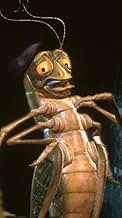



David Doyle
- Pepe the Cricket
- (voice)
5.26.5K
1
2
3
4
5
6
7
8
9
10
Featured reviews
Beautifully done, but I do prefer the Disney film.
Don't get me wrong, I really like this movie. The star is Pinnocchio himself, with a very likable voice over by Jonathan Taylor Thomas, with very careful design by Angus Bickerton. Also superb is Martin Landau as Geopetto, who brought charm and sadness to the role. The only things that weren't so well done were Jiminy Cricket, though David Doyle voiced him with spirit,(it's just his character animation was a bit mechanical) and Udo Keir's villain did little for me, but that is just me being picky. The film is lavishly designed, especially with the scenes with the puppets with the sets that look like something out of an opera or vaudeville. Also Rachel Portman's score was beautiful, very dynamic and sometimes moving in the more slower bits. Comparing this to the Disney film, this is a lot more faithful to the book by Carlo Callodi, but the Disney film has charm and a certain darkness that isn't quite there here, but it is evident. All in all, a highly underrated and beautiful film. 7/10 Bethany Cox.
Good movie, but target audience seems unclear.
This is certainly a well done movie, with an all-star cast. However, the intended target audience of this film is unclear. While little kids, who know of Pinocchio from story books and the Disney Animated Classic, are sure to enjoy the outstanding animation of the puppet, will most likely be frightened by many of the other scenes. Older kids, teenagers, and many adults often consider themselves too old for the story of Pinocchio; with a few exceptions.
There's also a couple other scenes in the film which make it objectionable for younger children. One scene makes repeated use of the word "jack-a**"; while referring to donkeys, as in the original story, the word seems a little over used for a film that has a "G" rating in Canada (not sure of the US rating). Another objectionable scene is at the end when "real boy" Pinocchio, tells a lie to two of the films villains, knowing that his nose won't grow anymore. To me this counter-acts the lesson to be learned by having his nose grow when he lies in the first place.
Over all the film is still really well done, and very touching (provoking tear-ducts in places). The acting is excellent and the direction seems good. The script on the whole seems good, apart from the few objectionable scenes, which make me wonder what the film's target audience is meant to be; as opposed the recent Disney musical version, titled "Geppetto", which was definitely family-oriented.
There's also a couple other scenes in the film which make it objectionable for younger children. One scene makes repeated use of the word "jack-a**"; while referring to donkeys, as in the original story, the word seems a little over used for a film that has a "G" rating in Canada (not sure of the US rating). Another objectionable scene is at the end when "real boy" Pinocchio, tells a lie to two of the films villains, knowing that his nose won't grow anymore. To me this counter-acts the lesson to be learned by having his nose grow when he lies in the first place.
Over all the film is still really well done, and very touching (provoking tear-ducts in places). The acting is excellent and the direction seems good. The script on the whole seems good, apart from the few objectionable scenes, which make me wonder what the film's target audience is meant to be; as opposed the recent Disney musical version, titled "Geppetto", which was definitely family-oriented.
No strings attached
This is a lavish, sumptuously-mounted version of the classic story. Great costumes and location work, with Prague as 18th-century Italy. Top-notch FX: Pinocchio himself; Pepe (not Jiminy) Cricket; a hUge, whale-like sea monster; boys morphing into jackasses.
Good cast: Martin Landau (fresh from his Oscar-winning portrayal of Lugosi in "Ed Wood") as Gepetto; Genevieve Bujold, whom I hadn't seen in ages (and who is aging very nicely), as his long-term love interest; Udo Kier as the heavy; plus an assortment of other character actors mostly unknown to me.
Altogether well-done, its only drawbacks being a couple of lame songs, plus occasional slapstick for the kiddies. And it must be admitted, the Diz cartoon is a tough act to follow.
Good cast: Martin Landau (fresh from his Oscar-winning portrayal of Lugosi in "Ed Wood") as Gepetto; Genevieve Bujold, whom I hadn't seen in ages (and who is aging very nicely), as his long-term love interest; Udo Kier as the heavy; plus an assortment of other character actors mostly unknown to me.
Altogether well-done, its only drawbacks being a couple of lame songs, plus occasional slapstick for the kiddies. And it must be admitted, the Diz cartoon is a tough act to follow.
Interesting portrayal of the old fable.
Saw it on DVD, pretty good transfer from film. I can't give it a very high rating as a film, it was a bit muddled at times in exactly what it was trying to convey. But the wooden puppet looked very life-like, his "education" was handled very well, and in the end the message of where life really comes from is very clear. My favorite part, however, was listening to Stevie Wonder sing the songs he wrote for the film.
I bought the DVD to give to my grandchildren, 7 and 10. It will be interesting to see how they react to it.
I bought the DVD to give to my grandchildren, 7 and 10. It will be interesting to see how they react to it.
Actually a cute film
The Adventures of Pinocchio (1996), directed by Steve Barron, is one of those adaptations that often gets overshadowed by Disney's iconic version, yet it offers a quirky and memorable take on the classic Carlo Collodi tale. With Martin Landau as Geppetto and Jonathan Taylor Thomas as Pinocchio, the film takes a slightly different path from the story many of us grew up with, but it deserves more credit than it often receives. While not perfect, it succeeds in creating a unique and entertaining world that is fun, heartfelt, and at times unexpectedly emotional.
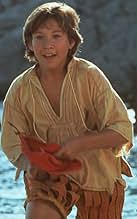
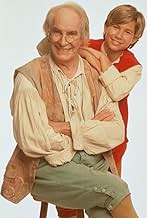
What stands out immediately is how the film isn't bound by Disney's blueprint. Instead, it takes creative liberties that allow the story to breathe in new directions. Pinocchio's world is presented with a balance of whimsy and darker undertones, leaning closer to Collodi's original story while still maintaining a family-friendly tone. Landau brings warmth and gravitas to Geppetto, grounding the film with a performance that feels both tender and dignified. Meanwhile, Jonathan Taylor Thomas delivers a spirited and mischievous Pinocchio, giving the character just the right mix of innocence and playfulness to connect with younger audiences of the '90s.
One of the more divisive changes comes with Pinocchio's companion. Instead of Jiminy Cricket, the film introduces Pepe the Cricket. While Pepe is amusing in his own right, he doesn't fully embody the iconic voice of conscience that Jiminy so memorably represented in Disney's adaptation. This choice, while creative, left some viewers feeling that something essential was missing. Still, Pepe does add his own brand of humor, and for what the film was trying to do-distinguish itself from Disney-he serves his purpose.
The screenplay, while uneven at times, provides enough heart, humor, and imagination to carry the film. There are moments of charm, moments of sadness, and moments of pure quirkiness, which together create an entertaining if imperfect experience. The film occasionally struggles with tone, wavering between serious themes and lighthearted comedy, but the performances and inventive visual approach keep it from feeling flat. Steve Barron, known for his work in music videos and other family films, demonstrates a clear sense of how to make the material engaging for a 1990s audience, even if the execution doesn't always land as smoothly as it could.
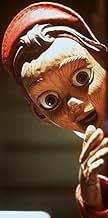
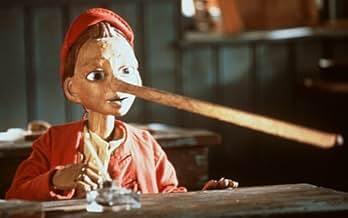
The practical effects and makeup work, particularly Pinocchio's wooden design, deserve mention. Instead of relying heavily on animation or CGI, the filmmakers used animatronics and puppetry to bring Pinocchio to life. While some may find the effect uncanny by today's standards, at the time it gave the film a tactile, almost storybook quality. This creative decision sets it apart from both the Disney version and later CGI-heavy adaptations, giving the film a distinctive visual identity.
Ultimately, The Adventures of Pinocchio is a curious mix: not the definitive Pinocchio film by any means, but not the disaster some critics painted it to be. It may not have the same timeless resonance as Disney's animated masterpiece, but it has its own flavor-quirky, heartfelt, and occasionally offbeat. For audiences who grew up in the 1990s, it remains a nostalgic gem, carried by Martin Landau's sincerity and Jonathan Taylor Thomas' charisma. While imperfect, it proves that there's more than one way to tell the story of the little wooden boy who wanted to be real.
What stands out immediately is how the film isn't bound by Disney's blueprint. Instead, it takes creative liberties that allow the story to breathe in new directions. Pinocchio's world is presented with a balance of whimsy and darker undertones, leaning closer to Collodi's original story while still maintaining a family-friendly tone. Landau brings warmth and gravitas to Geppetto, grounding the film with a performance that feels both tender and dignified. Meanwhile, Jonathan Taylor Thomas delivers a spirited and mischievous Pinocchio, giving the character just the right mix of innocence and playfulness to connect with younger audiences of the '90s.
One of the more divisive changes comes with Pinocchio's companion. Instead of Jiminy Cricket, the film introduces Pepe the Cricket. While Pepe is amusing in his own right, he doesn't fully embody the iconic voice of conscience that Jiminy so memorably represented in Disney's adaptation. This choice, while creative, left some viewers feeling that something essential was missing. Still, Pepe does add his own brand of humor, and for what the film was trying to do-distinguish itself from Disney-he serves his purpose.
The screenplay, while uneven at times, provides enough heart, humor, and imagination to carry the film. There are moments of charm, moments of sadness, and moments of pure quirkiness, which together create an entertaining if imperfect experience. The film occasionally struggles with tone, wavering between serious themes and lighthearted comedy, but the performances and inventive visual approach keep it from feeling flat. Steve Barron, known for his work in music videos and other family films, demonstrates a clear sense of how to make the material engaging for a 1990s audience, even if the execution doesn't always land as smoothly as it could.
The practical effects and makeup work, particularly Pinocchio's wooden design, deserve mention. Instead of relying heavily on animation or CGI, the filmmakers used animatronics and puppetry to bring Pinocchio to life. While some may find the effect uncanny by today's standards, at the time it gave the film a tactile, almost storybook quality. This creative decision sets it apart from both the Disney version and later CGI-heavy adaptations, giving the film a distinctive visual identity.
Ultimately, The Adventures of Pinocchio is a curious mix: not the definitive Pinocchio film by any means, but not the disaster some critics painted it to be. It may not have the same timeless resonance as Disney's animated masterpiece, but it has its own flavor-quirky, heartfelt, and occasionally offbeat. For audiences who grew up in the 1990s, it remains a nostalgic gem, carried by Martin Landau's sincerity and Jonathan Taylor Thomas' charisma. While imperfect, it proves that there's more than one way to tell the story of the little wooden boy who wanted to be real.


Did you know
- TriviaThe puppet of Pinocchio took Jim Henson's Creature Shop 9 months to perfect. It was operated by 12 people.
- ConnectionsEdited into The Adventures of Pinocchio (1996)
- How long is The Adventures of Pinocchio?Powered by Alexa
Details
Box office
- Budget
- $25,000,000 (estimated)
- Gross US & Canada
- $15,094,530
- Opening weekend US & Canada
- $3,832,551
- Jul 28, 1996
- Gross worldwide
- $15,094,530
- Runtime
- 1h 36m(96 min)
- Color
- Sound mix
- Aspect ratio
- 2.39 : 1
- 2.35 : 1
Contribute to this page
Suggest an edit or add missing content