IMDb RATING
6.9/10
3.9K
YOUR RATING


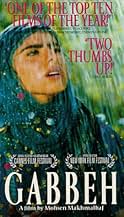
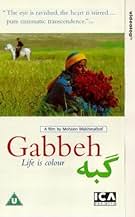
When an old couple washes their gabbeh - a type of Persian rug - a young woman magically appears and tells them her life story.When an old couple washes their gabbeh - a type of Persian rug - a young woman magically appears and tells them her life story.When an old couple washes their gabbeh - a type of Persian rug - a young woman magically appears and tells them her life story.
- Director
- Writer
- Stars
- Awards
- 5 wins & 6 nominations total



- Director
- Writer
- All cast & crew
- Production, box office & more at IMDbPro
6.93.9K
1
2
3
4
5
6
7
8
9
10
Featured reviews
Demands the right frame of mind and patience
(1996) Gabbeh
(In Iran/ Persian with English subtitles)
FANTASY/ DRAMA
Edited, written and directed by Mohsen Makhmalbaf that consists of a similar idea to films as "How To Make An American Quilt" and "Little Big Man" or "A Man Called Horse" where it has a blanket revealing a story or a folklore tale or a myth. And in order for anyone to understand this demands the right frame of mind, and to be familiar with Iranian rituals and customs for it's completely plot less, using surrealism in some scenes and then using imagery of landscapes on others. The word "Gabbeh" is a name of an interwoven blanket with pictures, telling a story in Iranian fashion in which the beginning is boring as I'm totally oblivious about Iranian culture but gets more interesting as the film progresses.
Edited, written and directed by Mohsen Makhmalbaf that consists of a similar idea to films as "How To Make An American Quilt" and "Little Big Man" or "A Man Called Horse" where it has a blanket revealing a story or a folklore tale or a myth. And in order for anyone to understand this demands the right frame of mind, and to be familiar with Iranian rituals and customs for it's completely plot less, using surrealism in some scenes and then using imagery of landscapes on others. The word "Gabbeh" is a name of an interwoven blanket with pictures, telling a story in Iranian fashion in which the beginning is boring as I'm totally oblivious about Iranian culture but gets more interesting as the film progresses.
Dazzling colors
In the '90s there was a new wave of Iranian directors. The two most prominent of them being Mohsen Makhmalbaf and Abbas Kiarostami. Makhmalbaf was the youngest of these two and is strongly influenced by the Islamic revolution of 1979.
Gabbeh is the name of a traditional Persian carpet made by nomads. The motifs on a gabbeh are not abstract (like in normal Persian carpets) but are real life representations.The film was originally meant as a sort of commercial for this type of carpets. Makhmalbaf became so intrigued with the subject that the project grew out to a feature length film.
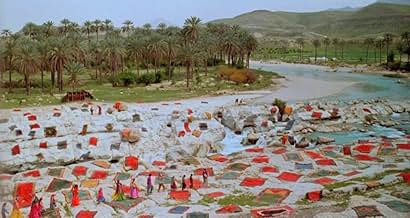
One of the typical elements of Iranian movies is the story within a story. This is also the structure of "Gabbeh". An aged couple goes to a little stream to clean their gabbeh. During the washing the illustration on the carpet comes to live. This illustration is about the courting of a young couple. It is left to the imagination of the viewer to decide of the old - and the young couple are the same persons.
'Gabbeh" uses a very bright (not to say dazzling) color palette. This reminded me of films such as "The color of pomegranates" (1969, Sergei Parajanov) and above all "Ju Dou" (1990, Zhang Yimou).
Gabbeh is the name of a traditional Persian carpet made by nomads. The motifs on a gabbeh are not abstract (like in normal Persian carpets) but are real life representations.The film was originally meant as a sort of commercial for this type of carpets. Makhmalbaf became so intrigued with the subject that the project grew out to a feature length film.
One of the typical elements of Iranian movies is the story within a story. This is also the structure of "Gabbeh". An aged couple goes to a little stream to clean their gabbeh. During the washing the illustration on the carpet comes to live. This illustration is about the courting of a young couple. It is left to the imagination of the viewer to decide of the old - and the young couple are the same persons.
'Gabbeh" uses a very bright (not to say dazzling) color palette. This reminded me of films such as "The color of pomegranates" (1969, Sergei Parajanov) and above all "Ju Dou" (1990, Zhang Yimou).
This is a visually stunning film.
This visually stunning film tells the story of an old couple's gabbeh-a finely crafted Persian carpet. One day when they go to a nearby spring to wash the carpet, an attractive young woman appears suddenly and mysteriously-she is the apotheosis of the people whose tale is told in the carpet's woof and warp.
The film is a surrealistic folk tale. As she helps the old woman wash the carpet, the young woman (the spirit of the carpet) begins the tale of her life, which becomes the film's story. The film's charm lies in the magical use of color and water to tell a story. Young girls are everywhere in native dresses that complement the picturesque scenery with as many dabs of color as a French impressionist painting. The filmmaker here is an artist, adept at sunsets, drifting cotton-white clouds on a pristine blue canvas. Pastels, ultramarines, burnt siennas, ochres-there is a sensuous joy in the very colors of the earth and sky.
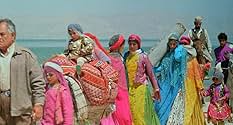
The world of the film is a kaleidoscope of color. Exotic birds appear from nowhere like bursts of sunset. Young women dress in native Iranian costumes of reds, golds, blues, and greens. And through it all, the sounds of flowing water, like little bells or delicate wind chimes, is given a palpable presence.
The Persian carpet, no longer mute, beguiles the viewer with its simple, haunting tale of people and places at once so ancient and new. The wolf-like howls of a young woman's lover merge with the sound of the water as it rills and flows over stones, pebbles, and sand. The water is itself a comment on the people whose lives are lived within its boundaries. The magical and surrealistic elements of the peasant girl's story weave themselves into a fairy-tale. What enchantment there is in a young woman's quest for love and continuity. The very air is rich with the colors, sights, and sounds-the spices and incense of the Near East.
The film is a surrealistic folk tale. As she helps the old woman wash the carpet, the young woman (the spirit of the carpet) begins the tale of her life, which becomes the film's story. The film's charm lies in the magical use of color and water to tell a story. Young girls are everywhere in native dresses that complement the picturesque scenery with as many dabs of color as a French impressionist painting. The filmmaker here is an artist, adept at sunsets, drifting cotton-white clouds on a pristine blue canvas. Pastels, ultramarines, burnt siennas, ochres-there is a sensuous joy in the very colors of the earth and sky.
The world of the film is a kaleidoscope of color. Exotic birds appear from nowhere like bursts of sunset. Young women dress in native Iranian costumes of reds, golds, blues, and greens. And through it all, the sounds of flowing water, like little bells or delicate wind chimes, is given a palpable presence.
The Persian carpet, no longer mute, beguiles the viewer with its simple, haunting tale of people and places at once so ancient and new. The wolf-like howls of a young woman's lover merge with the sound of the water as it rills and flows over stones, pebbles, and sand. The water is itself a comment on the people whose lives are lived within its boundaries. The magical and surrealistic elements of the peasant girl's story weave themselves into a fairy-tale. What enchantment there is in a young woman's quest for love and continuity. The very air is rich with the colors, sights, and sounds-the spices and incense of the Near East.
Life is color
Life is color, says one of the characters, and the dominant after-impression here is of the stunning array of bright hues; stamped against the desert like distinct life forces. In an early scene, an old man instructs a class on the colors of nature - reaching his hands outside the frame as if godlike - he touches the sky, and his hands come back blue; he stretches toward a meadow, and brings back flowers. It's too sincere and straightforwardly beautiful to be dismissed as a conjuring trick, and the film can't be regarded simply as a pictorial exercise, partly because it's just too difficult for that; the narrative is as subtle and allusive as the mastery of its dominant image - the carpet weaving. For example, when a young girl is killed while going after a kid goat on the mountain, it's symbolized simply by the rolling of a ball of black wool toward her sister; the ball then tumbles into the water and away. It would take a second viewing though to comment with confidence on all that actually happens in the film - narrative clarity is secondary to the nomadic wandering of the tribe, and above all to the film's impeccable visual design. Presumably enjoyed by western audiences mainly as a cultural digression; a lush window into another world, but I wonder how many of us are equipped to see through that window clearly.
Enchanting tale
«Gabbeh» is the first movie from Iran that I saw. And I'm so happy because since then, I've seen 5 or 6 and all of them were to my eyes excellent.
This movie is simple, poignant and beautiful. It's poetic and magic at the same time. The visual is also fantastic. Truly enchanting.
Out of 100, I gave it 87.
This movie is simple, poignant and beautiful. It's poetic and magic at the same time. The visual is also fantastic. Truly enchanting.
Out of 100, I gave it 87.


Did you know
- TriviaIran's submission for 70th Academy Awards.
- ConnectionsFeatured in Stardust Stricken - Mohsen Makhmalbaf: A Portrait (1996)
- How long is Gabbeh?Powered by Alexa
Details
- Release date
- Countries of origin
- Official site
- Language
- Also known as
- Hayatın Renkleri
- Filming locations
- Production companies
- See more company credits at IMDbPro
Box office
- Gross US & Canada
- $532,629
- Gross worldwide
- $532,629
Contribute to this page
Suggest an edit or add missing content