IMDb RATING
7.7/10
5K
YOUR RATING

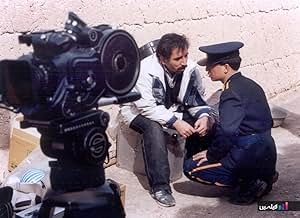
An Iranian policeman asks a director to make a film about a true stabbing incident involving both of them.An Iranian policeman asks a director to make a film about a true stabbing incident involving both of them.An Iranian policeman asks a director to make a film about a true stabbing incident involving both of them.
- Awards
- 1 win & 1 nomination total




- Director
- Writer
- All cast & crew
- Production, box office & more at IMDbPro
7.74.9K
1
2
3
4
5
6
7
8
9
10
Featured reviews
An Interesting Fusion of Art & Life
A self-reflexive semi-autobiographical account that finds writer-director Mohsen Makhmalbaf trying to reconstruct a childhood incident from memory, A Moment of Innocence is an attempt by him to make amends with a former policeman who was at the receiving end of this very episode back in their youth.
An interesting dramatisation of the real-life event that cleverly merges past with present and fiction with reality, the film attempts to recreate the said event from the perspective of both the director & the policeman. But it's the new revelations that emerge from the whole re-enactment that makes the journey so fascinating.
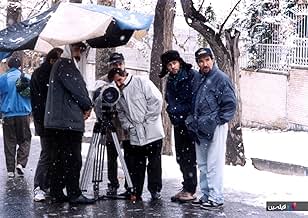
Shot in documentary style, the film follows the policeman & director recounting the event and providing background details of their younger selves to the novice actors who are supposed to play them on camera. The boys' hesitation to act out the scenes is evident but it's the final frame that brings home the film's message with clarity.
Overall, A Moment of Innocence is a fusion of art & life that expertly showcases the power of cinema & its ability to heal wounds of the past. Through this docu-fiction, Mohsen Makhmalbaf speaks to the innate decency in all of us and offers an arresting reflection of youth, love, loss, guilt, regret, innocence & forgiveness. Definitely worth a shot.
An interesting dramatisation of the real-life event that cleverly merges past with present and fiction with reality, the film attempts to recreate the said event from the perspective of both the director & the policeman. But it's the new revelations that emerge from the whole re-enactment that makes the journey so fascinating.
Shot in documentary style, the film follows the policeman & director recounting the event and providing background details of their younger selves to the novice actors who are supposed to play them on camera. The boys' hesitation to act out the scenes is evident but it's the final frame that brings home the film's message with clarity.
Overall, A Moment of Innocence is a fusion of art & life that expertly showcases the power of cinema & its ability to heal wounds of the past. Through this docu-fiction, Mohsen Makhmalbaf speaks to the innate decency in all of us and offers an arresting reflection of youth, love, loss, guilt, regret, innocence & forgiveness. Definitely worth a shot.
Moments of Innocence Twenty Years Apart
The Iranian cinema is perhaps the most self-reflexive of all national cinemas. Though it owes much to the development of Italian neo-realism, the Iranian cinema today is not just an extension of its predecessor's concerns about cinematic truth but a formal inquiry of the nature of cinema and the "truth" that lies within and outside of art. Jacques Rivette's groundbreaking "L'amour fou" already sets the stage in 1968 when he investigated the symbiotic relationship betwen art and life by using two different film stocks, 16 and 35 mm., to represent "reality" as it unfolds in front and behind the camera respectively.
In Moshen Makhmalbaf's 1996 masterpiece "A Moment of Innocence" twenty years separates a key moment in time and the recreation of it. The incident occurred when Makhmalbaf was only a youth who participated in an anti-Shah demonstration which led to the stabbing of a policeman and his imprisonment for the next five years. In an attempt to recapture this moment Makhmalbaf decides to a make a film within a film casting all the original participants (including the policeman) to play themselves as mentors to their younger selves, (i.e., actors) guiding and instructing them in the making of this "fictional" documentary.
It is not surprising that non-professional actors are employed here to both maintain a semblance of reality and to keep cinematic distortion at bay. But paradoxically, the young non-professional actors chosen to play Makhmalbaf and the policeman of their youth are as similar as they are dissimilar from their counterparts, thus, setting the stage for exploring the many tensions that exist between past and present, art and life, cinema and reality. This type of casting not only blurs the line between fiction and reality but also the distinction between documentary and narrative filmmaking.
The preoccupation with the phenomenological aspects of the cinema is as much the focus of this work as is the dramatization of the event leading up to the pivotal moment, then and now, reconstructed as a memory film as well as a product of the filmmaker's imagination to help correct an incident that only becomes clear to everyone involved after twenty years have elapsed. This celebrated moment which occurs at the end of film effectively captures the past by placing it in the present context much as if past and present suddenly converge and share the same space and time, thereby allowing us to see loss and recovery unfold simultaneously. That lost moment is now regained twenty years later through art's ability to heal and transform Makhmalbaf and his crew--thus altering the "reality" of life. The final shot is both life-affirming and referential because it so eloquently evokes the cinema's first prominent use of the freeze frame in Truffaut's "400 Blows"--if only to remind us just how far the cinema has come along. Like Truffaut's autobiographical based character Antoine Doinel the cinema has indeed grown up.
In Moshen Makhmalbaf's 1996 masterpiece "A Moment of Innocence" twenty years separates a key moment in time and the recreation of it. The incident occurred when Makhmalbaf was only a youth who participated in an anti-Shah demonstration which led to the stabbing of a policeman and his imprisonment for the next five years. In an attempt to recapture this moment Makhmalbaf decides to a make a film within a film casting all the original participants (including the policeman) to play themselves as mentors to their younger selves, (i.e., actors) guiding and instructing them in the making of this "fictional" documentary.
It is not surprising that non-professional actors are employed here to both maintain a semblance of reality and to keep cinematic distortion at bay. But paradoxically, the young non-professional actors chosen to play Makhmalbaf and the policeman of their youth are as similar as they are dissimilar from their counterparts, thus, setting the stage for exploring the many tensions that exist between past and present, art and life, cinema and reality. This type of casting not only blurs the line between fiction and reality but also the distinction between documentary and narrative filmmaking.
The preoccupation with the phenomenological aspects of the cinema is as much the focus of this work as is the dramatization of the event leading up to the pivotal moment, then and now, reconstructed as a memory film as well as a product of the filmmaker's imagination to help correct an incident that only becomes clear to everyone involved after twenty years have elapsed. This celebrated moment which occurs at the end of film effectively captures the past by placing it in the present context much as if past and present suddenly converge and share the same space and time, thereby allowing us to see loss and recovery unfold simultaneously. That lost moment is now regained twenty years later through art's ability to heal and transform Makhmalbaf and his crew--thus altering the "reality" of life. The final shot is both life-affirming and referential because it so eloquently evokes the cinema's first prominent use of the freeze frame in Truffaut's "400 Blows"--if only to remind us just how far the cinema has come along. Like Truffaut's autobiographical based character Antoine Doinel the cinema has indeed grown up.
Spectacular!
There is absolutely nothing bad I can say about this film. I was lucky enough to attend a screening of this gem last night at the Alamo Drafthouse. The show was nearly sold out, for good reason.
This film is about a real life experience that Mohsen Makhmalbaf had at the age of seventeen. When he was seventeen, he stabbed a police man while participating in a demonstration. He was imprisoned for five years. Twenty years after this event took place, he has made amends with the policeman he stabbed and is now making a film about this incident.
The film is a work of art. It is beautifully shot, with no over the top camera work and editing. The film is masterfully directed and it is very humanistic. This film will probably prove to be one if the most important films in the history of cinema, especially to Iranian filmmakers. I would recommend this film to any and everybody.
This film is about a real life experience that Mohsen Makhmalbaf had at the age of seventeen. When he was seventeen, he stabbed a police man while participating in a demonstration. He was imprisoned for five years. Twenty years after this event took place, he has made amends with the policeman he stabbed and is now making a film about this incident.
The film is a work of art. It is beautifully shot, with no over the top camera work and editing. The film is masterfully directed and it is very humanistic. This film will probably prove to be one if the most important films in the history of cinema, especially to Iranian filmmakers. I would recommend this film to any and everybody.
A Fantastic Exploration of Memory and History
Makhmalbaf has arguably created one of the MOST interesting films I have seen in my entire life.
Casting young men unexperienced in acting to portray himself and the policemen he stabbed when he was 17, the director separates himself and his young self from the policemen and his; they separately train the actors portraying themselves 20 years earlier during an anti-Shah demonstration.
Culminating in the showdown between the young actors, the truths behind the situation unbeknownst to both director and policemen become evident. An extremely powerful film, and I advise you to stop at nothing to view it.
Casting young men unexperienced in acting to portray himself and the policemen he stabbed when he was 17, the director separates himself and his young self from the policemen and his; they separately train the actors portraying themselves 20 years earlier during an anti-Shah demonstration.
Culminating in the showdown between the young actors, the truths behind the situation unbeknownst to both director and policemen become evident. An extremely powerful film, and I advise you to stop at nothing to view it.
10Red-125
Unique movie
The Iranian movie Nun va Goldoon (1996) was shown in the U.S. with the title A Moment of Innocence. The film was written and directed by Mohsen Makhmalbaf.
Fact: director Makhmalbaf, as a young revolutionary, stabbed one of the Shah's police officers. Makhmalbaf was trying to take the policeman's gun. He got caught, and served five years in jail.
The rest of this movie is based on the theoretical concept that Makhmalbaf is making a film based on this event. Because the incident took place 20 years earlier, Makhmalbaf and the policeman must find younger actors to play themselves as a young revolutionary and a young policeman. Also, they need to cast the young woman who accompanied Makhmalbaf when he made his attempt.
Mirhadi Tayebi portrayed the policeman. I believe he was, indeed, the real-life policeman. Makhmalbaf plays himself.
However, we never actually see this movie. What we see is a movie about making a movie. It's fascinating. Nothing goes as planned, and we worry about it as much as the actors worry.
I've never seen a film quite like this. It was both entertaining and informative. See the trailer before you watch the film. That explains the moment of innocence.
We saw this movie on the small screen, where it worked very well. The film has a very high IMDb rating of 7.9. Worth that and more.
P.S. A little girl has a wonderful scene when the former policeman comes to her door. We've seen this type of verbal female schoolchild in other Iranian films. I assume they exist in real life, and I hope they're able to do well.
Fact: director Makhmalbaf, as a young revolutionary, stabbed one of the Shah's police officers. Makhmalbaf was trying to take the policeman's gun. He got caught, and served five years in jail.
The rest of this movie is based on the theoretical concept that Makhmalbaf is making a film based on this event. Because the incident took place 20 years earlier, Makhmalbaf and the policeman must find younger actors to play themselves as a young revolutionary and a young policeman. Also, they need to cast the young woman who accompanied Makhmalbaf when he made his attempt.
Mirhadi Tayebi portrayed the policeman. I believe he was, indeed, the real-life policeman. Makhmalbaf plays himself.
However, we never actually see this movie. What we see is a movie about making a movie. It's fascinating. Nothing goes as planned, and we worry about it as much as the actors worry.
I've never seen a film quite like this. It was both entertaining and informative. See the trailer before you watch the film. That explains the moment of innocence.
We saw this movie on the small screen, where it worked very well. The film has a very high IMDb rating of 7.9. Worth that and more.
P.S. A little girl has a wonderful scene when the former policeman comes to her door. We've seen this type of verbal female schoolchild in other Iranian films. I assume they exist in real life, and I hope they're able to do well.


Did you know
- TriviaThis film is in the Official Top 250 Narrative Feature Films on Letterboxd.
- How long is A Moment of Innocence?Powered by Alexa
Details
Box office
- Gross US & Canada
- $37,598
- Opening weekend US & Canada
- $3,997
- Nov 14, 1999
- Runtime
- 1h 18m(78 min)
- Color
- Aspect ratio
- 1.85 : 1
Contribute to this page
Suggest an edit or add missing content