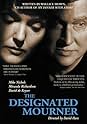
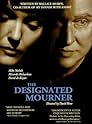
Jack and Judy are husband and wife, and Howard is Judys father. They live in some fictional undemocratic and repressive country, and tell us a story about their lives, mostly from Jack's poi... Read allJack and Judy are husband and wife, and Howard is Judys father. They live in some fictional undemocratic and repressive country, and tell us a story about their lives, mostly from Jack's point of view.Jack and Judy are husband and wife, and Howard is Judys father. They live in some fictional undemocratic and repressive country, and tell us a story about their lives, mostly from Jack's point of view.
- Director
- Writer
- Stars
- Director
- Writer
- All cast & crew
- Production, box office & more at IMDbPro
6.4379
1
2
3
4
5
6
7
8
9
10
Featured reviews
10grunin
Yes, it's all talk, but what talk!
Three characters sit at table, taking turns speaking directly to the camera, talking of courage and cowardice in a time of repression, in an unspecified yet intuitively recognizable place and time not far from our own.
Shawn's virtuoso writing (far more nuanced than a short summary can convey) meditates on the hairsplitting liberal in us all, as 'the last people who really understand John Donne' are casually wiped out in the interest of 'fighting terrorism'.
As for the lack of action: yes, maybe it's really a radio play, but every actor or actress should *see* Mike Nichols, who gives an extraordinary, one-of-a-kind performance. Particularly, he breaks all the rules of "actor's diction," so he sounds just like a *real* person (say, being interviewed for a documentary). Not an effect you can use just anywhere, but brilliant here.
Shawn's virtuoso writing (far more nuanced than a short summary can convey) meditates on the hairsplitting liberal in us all, as 'the last people who really understand John Donne' are casually wiped out in the interest of 'fighting terrorism'.
As for the lack of action: yes, maybe it's really a radio play, but every actor or actress should *see* Mike Nichols, who gives an extraordinary, one-of-a-kind performance. Particularly, he breaks all the rules of "actor's diction," so he sounds just like a *real* person (say, being interviewed for a documentary). Not an effect you can use just anywhere, but brilliant here.
Talking it over
'The Designated Mourner', a play by Wallace Shawn, is above all else an exercise in writing. Three people (in this adaptation by David Hare, sat statically throughout in one of two locations, one of which appears to be a television news desk, the other a table in a small café), discuss their relationship. But although they respond to each other in tone, they rarely directly address the subject material that the others refer to; and the wider backdrop to their personal story, a crypto-fascist coup, is mentioned only elliptically by all three participants, just as it might be in real conversation where certain things would be taken as known. But there's little that's naturalistic or conventionally conversational about these carefully constructed interlaced monologues; they better represent the inner voices of self-justification (or alternatively, the voices of published autobiography). In spite of the artifice, one does develop a sophisticated sense for the nuances of the trio's characters; everyone has an agenda, and deciphering the three unreliable narrators is exactly the point. Thi particular film of the play is well acted, and it's probably sensible that Hare has chosen to add very little to the basic script (having made this decision, almost his only work as director is to choose when to cut between alternative close-ups). But while theatre has to work within certain intrinsic limitations (and offers you the benefits of live performance as a compensation), cinema does not and in this sense, this seems a strange work to put on screen. Nonetheless, it's still an interesting experiment, and worth watching if you like your drama wordy and cerebral.
Fascinating and rewarding for thinkers; boring and senseless for average movie-watchers.
Before you consider renting this, consider the fact that it is a filmed stage play consisting of three people at a table talking not to each other but to the person watching.
Nobody here has mentioned the coloring of each scene. There is some significance here.
If you enjoy a true exercise in using your little grey cells, you will enjoy this. If you enjoy watching skilled actors talking ideas, you will enjoy it.
Don't look for action or plot. This is only for people who love thinking, who are able to live in the world of the mind.
Nobody here has mentioned the coloring of each scene. There is some significance here.
If you enjoy a true exercise in using your little grey cells, you will enjoy this. If you enjoy watching skilled actors talking ideas, you will enjoy it.
Don't look for action or plot. This is only for people who love thinking, who are able to live in the world of the mind.
original, moving film.
What does it mean to be an intellectual? is it a facade comprised of book-learned knowledge, some peripheral understanding of poetry, art, and literature that are ultimately the persona known to others as one's self? Or is it the inner core of a person who possesses not simply a mere knowledge, but rather engages in communal understanding with the work of art, living and experiencing it? These are some of the many questions that this film raises. What these three actors -- who sit at a table, talking into the camera -- manage to accomplish is beyond my comprehension. If you like writers like Joyce or Kafka, if you enjoy poetry and intellectual stimulation in general, you will most likely appreciate this picture.
oh my god
I worked at the national film theatre & had to usher this film, unfortunately I drew the short straw & was the only one who had to watch it twice. About 75% of the audience walked out per screening. Three people talking to camera. set = table. Genuinely had people snoring. I had to stand up to stop from sleeping.
Worst film ever made. don't accidentally watch it, hire it etc. It really is not worth the effort. If however you're planning to rob a bank, show the workers this film & watch them nod off. This really is a film to kill yourself to. Dull Dull Dull.
PS. no this is not highbrow - it's tosh.
Worst film ever made. don't accidentally watch it, hire it etc. It really is not worth the effort. If however you're planning to rob a bank, show the workers this film & watch them nod off. This really is a film to kill yourself to. Dull Dull Dull.
PS. no this is not highbrow - it's tosh.
Did you know
- SoundtracksWhat Is Life?
from "Orfeo ed Euridice"
Written by Christoph Willibald Gluck (as Gluck)
Performed by Kathleen Ferrier
Courtesy of the Decca Record Company
Details
Box office
- Gross US & Canada
- $215,292
- Gross worldwide
- $215,292
Contribute to this page
Suggest an edit or add missing content