

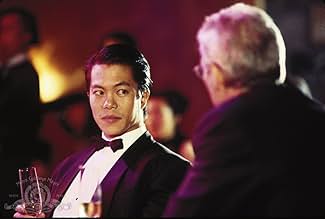
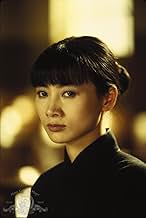
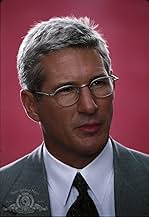
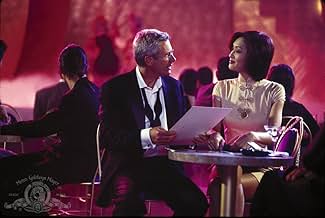
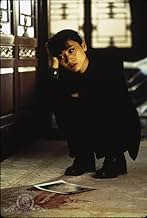
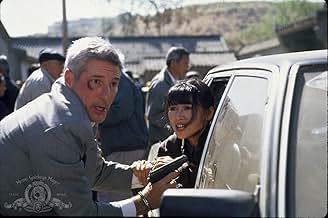
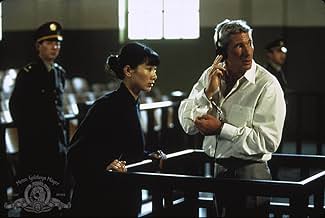
An American attorney on business in China is wrongfully arrested and put on trial for murder, with a female defense lawyer from the country the only key to proving his innocence.An American attorney on business in China is wrongfully arrested and put on trial for murder, with a female defense lawyer from the country the only key to proving his innocence.An American attorney on business in China is wrongfully arrested and put on trial for murder, with a female defense lawyer from the country the only key to proving his innocence.
- Awards
- 4 wins total


- Director
- Writer
- All cast & crew
- Production, box office & more at IMDbPro
Featured reviews
Very good, exciting, exotic suspense thriller
Some seem to be attacking the movie on the basis that it is too hard on China - REALLY?
Ask any North Korean refugee who's been captured in China -
Ask any member of the harmless Falun Gong religious sect -
Ask anyone connected by family ties with those identified as having participated in the Tianenmen Square protests (the protests were actually in quite a number of cities - but television covered just the tens of thousands assembled in Beijing).
No, it's not an "art house" kind of movie - don't expect the slow pace and strange story of something like Farewell My Concubine.
Instead, it's a wonderful Hitchcock-type story transplanted to Communist China - and voila - a wonderful movie that should have been remembered at Oscar time!
It's far better than, say, Hitchcock's Torn Curtain or Topaz - both set in repressive Communist regimes. It's more like a combination of The Wrong Man and North by Northwest - but sexier than either.
Our Welsh friend from beautiful Aberystwyth, Philip Davies, has it about right in his review printed beneath mine.
This is beautifully shot, with wonderful acting in a riveting Hitchcock type movie. Richard Gere is excellent - the politics and scenes of a changing China are fascinating.
I strongly recommend this one.
This is very exciting, suspenseful, romantic - and its depiction of China rings true.
White Light
Boxer Rebellion in Madison Square Gardens?
Richard Gere's American is an alienated, rootless 'Rick' caught in the cultural cross-fire between two power blocs. It is his enforced engagement with the reality of another world-view and the struggle of an intelligent Chinese woman to redeem the revolutionary excesses of her culture that lead directly to the Casablanca-esque ending, where love is sublimated beyond the personal to an ideal understanding and identification - 'You have a family here' - with the historical plight of a people.
This explains Richard Gere's unusually selfless performance, where he has had the taste and intelligence to let the women, particularly his Chinese defence lawyer, dominate every situation and every scene. Indeed, this feminist tendency in the film is also reflected in the consistently hostile view taken of the militaristic structure of Chinese state power as so much authoritarian posturing. As symbol of a new China the young woman lawyer is most effective: The ancient Greeks also saw the spirit of unbiased law as female, and Shakespeare's Portia is another such paradigm. And the actress portraying her illuminates the screen with her passionate intellectual intensity.
There is an effective parallelism to the revolutionary acts which destroyed the young lawyer's father during the time of the Cultural Revolution, leaving her with crippling and unresolved guilt, and the barrel of a gun in the hands of the murdered girl's father which alone can resolve the historical tensions at work in the courtroom, and reverse all the political lies in a new revolutionary act, additionally realising the great potential of a young China, by freeing that stirring Chinese conscience from its historical contradictions.
So this is an intelligent political thriller, although those of a more Costas-Gavrian or Godardian intellectual purity do seem to resent seeing a crisis of the Left viewed even from a very disengaged American viewpoint, disliking the humanist American strain of populist appeal in a political context, and resenting the smooth professionalism of the presentation as a mere circus. Even stranger are the objectors to Gere's Buddhism, who seemingly take fright at the intrusion of other perspectives into their own blinkered focus! In any case, Buddhism seems clearly not to be an issue to the scriptwriter.
This film in no way presents itself as the last word on its subject - but it is an intelligent and engaging movie, which, far from slandering the Chinese in the manner some vintage Korean-War tub-thumper about the 'Yellow Peril', goes out of its way not to identify the Chinese people with their masters. Curiously, this is exactly what the film's detractors do!
There is a sly reference to the Boxer Rebellion that began China's long road to modernisation, in the person of the trusty who was sent to beat up or even kill the American, but who comes to see that the real foreign devils in this instance are the corrupted Chinese officials who have sold out to the worst foreign traits of cynicism and greed by doing back-door deals with an unscrupulous Western communications company, and who finally confesses his error with true selfless revolutionary earnestness.
The fact that this Boxer Rebellion is played out in the blockbuster film equivalent of Madison Square Gardens, and is mightily entertaining throughout, has led many critics to assume that all they have been presented with is a superficial entertainment unworthy of such a serious subject. Actually, the film is fully engaged with the tragedy and passion of the Chinese people as they try to work out their destiny, and the proof of this is that, to any unbiased observer, the film leaves one with a new respect for the Chinese people, caught up in the complexities of their own history, and struggling for a better life. There is nothing patronising; there is emphatically no United States Cavalry riding to the rescue.
And I should have thought the contempt shown throughout towards official American diplomacy and state policy would have appealed to the most anti-American leftist. But are the critics just taking fashionable left jabs at their own right-wing bogies? - and I do mean Humphrey! Let us leave these obsessives to their futile shadow-boxing, forever engaged with an opponent entirely constructed from the straw which evidently bulks out their own brain-pans.
Arbitrary Law
Reading the production notes and trivia on here is interesting to me because it shows how the producers really did capture the reality of what goes on in Red China. I visited all over China and Lhasa, Tibet, right after the olympics and can vouch that the same legal situation still exists there today. In Beijing, we drove by a large, concrete and windowless court-building with the CCP emblem (seen many times in the film, and omnipresent in China in general) and when asked what the building was, my tour guide just responded plainly, "That's where you go to die."
For a foreigner, yeah, it might take a murder or espionage charge to keep you imprisoned indefinitely over there, but for Chinese citizens, many crimes are still punishable by execution without a fair trial, just as the film accurately portrays.
So, if you're into Chinese history or culture, then this is definitely worth watching, even more than once. If not, then don't watch it.
Underrated Political/Courtroom Drama
Gere, a follower, I believe, of the Dalai Lama whom the Communists forced out of Tibet, uses this film to get his shots in at his mentor's enemy. Anyone who thinks this is just a coincidence is pretty naive. Nonetheless, the facts support the film's stark, brutal portrayal of Communist China's leadership. At the very least, it shows a regime unwilling to hear both sides of a story. (Hollywood has often given the same treatment to the U.S. government, showing it more often in a corrupt light, which is ludicrous compared to restrictive Communist China.)
Anyway, Gere really dominates this film, being in almost every scene. This is your basic frame-up-then-prove-your-innocence-in-court story. It keeps your attention throughout although I thought the ending was a bit confusing because things happened almost too fast for the viewer to take in. At two hours, the film could have been trimmed a tad but the lulls in here were not much.
Overall, an underrated film and unjustly criticized by the national critics, most of whom don't like it when communism is bashed.


Did you know
- TriviaMost of the film's exterior scenes were shot on a seven-acre reproduction of a Beijing neighborhood, constructed near Los Angeles International Airport. The set was decorated with 300 bicycles, 15 cars, and thousands of miscellaneous props - from stoves to manhole covers - which had actually been imported from China.
- GoofsThe closing scene of a Chinese airport reveals an American West 737. American West does not fly to China.
- Quotes
Shen Yuelin: If you plead not guilty, you will be sentenced to death. And, unlike in your country, Mr. Moore, sentences are carried out within a week. You will be shot, and the cost of the bullet will be billed to your family.
- Crazy creditsThe opening title is first displayed in Chinese "letters" (called hanzi) which then change into English.
- SoundtracksY.M.C.A
Written by Henri Belolo, Jacques Morali and Victor Willis
Performed by The Village People
Courtesy of Scorpio Music and Courtesy of Mercury Records, Inc.
By Arrangement with PolyGram Film & TV Licensing
- How long is Red Corner?Powered by Alexa
Details
- Release date
- Country of origin
- Official site
- Languages
- Also known as
- Червоний кут
- Filming locations
- Beijing, China(Establishing shots, including the opening scenes were shot in Beijing, including a bicycle ride through Tiananmen Square.)
- Production companies
- See more company credits at IMDbPro
Box office
- Budget
- $48,000,000 (estimated)
- Gross US & Canada
- $22,459,274
- Opening weekend US & Canada
- $7,403,362
- Nov 2, 1997
- Gross worldwide
- $22,459,274
- Runtime
- 2h 2m(122 min)
- Color
- Sound mix
- Aspect ratio
- 1.85 : 1