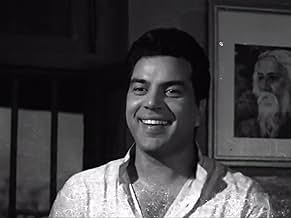
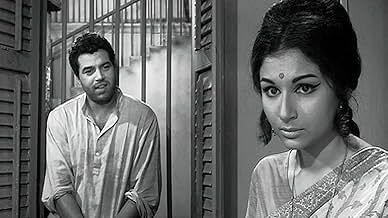
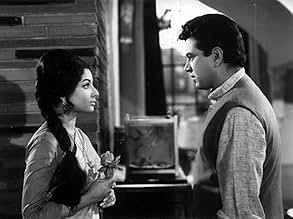
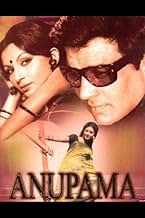
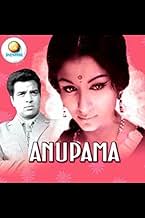
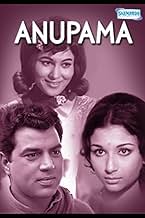
A grieving widower has a complex relationship with his daughter, blaming her for his wife's death. As she grows up, a kind poet helps her heal and find happiness despite her father's conflic... Read allA grieving widower has a complex relationship with his daughter, blaming her for his wife's death. As she grows up, a kind poet helps her heal and find happiness despite her father's conflicted behavior.A grieving widower has a complex relationship with his daughter, blaming her for his wife's death. As she grows up, a kind poet helps her heal and find happiness despite her father's conflicted behavior.
- Awards
- 1 win & 4 nominations total
Shashikala Jawalkar
- Anita Bakshi 'Annie'
- (as Shashikala)
Brahm Bhardwaj
- Suresh Bakshi
- (as Bharadwaj)
David Abraham
- Moses
- (as David)
7.5589
1
2
3
4
5
6
7
8
9
10
Featured reviews
A 'tear-jerker' is not appropriate do describe this film. It is in fact, a masterful handling of a sensitive subject by Hrishikesh Mukherjee
Known for his more successful rollicking comic adventures, this gem is still one of Hrishikesh Mukherjee's best works.
Anupama is the story of a shy and retreating girl who grows up with the stigma of guilt, and her father's reproach and blame for having lost her mother during childbirth. It's a poignant journey of how she overcomes her own guilt and steps out of her father's overbearing shadow.
Tarun Bose - another unsung character actor from Hindi cinema - plays Sharma, an affluent businessman who has married late but deeply loves his wife. When she dies in childbirth, he blames the newborn daughter Uma for having separated him from his only joy in life. She grows up as a timid young girl who pines for her father's affection, feels the guilt of her mother's demise and is barely able to express herself as a result. Indeed her first words in the movie are almost an hour into it, in a lilting song amidst nature.
Sharmila Tagore, performs exquisitely as the daughter Uma, and despite having very few words to say, truly embodies the repressed, melancholy character, especially with her eyes that express all her emotions. Of course it helps that she is so beautiful.
The scenes between father and daughter are poignant, and are sensitively handled. Deep inside, Sharma does love his daughter, but it shows only when he is drunk, and not in his senses.
Hindi cinema has produced many excellent actors who are grossly underrated, and none more so than Dharmendra, who is not really remembered today for some of his sensitive portrayals, and his flair for comedy. Here he plays Ashok, a writer by profession from a modest background whose keen mind is quick to notice Uma's angst. Which also attracts the two together.
Helping the plot race along - despite the melancholy theme, there's never a dull moment in the screenplay - are Shashikala who plays Annie (or Anita) - an effervescent tomboy and a complete anti-thesis of Uma's character- and a young Deven Verma who plays Arun, her love interest and a childhood friend of Ashok.
There's also David - a Hrishikesh Mukherjee regular - provides great comic relief as Sharma's cheerful friend Moses. He has the best line in the movie. Translated from Hindi, "Death is great fun. The dying person doesn't know when it will happen, and everybody else cries." This has to be one of David's finest performances - he jokes, dances with Shashikala, and generally brings the house down with his pearls of wisdom.
An unspoken love develops between Ashok and Uma, that threatens to die unrequited. Ashok understands the father's grief, but resents his ignorance and neglect of his daughter. The song 'Ya dil ki suno..' sung by the peerless Hemant Kumar, who also scores the music, is heart-rending. This song alone is worth the price of the movie. Written by Kaifi Azmi, It poetically describes the insensitivity of the father: "what a flower has bloomed in nature, the gardener has no love for it".
Can Uma really overcome her internal barriers and take the leap to be with Ashok? Does she really have the strength to break free from emotions of both love and terror for her father? Despite a predictable ending, the movie still surprises in the end.
Modern day directors can learn a lot about how to balance emotional content with sparkling comedy. And aided by excellent performances all round, 'Anupama' makes for a memorable experience.
Anupama is the story of a shy and retreating girl who grows up with the stigma of guilt, and her father's reproach and blame for having lost her mother during childbirth. It's a poignant journey of how she overcomes her own guilt and steps out of her father's overbearing shadow.
Tarun Bose - another unsung character actor from Hindi cinema - plays Sharma, an affluent businessman who has married late but deeply loves his wife. When she dies in childbirth, he blames the newborn daughter Uma for having separated him from his only joy in life. She grows up as a timid young girl who pines for her father's affection, feels the guilt of her mother's demise and is barely able to express herself as a result. Indeed her first words in the movie are almost an hour into it, in a lilting song amidst nature.
Sharmila Tagore, performs exquisitely as the daughter Uma, and despite having very few words to say, truly embodies the repressed, melancholy character, especially with her eyes that express all her emotions. Of course it helps that she is so beautiful.
The scenes between father and daughter are poignant, and are sensitively handled. Deep inside, Sharma does love his daughter, but it shows only when he is drunk, and not in his senses.
Hindi cinema has produced many excellent actors who are grossly underrated, and none more so than Dharmendra, who is not really remembered today for some of his sensitive portrayals, and his flair for comedy. Here he plays Ashok, a writer by profession from a modest background whose keen mind is quick to notice Uma's angst. Which also attracts the two together.
Helping the plot race along - despite the melancholy theme, there's never a dull moment in the screenplay - are Shashikala who plays Annie (or Anita) - an effervescent tomboy and a complete anti-thesis of Uma's character- and a young Deven Verma who plays Arun, her love interest and a childhood friend of Ashok.
There's also David - a Hrishikesh Mukherjee regular - provides great comic relief as Sharma's cheerful friend Moses. He has the best line in the movie. Translated from Hindi, "Death is great fun. The dying person doesn't know when it will happen, and everybody else cries." This has to be one of David's finest performances - he jokes, dances with Shashikala, and generally brings the house down with his pearls of wisdom.
An unspoken love develops between Ashok and Uma, that threatens to die unrequited. Ashok understands the father's grief, but resents his ignorance and neglect of his daughter. The song 'Ya dil ki suno..' sung by the peerless Hemant Kumar, who also scores the music, is heart-rending. This song alone is worth the price of the movie. Written by Kaifi Azmi, It poetically describes the insensitivity of the father: "what a flower has bloomed in nature, the gardener has no love for it".
Can Uma really overcome her internal barriers and take the leap to be with Ashok? Does she really have the strength to break free from emotions of both love and terror for her father? Despite a predictable ending, the movie still surprises in the end.
Modern day directors can learn a lot about how to balance emotional content with sparkling comedy. And aided by excellent performances all round, 'Anupama' makes for a memorable experience.
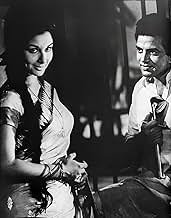
Vintage Hrishikesh?
I had really fond memories of this film but on revisiting it I was actually taken aback at how many problems it had.
The bad: 1. Shashikala played a most exaggerated character and got annoying after a while, plus she acted 18-20 years old and was clearly an older woman.
2. The story was melodramatic and exaggerated.
The good: 1. It is a Hrishikesh Mukherjee film - loaded with pluses.
2.Sharmila was awesome as Uma - the traumatized silent girl; she was beautiful and extremely competent at showing emotions without words.
3.Dharam was best in the idealist roles. Here he is just so good - often seen in a singlet with holes, and never stylish but always full of his own inimitable style.
4. Tarun Bise, David, Deven Varma all did a good job.
5. The music was fantastic - Bheegi Bheegi fiza, Yaa dil ki suno duniya waalon, Aisi bhi baatein.
On balance a good film, watchable for the lead pair, the songs, but surprisingly not one of the best from the maestro.
The bad: 1. Shashikala played a most exaggerated character and got annoying after a while, plus she acted 18-20 years old and was clearly an older woman.
2. The story was melodramatic and exaggerated.
The good: 1. It is a Hrishikesh Mukherjee film - loaded with pluses.
2.Sharmila was awesome as Uma - the traumatized silent girl; she was beautiful and extremely competent at showing emotions without words.
3.Dharam was best in the idealist roles. Here he is just so good - often seen in a singlet with holes, and never stylish but always full of his own inimitable style.
4. Tarun Bise, David, Deven Varma all did a good job.
5. The music was fantastic - Bheegi Bheegi fiza, Yaa dil ki suno duniya waalon, Aisi bhi baatein.
On balance a good film, watchable for the lead pair, the songs, but surprisingly not one of the best from the maestro.
First-rate cinema but could have been a little shorter...
I believe that calling this movie a tear-jerker does not do justice to it -- this is world class cinema at its finest that sensitively portrays a range of human emotions. Certainly the interaction between father and daughter towards the end comprise the most poignant scenes in this movie, and they have been both written and picturized in a manner that is deeply touching.
Although the movie takes its own time to develop the characters thoroughly and although you wouldn't expect anything less from Hrishikesh Mukherjee in that regard, I did feel that the movie could have been shortened a little bit. Also, Shashikala's role seemed a little exaggerated.
In general, the movie is a gem and I wish viewers all over the world could be introduced to such Hindi classics for a true appreciation of the range of "Bollywood" movies over the years.
Although the movie takes its own time to develop the characters thoroughly and although you wouldn't expect anything less from Hrishikesh Mukherjee in that regard, I did feel that the movie could have been shortened a little bit. Also, Shashikala's role seemed a little exaggerated.
In general, the movie is a gem and I wish viewers all over the world could be introduced to such Hindi classics for a true appreciation of the range of "Bollywood" movies over the years.
10choubey
A heartbreaking tear-jerker that explores life and death through the eyes of a young woman who has lived as a burden to her estranged father.
A heartbreaking tear-jerker that explores life and death through the eyes of a young woman who has lived as a burden to her estranged father. Both, Dharmendra and Sharmila Tagore establish their signature acting in this movie.
Did you know
- TriviaKuch Dil Ne Kaha Kuch Bhi Nahin. Sharmila Tagore had turned up for the song's shoot in Mahabaleshwar at 5 am in full makeup and with her hair styled in a bouffant. Director Hrishikesh Mukherjee disapproved of the bouffant and told the actress that it didn't go with her character. He gave in when she insisted on keeping it. Later, however, Tagore regretted her appearance in the song and wished that she had listened to the director. [
- ConnectionsFeatured in Guddi (1971)
- SoundtracksYa Dil Ki Suno Duniyawalo
Sung by Hemanta Mukherjee (as Hemant Kumar)
Music composed by Hemanta Mukherjee (as Hemant Kumar)
Lyrics by Kaifi Azmi
- How long is Anupama?Powered by Alexa
Details
- Release date
- Country of origin
- Language
- Also known as
- Incomparable
- Filming locations
- Production company
- See more company credits at IMDbPro
- Runtime
- 2h 28m(148 min)
- Color
Contribute to this page
Suggest an edit or add missing content