Window Water Baby Moving
- 1959
- 13m
IMDb RATING
7.5/10
2.6K
YOUR RATING

Stan Brakhage films the birth of his first child, Myrrena.Stan Brakhage films the birth of his first child, Myrrena.Stan Brakhage films the birth of his first child, Myrrena.

Stan Brakhage
- Self
- (uncredited)
Myrrena Schwegmann
- Self (baby being born)
- (uncredited)
Jane Wodening
- Self
- (uncredited)
7.52.5K
1
2
3
4
5
6
7
8
9
10
Featured reviews
Great
Window Water Baby Moving (1962)
**** (out of 4)
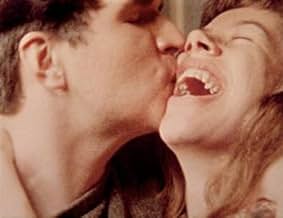
I'm not quite sure where the line is drawn when it comes to art and a simple home movie but this film is certainly the best of both. Director Brakhage made this eleven-minute film dealing with the birth of his first child. The mixture of something beautiful like art and something ugly like a home movie is rather interesting for the story as there's a lot of ugliness that goes along with childbirth but at the same time there's also something beautiful about it and this film perfectly captures both. Nothing during the birth sequence is kept to the imagination as the director gets the camera very close to where all the action is going on and he doesn't shy away from showing anything. It's rather amazing that his wife was such a good sport because there had to be times where he was in the way of the birth just to get certain shots. The film shows a lot of this ugly, bloody mess but it's also done very beautifully. The birth shots and edited with shots of Brakhage and his wife loving on one another and the way this editing is done really captures the love and affection the director must have been feeling.
**** (out of 4)
I'm not quite sure where the line is drawn when it comes to art and a simple home movie but this film is certainly the best of both. Director Brakhage made this eleven-minute film dealing with the birth of his first child. The mixture of something beautiful like art and something ugly like a home movie is rather interesting for the story as there's a lot of ugliness that goes along with childbirth but at the same time there's also something beautiful about it and this film perfectly captures both. Nothing during the birth sequence is kept to the imagination as the director gets the camera very close to where all the action is going on and he doesn't shy away from showing anything. It's rather amazing that his wife was such a good sport because there had to be times where he was in the way of the birth just to get certain shots. The film shows a lot of this ugly, bloody mess but it's also done very beautifully. The birth shots and edited with shots of Brakhage and his wife loving on one another and the way this editing is done really captures the love and affection the director must have been feeling.
the most personal 'family film' ever made
You ever see that cliché happening, if not in TV or movies then in real life, of the husband documenting every single excruciatingly painful but miraculous happening that is birth? Apparently, according to Stan Brakhage on the DVD this film is on, this trend was at least in part inspired by his original efforts. Shot on a minimal budget (save for what it must've cost to have a birth in the Brakhage household as opposed to the hospital), this film IS the difference between a simple 'home movie' and something close to the most personal art possible. Documentary film-making has always been about a subject that compels the filmmaker enough to get hours and hours of footage down. That here Brakhage, who often does montage work of paintings and the like, is focusing his subject matter on his wife, and his child just itching to get out, in all graphic detail, is astounding. For the 60's, when this was first released, it was probably a lot more shocking than now.
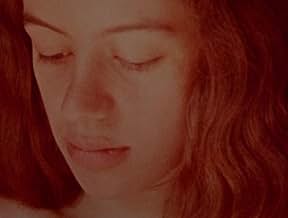
Not to say that the film isn't shocking, but it is on a different level than what you might see on one of those 'birth' shows on one of the Discovery channels. The way certain things are presented in the film are surprising, and (if you're a guy like me) definitely unnerving. But Brakhage somehow makes his film almost beautiful in a way by cutting the film's subject matter in half, so to speak. The first half is just the mother of his child, in a bathtub, feeling the baby kicking, et all. It's really just a great montage of the woman as a whole, nothing unseen, with the belly getting the most screen-time aside from the mother's face and genitals. Then comes the second part, the birth. Basically, if you still wonder how it works, in near unflinching detail, watch the film. That it is presented in such a grainy 16mm kind of filming, and still using the intense, mad montage of Brakhage's two cameras on her (I think it was two, one more close to the 'action' than the other).
And when it ends, it is, like all (practically) successful births, a miracle in and of itself. So much happens within these 13 minutes of film than, in a way, it feels longer. I loved how it dealt with its subject matter, which could be very tricky, and messy (the latter of which is very true), and was still a wonder for the eyes. It lacks music, which is sort of a pro and a con for me- you could do with some music, make it even more home movie-like. As it is, Brakhage has one of his most notorious- and possibly best- works here, and maybe the only film that makes that bridge between a health class and film class in school.
Not to say that the film isn't shocking, but it is on a different level than what you might see on one of those 'birth' shows on one of the Discovery channels. The way certain things are presented in the film are surprising, and (if you're a guy like me) definitely unnerving. But Brakhage somehow makes his film almost beautiful in a way by cutting the film's subject matter in half, so to speak. The first half is just the mother of his child, in a bathtub, feeling the baby kicking, et all. It's really just a great montage of the woman as a whole, nothing unseen, with the belly getting the most screen-time aside from the mother's face and genitals. Then comes the second part, the birth. Basically, if you still wonder how it works, in near unflinching detail, watch the film. That it is presented in such a grainy 16mm kind of filming, and still using the intense, mad montage of Brakhage's two cameras on her (I think it was two, one more close to the 'action' than the other).
And when it ends, it is, like all (practically) successful births, a miracle in and of itself. So much happens within these 13 minutes of film than, in a way, it feels longer. I loved how it dealt with its subject matter, which could be very tricky, and messy (the latter of which is very true), and was still a wonder for the eyes. It lacks music, which is sort of a pro and a con for me- you could do with some music, make it even more home movie-like. As it is, Brakhage has one of his most notorious- and possibly best- works here, and maybe the only film that makes that bridge between a health class and film class in school.
Stan Brakhage's beautiful film of his first child being born.
While many women cringe at the thought of child birth and would never want to go through it, other women love children and are more than delighted to deliver a baby. I am a male, so I don't really have a true opinion, but I would really like to have a child someday. This film is essentially the birth of experimental filmmaker Stan Brakhage's first child. We witness his daughter being born without the sugarcoating or hiding the act. We see the birth in all of its glory. Many viewers will be nauseated with the sight, but others will be honored. This film is amazing because we see life actually being given and it is amazing. The human body is very complex, and the birthing process doesn't hide this fact. This is a film that people will watch for the ending. The ending makes the whole process worth it as the child turns out beautiful and We as viewers are treated to a loving sight of the child living and very healthy looking. This is the sweet side of Stan Brakhage. Usually his films involve the viewers in the difficulty of trying to figure out what he is trying to say, but this film is almost like a reward to the viewer. Children are beautiful and it is strange to realize that in twenty years, they will be running the country.
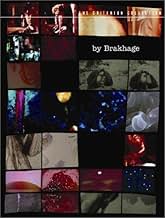
(I watched this film as part of the DVD short film collection of Stan Brakhage entitled, BY BRAKHAGE: AN ANTHOLOGY.)
(I watched this film as part of the DVD short film collection of Stan Brakhage entitled, BY BRAKHAGE: AN ANTHOLOGY.)
no masterpiece
i liked his filmic style at first, his use of jump cuts and sped up footage was effective in portraying the woman's fear and angst although she looked calm on the outside. it also elevated the importance of the action of giving birth.
but i don't think the lingering graphic shots of the vagina bleeding did anything for the film and took me out of the rather mysterious tranquil feeling given off by the film previously.
he certainly knows how to make a film affecting but i won't want to watch it again and i don't think it conveyed any of the actualities of birth, the beauty and the miracle.
but i don't think the lingering graphic shots of the vagina bleeding did anything for the film and took me out of the rather mysterious tranquil feeling given off by the film previously.
he certainly knows how to make a film affecting but i won't want to watch it again and i don't think it conveyed any of the actualities of birth, the beauty and the miracle.
A visceral experience like no other.
An amazing avant-garde short of the birth of Brakhage's first child. This film is both graphic and beautiful while effecting each viewer a little differently. The colors in the film are especially striking. (Warning this film is not for the queazy).


Did you know
- TriviaIn the early 80's, Brakhage screened 'Window Water Baby Moving' to Andrei Tarkovsky who wasn't impressed with the film. Brakhage said in an interview: "The first film was Window Water Baby Moving. First of all I got nervous because Olga, who is teetering over me on the bureau, begins to sway. I've seen people faint at that film and I don't know, maybe she's never seen childbirth before. And then I see Tarkovsky's wife averting her face from the screen at times as you get to see some of the more explicit details of childbirth. ... Tarkovsky starts talking in rapid Russian, with Zanussi answering him, and whatever he's saying it's obviously angry. Finally, after a lot of these exchanges, Jane had the presence of mind to say, "What's going on? What's he saying?" So Zanussi starts translating and he says, "Well..." and we all wait, "Well... he says," and we wait some more, "he says that Art must have a mystery to it and this is too scientific to be Art.""
- ConnectionsEdited into Alt-J: Pleader (2017)
Details
- Release date
- Country of origin
- Also known as
- Window, Water, Baby, Moving
- See more company credits at IMDbPro
Contribute to this page
Suggest an edit or add missing content