
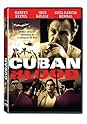
The year is 1958, and in Holguín, Cuba, a boy's world is about to change forever.The year is 1958, and in Holguín, Cuba, a boy's world is about to change forever.The year is 1958, and in Holguín, Cuba, a boy's world is about to change forever.
- Awards
- 2 nominations total



- Director
- Writers
- All cast & crew
- Production, box office & more at IMDbPro
5.8596
1
2
3
4
5
6
7
8
9
10
Featured reviews
recommended
Harvey Keital's best performance so far the new century. Very nicely photographed, a beautiful snap-shot of pre-Castro Cuba. The story revolves around the nephew of a local minor crime boss who develops a friendship with an American with Hollywood connections. It's really about the moment when a boy awakens to the fact that the small circle of people he knows actually live in a much larger, much more complex world that he doesn't yet understand.the script is strong and filled with humor, the direction is crisp. Over all, a really professional job that fits in well with the tradition of Latin American cinema. The one weakness is the decision to shoot in sync-sound English rather than Spanish - probably to improve sales in the US. Unfortunately, this just makes the film a little less convincing. But if you can see beyond this, you will find a heartfelt trip to another world. Recommended.
Sweet film, true story...Worth seeing
I saw this film and heard the writer-director, Juan Gerard, speak at the Santa Barbara Int'l Film Festival.
All I knew about it was that it was the story of an 8-year-old boy at the time of the Cuban Revolution in 1958 and how it affects his home and family.
Its opening scene will bring to mind "Cinema Paradiso". In fact, the film is filled with references to classic films: The Roulette Wheel (Casablanca), "chicken clucking" (Rebel Without a Cause), references to Bunuel, "Touch of Evil"; you'll find more. The homeless man (Georg Stanford Brown)is a reference to Cuban folklore which often uses a black man as a type of Greek chorus.
What this film really is is the culmination of a dream. Gerard's wish to honor his family and medium of film that he has loved all of his life.
This is the true story of Juan Gerard and all the people in it are real,as are the events depicted. Gerard is actually an architect and engineer (and passionate film lover) but his dream was to make this movie. He and his wife decided to live that dream and Harvey Keitel became an "angel" who believed in Gerard and agreed to produce and star in it. Keitel holds the screen powerfully as the mysterious and secretive grandfather "Che". Brown and Keitel are the only Americans in the cast. Iben Hjejle (High Fidelity) and Gael Garcia Bernal (Y tu Mama Tambien) offer strong support in key roles.
Truthfully, the first half of the film suffers from stiff delivery of lines, and some overracting, but stay with it. The last half is much better as the events of the revolution combine for the bittersweet, and honest climax. It is the first effort of Juan Gerard, but it is honest as he is and his passion and heart really come through,in this sincere first effort. I would definitely see it again, and hope that he continues his film career.
All I knew about it was that it was the story of an 8-year-old boy at the time of the Cuban Revolution in 1958 and how it affects his home and family.
Its opening scene will bring to mind "Cinema Paradiso". In fact, the film is filled with references to classic films: The Roulette Wheel (Casablanca), "chicken clucking" (Rebel Without a Cause), references to Bunuel, "Touch of Evil"; you'll find more. The homeless man (Georg Stanford Brown)is a reference to Cuban folklore which often uses a black man as a type of Greek chorus.
What this film really is is the culmination of a dream. Gerard's wish to honor his family and medium of film that he has loved all of his life.
This is the true story of Juan Gerard and all the people in it are real,as are the events depicted. Gerard is actually an architect and engineer (and passionate film lover) but his dream was to make this movie. He and his wife decided to live that dream and Harvey Keitel became an "angel" who believed in Gerard and agreed to produce and star in it. Keitel holds the screen powerfully as the mysterious and secretive grandfather "Che". Brown and Keitel are the only Americans in the cast. Iben Hjejle (High Fidelity) and Gael Garcia Bernal (Y tu Mama Tambien) offer strong support in key roles.
Truthfully, the first half of the film suffers from stiff delivery of lines, and some overracting, but stay with it. The last half is much better as the events of the revolution combine for the bittersweet, and honest climax. It is the first effort of Juan Gerard, but it is honest as he is and his passion and heart really come through,in this sincere first effort. I would definitely see it again, and hope that he continues his film career.
not the real title
Dreaming of Julia was the title of the original script, and was filmed in the summer of 2000 in Santo Domingo Republica Dominicana. To release the picture they change the original name to Cuba Libre. The director's cut was 3 and a half hours long. It was released on the festival of Bangkok in Thailand. It was the second film of Gael García Bernal (the first was Amores Perros)
and the first of Juan Gerard as a Director. In the poster the names of Diana Bracho and Cecilia Suares does not appear. Diana plays the grandmother and Cecilia the mother of the kid. They are great actresses and they keep the story together specially Diana. Check her out in other things you would be surprised.
and the first of Juan Gerard as a Director. In the poster the names of Diana Bracho and Cecilia Suares does not appear. Diana plays the grandmother and Cecilia the mother of the kid. They are great actresses and they keep the story together specially Diana. Check her out in other things you would be surprised.
Little boy grows up in confusing time and place
The central theme in this movie seems to be confusion, as the relationships, setting, acting and social context all lead to the same place: confusion. Even Harvey Keitel appears to be out of his element, and lacks his usual impeccable clarity, direction and intensity. To make matters worse, his character's name is 'Che', and we are only told (directly, by the narrator) well into the film that he is not 'that' Che, just a guy named Che. The family relationships remain unclear until the end of the film, and once defined, the family is divided - the younger generation off to America. So cliché. Other reviews discuss how the movie depicts the impact of the revolution on a boy's family; however the political stance of the director is murky at best, and we are never quite sure who is responsible for what bloodshed. So they lost their property (acquired by gambling profits) - so what? Refusing to take a political stand, when making a movie about the Cuban revolution, is an odd and cowardly choice. Not to mention the movie was in English! Why are all these Cubans speaking English? No wonder they did not get permission to film in Cuba. And if family life is most important to look at here, it would be great if we could figure out who is who - we are 'introduced' to them all in the beginning - a cheap way out of making the relationships clear throughout the film! The acting was mostly shallow, wooden, and unbelievable, timing was off all around. The 'special' visual effects were confusing and distracting. References to American films - and the black character as Greek chorus - strictly gratuitous, intellectually ostentatious, and consistently out of place. I only watched the whole movie because I was waiting for clarity, or some point to it all. It never happened.
Poignant coming of age story set in pre-Castro Cuba.
I felt this is a very good and well made movie that focuses on and revolves around the life of a 12 year old Cuban boy who in the movie is known as "the boy". This movie reminds me a lot of Two Bits, starring Al Pacino and Jerry Barone as the grandfather and his grandson. This has that same type of poignant, nostalgic affection for the mysteries of childhood, all framed around a story of a boy coming of age in a Cuba right on the cusp of losing it's traditional old ways and becoming a revolutionary state. Politics are incidental, this is a story of a boy who is obsessed with movies and is discovering love (for an adult woman).
It's a sweet, artfully filmed and directed movie starring Andhy Méndez, who was actually born in Havana, Cuba but immigrated to Miami when he was 5 years old. He then began his career as an actor and a model when he co-starred in the Mexican made telenovela Morelia (which was shot in Miami). Andhy still acts today and has been in many TV series and movies.
It's a sweet, artfully filmed and directed movie starring Andhy Méndez, who was actually born in Havana, Cuba but immigrated to Miami when he was 5 years old. He then began his career as an actor and a model when he co-starred in the Mexican made telenovela Morelia (which was shot in Miami). Andhy still acts today and has been in many TV series and movies.


Did you know
- TriviaJuan Gerard tried to film in Cuba, but was unable to obtain permission; hence the film was shot in the Dominican Republic.
- ConnectionsFeatured in Cuban Blood (2003)
Details
- Release date
- Countries of origin
- Official site
- Language
- Also known as
- Sangre de Cuba
- Filming locations
- Production companies
- See more company credits at IMDbPro
- Runtime
- 1h 49m(109 min)
- Color
- Sound mix
- Aspect ratio
- 1.66 : 1
Contribute to this page
Suggest an edit or add missing content