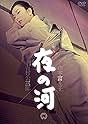
An artistically and commercially successful kimono designer begins an affair with a married man. But when his wife dies, her reaction is not as expected.An artistically and commercially successful kimono designer begins an affair with a married man. But when his wife dies, her reaction is not as expected.An artistically and commercially successful kimono designer begins an affair with a married man. But when his wife dies, her reaction is not as expected.
- Director
- Writers
- Stars
- Awards
- 2 wins total
- Director
- Writers
- All cast & crew
- Production, box office & more at IMDbPro
7.2165
1
2
3
4
5
6
7
8
9
10
Featured reviews
Deceptively Deep?
At first I thought this was going to be the sort of movie I couldn't condone. It had a lot of front-loaded exposition which was considered fashionable in pre-1960s film. It also took me a while to accept the lead's performance - she was always smiling regardless of what was going on or what the interlocutor was saying. It seemed so fake.
As for the performance, the tide for that turns and it comes to seem masterful when we see that theatrical East Asian femininity that stereotypically manifests as all smiles and giggles in almost all situations creates an impressive contrast when there is reason to stop smiling. Also, there are so many different types of smiles and we are reminded that they can sometimes be used to express scorn or even dominance.
Well, the exposition doesn't matter all that much as the movie rolls along, since it's not really a feminist piece about a career-oriented woman in a patriarchal society trying to make it under the stresses of capitalism as the face plot would have one assume. It's about a woman's choice in the sexual marketplace. The attractive protagonist has a variety of suitors and she has to navigate them skillfully, sifting out the losers without stepping on toes too roughly, because a jilted man's fury or crying, as the case were, can become cumbersome.
But there's more than that too. It's actually a glorious piece of misandry that has some very clever criticisms of men. The writer was clearly writing from a position of chastisement but understood her subject. Almost every man in the film is unreliable and a bit scummy. Sometimes it's in a subtle way, such as when a worker just doesn't show up to work; sometimes it's overt, such as when the wealthier merchant tries to force the protagonist to be his mistress; and, of course, we have the most shocking revelation where the suave, serious doctor is exposed for what he is.
But is it really so shocking? Is the ending really so unexpected? In art, like in real life, the characters are usually deluded and just trying to support slides of reality that they've made up for themselves. If you think twice about it, it really shouldn't be shocking, but rather refreshing to see a person with a reasonable head on her shoulders for once.
Honourable Mentions: Alice's Restaurant (1969): The final frames of River really remind me of Alice. That ironic facial expression leaves us with some satisfying final doubt. You got all you wanted, why looking so glum, chum?
As for the performance, the tide for that turns and it comes to seem masterful when we see that theatrical East Asian femininity that stereotypically manifests as all smiles and giggles in almost all situations creates an impressive contrast when there is reason to stop smiling. Also, there are so many different types of smiles and we are reminded that they can sometimes be used to express scorn or even dominance.
Well, the exposition doesn't matter all that much as the movie rolls along, since it's not really a feminist piece about a career-oriented woman in a patriarchal society trying to make it under the stresses of capitalism as the face plot would have one assume. It's about a woman's choice in the sexual marketplace. The attractive protagonist has a variety of suitors and she has to navigate them skillfully, sifting out the losers without stepping on toes too roughly, because a jilted man's fury or crying, as the case were, can become cumbersome.
But there's more than that too. It's actually a glorious piece of misandry that has some very clever criticisms of men. The writer was clearly writing from a position of chastisement but understood her subject. Almost every man in the film is unreliable and a bit scummy. Sometimes it's in a subtle way, such as when a worker just doesn't show up to work; sometimes it's overt, such as when the wealthier merchant tries to force the protagonist to be his mistress; and, of course, we have the most shocking revelation where the suave, serious doctor is exposed for what he is.
But is it really so shocking? Is the ending really so unexpected? In art, like in real life, the characters are usually deluded and just trying to support slides of reality that they've made up for themselves. If you think twice about it, it really shouldn't be shocking, but rather refreshing to see a person with a reasonable head on her shoulders for once.
Honourable Mentions: Alice's Restaurant (1969): The final frames of River really remind me of Alice. That ironic facial expression leaves us with some satisfying final doubt. You got all you wanted, why looking so glum, chum?
Pleasant but a bit dull
Not a new subject and nothing new to say. This is a pleasant moral tale about a naive young single kimono maker who knowingly becomes involved with a married professor. She knows he's married, because his daughter is instrumental to their meeting. Some lovely Kyoto scenery and fairly good performances make up for the lack of originality or any particular flair.
Did you know
- TriviaThis is the first long colour film in Japan.
Details
- Release date
- Country of origin
- Language
- Also known as
- River of the Night
- Filming locations
- Production company
- See more company credits at IMDbPro
- Runtime
- 1h 44m(104 min)
- Sound mix
- Aspect ratio
- 1.37 : 1
Contribute to this page
Suggest an edit or add missing content