IMDb RATING
6.6/10
2.6K
YOUR RATING

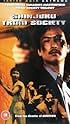
Amidst a Chinese and Japanese mafia war, a lawyer for the Chinese mob finds a rift forming between him and his corrupt police office brother.Amidst a Chinese and Japanese mafia war, a lawyer for the Chinese mob finds a rift forming between him and his corrupt police office brother.Amidst a Chinese and Japanese mafia war, a lawyer for the Chinese mob finds a rift forming between him and his corrupt police office brother.



- Director
- Writer
- All cast & crew
- Production, box office & more at IMDbPro
6.62.6K
1
2
3
4
5
6
7
8
9
10
Featured reviews
Plenty of stylish and bone crunching violence
I found this a bit hard to follow to the extent that it seemed to dip in the middle while I tried to make head or tail of who was fighting who and why. One of the problems is the cultural/language one. Here we have a Chinese/Taiwanese/Japanese problem of which we know little and because we are simply reading English subtitles inevitably loose some of the subtleties. Another problem is that there seem to be just too many only half explained twists and coincidences. Nevertheless, it seems unlikely that there is a wholly bad Miiki film and this certainly is not that. Plenty of stylish and bone crunching violence, a window upon some less than orthodox sexual goings on plus the family aspect. All in all a decent ride but maybe checking out the storyline might actually be helpful before watching this one. PLEASE SEE later re-appraisal 11/2/19
Miike and the Ultra-Violence of Crime
Amidst a Chinese and Japanese mafia war, a lawyer for the Chinese mob finds a rift forming between him and his corrupt police officer brother. Welcome to the "black society", the underworld that exists just beyond the periphery of our vision.
In this world, many of the characters have a grey, ambiguous morality, and (in the words of Tom Mes) "nobody does what you expect them to do." In this sense, the film is not terribly far removed from the classic noir with its gritty scenarios and anti-heroes. Of course, here it goes in directions never before considered.
The ethnic / nationality aspect is fascinating, even if not fully comprehensible to an American audience. We can understand the ancient divide between China and Japan, and appreciate how this battle is now playing out between the Triads and yakuza. But the use of a character half-Japanese, half-Chinese is brilliant. Americans who do not understand the languages or customs may miss the point, but for their culture it is no different than how we once thought of the "mulatto" -- rejected by both black and white cultures.
Sight & Sound noted the film was similar to the gangster films of Kinji Fukasaku, while noting that it still contained "scenes such as the one where sodomy is used as a police interrogation technique bear Miike's unmistakable signature." (Interestingly, neither Miike nor Fukasaku are primarily known for their gangster films -- Fukasaku is connected best to "Tora! Tora! Tora!" and "Battle Royale".)
The film is one of the earliest examples of Miike's use of extreme violence. We have decapitated heads, eyes ripped from their sockets, and the aforementioned sodomy. The film also has some unsettling sexual aspects. Not quite on par with Miike's "Visitor Q", but what is?
Also worth noting is the soundtrack, which often sound like more 1980s synth than 1990s techno. Was this a style choice, or was Japan in a different musical era than the United States in 1995? Interestingly, this film is composer Atorie Shira's only credit. Another "anachronism" is a trunk shot very reminiscent of "Reservoir Dogs" (1992). Coincidence? It's no secret that Tarantino borrows from his favorite films, but was Miike borrowing from Tarantino?
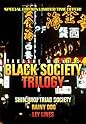
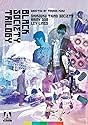
Arrow Video has released the film as part of their Black Society Blu-ray box set, complete with an all-new audio commentary from Miike expert Tom Mes, the author of "Agitator". This is actually the second Mes commentary for the film, so anyone who has an old DVD can now hear him twice. (Interestingly, he feels this film has a "gothic element", which is not something that immediately comes to mind when you are talking about Miike.)
In this world, many of the characters have a grey, ambiguous morality, and (in the words of Tom Mes) "nobody does what you expect them to do." In this sense, the film is not terribly far removed from the classic noir with its gritty scenarios and anti-heroes. Of course, here it goes in directions never before considered.
The ethnic / nationality aspect is fascinating, even if not fully comprehensible to an American audience. We can understand the ancient divide between China and Japan, and appreciate how this battle is now playing out between the Triads and yakuza. But the use of a character half-Japanese, half-Chinese is brilliant. Americans who do not understand the languages or customs may miss the point, but for their culture it is no different than how we once thought of the "mulatto" -- rejected by both black and white cultures.
Sight & Sound noted the film was similar to the gangster films of Kinji Fukasaku, while noting that it still contained "scenes such as the one where sodomy is used as a police interrogation technique bear Miike's unmistakable signature." (Interestingly, neither Miike nor Fukasaku are primarily known for their gangster films -- Fukasaku is connected best to "Tora! Tora! Tora!" and "Battle Royale".)
The film is one of the earliest examples of Miike's use of extreme violence. We have decapitated heads, eyes ripped from their sockets, and the aforementioned sodomy. The film also has some unsettling sexual aspects. Not quite on par with Miike's "Visitor Q", but what is?
Also worth noting is the soundtrack, which often sound like more 1980s synth than 1990s techno. Was this a style choice, or was Japan in a different musical era than the United States in 1995? Interestingly, this film is composer Atorie Shira's only credit. Another "anachronism" is a trunk shot very reminiscent of "Reservoir Dogs" (1992). Coincidence? It's no secret that Tarantino borrows from his favorite films, but was Miike borrowing from Tarantino?
Arrow Video has released the film as part of their Black Society Blu-ray box set, complete with an all-new audio commentary from Miike expert Tom Mes, the author of "Agitator". This is actually the second Mes commentary for the film, so anyone who has an old DVD can now hear him twice. (Interestingly, he feels this film has a "gothic element", which is not something that immediately comes to mind when you are talking about Miike.)
Shinjuku Triad Killers
I really like Miikes movies about Yakuza, this one I saw about 2 years ago and it really fu**ed my head. Never before seen such a sick and twisted thing. The Story is good and the actors do their thing very well. I haven't seen the UK or Japan version, but I have to say that I believe that the German DVD is a bit censored. If you haven't seen the movie already and live in Germany maybe you better look out for a DVD from the Nederlands or Austria. The I-ON DVD contains a lot of very hard and nasty scenes, but at the showdown I felt that something was missing, about one or two very short scenes.
All in all a good perverted movie with crazy characters and a high level of violence, that's what I like Miike for!!
All in all a good perverted movie with crazy characters and a high level of violence, that's what I like Miike for!!
10Nyagtha
Can you just say "A great film"?
A lot has been said about Shinjuku Triad Society as the first true "Miike" film and I thought this sort of description might have been a cliché. But, like all clichés, it is based on the truth. All the Miike trademarks are here, the violence, the black humour, the homosexuality, the taboo testing and the difficult to like central character. Shinjuku is however, one of Miike's most perfectly formed films. He says in an interview that if he made it again it would be different, but not necessarily better. I think what he means is that the film possesses a truly captivating energy and raw edge which seems so fresh that although he might be able to capture a more visually or technically complex movie he could not replicate or better the purity of this film.
As you might expect, the violence is utterly visceral, gushing blood and gritty beatings are supplemented by a fantastic scene in which a woman has a chair smashed over her face. (Only a Miike film could let you get away with a sentence like that.) The film has a fantastic pace, unlike Dead or Alive which begins and ends strongly and dips in the middle. Dead or Alive also deals with similar issues, Miike is clearly concerned about the relations between the Japanese and Chinese in the postwar period and this emotive subject is handled well here, the central character really coming to life when you begin to understand his past.
I cannot sing Shinjuku's praises enough. I do not want to give away too much. This is Miike before he began to use CGI to animate his films and is almost reminiscent of something like Kitano's Sonatine. The central characters are superbly realized and the final twist guarantees that as soon as the film has finished you'll be popping it back on again to work it all out.
As you might expect, the violence is utterly visceral, gushing blood and gritty beatings are supplemented by a fantastic scene in which a woman has a chair smashed over her face. (Only a Miike film could let you get away with a sentence like that.) The film has a fantastic pace, unlike Dead or Alive which begins and ends strongly and dips in the middle. Dead or Alive also deals with similar issues, Miike is clearly concerned about the relations between the Japanese and Chinese in the postwar period and this emotive subject is handled well here, the central character really coming to life when you begin to understand his past.
I cannot sing Shinjuku's praises enough. I do not want to give away too much. This is Miike before he began to use CGI to animate his films and is almost reminiscent of something like Kitano's Sonatine. The central characters are superbly realized and the final twist guarantees that as soon as the film has finished you'll be popping it back on again to work it all out.
The yakuza have it tough!
This movie is the first of Miikes triad society trilogy, and the trilogy kicks of to a great start. The movies in the trilogy are only connected thematically, and these themes are actually apparent in all his films, if you look close enough. Shinjuku Triad Society is about a cop trying to prevent his kid brother from getting too involved with a rather extreme gang of outsiders, struggling their way to the top of Tokyos yakuza. The kid brother is a lawyer, and the triad gang is becoming increasingly in need of one, as the movie progresses. The movie takes place in a very harsh environment, and is therefore pretty violent and tough. Miike has done worse, but since this is a serious movie it hits you very hard. As usual there is also a lot of perverted sex, mostly homosexual in this one. The movie is in many ways a typical gangster movie, but with a great drive and true grittiness. If you've only seen Miikes far-out movies (Ichi the killer, Fudoh etc.) this is worth checking out since it is sort of a compromise between his aggressive over-the-top style displayed in those movies and his more serious side, as seen in the other films of the trilogy. And as always with Miike, there are at least two scenes in this that you'll NEVER forget (see it and figure out which ones for yourself).
8/10
8/10


Did you know
- ConnectionsFeatured in Takashi Miike: Into the Black (2017)
- How long is Shinjuku Triad Society?Powered by Alexa
Details
- Release date
- Country of origin
- Languages
- Also known as
- Black Society
- Production companies
- See more company credits at IMDbPro
- Runtime
- 1h 40m(100 min)
- Color
- Aspect ratio
- 1.85 : 1
Contribute to this page
Suggest an edit or add missing content