IMDb RATING
6.7/10
2.6K
YOUR RATING


After the death of her father, Hannah becomes concerned with the strange behavior of her mother. As her mother's troubled childhood is revealed, Hannah realizes how little she ever knew.After the death of her father, Hannah becomes concerned with the strange behavior of her mother. As her mother's troubled childhood is revealed, Hannah realizes how little she ever knew.After the death of her father, Hannah becomes concerned with the strange behavior of her mother. As her mother's troubled childhood is revealed, Hannah realizes how little she ever knew.
- Director
- Writers
- Stars
- Awards
- 9 wins & 3 nominations total


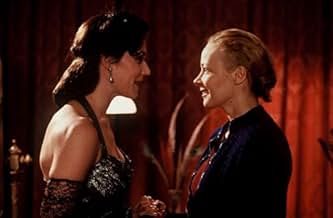
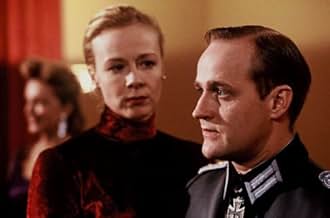
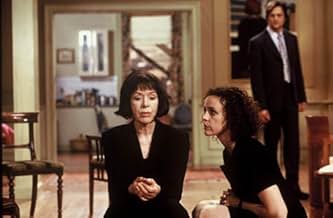





- Director
- Writers
- All cast & crew
- Production, box office & more at IMDbPro
6.72.6K
1
2
3
4
5
6
7
8
9
10
Featured reviews
Major disappointment!
One thing that astonished me about this film (and not in a good way) was that Nathan Stoltzfus, who seems to pride himself on being the major historian on the topic of the Rosenstrasse, was one of the historians working on this film, considering how much of the actual events were altered or disregarded.
Another reviewer said that von Trotta said she never meant for Lena to bed Goebbels, but in that case, why did she give every impression that that was what had happened? Why not show other possible reasons for the mens' release, such as the disaster that was Stalingrad, or the Nazis' fear that the international press, based in Berlin, would find out about the protest.
Also, why did the whole storyline play second fiddle to a weak family bonding storyline that has been done over and over again? Surely something as awesome as this could carry its own history! In places, it was as if the film had two story lines that really seemed to have little in common.
Overall, this film failed in its aim, which was to draw attention to a little-known act of resistance, which is a shame, because done better, it could have had a major impact.
Another reviewer said that von Trotta said she never meant for Lena to bed Goebbels, but in that case, why did she give every impression that that was what had happened? Why not show other possible reasons for the mens' release, such as the disaster that was Stalingrad, or the Nazis' fear that the international press, based in Berlin, would find out about the protest.
Also, why did the whole storyline play second fiddle to a weak family bonding storyline that has been done over and over again? Surely something as awesome as this could carry its own history! In places, it was as if the film had two story lines that really seemed to have little in common.
Overall, this film failed in its aim, which was to draw attention to a little-known act of resistance, which is a shame, because done better, it could have had a major impact.
A Reminder of "A Ray of Light" in an Awful Abyss
Berlin-born in 1942 Margarethe von Trotta was an actress and now she is a very important director and writer. She has been described, perhaps even unfairly caricatured, as a director whose commitment to bringing a woman's sensibility to the screen outweighs her artistic strengths. "Rosenstrasse," which has garnered mixed and even strange reviews (the New York Times article was one of the most negatively aggressive reviews I've ever read in that paper) is not a perfect film. It is a fine movie and a testament to a rare coalescing of successful opposition to the genocidal Nazi regime by, of all peoples, generically powerless Germans demonstrating in a Berlin street.
Co-writer von Trotta uses the actual Rosenstrasse incident in the context of a young woman's search for information about her mother's never disclosed life as a child in the German capital during World War II.
The husband of Ruth Weinstein (Jutta Lampe) has died and in a surprising reversion to an orthodox Jewish lifestyle apparently hitherto in long abeyance, Ruth not only "sits shivah" (the Jews' week-long mourning ritual) but she insists on following the strict proscriptions of her faith. Her apartment in New York City reflects the affluence secured by her deceased spouse's labors. Her American-born daughter, Hannah (Maria Schrader) and her brother are a bit put-off by mom's assumption of restrictive orthodox Jewish practices but they pitch in. The mother coldly rejects the presence of Hannah's fiance, a non-Jew named Luis (Fedja van Huet). A domestic crisis might well erupt as Ruth warns that she'll disown Hannah if she doesn't give up doting, handsome Luis. Stay tuned.
A cousin arrives to pay her respects and also drops clues to an interested Hannah about a wartime mystery about mom's childhood in Berlin. Hannah is intrigued - she queries her mom who resolutely refuses to discuss that part of her life. This is very, very realistic. I grew up with parents who fled Nazi Germany just in time and I knew many children whose families, in whole but usually in part, escaped the Holocaust. Those days were simply not discussed.
So Hannah, having learned that a German gentile woman saved Ruth's life, traipses off to Berlin hoping to find the savior still breathing. Were she not, this would have been a very short film. But Ruth, pretending to be a historian, locates 90 year-old Lena Fischer (Doris Schade), now a widow. As the happy-to-be-interviewed but shaken up by repressed memories Lena tells her story, the scenes shift fairly seamlessly between present day Berlin and the war-time capital.
The young Lena of 1943 (Katja Riemann) was a fine pianist married to a Jewish violinist, Fabian Fischer (Martin Feifel). With the advent of the Nazi regime he was required to use "Israel" as a middle name just as Jewish women had to add "Sarah" to their names(incidentally I wish IMDb had not given Fabian's name on its characters list with the false "Israel" included-it simply perpetuates a name applied by Nazis as a mark of classification and degradation).
While Germany deported most of its Jewish population to concentration camps, those married to "Aryans" were exempted. For a time. Until 1943 when the regime decided to take them too (most were men; a minority were Jewish women married to non-Jews). The roundup is shown here in all its frightening intensity.
The young Lena tries to locate her husband. All she and many other women know is that they're confined in a building on Rosenstrasse. The crowd of anxious women builds up, some piteously seeking help from German officers who predictably refuse aid and also verbally abuse them ("Jew-loving whore" being one appellation). As a subplot Lena more or less adopts eight-year-old Ruth who hid when her mother was seized (remember, Ruth is now sitting shiva in Manhattan). The child Ruth is fetchingly portrayed by Svea Lohde.
Through increasingly angry protestations the women finally prevail. The men, and a handful of women, are released. As in the real story the Nazis gave in, one of the rare, almost unprecedented times when the madmen acknowledged defeat in their homicidal agenda (another was the termination of the euthanasia campaign to rid the Reich of mental defectives and chronic invalids but that's another story).
Von Trotta builds up the tension and each woman's story is both personal and universal. Hannah continues to prod the aging Lena who slowly, one gathers, begins to suspect she's not dealing with an ordinary historian but rather someone with a need to learn about the girl she rescued, the child whose mother was murdered.
The contrasts between Rosenstrasse of 1943, a set, and the street today in a bustling, rebuilt, unified Berlin provide a recurring thematic element. Today's Berlin bears the heritage but not the scars of a monstrous past. Von Trotta makes that point very well.
The main actors are uniformly impressive. Lena's husband while strong is also shown as totally helpless in the snare of confinement with a likely outlook of deportation (which is shown to have been clearly understood by all characters - including the local police and military - as a one-way trip to oblivion). The older Ruth is catalytically forced to confront demons long suppressed in her happy New York life. Hannah is very believable as a young woman whose father's death triggers a need to discover her family's past. These things happen (although the Times's critic appears not to know that).
Von Trotta's hand is sure but not perfect. A scene with Goebbels at a soiree enjoying Lena's violin playing is unnecessary and distractive. The suggestion that she may have gone to bed with the propaganda minister, the most fanatical top-level Hitler worshiper, to save her husband detracts from the wondrous accomplishment of the demonstrating spouses and relatives. Most of the German officers come from central casting and are molded by the Erich von Stroheim "copy and paste" school of Teutonic nastiness. But that's understandable.
The Rosenstrasse story has been the subject of books and articles and some claim it's a paradigm case for arguing that many more Jews could have been saved had more Germans protested. Unfortunately that argument is nonsense. The German women who occupied Rosenstrasse were deeply and understandably self-interested. Most Germans were located on a line somewhere between passive and virulent anti-Semitism. THAT'S why the Rosenstrasse protest was virtually singular. Whether one buys or rejects the Goldenhagen thesis that most Germans were willing accomplices of the actual murderers it just can not be denied that pre-Nazi endemic anti-Semitism erupted into a virulent strain from 1933 on.
The elderly Lena remarks that what was accomplished by the women was "a ray of light" in an evil time. Most of the men and women sprung from a near death trip survived the war. So "a ray of light" it was and von Trotta's movie is a beacon of illumination showing that some were saved by the courage of largely ordinary women and for every life saved an occasion for celebration exists. And always will.
9/10
Co-writer von Trotta uses the actual Rosenstrasse incident in the context of a young woman's search for information about her mother's never disclosed life as a child in the German capital during World War II.
The husband of Ruth Weinstein (Jutta Lampe) has died and in a surprising reversion to an orthodox Jewish lifestyle apparently hitherto in long abeyance, Ruth not only "sits shivah" (the Jews' week-long mourning ritual) but she insists on following the strict proscriptions of her faith. Her apartment in New York City reflects the affluence secured by her deceased spouse's labors. Her American-born daughter, Hannah (Maria Schrader) and her brother are a bit put-off by mom's assumption of restrictive orthodox Jewish practices but they pitch in. The mother coldly rejects the presence of Hannah's fiance, a non-Jew named Luis (Fedja van Huet). A domestic crisis might well erupt as Ruth warns that she'll disown Hannah if she doesn't give up doting, handsome Luis. Stay tuned.
A cousin arrives to pay her respects and also drops clues to an interested Hannah about a wartime mystery about mom's childhood in Berlin. Hannah is intrigued - she queries her mom who resolutely refuses to discuss that part of her life. This is very, very realistic. I grew up with parents who fled Nazi Germany just in time and I knew many children whose families, in whole but usually in part, escaped the Holocaust. Those days were simply not discussed.
So Hannah, having learned that a German gentile woman saved Ruth's life, traipses off to Berlin hoping to find the savior still breathing. Were she not, this would have been a very short film. But Ruth, pretending to be a historian, locates 90 year-old Lena Fischer (Doris Schade), now a widow. As the happy-to-be-interviewed but shaken up by repressed memories Lena tells her story, the scenes shift fairly seamlessly between present day Berlin and the war-time capital.
The young Lena of 1943 (Katja Riemann) was a fine pianist married to a Jewish violinist, Fabian Fischer (Martin Feifel). With the advent of the Nazi regime he was required to use "Israel" as a middle name just as Jewish women had to add "Sarah" to their names(incidentally I wish IMDb had not given Fabian's name on its characters list with the false "Israel" included-it simply perpetuates a name applied by Nazis as a mark of classification and degradation).
While Germany deported most of its Jewish population to concentration camps, those married to "Aryans" were exempted. For a time. Until 1943 when the regime decided to take them too (most were men; a minority were Jewish women married to non-Jews). The roundup is shown here in all its frightening intensity.
The young Lena tries to locate her husband. All she and many other women know is that they're confined in a building on Rosenstrasse. The crowd of anxious women builds up, some piteously seeking help from German officers who predictably refuse aid and also verbally abuse them ("Jew-loving whore" being one appellation). As a subplot Lena more or less adopts eight-year-old Ruth who hid when her mother was seized (remember, Ruth is now sitting shiva in Manhattan). The child Ruth is fetchingly portrayed by Svea Lohde.
Through increasingly angry protestations the women finally prevail. The men, and a handful of women, are released. As in the real story the Nazis gave in, one of the rare, almost unprecedented times when the madmen acknowledged defeat in their homicidal agenda (another was the termination of the euthanasia campaign to rid the Reich of mental defectives and chronic invalids but that's another story).
Von Trotta builds up the tension and each woman's story is both personal and universal. Hannah continues to prod the aging Lena who slowly, one gathers, begins to suspect she's not dealing with an ordinary historian but rather someone with a need to learn about the girl she rescued, the child whose mother was murdered.
The contrasts between Rosenstrasse of 1943, a set, and the street today in a bustling, rebuilt, unified Berlin provide a recurring thematic element. Today's Berlin bears the heritage but not the scars of a monstrous past. Von Trotta makes that point very well.
The main actors are uniformly impressive. Lena's husband while strong is also shown as totally helpless in the snare of confinement with a likely outlook of deportation (which is shown to have been clearly understood by all characters - including the local police and military - as a one-way trip to oblivion). The older Ruth is catalytically forced to confront demons long suppressed in her happy New York life. Hannah is very believable as a young woman whose father's death triggers a need to discover her family's past. These things happen (although the Times's critic appears not to know that).
Von Trotta's hand is sure but not perfect. A scene with Goebbels at a soiree enjoying Lena's violin playing is unnecessary and distractive. The suggestion that she may have gone to bed with the propaganda minister, the most fanatical top-level Hitler worshiper, to save her husband detracts from the wondrous accomplishment of the demonstrating spouses and relatives. Most of the German officers come from central casting and are molded by the Erich von Stroheim "copy and paste" school of Teutonic nastiness. But that's understandable.
The Rosenstrasse story has been the subject of books and articles and some claim it's a paradigm case for arguing that many more Jews could have been saved had more Germans protested. Unfortunately that argument is nonsense. The German women who occupied Rosenstrasse were deeply and understandably self-interested. Most Germans were located on a line somewhere between passive and virulent anti-Semitism. THAT'S why the Rosenstrasse protest was virtually singular. Whether one buys or rejects the Goldenhagen thesis that most Germans were willing accomplices of the actual murderers it just can not be denied that pre-Nazi endemic anti-Semitism erupted into a virulent strain from 1933 on.
The elderly Lena remarks that what was accomplished by the women was "a ray of light" in an evil time. Most of the men and women sprung from a near death trip survived the war. So "a ray of light" it was and von Trotta's movie is a beacon of illumination showing that some were saved by the courage of largely ordinary women and for every life saved an occasion for celebration exists. And always will.
9/10
A lifeless pamphlet
I went to see the movie for two reasons: 1) Katha Riemann was given a prize for her role in Venice and 2) The story - the rescue of hundreds of Berlin jews, who had been rounded up for deportation in the spring of 1943 - and were being kept by the Gestapo in Rosenstrasse (Rose Street) - is important. The deportation was halted by the non-jewish partners and friends who demonstrated in front of the detainment centre.
However, Trottas movie is extremely disappointing, a pamphlet put on celluloid. The movie is intended to be GOOD, the main characters are intended to be GOOD, the nazis are just EVIL, lustful or downright stupid. Maria Schrader is supposed to be a young jewish New Yorker, trying to understand the unspoken traumas of her German-born mother who survived Rosenstrasse - but never succeeds in convincing me, that she is American. (There is something about her body-language which is much too Continental). Extremely annoying is the use of German in the US scenes....spiced with a few choice english words or sentences which seem totally out of place.
Katja Riemann does add a bit more life to her character - a Preussian baroness and talented pianist, who rescues her jewish husband. (Does she really have to f*** propaganda minister Goebbels to get hubby away from Gestapo- and does Goebbels really have to be portrayed as a - cartoonish - lustful little salivating man, forever chasing a bit of tail, and so plainly disgusting).
We all know Goebbels was a war criminal - but it would have been so more interesting, if the characters were REAL people and the story not just a study in black and white with a stilted dialogue.
However, Trottas movie is extremely disappointing, a pamphlet put on celluloid. The movie is intended to be GOOD, the main characters are intended to be GOOD, the nazis are just EVIL, lustful or downright stupid. Maria Schrader is supposed to be a young jewish New Yorker, trying to understand the unspoken traumas of her German-born mother who survived Rosenstrasse - but never succeeds in convincing me, that she is American. (There is something about her body-language which is much too Continental). Extremely annoying is the use of German in the US scenes....spiced with a few choice english words or sentences which seem totally out of place.
Katja Riemann does add a bit more life to her character - a Preussian baroness and talented pianist, who rescues her jewish husband. (Does she really have to f*** propaganda minister Goebbels to get hubby away from Gestapo- and does Goebbels really have to be portrayed as a - cartoonish - lustful little salivating man, forever chasing a bit of tail, and so plainly disgusting).
We all know Goebbels was a war criminal - but it would have been so more interesting, if the characters were REAL people and the story not just a study in black and white with a stilted dialogue.
Sympathy for the Monumentally Naive
"Rosenstrasse" is a defense of naive Righteous Gentiles, the women who married secular Jews in Germany as the Nazis rose to power.
Like "The Pianist," it goes out of its way to distinguish between Nazis and natives who thought this too shall pass and noble Prussian culture would again assert itself (I couldn't pick up all the cultural references, particularly in the German music selections, though soldiers are seen dancing to Cole Porter songs.).
While the promotion for the film claims that feminist director Margarethe von Trotta is the first to deal with this particular slice of German protest to the Nazi eradication of Jews, a series of German films not otherwise distributed in the U.S. were shown on PBS some years ago and demonstrated that other post-war filmmakers were looking at complicity and professed ignorance among their country people, and that their discovery of their parents' hypocrisy led to the radical politics of 1968.
Von Trotta carefully avoids this context by oddly having her seeker of truth be a young American woman who grew up speaking German fluently in the German Jewish emigre enclave of Washington Heights in Manhattan (from whence came Henry Kissinger) and has a South American boyfriend.
Somewhat clumsily for the narrative and for the family, her father's death leads her to investigate her mother's past in Germany to try and figure out why her cold, secular mother is suddenly following shiva (Jewish mourning rituals) for him. (These rituals are disconcertingly portrayed inaccurately -- What rule of silence? Everyone would be talking about memories of the deceased, and eating and eating-- unless the point is to show they don't know how to follow Jewish tradition anymore and talk of any past is verboten in this family).
The film unravels, not particularly satisfactorily, many layers of irony and guilt as personal and political realities are intertwined --
between Germans (especially soldiers who had witnessed what the S.S. was doing in the East, showing it was not a secret at home); between gentiles and Jews (particularly about intermarriage then and now); between survivors and the dead; between men and women (there's an assertion that gentile men deserted their Jewish wives to their fates while gentile women did not desert their spouses); between mothers and children, whether biologically linked or not; between siblings, and,between chance and choice.
Katja Riemann's strong performance as the stubborn wife who accidentally becomes an activist by default almost puts aside the fact that her character was monumentally oblivious to what was happening around her until it was almost too late by a thread.
The conclusion seems to come out in favor of compromise as it explores love and tradition, which is inevitably not happy for everyone but may be a flexible response to a complicated past and present.
Like "The Pianist," it goes out of its way to distinguish between Nazis and natives who thought this too shall pass and noble Prussian culture would again assert itself (I couldn't pick up all the cultural references, particularly in the German music selections, though soldiers are seen dancing to Cole Porter songs.).
While the promotion for the film claims that feminist director Margarethe von Trotta is the first to deal with this particular slice of German protest to the Nazi eradication of Jews, a series of German films not otherwise distributed in the U.S. were shown on PBS some years ago and demonstrated that other post-war filmmakers were looking at complicity and professed ignorance among their country people, and that their discovery of their parents' hypocrisy led to the radical politics of 1968.
Von Trotta carefully avoids this context by oddly having her seeker of truth be a young American woman who grew up speaking German fluently in the German Jewish emigre enclave of Washington Heights in Manhattan (from whence came Henry Kissinger) and has a South American boyfriend.
Somewhat clumsily for the narrative and for the family, her father's death leads her to investigate her mother's past in Germany to try and figure out why her cold, secular mother is suddenly following shiva (Jewish mourning rituals) for him. (These rituals are disconcertingly portrayed inaccurately -- What rule of silence? Everyone would be talking about memories of the deceased, and eating and eating-- unless the point is to show they don't know how to follow Jewish tradition anymore and talk of any past is verboten in this family).
The film unravels, not particularly satisfactorily, many layers of irony and guilt as personal and political realities are intertwined --
between Germans (especially soldiers who had witnessed what the S.S. was doing in the East, showing it was not a secret at home); between gentiles and Jews (particularly about intermarriage then and now); between survivors and the dead; between men and women (there's an assertion that gentile men deserted their Jewish wives to their fates while gentile women did not desert their spouses); between mothers and children, whether biologically linked or not; between siblings, and,between chance and choice.
Katja Riemann's strong performance as the stubborn wife who accidentally becomes an activist by default almost puts aside the fact that her character was monumentally oblivious to what was happening around her until it was almost too late by a thread.
The conclusion seems to come out in favor of compromise as it explores love and tradition, which is inevitably not happy for everyone but may be a flexible response to a complicated past and present.
Correct to be faithful to history. But is it the rise of Neo-Nazi?
Film is a cultural product more or less reflecting the trend of a time. Thus, I was made alert when I was watching this slow-tuned movie. Why in such a sudden in the past few years, movies like "Rosenstraße" depicting the humane behaviour of the Germans at wartime mushroom? "The Pianist", "Der Untergang" join the rally.
People may say, "Time heals!" "We need to do justice to the German". True, true, true, doubtlessly, there must have been German citizens who were holding opposing ideas against the Nazi government's. There must be kind-hearted and righteous Germans who protected Jewish people and later got persecuted by their own people. And there is a need to make movies reflecting the true historical facts. These films are 100% not party or government propaganda. My concern here is "timing". Tellingly, why didn't these movies come up in the 70's, 80's or 90's? But early 21st Century when the Neo-Nazi is rising quietly bit by bit today in Germany. I cannot but easily associate these movies to what is really happening in this country.
People may say, "Time heals!" "We need to do justice to the German". True, true, true, doubtlessly, there must have been German citizens who were holding opposing ideas against the Nazi government's. There must be kind-hearted and righteous Germans who protected Jewish people and later got persecuted by their own people. And there is a need to make movies reflecting the true historical facts. These films are 100% not party or government propaganda. My concern here is "timing". Tellingly, why didn't these movies come up in the 70's, 80's or 90's? But early 21st Century when the Neo-Nazi is rising quietly bit by bit today in Germany. I cannot but easily associate these movies to what is really happening in this country.


Did you know
- TriviaIt took Margarethe von Trotta almost 10 years to realize this project for financial reasons.
- ConnectionsFeatured in Katja Riemann (2006)
- SoundtracksSonata for Piano and Violin in A
'Allegretto Moderato' - César Franck (op. 446 198 2)
Courtesy of UNIVERSAL CLASSICS & JAZZ - a division of UNIVERSAL MUSIC GmbH
- How long is Rosenstrasse?Powered by Alexa
Details
- Release date
- Countries of origin
- Languages
- Also known as
- Cuộc biểu tình Rosenstrasse
- Filming locations
- Production companies
- See more company credits at IMDbPro
Box office
- Gross US & Canada
- $734,519
- Gross worldwide
- $6,075,609
- Runtime
- 2h 16m(136 min)
- Color
- Sound mix
- Aspect ratio
- 2.35 : 1
Contribute to this page
Suggest an edit or add missing content