IMDb RATING
7.2/10
3K
YOUR RATING
The blind masseur and swordsman, Zatoichi, learns of a powerful political figure's secret and is quickly tailed by a group of killers.The blind masseur and swordsman, Zatoichi, learns of a powerful political figure's secret and is quickly tailed by a group of killers.The blind masseur and swordsman, Zatoichi, learns of a powerful political figure's secret and is quickly tailed by a group of killers.
Yaeko Mizutani
- Setsu
- (as Yoshie Mizutani)
Tomisaburô Wakayama
- Nagisa no Yoshiro
- (as Jô Kenzaburô)
- Director
- Writers
- All cast & crew
- Production, box office & more at IMDbPro
7.22.9K
1
2
3
4
5
6
7
8
9
10
Featured reviews
Good!
Seen on YouTube in black and white and, checking on
IMDb, it is in black and white. Beautiful music as usual, captivating story as usual, good acting and, especially, notable female beauties such as Masayo Banri and Yaeko Mizutani, two very beautiful Japanese women. Mixture inspired by drama and action, worth seeing.
First sequel of a great saga
The following review is an extract from the book "Shintaro Katsu´s Zatoichi: Complete guide to all movies", which is now available on Amazon.
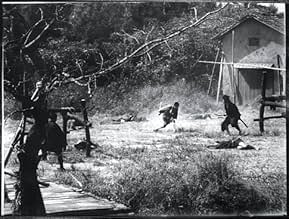
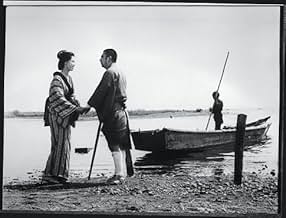
Zatoichi (Shintaro Katsu), the famous and prodigious masseur and blind swordsman, has arrived in a new region after the adventures narrated in the first film. After confronting some arrogant soldiers, who throw him into the water when they discover him in the boat in which they were crossing a river, he is hired to massage the head of a samurai detachment. However, while he is doing this work, he indiscreetly discovers a secret of the lord ("I had never had a client like this one..."), so the samurai will persecute him with the intention of killing him.
(...)
Second part of a long line of films with the mythical blind masseur, hardened player and wandering swordsman Zatoichi as the protagonist. The actor who gives life to the character is, once again, the great Shintaro Katsu. The director of this second part is not Kenji Misumi, but another director (Kazuo Mori). The sequel to "Zatoichi monogatari" (shot the same year, 1962) is not at the same level as the original. There are some gaps in the story; for example, it is never quite clear why the samurai want to kill Zatoichi (What is the secret that the masseur has discovered about the lord? It must be such a big secret that not even the spectator has the right to know...
In any case, Zoku Zatôichi monogatari's viewing is a good opportunity to see Shintaro Katsu and Tomisaburo Wakayama (Zatoichi and Yoshiro, repectively), two greats of the sixties and seventies chambara, who were also brothers in real life.
Zatoichi (Shintaro Katsu), the famous and prodigious masseur and blind swordsman, has arrived in a new region after the adventures narrated in the first film. After confronting some arrogant soldiers, who throw him into the water when they discover him in the boat in which they were crossing a river, he is hired to massage the head of a samurai detachment. However, while he is doing this work, he indiscreetly discovers a secret of the lord ("I had never had a client like this one..."), so the samurai will persecute him with the intention of killing him.
(...)
Second part of a long line of films with the mythical blind masseur, hardened player and wandering swordsman Zatoichi as the protagonist. The actor who gives life to the character is, once again, the great Shintaro Katsu. The director of this second part is not Kenji Misumi, but another director (Kazuo Mori). The sequel to "Zatoichi monogatari" (shot the same year, 1962) is not at the same level as the original. There are some gaps in the story; for example, it is never quite clear why the samurai want to kill Zatoichi (What is the secret that the masseur has discovered about the lord? It must be such a big secret that not even the spectator has the right to know...
In any case, Zoku Zatôichi monogatari's viewing is a good opportunity to see Shintaro Katsu and Tomisaburo Wakayama (Zatoichi and Yoshiro, repectively), two greats of the sixties and seventies chambara, who were also brothers in real life.
Good Film
Return of Masseur Ichi, The (1962)
*** (out of 4)
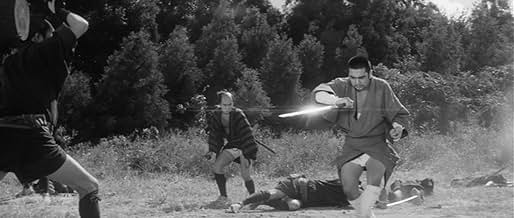
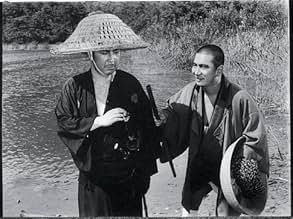
Blind masseur Zatoichi (Shintaro Katsu) discovers the weakness of a lord and must fight off various assassins who fear he will give away that secret. This was a pretty interesting samurai film from director Kazuo Mori, which relies a lot on fantasy but most of all is just all action and nice swordplay. Katsu makes for a wonderful lead and the supporting roles are filled nicely. The cinematography stretched out the full 2.35:1 looks incredibly sharp and the fights are well staged even though I have a somewhat hard time seeing a blind person doing all that.
*** (out of 4)
Blind masseur Zatoichi (Shintaro Katsu) discovers the weakness of a lord and must fight off various assassins who fear he will give away that secret. This was a pretty interesting samurai film from director Kazuo Mori, which relies a lot on fantasy but most of all is just all action and nice swordplay. Katsu makes for a wonderful lead and the supporting roles are filled nicely. The cinematography stretched out the full 2.35:1 looks incredibly sharp and the fights are well staged even though I have a somewhat hard time seeing a blind person doing all that.
Hyperdrive Mode
Never mind the first film to take its time in introducing the character to us, of which I am glad that it didn't rush. Now that we and the others in the film "know" him ( although part of the fun is that nobody is really able to know him and his skill really) the film goes to hyperdrive mode straightaway.
It's fascinating to see this in retrospect, knowing it is a long franchise, and trying to map out the development and where the film and its success came from. Inthink the first film is strong because it takes its time in creating its own universe, simply so that the sequels don't have to work so hard in setting things up. It's nice, and so is the self-reference it allows both in humour and mythology, but the films quickly morph into each other. It doesn't seem to be a problem here, since aren't all series all about working for or against the set rules and archetypes in the previous films?
Anyway, I think the two films have very well set up Zatoichi's blindness as a metaphor, yet it's the first film that's more ambitiously conceived. In this respect these two first films are like "Yojimbo" and "Sanjuro", Kurosawa's duology. The last shot of this film, however, is one of the coolest film moments I know of. Seriously. That last five seconds.
It's fascinating to see this in retrospect, knowing it is a long franchise, and trying to map out the development and where the film and its success came from. Inthink the first film is strong because it takes its time in creating its own universe, simply so that the sequels don't have to work so hard in setting things up. It's nice, and so is the self-reference it allows both in humour and mythology, but the films quickly morph into each other. It doesn't seem to be a problem here, since aren't all series all about working for or against the set rules and archetypes in the previous films?
Anyway, I think the two films have very well set up Zatoichi's blindness as a metaphor, yet it's the first film that's more ambitiously conceived. In this respect these two first films are like "Yojimbo" and "Sanjuro", Kurosawa's duology. The last shot of this film, however, is one of the coolest film moments I know of. Seriously. That last five seconds.
A very worthy addition to the series
In the 1960s and 70s, the Japanese made about 500000 Zatoichi films (or so it seems) and I have thoroughly enjoyed them all, even though after a while they all seem to blend together in my mind. Some viewers, like me, will like the familiarity of the character and story, while I am sure others will feel like "if you've seen one you've seen them all". Regardless of your opinion, they are all well-constructed and fun to watch even if the basic premise of the greatest swordsman being totally blind is ridiculous--you just need to suspend disbelief and enjoy.
This is an early installment of the series and it's better than average because it actually has some continuity--making reference to the prior film in the series. Here, in a follow-up, you see Zatoichi pining for a long lost love and having an ultimate showdown with his main rival. Along the way, he falls afoul of a clan who is trying to kill him to keep their secret (their leader "has issues"). And, as usual, the film is filled with amazing sword fights as well as tender moments. This one won't disappoint and is one of the better Zatoichi films.
Did you know
- TriviaThe Tale of Zatoichi proved to be so popular that this sequel went into production the same year, 1962.
- ConnectionsFeatured in Best in Action: 1962 (2018)
- How long is The Tale of Zatoichi Continues?Powered by Alexa
Details
- Release date
- Country of origin
- Language
- Also known as
- Повесть о Затоичи 2: Возвращение слепого массажиста
- Production company
- See more company credits at IMDbPro
- Runtime
- 1h 12m(72 min)
- Color
- Sound mix
- Aspect ratio
- 2.35 : 1
Contribute to this page
Suggest an edit or add missing content