IMDb RATING
7.4/10
14K
YOUR RATING

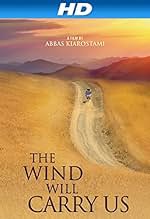
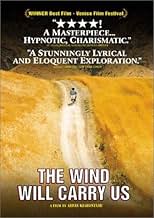
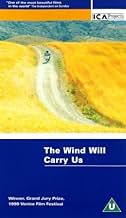
An engineer named Behzad travels to a rural village in Iran to witness a ritual associated with a woman's death. Meanwhile, the film follows his efforts to fit in with the local community an... Read allAn engineer named Behzad travels to a rural village in Iran to witness a ritual associated with a woman's death. Meanwhile, the film follows his efforts to fit in with the local community and how he spends his time waiting for the event.An engineer named Behzad travels to a rural village in Iran to witness a ritual associated with a woman's death. Meanwhile, the film follows his efforts to fit in with the local community and how he spends his time waiting for the event.
- Director
- Writers
- Stars
- Awards
- 4 wins & 7 nominations total




- Director
- Writers
- All cast & crew
- Production, box office & more at IMDbPro
7.413.6K
1
2
3
4
5
6
7
8
9
10
Featured reviews
... an artful exploration of life. Terrific!
This is a beautiful film that celebrates life and culture. It is entirely devoted to the Forough Farrokhzad poem (cited below / I've marked it for stanza; but not for line changes), which serves as it nucleus and core.
[Stanza 1] In my small night, alas, The wind has an appointment with the trees, In my small night there is fear of devastation.
[Stanza 2] Listen. Do you hear the dark wind whispering? I look upon this bliss with alien eyes I am addicted to my sorrow Listen. Do you hear the dark wind whispering?
[Stanza 3] Now something is happening in the night The moon is red and agitated And the roof may cave in at any moment.
[Stanza 4] The clouds have gathered like a bunch of mourners And seem to be waiting for the moment of rain.
[Stanza 5] A moment And after it, nothing. Beyond this window the night trembles And the earth Will no longer turn. Beyond this window an enigma worries for you and for me.
[Stanza 6] Oh you who are so verdant Place your hands like a burning memory in my hands. And leave your lips that are warm with life To the loving caresses of my lips. The wind will carry us away, The wind will carry us away.
Enjoy it with an open and rested mind. The style is minimalist for action and words, and panoramic for scenery. It's an artful exploration of life where the viewer has to glue the pieces together, from city group's arrival and to their take-away from the experience. Details count. Don't miss any of them.
[Stanza 1] In my small night, alas, The wind has an appointment with the trees, In my small night there is fear of devastation.
[Stanza 2] Listen. Do you hear the dark wind whispering? I look upon this bliss with alien eyes I am addicted to my sorrow Listen. Do you hear the dark wind whispering?
[Stanza 3] Now something is happening in the night The moon is red and agitated And the roof may cave in at any moment.
[Stanza 4] The clouds have gathered like a bunch of mourners And seem to be waiting for the moment of rain.
[Stanza 5] A moment And after it, nothing. Beyond this window the night trembles And the earth Will no longer turn. Beyond this window an enigma worries for you and for me.
[Stanza 6] Oh you who are so verdant Place your hands like a burning memory in my hands. And leave your lips that are warm with life To the loving caresses of my lips. The wind will carry us away, The wind will carry us away.
Enjoy it with an open and rested mind. The style is minimalist for action and words, and panoramic for scenery. It's an artful exploration of life where the viewer has to glue the pieces together, from city group's arrival and to their take-away from the experience. Details count. Don't miss any of them.
Enigmatic, but graceful and fascinating
Typically enigmatic Kiarostami film (although one not without some deadpan comedy, and with all the inherent geographic and cultural fascination associated with his work for Western audiences) winds through his previous work and themes, and through the remote Iranian village in which it's set, as gracefully and surely as a river (a somewhat fearsome one, for all its calmness). It's about (apparently) a group of photographers or filmmakers - only one of whom is ever seen directly - awaiting a mysterious ceremony that will follow an ailing old woman's death (actually, I'm not entirely sure of the accuracy of even that broad a synopsis) but although the narrative may be in part a death watch, the film itself is "a subtle personal debate about the value of being alive" (a beautiful one-line summary by Deborah Young of Variety). The film strikes a mystical balance between its parched environment and the signs of the modern world: the process of getting the cell phone to work forms a recurring pattern, warily intertwining with fragments of old poems and evocations of antiquity, mystery and ritual. The ending was, to me, more satisfying than in his last film A Taste Of Cherry, but the film really requires a second viewing: after seeing it just once, you walk away slightly deflated - even indignant - at having largely failed its navigational challenge.
A moving, life-confirming, and soulful comedy
It is a very interesting and compelling film that on the surface seems to be one of the most boring ever made. "Wind Will Carry Us" tells the story of Behzad, the documentary director, who travels with his crew from Tehran to the tiny remote village of Siah Dareh where they hope to document an ancient funeral ritual. While there, all they can do is wait for an old lady to die and to hope that it would happen sooner than later. The lady does not seem to hurry to meet her Creator. Nothing much happens with the exception of waiting and repetitions of the same conversations on the cell phone with the constant interruption of calls but the honest and poetic celebration of the world around us shines through every frame of this ode to joy of life. One of my friends, who had recommended the movie to me, suggested that it should not be over- aestheticized and I totally agree. The film's serious political and social metaphors and overtones are undeniable but in its core, it is a moving, life-confirming, and soulful comedy. Watching my first Abbas Kiarastami's movie was a very rewarding experience.
What a wonderful movie
What a wonderful movie. Iranian movies are making way internationally and are also becoming an important political tool. The leading Iranian director is Abbas Kiarostami. I really enjoyed the rhythm of this strange and different movie. This is an art-film at its very best. All set in the wonderful scenery of Kurdistan. The pictures and the poetry is beautiful. The cast is natural, common people. Please buy the DVD and see it! The movie is - unfortunately - sure not to come to a theater near you. The director Abbas Kiarostami says that 50% of a movie is made by associations and in the audience own head. Very different from the American movies where everything usually is served on one plate.
Sights and sounds of life in calm vivid detail
Another user who reviewed the film speaks of a film so full of 'symbolism' that he couldn't grasp. Maybe because it wasn't there? I'm generally not a fan of minimalism but Kiarostami grips me like no one else. I went out to take the trash after watching this and everything around me felt more alive, the nightsky, moon, trees blowing in the wind, I experienced all this in expansive vivid detail like new life was breathed into them. This is what a Kiarostami film does to me. It's about the sights and sounds of a life simple and profound in that simplicity, profound in the stoic sense of an old man sitting down in the same place every day to sip his tea. The wisdom here is not one of tremendous insight into something we didn't know, but a remembrance of something we knew and have forgotten and need to listen as the wind carries it back. Maybe the next world is beautiful muses a country doctor to our protagonist as they cross golden fields of wheat blowing in the wind, but no one has come back to tell us, so the present world is all we have; and how beautiful it is.
Beautiful Persian Zen.
The film is about waiting for something to happen, waiting for the death of an old woman which an engineer from Tehran and two of his associates have come to document; waiting for a narrative. Every now and then the engineer's cell phone rings, he has poor signal so he must rush to his car and drive to a nearby hill to get good signal. On top of the rocky hill there's a man digging a ditch, sight unseen, and the engineer idly chats with him down in his hole. That man digs up a thigh bone that once belonged to someone, the cemetery of the nearby village is on that hill, and throws it up to our curious protagonist. He stores it away in his car, a symbol of life come and gone. In the end he throws it down a creek and we see the old fickle bone flow down the water. All the symbolism in the film speaks for itself. Trees lush green and fields yellow golden with wheat and a hot dusty wind blowing over this.
I have great admiration for the way Kiarostami makes films. He's so open to the filmmaking process, no strings attached, script, rehearsal, staging, all the mechanics subordinate to the real deal. It takes balls to go into this with as little safeguards. A lot of the film seems to have been improvised on the spot, in that small Iranian village, the faces are real, their casual chitchat the casual chitchat of real people. Take him or leave him, not a lot of people can make films the way he does and make them good.
Beautiful Persian Zen.
The film is about waiting for something to happen, waiting for the death of an old woman which an engineer from Tehran and two of his associates have come to document; waiting for a narrative. Every now and then the engineer's cell phone rings, he has poor signal so he must rush to his car and drive to a nearby hill to get good signal. On top of the rocky hill there's a man digging a ditch, sight unseen, and the engineer idly chats with him down in his hole. That man digs up a thigh bone that once belonged to someone, the cemetery of the nearby village is on that hill, and throws it up to our curious protagonist. He stores it away in his car, a symbol of life come and gone. In the end he throws it down a creek and we see the old fickle bone flow down the water. All the symbolism in the film speaks for itself. Trees lush green and fields yellow golden with wheat and a hot dusty wind blowing over this.
I have great admiration for the way Kiarostami makes films. He's so open to the filmmaking process, no strings attached, script, rehearsal, staging, all the mechanics subordinate to the real deal. It takes balls to go into this with as little safeguards. A lot of the film seems to have been improvised on the spot, in that small Iranian village, the faces are real, their casual chitchat the casual chitchat of real people. Take him or leave him, not a lot of people can make films the way he does and make them good.


Did you know
- TriviaThe title is a reference to a poem written by famous modern Iranian female poet Forough Farrokhzad.
- GoofsWhen the engineer is driving back from the mountain, he stops and picks up someone who is walking down the road and starts talking to him, but when the camera shows the car from long shot for the first time, there is no one in the car other than the engineer.
- ConnectionsFeatured in Siskel & Ebert: Double Jeopardy/Jakob the Liar/Mumford (1999)
- How long is The Wind Will Carry Us?Powered by Alexa
Details
- Release date
- Countries of origin
- Official site
- Languages
- Also known as
- El viento nos llevará
- Filming locations
- Production company
- See more company credits at IMDbPro
Box office
- Gross US & Canada
- $259,510
- Opening weekend US & Canada
- $21,417
- Jul 30, 2000
- Gross worldwide
- $259,510
Contribute to this page
Suggest an edit or add missing content