
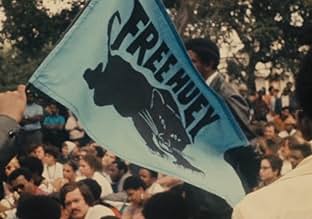
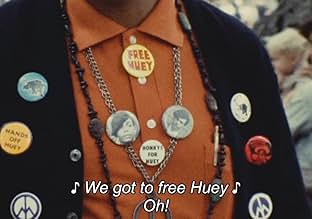
A short film of interviews and protests at a rally to free Huey P. Newton.A short film of interviews and protests at a rally to free Huey P. Newton.A short film of interviews and protests at a rally to free Huey P. Newton.
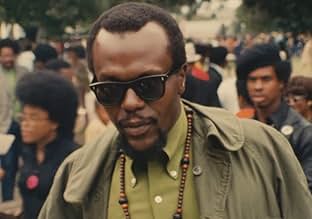


H. Rap Brown
- Self
- (uncredited)

Ron Dellums
- Self
- (uncredited)
James Forman
- Self
- (uncredited)

Bobby Seale
- Self
- (uncredited)
7.42.9K
1
2
3
4
5
6
7
8
9
10
Featured reviews
Captures the revolutionary sprit of the Black Panthers.
For any younger person such as myself who wasn't alive during the 60's and it's numerous radical movements, "Black Panthers" is a good historical piece of film. Vardas is definitely not objective here and is clearly rooting for the Black Panthers, but I can't really blame her when the opposition is the FBI and Oakland police.
Behind all the dry summaries and articles about the Black Panthers is a truly revolutionary spirit of an oppressed people. This film does a wonderful job capturing that spirit during one of the more important times for the Black Panthers, which was the trial of Huey Newton. I especially appreciated the extended interview of Huey Newton himself while he was in jail, footage of the underappreciated Stokely Carmicheal who was one of the more intellectual figures, and the focus on woman in the Black Panther party.
I wish there was more of a focus on differing parties in the movie, like the cops or white reactionaries. Not so the film could claim to be objective but because the claims of the Black Panthers (racism, fascism,etc.) could be shown as context for their rallies. In addition, there isn't much actual filmmaking shown here, just that a team was present. I would suggest the amazing "Harlan County" for a documentary that shows the spirit and soul of the movement, not just by showing up, but through filmmaking skills.
Overall it's a good visualizer of an interesting and important part of radical history in the U.S.
Behind all the dry summaries and articles about the Black Panthers is a truly revolutionary spirit of an oppressed people. This film does a wonderful job capturing that spirit during one of the more important times for the Black Panthers, which was the trial of Huey Newton. I especially appreciated the extended interview of Huey Newton himself while he was in jail, footage of the underappreciated Stokely Carmicheal who was one of the more intellectual figures, and the focus on woman in the Black Panther party.
I wish there was more of a focus on differing parties in the movie, like the cops or white reactionaries. Not so the film could claim to be objective but because the claims of the Black Panthers (racism, fascism,etc.) could be shown as context for their rallies. In addition, there isn't much actual filmmaking shown here, just that a team was present. I would suggest the amazing "Harlan County" for a documentary that shows the spirit and soul of the movement, not just by showing up, but through filmmaking skills.
Overall it's a good visualizer of an interesting and important part of radical history in the U.S.
Panthers in Their Own Words
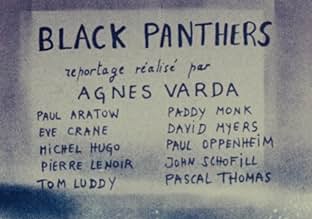
In 1968 the Black Panther Party (BPP) was at its most active and probably its height of popularity. This very brief documentary has several interviews/speeches which give a quick glimpse into what the BPP was demanding. There is footage of Kathleen Cleaver, Stokely Carmichael, and Huey Newton (one of the founders of the BPP). Kathleen and Stokely are two very well-spoken civil rights activists, or freedom fighters if you dare, and that is evident in this short documentary. At the time of this documentary Huey P. Newton, , was locked up for getting into a shootout with police. There is a little commentary from the documentarian, Agnes Varda, but just about everything else comes from the mouths of the Panthers themselves.
Fantastic window into 1968, messages still relevant today
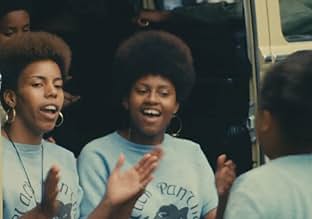
Bless Agnès Varda for making this short documentary, and for the most part simply allowing members of the Black Panthers to state their views and explain the motivation behind the Black Power movement. The issues are the same as those faced today by the community, and it certainly resonates to hear them speak of stopping the police from killing black people, or of incarceration as being stilted against minorities. The film was made around the time of the Huey Newton trial, and after governor Ronald Reagan had hypocritically overturned California's open carry law once black people started taking advantage of it. Mostly it consists of footage of people at rallies to "Free Huey!," interviews with leaders like Newton and Stokely Carmichael, and comments from supporters. It also includes great commentary from Kathleen Cleaver explaining the significance of black women wearing their hair naturally, in afros.
The film is a snapshot in time during the summer of 1968 which made it fascinating to me, but I wish it had been longer and more fleshed out. It probably should have also asked a critical question or two about the movement looking to Mao Zedong as a role model, given the brutality of his regime and the millions he killed. On the other hand, millions of black people had (and have) died in the system they were in with its widespread racism, so one can understand searching for an alternative, and becoming as assertive as they did when progress didn't just gradually happen. I loved how Varda provided a few moments of gentle narration, explaining to audiences the reasons for what seemed like a dangerous and possibly violent movement. This is well worth a half hour, and something to reflect on over half a century later.
The film is a snapshot in time during the summer of 1968 which made it fascinating to me, but I wish it had been longer and more fleshed out. It probably should have also asked a critical question or two about the movement looking to Mao Zedong as a role model, given the brutality of his regime and the millions he killed. On the other hand, millions of black people had (and have) died in the system they were in with its widespread racism, so one can understand searching for an alternative, and becoming as assertive as they did when progress didn't just gradually happen. I loved how Varda provided a few moments of gentle narration, explaining to audiences the reasons for what seemed like a dangerous and possibly violent movement. This is well worth a half hour, and something to reflect on over half a century later.
Agnès Varda in California
Since Agnès Varda died recently, I decided to watch two of her short documentaries filmed in the San Francisco Bay Area. One is "Uncle Yanco", about her relative in Sausalito. But the more important one is "Black Panthers". This half-hour doc focuses on a Black Panther rally in Oakland in August, 1968. The main purpose of the rally is to call for the release of Huey Newton, in jail on charges of killing a cop. But the rally touches on a number of other things: police brutality towards the black community, the Vietnam War, and calls for worldwide unity against imperialism. In fact, one interviewee lays out several demands that the black community is making in its call for justice (freedom, decent housing, well-paying jobs, good education, etc). There's also an interview with Newton in jail, where he details the horrible treatment that he experiences.
Contrary to what a lot of people like to say, the Black Power Movement was not about "hating white people". It was about teaching the black community to defend itself and recognize the beauty in, among other things, natural hair. The Black Lives Matter movement is the heir to this.
Definitely watch this doc.
Contrary to what a lot of people like to say, the Black Power Movement was not about "hating white people". It was about teaching the black community to defend itself and recognize the beauty in, among other things, natural hair. The Black Lives Matter movement is the heir to this.
Definitely watch this doc.
echoes from the past
The Black Panthers are organizing in Oakland to rally for Huey P. Newton's freedom. He and Bobby Seale had used their second amendment freedom to monitor the police force which was well-known to be oppressive. It talks about the killing of an unarmed young black man by the police. It's a documentary of the black power movement of that time. It sounds very familiar. There are differences. It's a bigger movement today and a more wide-spread one. Back in the day, the mostly black movement has to deal with the Vietnam war but most other issues remain the same. There is a bending toward justice over the years and it's always interesting to see the progression.


Did you know
- TriviaThis film is included in "Eclipse Series 43: Agnès Varda in California", released by Criterion.
- Quotes
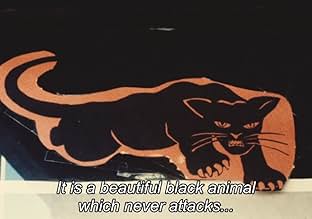
Narrator: The panther was chosen as their symbol. It is a beautiful black animal which never attacks, but, defends itself ferociously.
- ConnectionsFeatured in Berkeley in the Sixties (1990)
Details
Contribute to this page
Suggest an edit or add missing content