
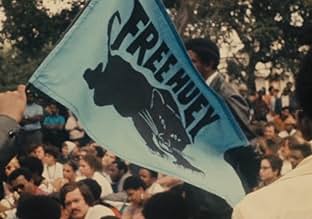
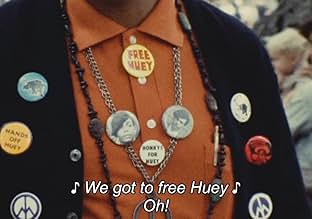
A short film of interviews and protests at a rally to free Huey P. Newton.A short film of interviews and protests at a rally to free Huey P. Newton.A short film of interviews and protests at a rally to free Huey P. Newton.
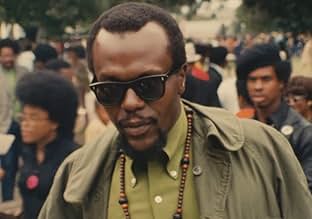


H. Rap Brown
- Self
- (uncredited)

Ron Dellums
- Self
- (uncredited)
James Forman
- Self
- (uncredited)

Bobby Seale
- Self
- (uncredited)
7.42.9K
1
2
3
4
5
6
7
8
9
10
Featured reviews
Being present
I've been deeply impressed by earlier work by Varda; when this happens with me the filmmaker's whole journey becomes a lifelong project. I have several of these running, open-ended affairs with creative, alert souls who I know I can always turn to for a far- reaching view.
This is a small snapshot, but no less part of the journey. It's among a few political films she did at the same time as Godard and others, with Vietnam booming in the distance.
It's a look at a rally party of the Black Panthers at the time of Huey Newton's trial for the murder of a policeman, but there's nothing more they can offer Varda's camera than sloganeering and Varda had no more time to devote into it, perhaps not the inclination to probe more and inquire. Possibly she was interested in no more than this glimpse in passing.
It says something that she was there of course, yet she also makes it a point to ask some of the rapt faces if they know Huey didn't do it; they don't, but they're fervent just the same, it's all part of a war being waged on them, Huey is a prisoner of that war, he must go free, or else.
There's a much more sobering history prior to and as we move away from that day, based on what little I know; the obsession with territory and tribal law, and on the other hand police abuse and a youthful life without prospects that would turn Southcentral LA into Beirut, but you have to remind yourself that this is all simmering behind the ideology and parades, the image barely able to contain a life that would soon spill from it.
Politics are thin, but maybe it is all here anyway for you to deepen? Politics aside, the glimpse is worthwhile. It's a day in that life, that place, that furor about injustice.
This is a small snapshot, but no less part of the journey. It's among a few political films she did at the same time as Godard and others, with Vietnam booming in the distance.
It's a look at a rally party of the Black Panthers at the time of Huey Newton's trial for the murder of a policeman, but there's nothing more they can offer Varda's camera than sloganeering and Varda had no more time to devote into it, perhaps not the inclination to probe more and inquire. Possibly she was interested in no more than this glimpse in passing.
It says something that she was there of course, yet she also makes it a point to ask some of the rapt faces if they know Huey didn't do it; they don't, but they're fervent just the same, it's all part of a war being waged on them, Huey is a prisoner of that war, he must go free, or else.
There's a much more sobering history prior to and as we move away from that day, based on what little I know; the obsession with territory and tribal law, and on the other hand police abuse and a youthful life without prospects that would turn Southcentral LA into Beirut, but you have to remind yourself that this is all simmering behind the ideology and parades, the image barely able to contain a life that would soon spill from it.
Politics are thin, but maybe it is all here anyway for you to deepen? Politics aside, the glimpse is worthwhile. It's a day in that life, that place, that furor about injustice.
Agnès Varda in California
Since Agnès Varda died recently, I decided to watch two of her short documentaries filmed in the San Francisco Bay Area. One is "Uncle Yanco", about her relative in Sausalito. But the more important one is "Black Panthers". This half-hour doc focuses on a Black Panther rally in Oakland in August, 1968. The main purpose of the rally is to call for the release of Huey Newton, in jail on charges of killing a cop. But the rally touches on a number of other things: police brutality towards the black community, the Vietnam War, and calls for worldwide unity against imperialism. In fact, one interviewee lays out several demands that the black community is making in its call for justice (freedom, decent housing, well-paying jobs, good education, etc). There's also an interview with Newton in jail, where he details the horrible treatment that he experiences.
Contrary to what a lot of people like to say, the Black Power Movement was not about "hating white people". It was about teaching the black community to defend itself and recognize the beauty in, among other things, natural hair. The Black Lives Matter movement is the heir to this.
Definitely watch this doc.
Contrary to what a lot of people like to say, the Black Power Movement was not about "hating white people". It was about teaching the black community to defend itself and recognize the beauty in, among other things, natural hair. The Black Lives Matter movement is the heir to this.
Definitely watch this doc.
A short documentary about the Black Panthers
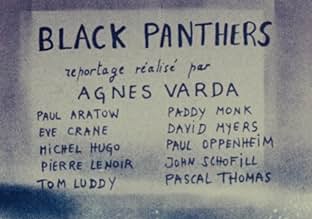
Black Panthers (original title) is listed by IMDb with the title "Huey" (1968). However, we saw it with the original title. This half-hour documentary was directed by the French filmmaker Agnès Varda.
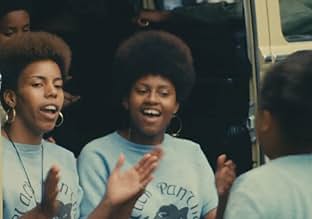
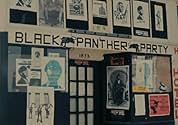
Varda went to a Black Panther rally in Oakland. The Panthers were demanding that the government free Huey Newton, co-founder of the Black Panther party. Newton was on trial, accused of murdering a police officer.
Beside filming the rally itself, Varda filmed an interview with Newton himself while he was in jail, In addition, she interviewed or recorded H. Rap Brown, Stokely Carmichael, Bobby Seale, and Eldridge Cleaver.
The Black Panthers Party was a revolutionary party, and they made no secret of the necessity to use violence to obtain their goals. They considered themselves at war with the Oakland Police Department. (Probably, the feeling was mutual.)
This is a historically important movie, especially for those who aren't old enough to remember the events of the late 1960's. It's also a lesson in the craft of documentary filmmaking, as exemplified by Agnès Varda. I would sum it up as "speak softly, but get the footage you need."
We saw this film at the wonderful Dryden Theatre in the George Eastman Museum in Rochester, NY. It's part of a Varda retrospective, co-sponsored by Rochester Institute of Technology and the Eastman Museum. I'm sure it will work well on the small screen.
P.S. Newton was eventually convicted of manslaughter, but a higher court overturned the verdict. He had two more trials, both of which ended in hung juries. Ultimately, the government gave up.
Varda went to a Black Panther rally in Oakland. The Panthers were demanding that the government free Huey Newton, co-founder of the Black Panther party. Newton was on trial, accused of murdering a police officer.
Beside filming the rally itself, Varda filmed an interview with Newton himself while he was in jail, In addition, she interviewed or recorded H. Rap Brown, Stokely Carmichael, Bobby Seale, and Eldridge Cleaver.
The Black Panthers Party was a revolutionary party, and they made no secret of the necessity to use violence to obtain their goals. They considered themselves at war with the Oakland Police Department. (Probably, the feeling was mutual.)
This is a historically important movie, especially for those who aren't old enough to remember the events of the late 1960's. It's also a lesson in the craft of documentary filmmaking, as exemplified by Agnès Varda. I would sum it up as "speak softly, but get the footage you need."
We saw this film at the wonderful Dryden Theatre in the George Eastman Museum in Rochester, NY. It's part of a Varda retrospective, co-sponsored by Rochester Institute of Technology and the Eastman Museum. I'm sure it will work well on the small screen.
P.S. Newton was eventually convicted of manslaughter, but a higher court overturned the verdict. He had two more trials, both of which ended in hung juries. Ultimately, the government gave up.
Panthers in Their Own Words
In 1968 the Black Panther Party (BPP) was at its most active and probably its height of popularity. This very brief documentary has several interviews/speeches which give a quick glimpse into what the BPP was demanding. There is footage of Kathleen Cleaver, Stokely Carmichael, and Huey Newton (one of the founders of the BPP). Kathleen and Stokely are two very well-spoken civil rights activists, or freedom fighters if you dare, and that is evident in this short documentary. At the time of this documentary Huey P. Newton, , was locked up for getting into a shootout with police. There is a little commentary from the documentarian, Agnes Varda, but just about everything else comes from the mouths of the Panthers themselves.
Historically Important
While Agnes Varda was in California shooting "Uncle Yanco", she made this short documentary about a rally to free Huey Newton after he had been jailed, as the documentary tells us, a shoot-out with the police that ended with ten people injured and one cop dead.
Mme. Varda shoots and edits this as an anthropological study, with only Back people speaking; indeed, you have to look carefully to spot a Caucasian in the background. Having grown up in this era, I note that it's a useful corrective to the usual coverage of events like this, in which one heard White people talking about the racial divide and how to deal with it.
Mme. Varda shoots and edits this as an anthropological study, with only Back people speaking; indeed, you have to look carefully to spot a Caucasian in the background. Having grown up in this era, I note that it's a useful corrective to the usual coverage of events like this, in which one heard White people talking about the racial divide and how to deal with it.


Did you know
- TriviaThis film is included in "Eclipse Series 43: Agnès Varda in California", released by Criterion.
- Quotes
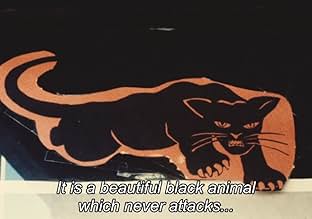
Narrator: The panther was chosen as their symbol. It is a beautiful black animal which never attacks, but, defends itself ferociously.
- ConnectionsFeatured in Berkeley in the Sixties (1990)
Details
Contribute to this page
Suggest an edit or add missing content