
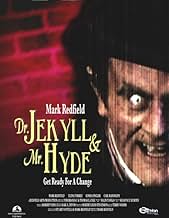
Dr. Henry Jekyll experiments with scientific means of revealing the hidden, dark side of man and releases a murderer from within himself.Dr. Henry Jekyll experiments with scientific means of revealing the hidden, dark side of man and releases a murderer from within himself.Dr. Henry Jekyll experiments with scientific means of revealing the hidden, dark side of man and releases a murderer from within himself.
- Director
- Writers
- Stars
- Awards
- 3 wins & 2 nominations total
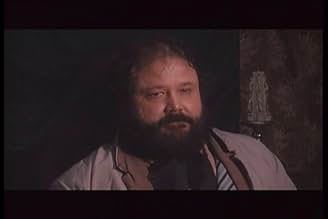
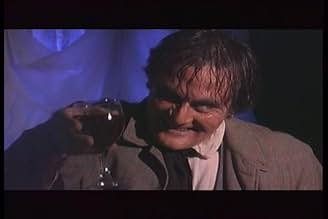

Ellie Torrez
- Claire Caine
- (as Elena Torrez)


- Director
- Writers
- All cast & crew
- Production, box office & more at IMDbPro
5.4146
1
2
3
4
5
6
7
8
9
10
Featured reviews
Quite compelling and effective
The good Dr. Jekyll discovers a potion that allows him to take a walk on the wild side as the evil Mr. Hyde in this retelling of the classic Robert Lewis Stevenson story. I find it unlikely that any filmmaker will surpass the masterful 1931 version of the story starring Frederic Marsh, but this low-budget version is really quite compelling and effective. I actually prefer it to the dull 1941 version starring Spencer Tracy. Writer/director Mark Redfield, who also gives a lively performance in the showy, dual lead roles, thankfully puts the emphasis on drama and theme rather than gore, and his cast delivers. This film, which seems to be influenced by the Hammer Horror than 'Halloween,' is a very welcome relief from the trashy, unimaginative slasher films that low-budget filmmakers continually try to pawn off on us fans of the genre. I wish more filmmakers currently working in the horror genre would attempt moody period pieces. If we're lucky, perhaps Redfield and company will tackle more of horror's great novels. Frankenstein, anyone? How about Dracula? (Anything to get the taste of 'Van Helsing' out of my mouth.)
Very good adaptation of the tale even if it shows its stage bound origins.
This version of Jekyll and Hyde has its origins in a stage production of the novel. This is part of the films flaw in that the acting seems to have been pulled right off the stage rather than coming from real life. This shouldn't put you off from seeing this movie since its quite good and is possibly one of the finer adaptations of the story. Sticking closer to the book, or so it seems, it tries to unravel the weird story with Jeykll and Hyde taking up less of the limelight. This is two friends trying to hash out whats going on. Its a refreshing take on the tale and adds nice shading to everything thats going on. Out side of the stage acting that some people use this film really has no flaws other than a bit too much of the chroma-key or blue screen effects that it uses to supplement its backgrounds. There's nothing wrong with it, but it seems to have been over used sand at times I felt like I was watching a video game rather than a movie.
Ultimately this is a film to put on your must see list especially if you want to see a good version of a literary classic.
Ultimately this is a film to put on your must see list especially if you want to see a good version of a literary classic.
Pleasantly surprised
Although I am a horror fan, I looked upon the arrival of yet another telling of Dr. Jekyll and Mr. Hyde with a certain degree of trepidation. However, I must confess I was pleasantly surprised. This version was shot on video, but the production compensated with the use of nice locations and imaginative sets. The filmmakers were smart to stay away from outdoor daylight exteriors. (Here comes my rant.) Outdoor daylight exteriors are the Achilles heel of the current flood of video features. They always bring the cinematic look of the film down to the level of the evening news. The local evening news at that! When I watch a movie I want images that will transport me somewhere, not ugly reality. That's my major pet peeve about the so-called "video revolution." Up yours, Dogma! (Now back to the review.) The performances were pretty good throughout. Mark Redfield, who also wrote and directed, plays Hyde with a bit of a twinkle in his eye rather than as a straightforward monster. Carl Randolph gives a good understated performance as Jekyll's loyal but suspicious friend. Elena Torrez is sufficiently seductive as the prostitute who tempts Jekyll and brings out the beast in Hyde. J.R. Lyston is also good as the somewhat comic Scotland Yard inspector who finds Hyde's murders almost as destructive to the Yard's image as those blasted stories by that Conan Doyle fellow. The film is more loyal to the Stevenson story than many of its predecessors, but it does update the time to the turn of the last century. This allows for the introduction of the Lumiere Brothers and a novel ending. I caught this film at a horror festival. I look forward to buying a copy.
Dr. Jekyll & Mr. Hyde is a must see!!!
I really enjoyed Dr. Jekyll and Mr. Hyde for the acting ability, the set design, costumes, the story!!! Basically everything and I do believe it was done on very little to NO budget which is really impressive. It transfixed you into a different time era and from the first few minutes you know you are hooked. It is not the kind of movie that you feel like you can predict how it will turn out, I was always interested in what would happen next. I would love to work with the director Mark Redfield, I think I could learn a lot from him - he was the most astonishing actor. This movie is a real treat and you melt into the story completely. You will not be disappointed!!!
DR. JEKYLL AND MR. HYDE (TV) (Mark Redfield, 2002) **1/2
Although I had heard good things about this shot-on-video adaptation of the Robert Louis Stevenson horror classic, the fact that it was the most recent version I've watched so far, that it was maligned cheapo label Alpha which had released it on DVD and that I had seen Giorgio Albertazzi's superlative TV mini-series JEKYLL (1969) fairly recently, made me postpone this viewing past its Halloween Challenge due date!
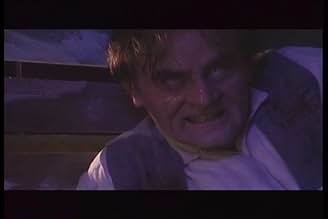
As it happens, while it may not rank anywhere near the top of the pile in JEKYLL & HYDE movies, it is lively, engaging and innovative enough to earn a respectable placement in that pantheon. Practically a one-man labor of love for writer-producer-designer-director-leading man Mark Redfield, his excellent portrayal of the two facets of the good doctor (but especially his despicable Hyde incarnation) is the film's major asset; also putting in good work is the lovely Elena Torrez as Hyde's prize streetwalker, Robert Leembruggen as Torrez's dethroned pimp and R. Scott Thompson as Jekyll's nemesis, Mordecai Carew. The sets are cleverly effective in a cheaply naïve sort of way but the inherently drab look of DV shooting and the obvious theatrical origins of the whole production work against the film's overall appeal.
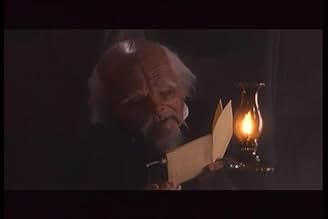
Rather than making unwieldy comparisons to other superior film versions of the story, it would be more fruitful to dwell on what this film took from them and how it differs from the norm: for example, the setting is moved forward a little to after the Ripper murders like EDGE OF SANITY (1989); Jekyll keeps portraits of his ancestors in his living room (two of them being none other than John Barrymore and Fredric March!); the Hyde make-up here is more akin to Spencer Tracy's "less is more" approach than the overtly simian look of March's Hyde; like Jean-Louis Barrault in Jean Renoir's LE TESTAMENT DU DOCTEUR CORDELIER (1959) and Giorgio Albertazzi's aforementioned Italian TV version, Hyde here dies by his own hand (strangulation) rather than being shot by the police; Jekyll narrates the progress of his experiments into a dictaphone like in the Renoir film, as well as by Udo Kier in Walerian Borowoczyk's DOCTEUR JEKYLL ET LES FEMMES (1981), etc.
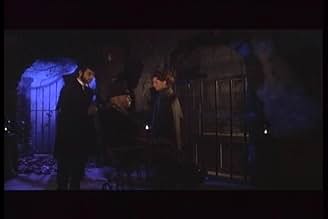
The fanciful liberties taken with the original text are more of a hit-or-miss affair, however: Hyde turns into Jekyll in front of an insignificant new intern rather than his skeptical rival Dr. Lanyon; Jekyll's fiancée jumps to her death off a balcony when Hyde takes over Jekyll and, as a result, the latter stops calling at her mansion; Jekyll indulges in some unexplained dealings with body snatchers(!) for his experiments; Hyde loses a finger when, in a trigger-happy mood, he despatches Leembruggen; this being set around the turn-of-the-century, Jekyll takes the time to record the outcome of his experiments on film courtesy of a cinematographic device purchased directly from the Lumiere brothers!; a bumbling Scotland Yard Inspector (who even namedrops Arthur Conan Doyle at one stage) aids Jekyll's attorney, Mr. Utterson, in investigating the disappearance of Jekyll and cornering Hyde in his hideout; an eccentric Chinaman is Hyde's landlord in his Soho abode, etc.
P.S. Redfield has just completed THE DEATH OF POE and is, apparently, in the pre-production stages of THE CRIMES OF SHERLOCK HOLMES, THE MADNESS OF FRANKENSTEIN and THE TELL-TALE HEART...
As it happens, while it may not rank anywhere near the top of the pile in JEKYLL & HYDE movies, it is lively, engaging and innovative enough to earn a respectable placement in that pantheon. Practically a one-man labor of love for writer-producer-designer-director-leading man Mark Redfield, his excellent portrayal of the two facets of the good doctor (but especially his despicable Hyde incarnation) is the film's major asset; also putting in good work is the lovely Elena Torrez as Hyde's prize streetwalker, Robert Leembruggen as Torrez's dethroned pimp and R. Scott Thompson as Jekyll's nemesis, Mordecai Carew. The sets are cleverly effective in a cheaply naïve sort of way but the inherently drab look of DV shooting and the obvious theatrical origins of the whole production work against the film's overall appeal.
Rather than making unwieldy comparisons to other superior film versions of the story, it would be more fruitful to dwell on what this film took from them and how it differs from the norm: for example, the setting is moved forward a little to after the Ripper murders like EDGE OF SANITY (1989); Jekyll keeps portraits of his ancestors in his living room (two of them being none other than John Barrymore and Fredric March!); the Hyde make-up here is more akin to Spencer Tracy's "less is more" approach than the overtly simian look of March's Hyde; like Jean-Louis Barrault in Jean Renoir's LE TESTAMENT DU DOCTEUR CORDELIER (1959) and Giorgio Albertazzi's aforementioned Italian TV version, Hyde here dies by his own hand (strangulation) rather than being shot by the police; Jekyll narrates the progress of his experiments into a dictaphone like in the Renoir film, as well as by Udo Kier in Walerian Borowoczyk's DOCTEUR JEKYLL ET LES FEMMES (1981), etc.
The fanciful liberties taken with the original text are more of a hit-or-miss affair, however: Hyde turns into Jekyll in front of an insignificant new intern rather than his skeptical rival Dr. Lanyon; Jekyll's fiancée jumps to her death off a balcony when Hyde takes over Jekyll and, as a result, the latter stops calling at her mansion; Jekyll indulges in some unexplained dealings with body snatchers(!) for his experiments; Hyde loses a finger when, in a trigger-happy mood, he despatches Leembruggen; this being set around the turn-of-the-century, Jekyll takes the time to record the outcome of his experiments on film courtesy of a cinematographic device purchased directly from the Lumiere brothers!; a bumbling Scotland Yard Inspector (who even namedrops Arthur Conan Doyle at one stage) aids Jekyll's attorney, Mr. Utterson, in investigating the disappearance of Jekyll and cornering Hyde in his hideout; an eccentric Chinaman is Hyde's landlord in his Soho abode, etc.
P.S. Redfield has just completed THE DEATH OF POE and is, apparently, in the pre-production stages of THE CRIMES OF SHERLOCK HOLMES, THE MADNESS OF FRANKENSTEIN and THE TELL-TALE HEART...


Did you know
- ConnectionsFeatured in No Stopping the Stover (2016)
Details
Contribute to this page
Suggest an edit or add missing content